



The past week has delivered a seismic shock to gold markets, with prices plummeting over 10% in a dramatic sell-off. For investors navigating Chinese equities, this volatility underscores a timeless truth: when it comes to gold, all roads lead back to Federal Reserve policy. Understanding the central bank’s next move is no longer just an academic exercise; it’s a survival skill for capital preservation and growth.
Executive Summary: Key Takeaways
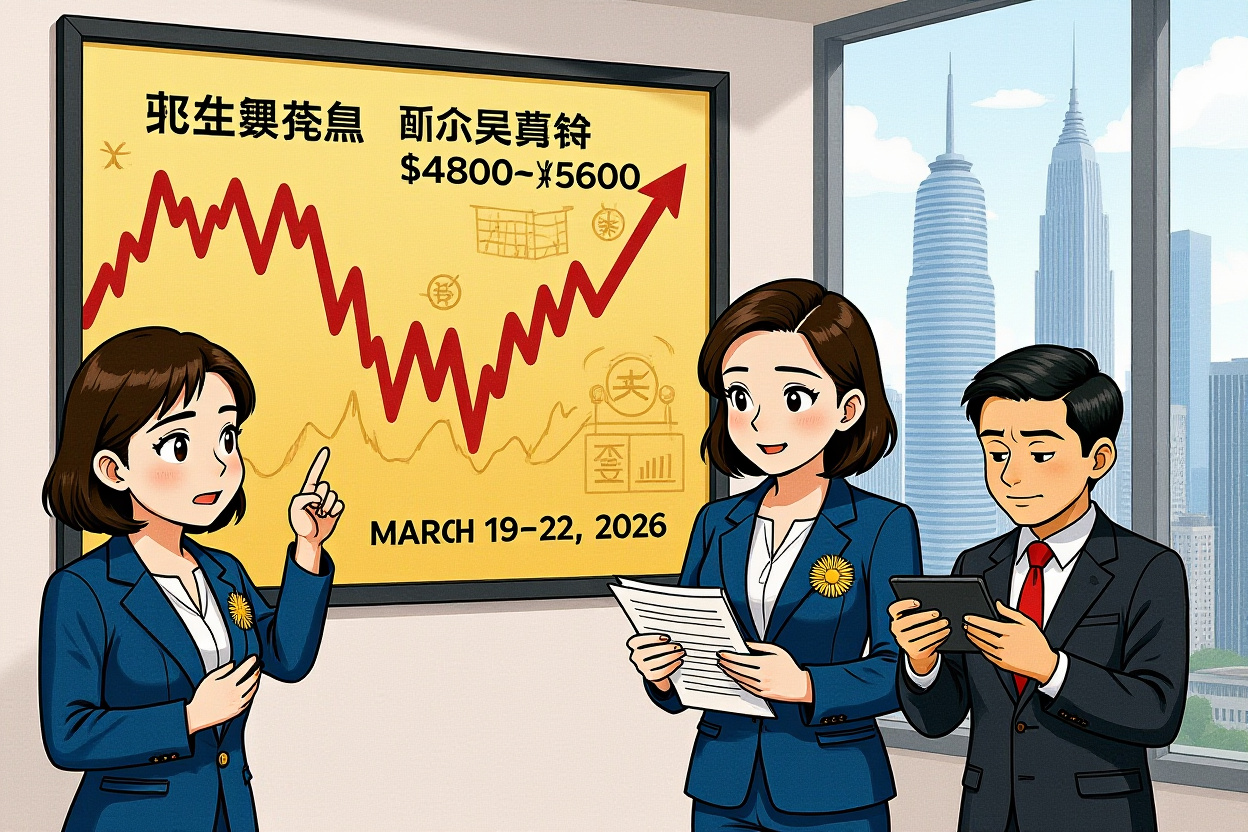
- International gold prices experienced their largest weekly decline in 43 years, falling from above $4800 to below $4500 per ounce between March 19 and March 22, 2026.
- Former Galaxy Securities chief economist Zuo Xiaolei (左晓蕾) emphasizes that while short-term predictions are futile, long-term investment strategy must center on Federal Reserve policy, especially amidst stagflation risks.
- Middle East geopolitical tensions are directly impacting energy prices and global inflation, complicating the Federal Reserve’s monetary policy decisions and delaying expected rate cuts.
- Investors are advised to adopt a cautious, watchful stance, prioritizing macroeconomic analysis over reactive trading in the face of unprecedented uncertainty.
The Historic Gold Plunge: Decoding the 2026 Sell-Off
From March 19 to March 22, 2026, the international spot gold price chart resembled a cliff edge, tumbling from approximately $4800 per ounce to breach the $4500 support level. This decline of over 10% marked the most severe single-week drop since 1983, sending shockwaves through commodity desks and portfolio management teams worldwide. For context, the last comparable decline occurred during the Volcker-era interest rate hikes, a period defined by aggressive Federal Reserve policy aimed at taming inflation.
Weekly Performance and Historical Context
The velocity of the decline was extraordinary. Market data indicates selling pressure intensified mid-week, with algorithmic trading and margin calls exacerbating the fall. This move wiped out gains accumulated over several months, reminding investors that gold, while a perceived safe haven, is not immune to liquidity-driven repricing. The scale of the drop forces a reevaluation of risk models that had become complacent after years of generally upward trending prices.
Short-Term Volatility Versus Structural Shifts
In immediate reaction, analysts pointed to a confluence of technical factors: a strengthening U.S. dollar index (DXY), profit-taking after a long rally, and shifting sentiment in bond markets. However, seasoned market participants understand that such volatility often masks deeper, fundamental currents. The true driver, as history repeatedly shows, is the anticipated path of Federal Reserve policy. When the market’s narrative on interest rates shifts, gold—which bears no yield—is often the first asset to be reassessed.
Expert Analysis: Zuo Xiaolei’s Framework for Gold Investors
At the China Development Forum 2026 Annual Meeting, former Galaxy Securities chief economist Zuo Xiaolei (左晓蕾) provided crucial perspective. She framed the sell-off as a normal market correction within a larger, more complex economic cycle. “For investors, you cannot catch every timing point,” she noted, highlighting the futility of trying to predict short-term gold price movements due to the overwhelming number of unpredictable variables.
The Long-Term Imperative: Monitoring the Federal Reserve
Zuo’s core advice cuts through the noise: long-term strategy must be anchored in Federal Reserve policy. She argues that the current global environment, reminiscent of past oil crises, carries significant stagflation risks—a combination of stagnant growth and rising inflation. In such a scenario, the Federal Reserve’s monetary policy toolkit appears limited and often contradictory. Raising rates to fight inflation can choke growth, while cutting rates to stimulate the economy can fuel inflationary fires. This dual mandate dilemma makes the central bank’s every signal paramount for asset allocators.
The Stagflation Dilemma and Portfolio Implications
“Every oil crisis tends to trigger ‘stagflation,'” Zuo explained. “Under these circumstances, Federal Reserve policy is caught in a dilemma, with few direct and effective intervention tools available.” For gold investors, this creates a unique environment. Historically, gold has performed well during periods of high inflation, but its relationship with interest rates is inverse. Therefore, deciphering whether the Fed prioritizes inflation containment or growth support becomes the critical question for positioning. Zuo’s recommendation in this climate is prudence: “For investors, I think it’s unwise to trade recklessly. Adopting a steady, watchful stance is more appropriate.”
The Federal Reserve’s 2026 Conundrum: Inflation, Geopolitics, and Delayed Easing
The anticipated dovish pivot by the Federal Reserve has been thrown into disarray. At the start of 2026, consensus pointed toward a cycle of interest rate cuts as the new chair took office. However, the eruption of conflict in the Middle East has rewritten the script, demonstrating how swiftly geopolitical shocks can transmit into core economic indicators.
Energy Shocks and Inflationary Pass-Through
Zuo Xiaolei (左晓蕾) specifically highlighted the need to closely monitor energy supply issues stemming from Middle East tensions. The subsequent spike in international oil prices has already begun influencing U.S. domestic inflation metrics. “The transmission takes some time, but the impact is already becoming apparent,” she observed. This complicates the Federal Reserve’s calculus immensely. The central bank is now forced to weigh resilient inflation data against weakening growth signals, making the timing and magnitude of any policy shift highly uncertain. Every speech and data release from the Fed is now a high-stakes event for markets.
Why the Fed’s Hesitation Matters for Gold
The delay in expected rate cuts is a direct reflection of the Federal Reserve’s heightened inflation vigilance. For gold, higher-for-longer interest rates increase the opportunity cost of holding a non-yielding asset, applying downward pressure on prices—as seen in the recent plunge. However, if the Fed’s hesitation leads to a policy mistake that allows inflation to become entrenched, gold’s fundamental role as an inflation hedge could reassert itself powerfully. Thus, the trajectory of Federal Reserve policy is not a linear indicator but a dynamic variable that investors must interpret in real-time.
Strategic Implications for Chinese Market Participants
For institutional investors and fund managers focused on Chinese equities, the gold story is not a sidebar. It is a critical barometer of global risk sentiment, currency expectations, and real interest rates—all of which flow directly into valuations for A-shares, Hong Kong-listed stocks, and offshore Chinese bonds. A holistic investment approach now demands a sophisticated understanding of Federal Reserve policy.
Integrating the Fed Watch into Asset Allocation
- Diversification Logic: Gold’s role in a portfolio should be evaluated not in isolation, but in relation to the expected path of U.S. real yields, which are dictated by Federal Reserve policy.
- Sector Rotation Signals: Certain sectors within Chinese markets, such as commodities, industrials, and consumer staples, exhibit varying sensitivities to inflation expectations and dollar strength. Shifts in Fed rhetoric can signal rotation opportunities.
- Currency Hedge Considerations: The RMB’s (人民币) exchange rate against the dollar is influenced by the interest rate differential. Tighter Federal Reserve policy can pressure emerging market currencies, affecting the returns of unhedged offshore investments.
Practical Steps for Navigating Uncertainty
Instead of timing the gold market, professionals should focus on building resilient frameworks. This involves setting up alerts for key U.S. economic data releases like CPI and non-farm payrolls, which directly inform Federal Reserve policy. It also means maintaining flexibility in position sizing and having contingency plans for different Fed scenarios—accelerated tightening, prolonged pauses, or unexpected easing. Resources like the Federal Reserve’s official website provide transcripts and economic projections that are essential for primary research.
Beyond Gold: Global Indicators and Chinese Market Dynamics
The gold price action is a symptom of broader macroeconomic crosscurrents. Chinese investors must zoom out to see the full picture, which includes domestic monetary policy from the People’s Bank of China (中国人民银行), regulatory shifts from the China Securities Regulatory Commission (中国证监会), and the performance of alternative havens like the Japanese yen or Swiss franc.
Comparative Safe-Haven Flows
During the recent turmoil, some capital did not flee to traditional havens but instead rotated into U.S. Treasuries or technology stocks. This behavior underscores that in a world of intertwined economies, “safety” is relative. The appeal of gold is constantly measured against the yield of government bonds and the growth prospects of equity sectors. A decisive shift in Federal Reserve policy that alters the Treasury yield curve can immediately change this calculus.
The Domestic Policy Counterbalance
While Federal Reserve policy dominates the global narrative, China’s domestic monetary and fiscal stance provides an important counterbalance. Stimulus measures from Chinese authorities can support local asset prices and influence commodity demand, potentially offering a floor for gold prices. Astute investors monitor the interplay between the PBOC’s easing cycles and the Fed’s tightening cycles, as this divergence creates unique arbitrage and hedging opportunities across currency and bond markets.
Synthesizing the Outlook for Informed Decision-Making
The dramatic fall in gold prices is a powerful reminder of the market’s capacity for swift repricing. However, as the analysis from Zuo Xiaolei (左晓蕾) clarifies, reacting to daily price action is a losing strategy. The sustainable approach is to build an investment thesis around the dominant macroeconomic force: the direction and credibility of Federal Reserve policy. The central bank’s struggle with the stagflationary impulses from energy markets will be the defining story of 2026 and beyond.
For sophisticated professionals in Chinese markets, the call to action is clear. Elevate your macroeconomic research capabilities. Institutionalize a process for monitoring Federal Reserve communications, U.S. inflation data, and global energy politics. Use this intelligence not to bet on gold directly, but to inform your broader asset allocation, risk management, and sector selection within Chinese equities. In an era of uncertainty, knowledge of Federal Reserve policy is not just power—it is protection. Start by reviewing your current portfolio’s sensitivity to U.S. interest rate shocks and develop scenarios for the Fed’s next move. The market has voted with its sell-off; now is the time for investors to respond with strategic preparation.