



Executive Summary
As embodied AI and humanoid robots transition from labs to commercial floors, a specialized insurance market is rapidly emerging in China. This niche sector addresses unique risks beyond traditional coverage, presenting both opportunities and challenges for property insurers and investors alike.
– The global embodied AI insurance market is projected to grow from $150 million in 2025 to $711 million by 2032, a CAGR of 24.9%, signaling a major new growth vector for the property & casualty industry.
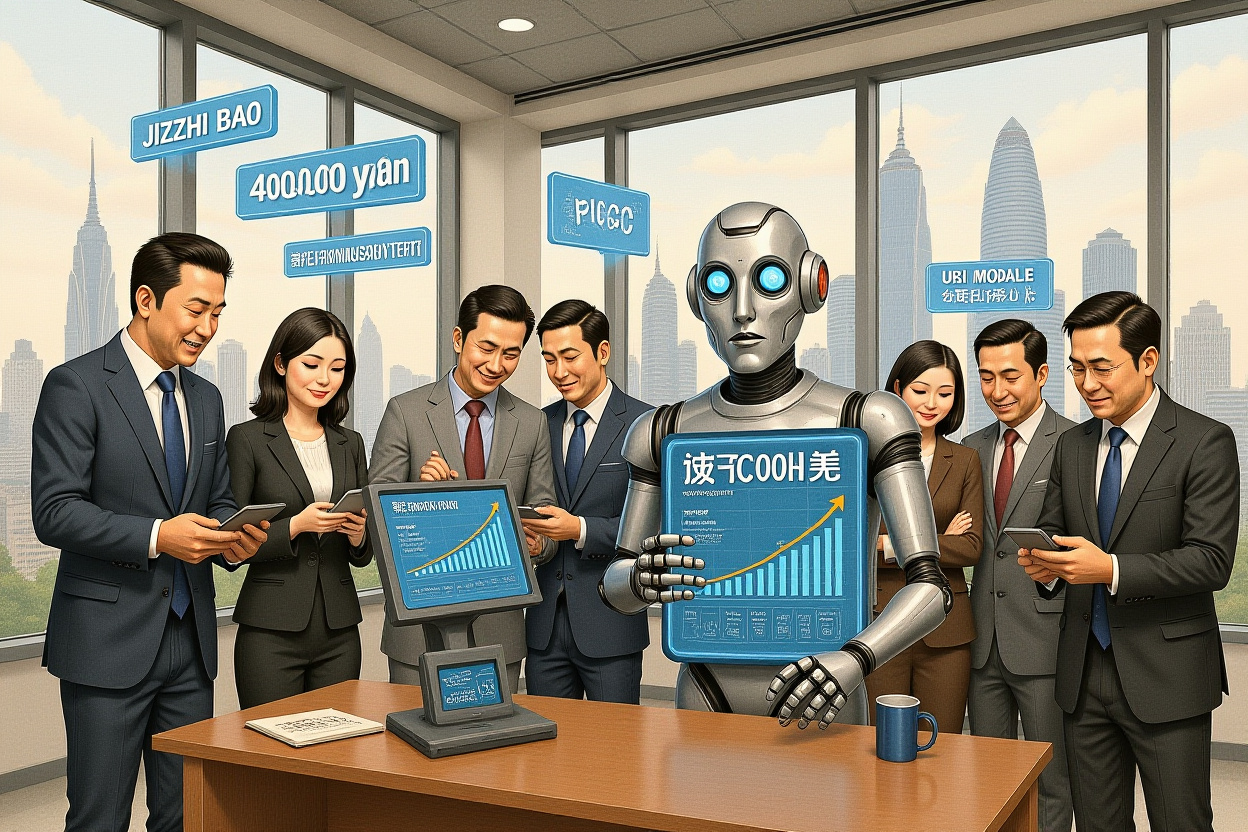
– Leading Chinese insurers like PICC, CPIC, and Ping An are deploying differentiated products, from flexible micro-duration policies to integrated ‘insurance + leasing’ models, with per-robot coverage reaching up to 400,000 yuan for collision damage.
– The core challenge lies in pricing and underwriting novel risks—such as algorithmic failure and cyber hijacking—amid a severe lack of historical loss data and complex liability attribution.
– Future development hinges on building data-sharing ecosystems, adopting usage-based insurance (UBI) models, and evolving regulations to transform embodied AI insurance from a cost center into a risk-management partner.
A New Frontier in Risk: The Embodied AI Insurance Boom
Imagine a warehouse where a humanoid robot collides with a shelving unit, incurring 400,000 yuan in repair costs—a sum that can eclipse the damage from a luxury car accident. This scenario is no longer speculative; it’s the driving force behind one of the most dynamic and complex new sectors in China’s financial landscape: embodied AI insurance. As robots equipped with artificial intelligence and physical forms permeate factories, logistics hubs, and commercial spaces, the traditional risk playbook is obsolete. For institutional investors and corporate executives monitoring Chinese equities, understanding this nascent market is critical. It represents not just a technological evolution, but a fundamental shift in how risk is quantified, priced, and managed in the world’s second-largest economy.
The momentum is undeniable. Since the start of 2026, major Chinese property and casualty insurers have accelerated their forays into this domain. They are motivated by a clear commercial imperative: the embodied AI industry is commercializing at breakneck speed. Industry analysts now view the embodied AI insurance market as a pivotal emerging growth track for the property insurance sector over the next three years. This specialized coverage is essential because today’s robots are highly precise, expensive to maintain, and prone to novel failures that standard property policies simply cannot address.
Market Potential and Growth Projections
The scale of the underlying industry underpins the insurance opportunity. A January 2025 report from the China Information and Communication Technology Academy (中国信息通信研究院), titled the ‘Humanoid Robot Industry Development Research Report (2024)’, forecasts that between 2035 and 2040, humanoid robots will broadly achieve Level 3 autonomy. By that stage, the total market size for整机 (整机) is predicted to reach a staggering 100 billion to 300 billion yuan. This proliferation of advanced robots across industrial manufacturing, logistics仓储 (仓储), and商业服务 (商业服务) creates a massive, addressable risk pool for insurers.
Quantifying the insurance opportunity itself, market research firm QYResearch (恒州博智) released data in March 2025 showing global sales for embodied AI insurance reached $150 million. Their projection sees this figure soaring to $711 million by 2032, representing a compound annual growth rate (CAGR) of 24.9% from 2026 to 2032. For China’s insurers, capturing a significant share of this fast-growing, high-value market is a strategic priority with substantial implications for their long-term profitability and relevance in the tech-driven economy.
Differentiated Strategies of Major Chinese Insurers
Recognizing the potential, China’s保险巨头 (保险巨头) have moved swiftly. Since 2025, PICC Property and Casualty Company Limited (人保财险), China Pacific Property Insurance Co., Ltd. (太保产险), and Ping An Property & Casualty Insurance Company of China, Ltd. (平安产险) have each launched定制化 (定制化) insurance products designed for embodied AI in commercial settings. Their approaches vary, reflecting attempts to破解 (破解) the unique challenges of coverage scope and投保方式 (投保方式).
CPIC’s ‘Jizhi Bao’: Pioneering Flexible Micro-Duration Policies
In September 2025, the Ningbo branch of CPIC Property Insurance launched what it hailed as the nation’s first exclusive humanoid robot insurance product, dubbed ‘Jizhi Bao’ (机智保). A company representative explained to China News Service that this product represents a significant innovation by shattering the conventional annual policy model. ‘Jizhi Bao’ supports投保 (投保) by the day, week, or month, providing unparalleled flexibility for businesses engaged in short-term projects or rentals. Furthermore, it aims to cover the entire value chain—’产、销、租、用’ (产、销、租、用). Initially targeting整机制造商 (整机制造商), CPIC has begun a national推广 (推广) campaign and has already secured its first policy落地 (落地) in Suzhou, a major hub for advanced manufacturing.
PICC’s Dual-Track System: Comprehensive Coverage from Lab to Market
PICC Property and Casualty has adopted a robust, dual-pronged strategy. The company has developed a dedicated insurance solution that follows humanoid robots from the laboratory through to full commercial deployment. Its framework combines ‘本体损失险’ (本体损失险) and ‘第三者责任险’ (第三者责任险). The former covers physical damage to the robot itself stemming from traditional perils, human operational error, or electrical and network failures. The latter addresses liability for accidental harm caused to third-party property or persons.
To illustrate the value, a PICC负责人 (负责人) provided a concrete example. The company insures the first batch of over 470 humanoid robots for a租赁平台 (租赁平台) in the Yangtze River Delta region. Under this policy, if a robot is damaged due to a collision or a断裂 (断裂) in its传动装置 (传动装置), the maximum repair compensation can approach 400,000 yuan per unit. This figure starkly highlights the high-stakes nature of embodied AI insurance and why tailored products are necessary.
Ping An’s Integrated ‘Insurance + Leasing’ Model
Ping An Property & Casualty is focusing on integration and accessibility. In early January 2026, it partnered with Shanghai Electric Financial Leasing Co., Ltd. (上海电气融资租赁有限公司) to launch an embodied AI robot ‘保险 + 租赁’ (保险 + 租赁) policy. This innovative structure embeds the insurance premium into the periodic租金 (租金), dramatically lowering the upfront financial barrier for enterprises adopting this technology. Beyond just hardware damage, Ping An’s product incorporates第三者责任 (第三者责任),产品质量责任 (产品质量责任), and even信息泄露责任 (信息泄露责任) coverage. Leveraging AI algorithms, the policy enables dynamic risk pricing and real-time风险控制 (风险控制), moving towards a more proactive risk management model.
Navigating a High-Risk, Data-Scarce Landscape
Despite the bullish outlook, the development of embodied AI insurance is fraught with significant hurdles. As a nascent科技保险品类 (科技保险品类), it grapples with fundamental issues that challenge the very foundations of traditional insurance underwriting.
New Risk Characteristics and Complexity
A PICC executive outlined the distinct risk profile of humanoid robots compared to standard business property. First, risk sources are复合化 (复合化). Beyond natural disasters and hardware glitches, losses can originate from algorithmic bias, software vulnerabilities, or system被劫持 (被劫持). Second, defining the责任主体 (责任主体) is immensely complex. When an accident occurs, is the liability with the hardware manufacturer, the software developer, the system integrator, or the end-user? This ambiguity is far more pronounced than with traditional machinery. Third, emerging exposures like网络安全 (网络安全), algorithm safety, and data breaches fall completely outside the scope of conventional enterprise property insurance forms.
Expert Insights on Systemic Risks and the Data Gap
Academia and investment circles echo these concerns. Professor Wang Guojun (王国军) of the University of International Business and Economics Insurance College (对外经济贸易大学保险学院) identifies the core矛盾 (矛盾). Humanoid robots face novel systemic risks, such as catastrophic decision-making errors by AI or网络劫持 (网络劫持). Compounding this is a complete lack of historical赔付数据 (赔付数据), coupled with rapid technological迭代 (迭代) and diverse technical pathways. This creates a fundamental mismatch: insurance relies on the ‘law of large numbers,’ stability, and quantifiable risks, but embodied AI presents a reality of ‘high risk, fast iteration, and no data.’
Bai Wenxi (柏文喜), Chairman of Zhonghe Kunlun Asset Management Co., Ltd. (众和昆仑资产管理有限公司), agrees that professional embodied AI insurance is poised to be a major growth pole. However, he pinpoints three core industry dilemmas: 1) The failure of traditional actuarial models due to inadequate risk identification and data scarcity; 2) Blurred liability boundaries involving multiple parties from developers to operators; 3) The叠加 (叠加) of long-tail and systemic risks, where a failure in one robot within a cluster could trigger a ‘级联故障’ (级联故障), undermining the statistical basis of insurance.
Innovative Pricing and Risk Assessment in Embodied AI Insurance
In the face of a near-blank historical data slate, insurers are forced to innovate. The question of how to accurately price embodied AI insurance policies is paramount for sustainable market growth.
Dynamic Assessment and Cross-Industry Collaboration
PICC’s approach, as described by its representative, involves ‘动态评估’ (动态评估) paired with ‘跨界合作’ (跨界合作). Since direct理赔数据 (理赔数据) is unavailable, insurers are参考 (参考) data from more mature categories like industrial and service robots. They then adjust and refine premiums dynamically based on factors specific to the new robots: their安全水平 (安全水平), operational作业场景 (作业场景), and维修成本 (维修成本). More critically, PICC is engaging in deep collaboration with robot manufacturers. Together with other产业链 (产业链) players, they conduct comprehensive ‘体检’ (体检) on robots, deconstructing risks into components like the ‘大脑’ (大脑) (AI system), ‘小脑’ (小脑) (control system), and ‘身体’ (身体) (hardware). This collaborative effort aims to build a robust dynamic risk assessment system from the ground up.
Future Directions: From Data Sharing to UBI Models
Professor Wang Guojun believes the path forward requires insurers to transform ‘不确定性’ (不确定性) into tradable ‘风险产品’ (风险产品). This can be achieved through mechanisms like industry-wide data共建 (共建), dynamic pricing models, modular policy clauses, and hybrid pricing that uses both simulation and real-world machine data. Bai Wenxi proposes a holistic ‘数据-生态-监管’ (数据-生态-监管) framework. At the data layer, he advocates for a shared industry alliance to pool risk information. The ecosystem layer should promote integrated ‘保险+服务+科技’ (保险+服务+科技) offerings. On the regulatory front, establishing industry standards and potentially even mandatory insurance requirements will be crucial. For pricing, he suggests a near-term focus on scenario-based tiering, evolving towards中长期 (中长期) adoption of Usage-Based Insurance (UBI) models. The核心 (核心) paradigm shift, according to Bai, is moving from pure ‘损失补偿’ (损失补偿) to proactive ‘风险减量’ (风险减量), ultimately repositioning embodied AI insurance from a corporate cost center to a value-adding risk management partner in a model of ‘风险共治’ (风险共治).
The Path Forward for Embodied AI Insurance in China
The evolution of embodied AI insurance will be a key barometer for the maturity of China’s entire robotics and AI ecosystem. Its success is not merely a matter of product innovation but of systemic adaptation.
Regulatory and Standardization Imperatives
For the market to scale efficiently, clearer regulatory guidance and technical standards are needed. Definitions of liability in cases of AI error, data security protocols for insured robots, and minimum coverage requirements for certain high-risk applications are all areas where regulatory bodies like the China Banking and Insurance Regulatory Commission (CBIRC) may need to provide direction. Standardization of risk assessment metrics and data reporting formats will be essential for building the reliable datasets that insurers require.
Transforming Insurance from Cost Center to Value Partner
The ultimate goal for stakeholders across the embodied AI insurance value chain is to realize its full potential as a risk mitigation tool rather than just a financial backstop. By integrating telematics, real-time monitoring, and predictive maintenance services into insurance packages, providers can help clients prevent losses before they occur. This ‘risk reduction’ model aligns insurer and client incentives, fostering a more resilient and sustainable adoption of embodied AI technologies. For investors, companies that master this transition will likely command premium valuations in the equity markets.
Synthesis and Strategic Implications for Market Participants
The emergence of embodied AI insurance is a definitive trend with material implications for China’s property & casualty sector and the broader technology investment landscape. The market is poised for explosive growth, driven by the rapid commercialization of sophisticated robots. Leading insurers are already carving out niches with innovative products, though they must navigate a treacherous landscape of novel risks and profound data scarcity. The solutions will hinge on unprecedented collaboration between insurers, tech firms, and regulators to build new risk assessment paradigms and data ecosystems.
For institutional investors and fund managers, this represents a compelling sub-sector to watch within Chinese financial and technology equities. Companies that successfully develop scalable and profitable embodied AI insurance lines could see significant earnings growth. Similarly, robotics firms with strong insurer partnerships may benefit from smoother commercialization paths. The call to action is clear: incorporate analysis of embodied AI insurance developments into your due diligence for both insurance and robotics stocks. Monitor the quarterly reports of major insurers for commentary on this segment, track regulatory announcements, and engage with management on their strategies for turning the uncertainties of embodied AI into a structured, insurable, and ultimately profitable new frontier in risk.