



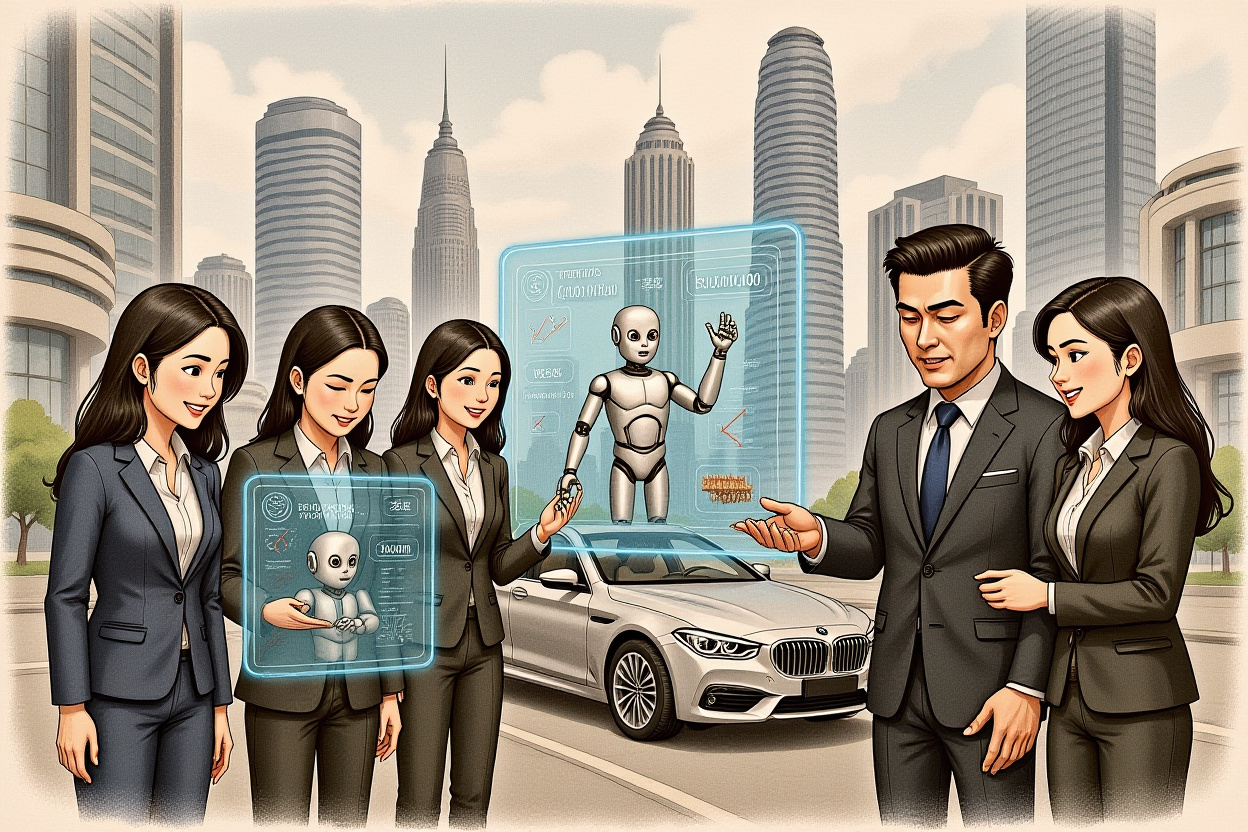
The High-Stakes World of Embodied AI Insurance
Imagine a collision in a high-tech warehouse where a humanoid robot is damaged, leading to a repair bill of nearly 400,000 yuan – a cost that can exceed that of fixing a luxury sports car. This scenario is becoming increasingly common as embodied intelligent robots, or embodied AI, permeate industries from manufacturing to logistics, driving an urgent need for specialized insurance solutions. In 2026, China’s property and casualty (P&C) insurers are aggressively expanding into the embodied AI insurance sector, viewing it as a pivotal growth avenue. With commercial adoption accelerating, this niche market is poised to transform risk management in the tech era, offering both challenges and lucrative opportunities for investors and insurers alike. The embodied AI insurance landscape is evolving rapidly, necessitating a deep dive into its dynamics, player strategies, and future trajectory.
Executive Summary: Key Takeaways on Embodied AI Insurance
– The embodied AI insurance market is projected to surge from $150 million in 2025 to $711 million by 2032, at a compound annual growth rate (CAGR) of 24.9%, according to QYResearch (恒州博智). – Major Chinese insurers like PICC Property and Casualty (人保财险), CPIC Property & Casualty (太保产险), and Ping An Property & Casualty (平安产险) are launching customized products, focusing on flexible coverage, dual liability systems, and integrated solutions. – Key challenges include data scarcity, complex liability boundaries involving hardware and software developers, and novel risks like algorithm failures and cybersecurity threats. – Experts emphasize the need for dynamic pricing, ecosystem collaboration, and regulatory frameworks to scale embodied AI insurance effectively. – This sector represents a significant emerging growth track within China’s P&C industry, with implications for global investors eyeing tech-driven insurance innovations.
The Surging Demand for Embodied AI Insurance
Embodied AI, referring to intelligent robots with physical forms that interact with the environment, is revolutionizing sectors such as industrial manufacturing, logistics warehousing, and commercial services. As these robots become more integral to operations, their high precision, substantial maintenance costs, and exposure to new risks outpace traditional insurance products. The China Academy of Information and Communications Technology (中国信息通信研究院) highlighted in a January 2025 report that the humanoid robot market could reach 100 billion to 300 billion yuan by 2035-2040, signaling massive insurance potential.
Market Growth and Projections
Data from market research firm QYResearch (恒州博智) underscores this momentum: global embodied AI insurance sales hit $150 million in 2025 and are expected to climb to $711 million by 2032, driven by a 24.9% CAGR from 2026 to 2032. This growth is fueled by rapid commercialization, with robots advancing to higher autonomy levels, akin to Level 3 in automotive terms, where they can perform complex tasks with minimal human intervention. Insurers are racing to capture this embodied AI insurance opportunity, tailoring products to cover everything from physical damage to algorithmic errors.
Applications and Inherent Risks
Embodied AI robots are deployed in diverse settings, from assembly lines to customer service roles. However, their sophistication introduces unique perils: – Hardware failures, such as collisions or传动装置断裂 (drive system fractures), can incur repair costs upwards of 400,000 yuan per unit, as seen in cases insured by PICC. – Software vulnerabilities, including algorithm biases or system hacks, pose systemic risks that traditional property insurance doesn’t address. – Operational hazards in dynamic environments, like warehouses or public spaces, increase the likelihood of accidents involving third parties. These factors necessitate a specialized approach to embodied AI insurance, moving beyond conventional coverage models.
Strategic Moves by Leading Chinese Insurers
In response to this demand, top P&C insurers in China have rolled out differentiated embodied AI insurance products since 2025, targeting various segments of the robotics ecosystem. Their strategies reflect a keen understanding of the technology’s lifecycle and risk profile.
PICC’s Dual Coverage System:本体损失险+第三者责任险 (Body Loss Insurance + Third-Party Liability Insurance)
PICC Property and Casualty (人保财险) has pioneered a comprehensive solution covering both the robot’s physical damage and liability for accidents. A company representative explained that this system addresses risks from traditional causes like natural disasters, human error, and electrical issues, as well as emerging threats from networks and software. For instance, in a长三角地区 (Yangtze River Delta) robot leasing platform, PICC insures over 470 humanoid robots, with each unit eligible for up to 400,000 yuan in repair compensation for damages from collisions or mechanical failures. This embodied AI insurance approach ensures end-to-end protection as robots transition from labs to commercial use.
CPIC’s Flexible “机智保” (Jizhi Bao) Product
CPIC Property & Casualty (太保产险) launched China’s first dedicated humanoid robot insurance in September 2025, called “机智保” (Jizhi Bao). Unlike annual policies, it offers daily, weekly, or monthly premiums, catering to the flexible needs of manufacturers, sellers, lessors, and users. A CPIC负责人 (responsible person) noted that the product initially targets整机制造商 (whole-machine manufacturers) and is being推广 (promoted) nationwide, with policies already implemented in苏州 (Suzhou). This innovation in embodied AI insurance allows for scalable, pay-as-you-go coverage, reducing upfront costs for businesses.
Ping An’s Integrated “Insurance + Leasing” Model
Ping An Property & Casualty (平安产险) collaborated with上海电气融资租赁有限公司 (Shanghai Electric Financial Leasing Co., Ltd.) in early 2026 to introduce a bundled policy that integrates premiums into rental fees. This lowers initial investment pressures for enterprises and expands coverage beyond hardware to include第三者责任 (third-party liability),产品质量责任 (product quality liability), and信息泄露责任 (information leakage liability). Leveraging AI algorithms for dynamic pricing and real-time risk control, Ping An’s embodied AI insurance solution exemplifies a shift toward value-added services, positioning insurance as a strategic partner rather than a mere cost center.
Challenges in the Embodied AI Insurance Landscape
Despite its promise, the embodied AI insurance sector faces significant hurdles, primarily due to its novelty and the complex nature of robotic risks. Industry experts point to data gaps, liability ambiguities, and pricing difficulties as major bottlenecks.
Novel Risk Profiles and Data Scarcity
According to a PICC负责人 (responsible person), embodied AI risks are复合化 (composite), stemming not only from hardware failures but also from算法偏差 (algorithm deviations),系统漏洞 (system vulnerabilities), and网络安全 (cybersecurity) breaches. Traditional enterprise property insurance falls short here. Professor Wang Guojun (王国军) of the对外经济贸易大学保险学院 (University of International Business and Economics Insurance School) notes that the core conflict lies between the “high-risk, fast-iteration, data-deficient” nature of robots and insurance’s reliance on “large numbers, stability, and quantifiability.” With no historical理赔数据 (claims data), insurers struggle to apply conventional精算模型 (actuarial models).
Complex Liability Boundaries
Bai Wenxi (柏文喜), Chairman of众和昆仑资产管理有限公司 (Zhonghe Kunlun Asset Management Co., Ltd.), highlights that accident责任主体 (liability subjects) can involve硬件制造商 (hardware manufacturers),软件开发商 (software developers), and运营方 (operators), making界定 (determination) more intricate than with traditional equipment. This ambiguity complicates claims processing and risk assessment in embodied AI insurance. For example, if a robot malfunctions due to a software update, is the developer or the user liable? Such questions necessitate clear contractual frameworks and regulatory guidance.
Pricing and Modeling Difficulties
To tackle pricing, PICC employs a “动态评估” (dynamic assessment) + “跨界合作” (cross-border cooperation) strategy. This involves referencing data from mature categories like industrial robots, adjusting for factors such as安全水平 (safety levels),作业场景 (operational environments), and维修成本 (maintenance costs). Collaborations with robot manufacturers for joint “体检” (health checks) help decompose risks into components like the “大脑” (brain), “小脑” (cerebellum), and “身体” (body), enhancing accuracy. Professor Wang Guojun (王国军) advocates for模块化条款 (modular clauses),仿真+实机混合定价 (simulation + real-machine hybrid pricing), and dynamic费率 (premium rates) to transform uncertainties into tradable risk products.
Expert Insights and Future Directions for Embodied AI Insurance
As the embodied AI insurance market matures, thought leaders propose holistic solutions to overcome its challenges, emphasizing data sharing, ecosystem development, and regulatory support.
Academic Perspectives on Risk Management
Professor Wang Guojun (王国军) suggests that insurers must innovate through数据共建 (data co-construction) and dynamic pricing mechanisms. He believes that embodied AI insurance should evolve from mere损失补偿 (loss compensation) to风险减量 (risk reduction), proactively mitigating incidents through predictive analytics and maintenance services. This aligns with industry trends where insurance is becoming a value partner in technology adoption.
Industry Recommendations for Ecosystem Development
Bai Wenxi (柏文喜) recommends a三位一体 (trinity) approach: – 数据层 (Data Layer): Establish a共享联盟 (sharing alliance) for pooling risk data across manufacturers and insurers. – 生态层 (Ecosystem Layer): Promote “保险+服务+科技” (insurance + service + technology) models, integrating coverage with robotic maintenance and safety protocols. – 监管层 (Regulatory Layer): Implement行业标准 (industry standards) and consider强制险 (compulsory insurance) for high-risk applications. For pricing, he proposes短期场景化分级 (short-term scenario-based grading) and中长期采用UBI (中期采用UBI模式 (medium- to long-term adoption of Usage-Based Insurance), where premiums adjust based on actual usage patterns. This shift can make embodied AI insurance more adaptable and fair.
The Path Forward for Embodied AI Insurance
The evolution of embodied AI insurance will likely hinge on collaboration and innovation, with insurers playing a crucial role in de-risking robotic deployments. Key trends include the integration of AI for real-time monitoring and the development of standardized policies.
From Loss Compensation to Risk Reduction
Insurers are increasingly focusing on风险共治 (risk co-governance), using IoT sensors and AI algorithms to prevent accidents before they occur. For instance, Ping An’s dynamic pricing model exemplifies this, where continuous data flow from robots enables proactive adjustments. This embodied AI insurance paradigm not only protects assets but also enhances operational efficiency, turning insurance into a strategic tool for businesses.
Regulatory and Standardization Efforts
Regulatory bodies like the中国银行保险监督管理委员会 (China Banking and Insurance Regulatory Commission) may step in to establish guidelines for liability and data privacy. As embodied AI insurance grows, expect more frameworks addressing算法安全 (algorithm safety) and网络安全 (cybersecurity), similar to regulations in autonomous vehicles. This will provide clarity for insurers and boost market confidence, attracting more participants to this新兴增长赛道 (emerging growth track).
Synthesizing the Embodied AI Insurance Opportunity
The embodied AI insurance market in China is at an inflection point, driven by technological advancement and strategic insurer initiatives. With projections pointing to robust growth, it offers a compelling avenue for investors seeking exposure to tech-driven financial services. Key takeaways include the importance of customized products, the need for collaborative data ecosystems, and the potential for insurance to add value beyond traditional coverage. For institutional investors and corporate executives, monitoring developments in embodied AI insurance is essential, as it will influence risk management strategies and investment decisions in robotics and AI sectors. Engage with insurers and tech firms to stay ahead of this curve, and consider how embodied AI insurance can mitigate risks in your own operations or portfolios. As the market evolves, those who adapt quickly will reap the rewards of this transformative industry.