



Key Takeaways
- The Middle East conflict triggered unprecedented market volatility, with oil prices swinging over 30% and Asian stock indices experiencing historic plunges.
- Traditional safe-haven assets like US Treasuries and gold failed, replaced by the US dollar, as surging energy prices re-ignited inflation fears.
- Intraday market reversals, driven by headlines and misinformation, created a dangerous ‘whipsaw’ effect for traders.
- The turmoil underscores the critical need for investors in Chinese equities and other Asia-Pacific assets to reassess geopolitical risk and portfolio hedging strategies.
The Middle East Conflict Ignites a Global Trading Frenzy
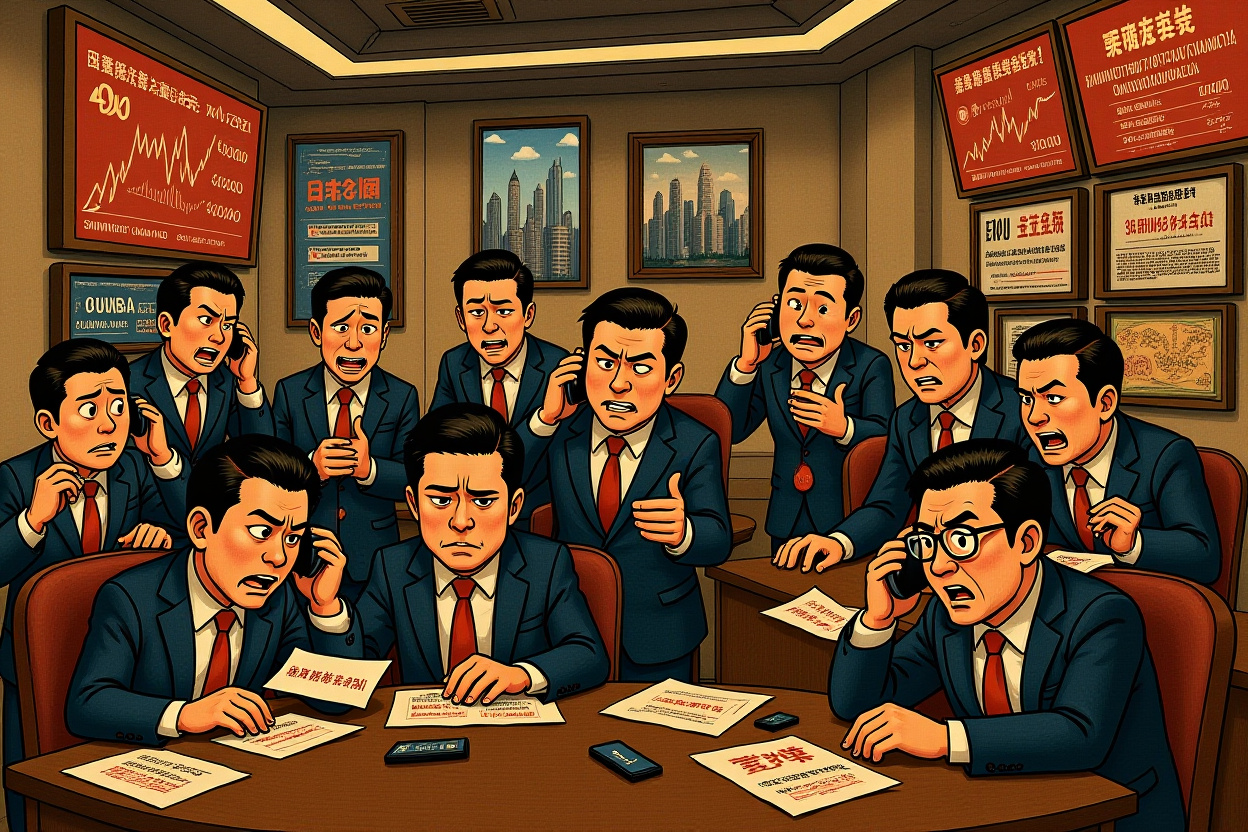
At 1 a.m. London time, the market’s madness jolted Michael Brown from his sleep. His phone, resting on the bedside table, buzzed incessantly with alerts: Brent crude breaking $100 per barrel; breaking $110; Nasdaq futures down 2%; the Nikkei plunging 5%. The senior strategist at broker Pepperstone rolled out of bed, fired up his computer, and began fielding a flood of calls from panicked clients across Asia. This scene, replicated across global financial hubs from Singapore to Oklahoma City, marked the opening salvo of a trading week defined by the profound market shock of the Middle East conflict.
From Seoul to Sydney, fund managers and CIOs were awakened not by alarms but by catastrophic portfolio moves. Gerald Gan (甘杰拉尔德), Chief Investment Officer at Reed Capital Partners in Singapore, was called repeatedly before dawn by staff urgently seeking guidance to protect client assets. Meanwhile, in the US oil heartland, veteran commodity trader Dennis Kissler of BOK Financial Securities was swamped with orders from shale executives desperate to lock in soaring prices, his voice gone hoarse by noon from handling three phones at once. This immediate, visceral reaction highlights how the Middle East conflict transmits instability directly to global portfolios with terrifying speed.
The Anatomy of a Market Panic
The initial surge was fueled by a potent mix of genuine supply fears and pure investor panic. Reports detailing potential disruptions to regional crude output over the weekend led to a pre-market anxiety pile-up. When trading opened, the moves were violent and decisive. West Texas Intermediate (WTI) crude futures jumped over 10% in minutes, at one point gaining more than 30%—a move of a magnitude rarely seen outside a major supply shock. The contagion was immediate and widespread.
- Equities: South Korea’s KOSPI index plummeted over 7%, later experiencing a record intraday drop of 12% before a partial recovery in wildly volatile trading.
- Currencies: The Indian Rupee and Egyptian Pound tumbled to record lows. Other Asian importers like Indonesia and the Philippines saw their currencies battered.
- Commodities: European natural gas futures skyrocketed 68% in just two days.
This multi-asset carnage served as a brutal reminder that in today’s interconnected markets, a geopolitical flashpoint in the Middle East can wipe out millions in capital across the globe within moments. As Kissler starkly warned, “In times like this, if you’re not on your toes and you’re on the wrong side, you can lose a million dollars in two seconds.”
The Great Safe-Haven Failure: Why Traditional Hedges Broke Down
One of the most disorienting features of the sell-off was the simultaneous failure of classic flight-to-quality assets. Typically, during a geopolitical crisis, capital floods into US Treasuries, gold, the Japanese Yen, and the Swiss Franc. This time, in a dramatic departure from the script dictated by the Middle East conflict, all but one of these pillars crumbled. Instead of rallying, Treasury yields rose (prices fell), gold sold off, and the Yen and Franc weakened. The sole winner was the US Dollar.
This paradox was driven by a powerful secondary effect of the oil spike: reignited inflation anxieties. For fund managers like Raymond Lee, CIO of Torica Capital in Sydney, this created a hedging nightmare. Lee, who had relied on US Treasuries to hedge portfolio risk, watched in dismay as oil surged and bonds fell in tandem on Monday. He concluded the Treasury market had effectively become an extension of the oil market, with yields moving inversely to crude prices. Faced with this breakdown in correlation, he ordered his traders to cut losses and sell their two-year Treasury futures positions. The lesson was clear—the mechanics of the Middle East conflict had short-circuited traditional defensive playbooks.
The Domino Effect on Monetary Policy Expectations
The surge in energy prices forced a rapid repricing of global interest rate expectations. Central banks, already in a protracted battle against inflation, now faced the prospect of a new commodity-driven price surge. This shifted market focus from growth risks to inflation risks, punishing rate-sensitive assets. The specter of “higher for longer” interest rates gained renewed potency, applying downward pressure on equity valuations globally, particularly for growth and tech stocks sensitive to discount rates. This complex channel demonstrates how the Middle East conflict influences Chinese equity markets not just through risk sentiment, but through the critical pathway of global liquidity and financing conditions.
The Whipsaw Effect: Navigating a Market Driven by Headlines
Beyond the sheer velocity, what traumatized traders was the violent “whipsaw” effect. Markets would swing wildly on a single piece of news, even if it was later retracted or proven false. A post by US Energy Secretary Chris Wright claiming a naval escort for a tanker through the Strait of Hormuz was enough to trigger a market tremor. More stunningly, WTI crude futures nearly erased a 31% intraday gain—the largest such reversal in at least four decades—after a statement from former US President Donald Trump hinted the war might be nearing an end.
These gyrations created an environment of extreme peril for active positions. As Michael Brown of Pepperstone described, “One minute you think, ‘Maybe we’re out of the woods, maybe there’s progress.’ The next minute the news flips completely and all your positions are losing money. Back to square one.” This headline-driven volatility erodes capital through stop-loss triggers and makes fundamental analysis feel secondary to news-tracking, a dangerous state for disciplined, long-term investment.
The Operational Toll on Trading Desks
The market stress translated into intense physical and operational demands. Veteran traders like Dennis Kissler, who cut his teeth in the Chicago Mercantile Exchange pits during the 1990 Gulf War, enforced battle-tested protocols. He mandated full staffing and shared a tactical tip for endurance: limit coffee and water to minimize bathroom breaks. “You absolutely cannot take your eyes off the screen,” he instructed his team. In Singapore, Gerald Gan maintained a grueling schedule, logging on at 6 a.m. and monitoring screens until around 2 a.m. the next morning. This round-the-clock vigilance is the human cost of managing portfolio risk during a sustained Middle East conflict, underscoring the strain on asset managers and hedge funds globally.
Implications for Chinese Equity Markets and Asia-Pacific Investors
For sophisticated investors focused on Chinese equities, the recent turmoil offers critical lessons. Asia is severely dependent on Middle Eastern oil and gas imports to fuel its economies. Therefore, the region’s assets are disproportionately exposed to supply shocks and price volatility stemming from the Middle East conflict. The swift punishment meted out to currencies like the Indian Rupee and Korean stock markets is a direct consequence of this dependency. While China maintains strategic petroleum reserves and diverse import channels, its markets are not immune to the global risk-off sentiment and inflationary pressures generated by such events.
Reassessing Correlations and Hedging Strategies
The failure of US Treasuries as a hedge necessitates a urgent portfolio review. Investors must question the efficacy of their existing risk mitigation tools in a world where geopolitical shocks can simultaneously spike inflation. Alternative or complementary hedges may need consideration, including:
- Direct Commodity Exposure: Strategic positions in energy equities or futures, though these carry their own volatility.
- Currency Hedges: Given the dollar’s strength, careful management of RMB (人民币) and other Asia-Pacific currency exposure is crucial.
- Relative Value Plays: Identifying sectors or companies within China that may be less sensitive to energy inflation or could potentially benefit.
- Increased Cash Buffers: Maintaining higher liquidity to withstand volatility and seize opportunities created by dislocations.
The recent events prove that a generic “flight-to-quality” strategy is insufficient. Hedges must be stress-tested against scenarios where inflation fears trump growth fears.
Strategic Outlook and Navigating the New Volatility Regime
The consensus among frontline traders and strategists is one of sustained caution. “This isn’t over,” stated Gerald Gan, preparing for weeks of rollercoaster markets. The underlying geopolitical tensions remain unresolved, meaning markets will likely continue to trade with an elevated sensitivity to headlines from the region. This establishes a new, higher volatility regime that demands adjusted positioning and risk management.
For investors in Chinese equities, this environment requires a dual focus: navigating short-term volatility while adhering to long-term fundamentals. The key is to avoid being whipsawed by daily headlines while remaining cognizant of the larger macroeconomic shifts the conflict may engender, such as prolonged inflationary pressures or changes in global energy trade flows. Monitoring policy responses from the People’s Bank of China (中国人民银行) and Chinese government will be essential, as they will aim to cushion domestic markets from external energy and financial shocks.
A Call for Disciplined Vigilance
The message from trading floors worldwide is clear. The Middle East conflict has reintroduced a potent source of nonlinear risk into global markets. In such an environment, discipline is paramount. This means stricter position sizing, clearly defined entry and exit points, and a willingness to step aside during periods of extreme, news-driven chaos. For institutional investors and fund managers, robust scenario planning that includes acute geopolitical supply shocks is no longer optional but a core component of risk management. The traders who survived the week’s chaos did so not by predicting every twist, but by maintaining intense focus, managing liquidity, and respecting the market’s power to inflict severe damage in seconds.
Forward Guidance for the Global Investor
The seismic market reactions of the past week serve as a forceful reminder that geopolitical risk is a primary driver of capital flows and asset prices. The Middle East conflict has demonstrated its capacity to override traditional market logic, invalidate standard hedges, and produce gut-wrenching volatility across all asset classes. For investors with exposure to Chinese equities or any Asia-Pacific market, the imperative is to internalize these lessons.
Move beyond viewing such conflicts as distant geopolitical news; recognize them as direct inputs to your portfolio’s risk model. Audit your hedging strategies for resilience in an inflation-shock scenario. Strengthen your processes for monitoring and reacting to fast-breaking news. Most importantly, maintain the strategic patience to avoid reactive trading while exercising the tactical flexibility to protect capital. In a world where millions can be lost in two seconds, the premium on preparation, discipline, and clear-headed analysis has never been higher. The next phase of the Middle East conflict will test these principles again—ensure your strategy is ready.