



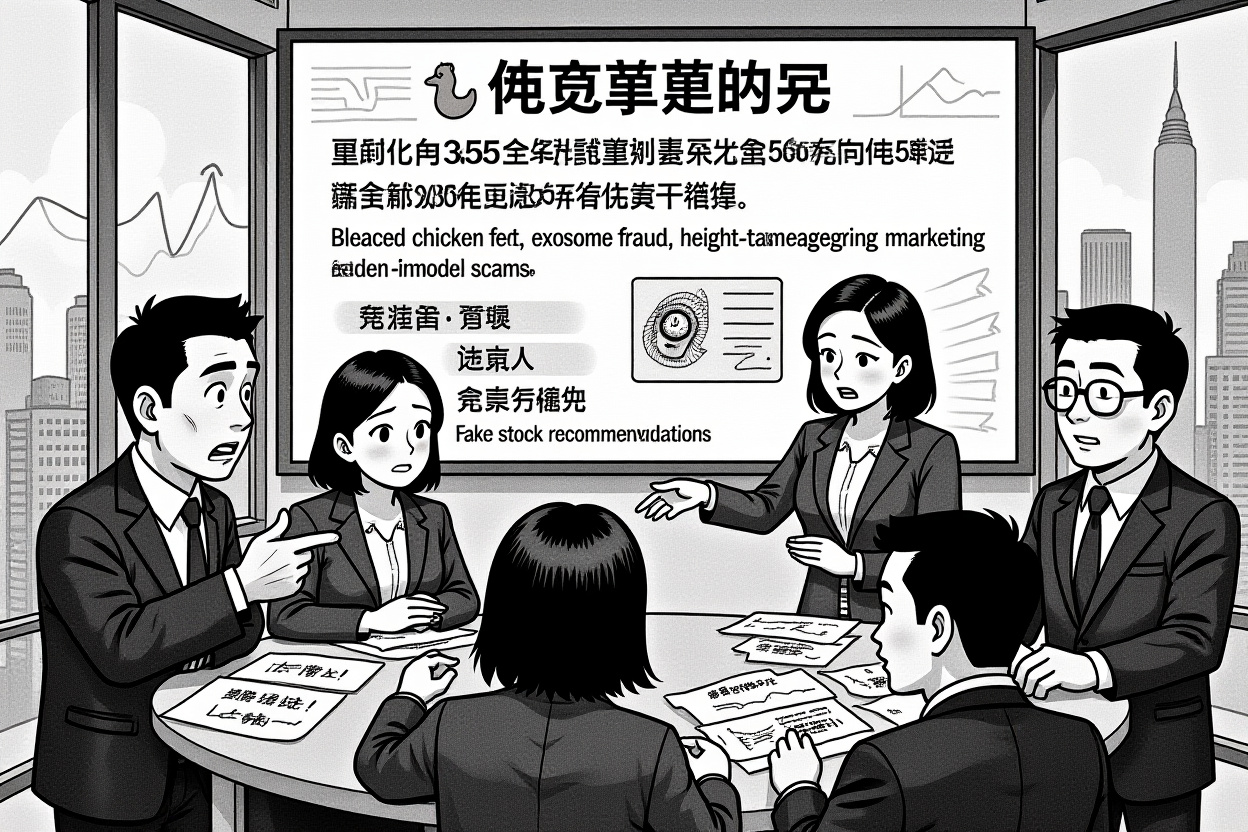
Executive Summary: Key Takeaways from the 315 Exposé
The 2026 315 Consumer Rights Day Gala, themed ‘放心消费 品质生活’ (Assured Consumption, Quality Life), unveiled systemic frauds threatening consumer safety and market integrity in China. Here are the critical insights for professionals and investors:
– Food Safety Crisis: Companies like 四川省蜀福香食品有限责任公司 (Sichuan Shufuxiang Food Co., Ltd.) used industrial-grade hydrogen peroxide to bleach chicken feet, exposing lax enforcement and supply chain risks.
– Healthcare Deceptions: Unapproved ‘exosome’ treatments and height-increase scams prey on consumer hopes, with ‘三无’ (three-noes) products generating high profits despite no clinical backing.
– Digital and Financial Frauds: Elder targeting via private domain marketing, AI model ‘poisoning’, and fake stock recommendations highlight evolving cyber risks and regulatory gaps.
– Transportation Non-Compliance: Brands like 哈啰租电动车 (Haluo Rent Electric Bicycle) and 电驴哥 (Dianlvge) flout national speed limits, endangering public safety and inviting regulatory crackdowns.
– Market Implications: These scandals underscore urgent needs for stronger oversight, corporate accountability, and investor due diligence in Chinese consumer sectors.
The 315 Consumer Rights Exposé: A Wake-Up Call for Global Stakeholders
China’s annual 315 Gala, broadcast by China Central Television (CCTV), serves as a pivotal moment for consumer advocacy, but the 2026 edition revealed frauds so brazen they have sent shockwaves through markets. This 315 consumer rights exposé not only highlights immediate dangers to consumers but also signals deeper systemic issues that could impact investor confidence and regulatory frameworks. From food contamination to financial scams, the seven exposed schemes illustrate how loopholes in enforcement and technological advancements are being exploited. For institutional investors and corporate executives, understanding these risks is crucial for navigating China’s equity markets, where consumer trust directly influences brand valuation and stock performance. The 315 consumer rights exposé thus becomes a critical lens for assessing corporate governance and regulatory resilience in one of the world’s largest economies.
Food Safety Scandals: The Bleached Chicken Feet Crisis
The 315 consumer rights exposé began with a stomach-churning revelation: popular snack items like ‘网红鸡爪’ (internet-famous chicken feet) were being whitened using industrial-grade hydrogen peroxide, a chemical unfit for human consumption. This scandal implicates multiple companies and exposes failures in supply chain monitoring.
Investigation and Regulatory Response
During the 315 Gala, journalists documented how facilities operated by 四川省蜀福香食品有限责任公司 (Sichuan Shufuxiang Food Co., Ltd.) and 重庆市曾巧食品有限公司 (Chongqing Zengqiao Food Co., Ltd.) used over 5,000 barrels of hydrogen peroxide, sourced from 四川金山制药有限公司 (Sichuan Jinshan Pharmaceutical Co., Ltd.), to process chicken feet. Workers lacked health certifications, and production areas were unsanitary. Upon exposure, the 国家市场监督管理总局 (State Administration for Market Regulation, SAMR) swiftly conducted raids, seizing products and initiating cases against the firms. For instance, 232 boxes of mountain pepper chicken feet and 319 boxes of braised chicken feet were confiscated due to positive tests for hydrogen peroxide. This 315 consumer rights exposé action underscores SAMR’s reactive capabilities, but questions remain about proactive inspections. Investors should note that such scandals can lead to stock dips for related companies, as seen in past food safety incidents, and monitor SAMR’s follow-up announcements on its official website for compliance updates.
Corporate Accountability and Public Reaction
The nonchalant response from implicated executives highlighted a culture of impunity. When contacted by media, 曾巧 (Zeng Qiao), a shareholder of 重庆市曾巧食品有限公司 (Chongqing Zengqiao Food Co., Ltd.), was overheard watching the 315 Gala casually before dismissing concerns with a terse ‘谢谢关心’ (Thank you for your concern). Similarly, 四川金山制药有限公司 (Sichuan Jinshan Pharmaceutical Co., Ltd.) employees deflected queries. Public outrage erupted online, with hashtag #315 trending on 微博 (Weibo), reflecting eroding consumer trust. For market participants, this 315 consumer rights exposé signals:
– Due Diligence Necessity: Scrutinize food and beverage companies for supplier audits and safety certifications.
– Regulatory Risks: Increased SAMR scrutiny could raise compliance costs across the sector.
– Brand Impact: Consumer boycotts may affect sales, as seen with past scandals like 2008’s melamine milk crisis.
Healthcare and Wellness Deceptions: From Exosomes to Height Myths
The 315 consumer rights exposé extended into healthcare, where pseudoscience and unverified treatments are marketed as miracles, endangering lives and exploiting vulnerabilities. Two key areas were highlighted: exosome ‘therapies’ and height-increase scams.
The Exosome ‘Miracle Drug’ Fraud
Height Increase Scams Exploiting Parental HopesDigital and Financial Frauds: Targeting Vulnerable DemographicsThe 315 consumer rights exposé shed light on how technology is weaponized for fraud, focusing on elder exploitation via private domain marketing and AI manipulation, alongside traditional investment scams.
Elder Fraud Through Private Domain Marketing
AI Model Poisoning and Data Integrity ThreatsThe 315 consumer rights exposé introduced ‘GEO’ (Generalized Epoch Optimization) techniques, where services like 力擎GEO优化系统 (Liqing GEO Optimization System) ‘投毒’ (poison) AI models by feeding them biased content. For example, a fictional smart bracelet was promoted to top search results in AI chatbots. This manipulation threatens data reliability and consumer trust in AI-driven platforms. The company behind it, 北京力思文化传媒有限公司 (Beijing Lisi Culture Media Co., Ltd.), had only one insured employee in 2025, highlighting the shadowy nature of such operations. For tech investors, this 315 consumer rights exposé raises alarms about:
– AI ethics and model security, as poisoned data can skew market analyses and investment decisions.
– Potential regulatory responses from the 国家互联网信息办公室 (Cyberspace Administration of China) to curb data abuse, impacting AI sector valuations.
Transportation Safety and Regulatory Evasion
Electric Bike Rental Non-ComplianceImplications for Urban Mobility and SafetyThe scandal underscores the tension between innovation and regulation in China’s fast-growing shared economy. As cities promote green transport, lapses in safety could lead to stricter rules, influencing stocks in sectors like logistics and insurance. The 315 consumer rights exposé serves as a reminder for investors to factor in regulatory adherence when evaluating companies in the transportation niche.
Investment Scams: Fake Stock Recommendations
The final segment of this 315 consumer rights exposé delved into financial fraud, where unlicensed entities offer ‘荐股分成’ (stock recommendation with profit sharing), preying on retail investors’ desire for quick gains.
The ‘荐股分成’ Scheme Uncovered
Regulatory Gaps and Investor ProtectionThe 315 consumer rights exposé noted that such schemes often impersonate legitimate firms like 深圳市凯丰投资管理有限公司 (Shenzhen Kaifeng Investment Management Co., Ltd.), eroding trust in the financial system. The CSRC has been bolstering enforcement, but gaps persist. Investors should:
– Advocate for stricter oversight and public education campaigns.
– Use official CSRC channels to report suspicious activities, protecting portfolio integrity.