



Executive Summary
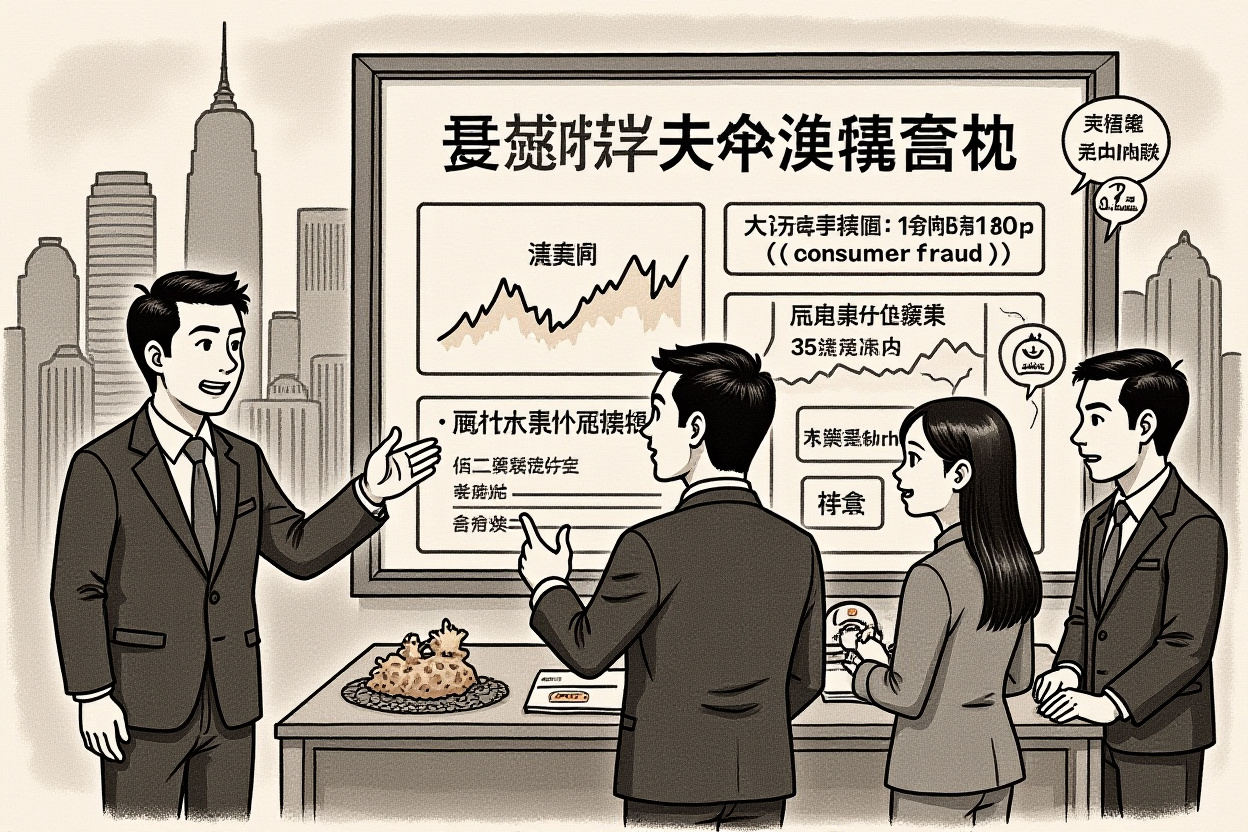
Key takeaways from the 315 consumer rights exposé:
– Food safety crisis involving hydrogen peroxide-bleached chicken feet, exposing lax enforcement and supply chain vulnerabilities.
– Healthcare and beauty frauds, including unapproved exosome “miracle cures” and bogus height-growth services that exploit consumer trust.
– Targeted scams against the elderly via private domain marketing, featuring actor “experts” and inflated drug prices.
– Regulatory violations in e-bike rentals by major brands like Hello and Diange, highlighting safety risks and non-compliance.
– AI model poisoning through GEO optimization services, threatening information integrity and digital market fairness.
– Financial deception via stock recommendation scams using profit-sharing schemes to defraud retail investors.
The Annual 315 Consumer Rights Exposé Uncovers Systemic Vulnerabilities
China’s 315 Gala, the flagship consumer rights exposé broadcast annually on World Consumer Rights Day, has once again delivered a stark revelation of systemic frauds plaguing the market. Under the theme “放心消费 品质生活” (Assured Consumption, Quality Life), the 2026 edition exposed seven egregious scams that not only jeopardize consumer safety but also signal profound regulatory and investment risks in Chinese equities. For institutional investors and corporate executives, these exposures underscore the critical intersection of consumer protection, corporate governance, and market stability. The 315 consumer rights exposé serves as a barometer for regulatory enforcement and ethical business practices, directly impacting sectors from healthcare to technology. As consumer trust erodes, companies implicated face potential litigation, regulatory crackdowns, and reputational damage that can ripple through supply chains and stock valuations. This deep dive analyzes the scams, their market implications, and the urgent calls for reform echoing from this pivotal event.
Food Safety Scandals: The Bleached Chicken Feet Crisis
The 315 consumer rights exposé began with a shocking food safety breach, revealing how popular snack items like chicken feet were being bleached with industrial-grade hydrogen peroxide. This scandal highlights gaps in China’s food regulatory framework and poses direct risks to companies in the consumer staples sector.
Investigation Findings and Regulatory Response
Undercover journalists from the 315 Gala investigated facilities in Sichuan and Chongqing, where companies such as Sichuan Shu Fuxiang Food Co., Ltd. (四川省蜀福香食品有限责任公司) and Chongqing Zengqiao Food Co., Ltd. (重庆市曾巧食品有限公司) were found using hydrogen peroxide, a chemical disinfectant, to whiten chicken feet. Authorities from the State Administration for Market Regulation (国家市场监督管理总局) seized over 5,000 barrels of the chemical and查封 (sealed) contaminated products. During the exposé, shareholders like Zeng Qiao (曾巧) were caught watching the broadcast casually, responding with “谢谢关心” (Thank you for your concern) when confronted, indicating a dismissive attitude toward compliance. This lax oversight extends to suppliers like Sichuan Jinshan Pharmaceutical Co., Ltd. (四川金山制药有限公司), which sold hydrogen peroxide without verifying end-use, complicating supply chain accountability.
Market Impact and Consumer Trust Erosion
For investors, this scandal underscores the vulnerability of China’s fast-moving consumer goods (FMCG) sector to regulatory shocks. Brands like “乖媳妇” (Guai Xifu) may face consumer boycotts and stock downturns, as seen in past food safety incidents. The State Administration for Market Regulation’s swift action, including立案核查 (filing for investigation) against entities like Mingyang Food (明扬食品), signals heightened scrutiny. However, the recurring nature of such frauds—evidenced by similar past exposés—points to systemic enforcement weaknesses. Investors should monitor companies with poor hygiene records or reliance on opaque supply chains, as they are prone to similar disruptions. The 315 consumer rights exposé thus serves as a critical reminder to incorporate ESG (Environmental, Social, and Governance) factors into due diligence, particularly for firms in sensitive industries like food processing.
Healthcare and Beauty Frauds: From Exosomes to Height Growth Scams
The 315 Gala exposed two pervasive healthcare scams: unapproved exosome treatments and fraudulent height-growth services. These deceptions not only harm consumers but also reveal regulatory loopholes in China’s booming health and beauty market, affecting sectors from pharmaceuticals to retail.
The Exosome “Miracle Cure” Scam
Exosomes, extracellular vesicles marketed as anti-aging and disease-curing “wonder drugs,” were revealed to be unapproved “三无” (three-no) products—lacking production licenses, clinical trials, and efficacy data. Companies like Yuancheng Gene Technology Co., Ltd. (源创基因科技有限公司) and Jiebosai’er Biotechnology Co., Ltd. (婕波噻尔生物科技有限公司) fraudulently promoted these for conditions from epilepsy to cancer, with executives like Han Zong (韩总) and Tan Zong (谭总) boasting of profits from illegal sales. For instance, Haolin (Tianjin) Biological Technology Co., Ltd. (灏麟(天津)生物科技有限公司)套证生产 (used borrowed certificates) to produce exosome products like “轻澄” (Qing Cheng), reporting revenues of 1.83 million yuan but losses of 918,800 yuan in 2024. This indicates that such schemes may be driven by desperation in competitive markets, posing risks for investors in biotech startups with unverified claims.
Bogus Height Increase Services Exploiting Parental Anxiety
Height-growth agencies like Anlishen (安立身), Dejirui (德脊瑞), and Yingruike (英瑞可) prey on parental fears, promising “无效全额退款” (full refund if ineffective) while relying on children’s natural growth. Investigations showed that these chains, with over 160 combined stores nationwide, use pseudo-scientific jargon like “量子修复” (quantum repair) and “心理疗愈” (psychological healing) to justify exorbitant fees. Dejirui’s负责人 (responsible person) admitted that adult height increase merely straightens bones, not lengthens them, contradicting marketing claims. For market participants, this scam highlights the risks in China’s education and wellness sectors, where aggressive franchising and lack of standardization can lead to consumer backlash and regulatory penalties. The 315 consumer rights exposé urges investors to scrutinize companies with ambiguous service models or overreliance on emotional marketing.
Elderly Targeting in Private Domains: Fake Medical Experts and Inflated Drug Prices
Private domain marketing, a growing channel in China’s digital economy, was exposed as a hub for defrauding elderly consumers through scripted videos and actor “experts.” This scam reveals vulnerabilities in online content regulation and the pharmaceutical supply chain.
The “Life Code” Video Scam and Its Mechanisms
Companies like Dahong International (大红国际) produced videos like “生命密码” (Life Code), featuring fake experts like Ding Yuqiu (丁玉球) who promoted “活元泰甘露聚糖肽口服溶液” (Huoyuantai Mannatide Oral Solution) as a cure for cataracts and heart disease. In reality, this OTC drug is a普通辅助治疗药品 (ordinary auxiliary treatment medication) with a market price of 68 yuan, sold at 298 yuan—a nearly 5x markup. The scheme involved策划公司 (planning companies) like Shengwei Culture Media Co., Ltd. (盛维文化传媒有限公司), where Zhong Zong (钟总) admitted that “experts” are merely actors reading scripts. Ding Yuqiu, an internal medicine practitioner, falsely claimed membership in the non-existent “中华医师学会” (Chinese Medical Doctor Association) to bolster credibility. For investors, this highlights risks in healthcare marketing and e-commerce, where companies may engage in deceptive practices to drive short-term sales, potentially facing fines from the State Administration for Market Regulation.
Regulatory Gray Zones and Enforcement Challenges
The 315 consumer rights exposé noted that private domain channels operate in “灰色地带” (gray zones), evading strict advertising laws. Firms like Henan Shuaba Culture Communication Co., Ltd. (河南耍吧文化传播有限公司) showed连续多年参保人数为0 (zero insured employees for years), indicating shell companies used for fraud. This complicates regulatory oversight and poses due diligence challenges for investors in digital marketing or pharmaceutical distribution. As China tightens rules on online content, companies reliant on such tactics may see disruptions, affecting sectors from consumer health to media. The exposé calls for enhanced monitoring of affiliate marketing networks and stricter verification of medical claims, which could reshape market dynamics for legitimate players.
Regulatory Violations in E-Bike Rentals: Speed Manipulation and Safety Risks
The 315 Gala targeted electric bicycle rental companies for公然违反国家标准 (openly violating national standards) on speed limits, exposing safety hazards and regulatory non-compliance in China’s urban mobility sector.
Speed Manipulation by Major Brands Like Hello and Diange
Undercover tests revealed that brands like Hello Rent Electric Vehicle (哈啰租电动车) and Diange (电驴哥) offered e-bikes with speeds up to 80 km/h, far exceeding the 25 km/h limit under the “电动自行车安全技术规范” (Electric Bicycle Safety Technical Specification). Hello, operated by Shanghai Junha Network Technology Co., Ltd. (上海钧哈网络科技有限公司), has faced multiple行政处罚 (administrative penalties), including a 2024 fine for producing substandard products. In response to the exposé, Hello客服 (customer service) apologized and claimed整改 (rectification), but past records suggest recurring issues. For investors, this indicates operational risks in the shared mobility space, where cost-cutting and competition may drive non-compliance, leading to liability for accidents and regulatory backlash.
Market Implications and Consumer Safety Concerns
With electric bicycles involved in 10% of urban traffic accidents per公安部道路交通安全研究中心 (Ministry of Public Security Road Traffic Safety Research Center) data, this scandal underscores the public safety stakes. Companies like Tiankong Chuxing (天空出行) also evaded questions on battery standards, hinting at broader industry malpractices. For equity markets, this could spur stricter regulations, increasing operational costs for rental firms and affecting profitability. The 315 consumer rights exposé advises investors to assess compliance track records and safety protocols in transportation-related stocks, as consumer trust and regulatory alignment are critical for sustainable growth in China’s evolving urban infrastructure.
AI Model Poisoning: The GEO Optimization Scandal Threatening Digital Integrity
The 315 consumer rights exposé unveiled a novel threat: GEO (Generation Engine Optimization) services that “投毒” (poison) AI models with biased or false information, compromising digital ecosystems and posing risks for tech investors.
How GEO Services Manipulate AI for Commercial Gain
Service providers like Beijing Lisi Culture Media Co., Ltd. (北京力思文化传媒有限公司), offering “力擎GEO优化系统” (Liqing GEO Optimization System), enable clients to feed promotional content into AI models like large language models (LLMs), ensuring their products rank as “标准答案” (standard answers). CEO Li Qianzhong (李千钟) admitted that spending “几百万” (millions) on GEO can manipulate search results, akin to traditional SEO but with AI vulnerabilities. In tests,虚构产品 (fictional products) like smart bracelets were promoted via auto-generated软文 (soft articles), later cited by AI models. With the company’s参保人数 (insured employees) at just 1 in 2025, this highlights the rise of shell operations exploiting regulatory gaps in China’s AI sector.
Risks to Information Integrity and Market Fairness
For investors, this scandal raises alarms about data quality and AI reliability, critical for sectors reliant on digital marketing and analytics. As China pushes AI governance under frameworks like the “互联网信息服务算法推荐管理规定” (Internet Information Service Algorithm Recommendation Management Provisions), companies engaged in GEO may face crackdowns, affecting tech startups and platforms. The 315 consumer rights exposé emphasizes the need for due diligence on AI ethics and compliance, as poisoned models can distort consumer behavior and erode trust in digital services, ultimately impacting stock performance of tech giants and ad-driven firms.
Financial Fraud: Stock Recommendation Scams and Fake Investment Firms
The final exposé targeted financial deception, where unlicensed entities ran “荐股分成” (stock recommendation profit-sharing) schemes to defraud retail investors, highlighting vulnerabilities in China’s capital markets and regulatory oversight.
Stock Recommendation Profit-Sharing Scams Exposed
Companies like Zunyi Xinbenke Information Consulting Co., Ltd. (遵义市鑫犇科信息咨询有限公司), established just six months prior, posed as investment advisors, promising “盈利五五分成” (50-50 profit splits) on stock picks. Investigations revealed that their “机构调研票” (institutionally researched stocks) were arbitrarily chosen by老板 (boss) Lin Haiqi (林海埼), with客服 (customer service) like Lai Zong (来总) admitting to abandoning clients when losses occurred. The firm招聘 (recruited) sales staff with月薪 (monthly salaries) up to 15,000 yuan, using scripted calls to lure investors. This scam often impersonates legitimate firms like Shenzhen Kaifeng Investment Management Co., Ltd. (深圳市凯丰投资管理有限公司), damaging their reputations and confusing market participants.
Investor Implications and Regulatory Gaps
For sophisticated investors, this underscores the prevalence of financial fraud in China’s retail investment landscape, where lax licensing allows scams to thrive. The China Securities Regulatory Commission (中国证券监督管理委员会) may intensify crackdowns, but the rapid proliferation of such schemes—aided by online platforms—poses ongoing risks. The 315 consumer rights exposé advises institutional players to monitor client education initiatives and regulatory updates, as consumer protection failures can lead to market volatility and eroded confidence in financial services. Enhancing due diligence on affiliate marketers and fintech partnerships is crucial to mitigate exposure.
Synthesizing the 315 Exposé: Key Takeaways for Market Participants
The 315 consumer rights exposé has laid bare seven critical frauds, each with ramifications for Chinese equities and global investors. From food safety to AI integrity, these scams reveal systemic weaknesses in enforcement, corporate governance, and consumer awareness. For fund managers and executives, the lessons are clear: regulatory risks are escalating, with the State Administration for Market Regulation and other bodies likely to ramp up inspections and penalties. Companies implicated may face stock downgrades, legal liabilities, and consumer boycotts, affecting sectors from consumer discretionary to healthcare. Moreover, the exposé highlights the growing importance of ESG metrics, as ethical lapses can swiftly translate into financial losses.
Forward-looking market guidance suggests that investors should prioritize firms with transparent supply chains, robust compliance frameworks, and proactive consumer engagement. Monitoring regulatory announcements post-315, such as potential amendments to the “消费者权益保护法” (Consumer Rights Protection Law), can offer early signals of market shifts. Additionally, diversifying away from sectors prone to fraud, like unregulated health products or fringe tech services, may mitigate risk. Ultimately, this 315 consumer rights exposé serves as a call to action: advocate for stronger enforcement, support ethical businesses, and integrate consumer protection into investment strategies to navigate China’s dynamic market landscape with resilience and insight.