



Summary:
– The 2026 F1 Chinese Grand Prix in Shanghai is projected to attract 230,000 spectators, generating substantial direct and indirect economic impacts, reinforcing its role as a catalyst for urban economic growth.
– Shanghai leverages F1 to advance its automotive industry cluster in Jiading District, enhancing global competitiveness in manufacturing and new energy vehicle innovation.
– Cities like Guangzhou, Wuhan, and Chengdu are investing in international-grade circuits, signaling a burgeoning market for racing economies and potential for a second Chinese F1 host.
– F1’s regulatory shift towards hybrid technology aligns with Shanghai’s green mobility goals, creating synergies for technological development and investment opportunities.
– Investors should monitor event-driven consumption trends and automotive sector stocks linked to F1 developments for strategic portfolio positioning.
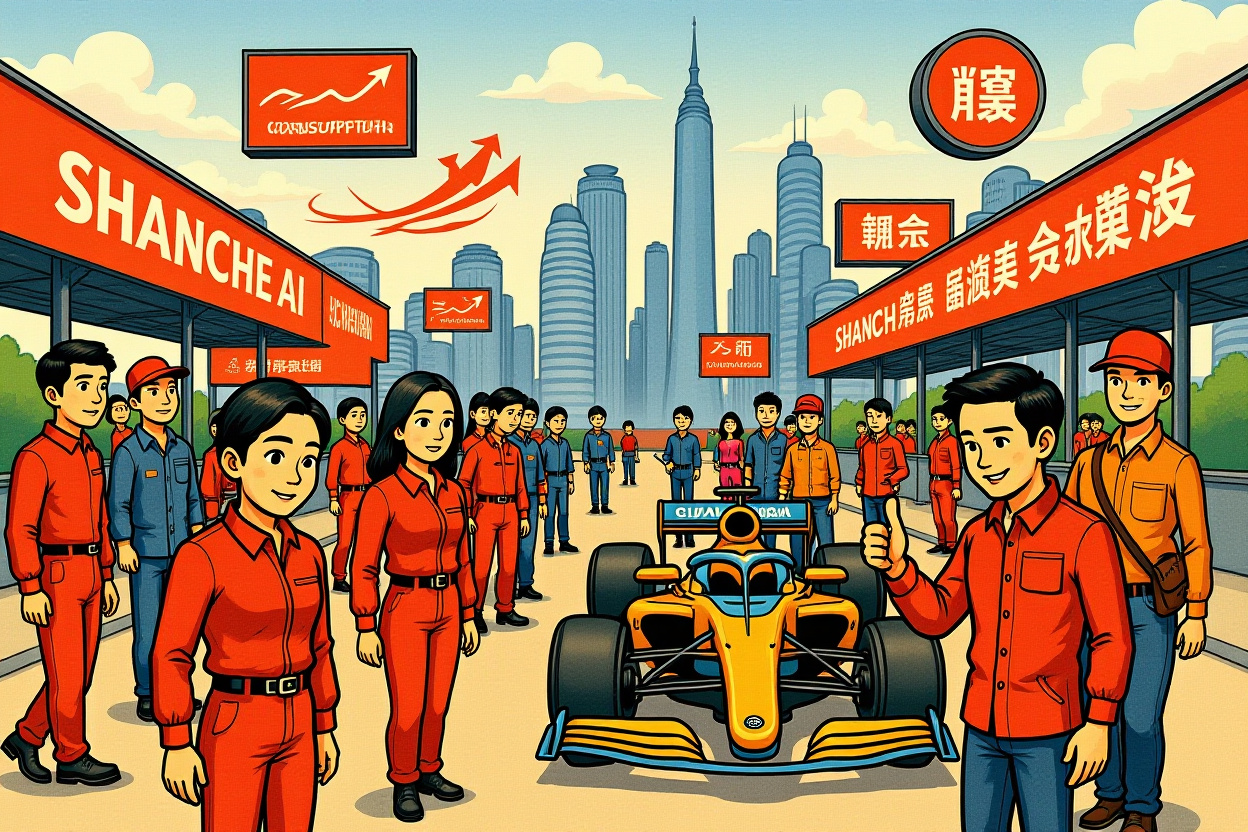
The roar of Formula 1 engines once again echoes through Shanghai, marking the city’s entry into the 2026 ‘F1 time.’ As one of the most commercialized sports IPs globally, F1’s two-decade partnership with Shanghai has transformed from a perceived ‘money-burning’ spectacle into a powerful engine for economic growth. With a new five-year cooperation period underway, the F1 Chinese Grand Prix is set to break attendance records, drawing an estimated 230,000 spectators over three days. This event exemplifies how top-tier commercial events can serve as a catalyst for urban economic growth, stimulating consumption, advancing industrial capabilities, and positioning cities on the global stage. In the context of China’s push to revitalize consumption and bolster high-end manufacturing, Shanghai’s F1 story offers critical insights for investors and policymakers alike, highlighting the transformative power of major赛事 (events) in shaping urban futures.
The Economic Ledger of F1 in Shanghai: Measuring Impact and Innovation
Since its inception in 2004, the F1 Chinese Grand Prix has continually expanded Shanghai’s event economy, creating new avenues for growth and solidifying its status as a premier global destination. The race’s ability to attract international and domestic visitors has made it a cornerstone of Shanghai’s strategy to boost consumption and enhance its urban profile.
Direct and Indirect Economic Impacts: A Data-Driven Analysis
The 2025 F1 Chinese Grand Prix generated approximately 2.47 billion yuan in direct economic impact, encompassing ticket sales, accommodation, dining, tourism, transportation, and entertainment. Indirect economic impact reached around 6.91 billion yuan, both figures showing a significant increase from 2024 levels of 1.406 billion yuan and 3.928 billion yuan, respectively. This surge contributed to Shanghai’s社会消费品零售总额 (total retail sales of consumer goods) growth of 4.6% in 2025, outperforming the national average of 3.7% and reversing a 3.1% decline from the previous year. The event’s ability to attract境外观众 (international spectators) and外省市观众 (domestic tourists from other provinces) underscores its broad appeal, with 14% of attendees from overseas and 74% from outside Shanghai in 2026. F1 acts as a catalyst for urban economic growth by injecting vitality into multiple sectors, aligning with Shanghai’s goal to become an ‘入境消费第一城 (top city for inbound consumption),’ as outlined in the municipal government work report. The预计 (projected) 23万 (230,000) spectators for the 2026 event, with tickets sold out months in advance ranging from 330 yuan grass seats to 42,800 yuan paddock passes, demonstrate sustained demand and pricing power.
International Benchmarks and Local Innovations: Learning from Global Peers
Comparing Shanghai to other F1 host cities reveals opportunities for enhancement and innovation. For instance, the 2025 F1 Singapore Grand Prix attracted over 300,000 spectators and boosted direct economic收益 (revenue) by more than 1 billion Singapore dollars. Singapore’s success is partly attributed to its ‘Grand Prix Season Singapore (GPSS),’ a 10-day festival that extends the event’s impact citywide through themed parties, concerts, and retail promotions. Inspired by this, Shanghai has launched its own ‘赛车月 (Racing Month),’ initially a month-long and now a 54-day extravaganza featuring赛事直播 (live broadcasts), karting experiences, family activities, and thematic exhibitions. Professor Li Yan (李燕) from Shanghai University’s体育学院 (Sports College) advocates for transforming the F1 Chinese Grand Prix into a ‘城市嘉年华 (city carnival),’ amplifying its economic ripple effects. This strategic extension demonstrates how F1 can serve as a sustained catalyst for urban economic growth beyond the race weekend, fostering year-round engagement and消费 (consumption). Local reports indicate that the 2025 Racing Month generated周边效应 (peripheral effects) exceeding previous editions, showcasing the potential for scalable event economies.
Beyond the Track: F1 as a Catalyst for Automotive Industry Advancement
F1’s presence in Shanghai provides a global window into China’s automotive sector, fostering industrial advancement and innovation that resonates across equity markets. The synergy between high-performance racing and mainstream manufacturing underscores Shanghai’s ambitions to lead in automotive technology and production.
Jiading District: From Race Track to Automotive Hub Evolution
The construction of the Shanghai International Circuit in Jiading in 2002 was a strategic move to integrate with the global automotive industry, coinciding with the development of the Shanghai International Automobile City. Yang Yibin (杨亦斌), Chairman of Shanghai Jiushi Sports Industry Development (Group) Co., Ltd., notes that F1 events attract automotive executives and experts to Jiading for high-level forums, while the circuit serves as a testing ground for local manufacturers during off-seasons. This synergy has propelled Jiading’s automotive industry, with industrial output from auto整车及零部件 (vehicles and parts) enterprises rising from 55.12 billion yuan in 2004 to 309.54 billion yuan in 2025, accounting for 65% of the district’s total industrial output. F1 acts as a catalyst for urban economic growth by embedding high-end manufacturing standards and fostering cluster development, making Jiading a focal point for investment in automotive供应链 (supply chains) and R&D facilities. The district’s evolution mirrors broader trends in Chinese manufacturing升级 (upgrading), where事件驱动 (event-driven) initiatives spur long-term industrial gains.
Shanghai’s Global Automotive Ambitions and Competitive Positioning
Shanghai has emerged as a pivotal player in the global automotive landscape, leveraging F1 to enhance its international profile. According to Gasgoo’s global automotive industry big data, Shanghai’s top three整车厂 (automobile plants) – including Tesla’s Shanghai Gigafactory, SAIC Volkswagen, and SAIC General Motors – have a combined planned capacity exceeding 2.4 million vehicles by 2026, with Tesla’s facility being its largest worldwide. In 2024, Shanghai Port handled 3.63 million vehicles, ranking first globally, with exports constituting 75% of the total, highlighting the city’s role as an export hub for国产汽车 (domestic automobiles). Automotive analyst Zhang Xiang (张翔), Director of the World Digital Automotive International Cooperation Research Center, emphasizes that F1, as a pinnacle of高端制造业 (high-end manufacturing), tests a city’s industrial prowess and openness. However, he points out that Shanghai must enhance per-vehicle产值和利润 (output value and profit) to rival automotive hubs like Detroit or Wolfsburg, focusing on value-added segments. The shift towards新能源汽车 (new energy vehicles) in Shanghai’s ‘十五五规划 (15th Five-Year Plan)’ and F1’s 2026 rule changes, which double hybrid system contribution to 50%, create alignment for technological advancement. F1 serves as a catalyst for urban economic growth by driving innovation in smart and green mobility solutions, potentially boosting related equities in the电动化 (electrification) and智能化 (smart technology) sectors.
The Race for a Second Chinese F1 City: Market Expansion and Investment Implications
With Shanghai’s success, other Chinese cities are eager to replicate the F1 model, signaling a broader expansion of赛车经济 (racing economy) that could reshape regional development and investment landscapes. This competition reflects growing confidence in China’s consumer market and infrastructure capabilities.
Contender Cities: Infrastructure Investments and Strategic Aspirations
Guangzhou has proposed building an F1 Guangzhou International Circuit with a 200-billion-yuan investment, aiming to become China’s second F1 host and leveraging its status as a southern economic powerhouse. Wuhan, since 2019, has planned an F1-standard track to cultivate a ‘赛车之城 (racing city),’ partnering with铭泰集团 (Mingtai Group) for event operations to host competitions like the China Drift Championship. Chengdu’s天府国际赛道 (Tianfu International Circuit), certified as a Grade 2 track by the国际汽联 (Fédération Internationale de l’Automobile, FIA), is designed with expansion potential for higher-grade events, positioning it as a hub for southwestern China. These initiatives reflect growing confidence in the market, as echoed by Mercedes team officials who suggested China could support a second F1 round due to its economic scale. The development of such infrastructure positions these cities to leverage F1 as a catalyst for urban economic growth, attracting tourism and investment, with potential spillovers into real estate and hospitality stocks.
Market Readiness and Economic Viability: Assessing the Landscape
F1 CEO Stefano Domenicali (多梅尼卡利) has expressed ambitions to make the Shanghai race the largest F1分站 (round), targeting 1 million spectators, highlighting the perceived potential in China’s观赛市场 (spectator market). Compared to Shanghai’s early days, contender cities now operate in a more favorable environment with greater economic scale and governmental support, as seen in national policies promoting消费提振 (consumption revitalization). Chen Jie (陈杰), Vice President of Mingtai Group, notes that 2026 is a ‘验证之年 (verification year)’ for Wuhan’s track, aiming for FIA Grade 2 certification to host international events. This competitive landscape indicates that F1’s role as a catalyst for urban economic growth could extend beyond Shanghai, creating new investment opportunities in regional development and related industries. Investors should monitor进展 (progress) in circuit approvals and event licensing, as these can signal upcoming catalysts for local economies and associated publicly traded companies.
Strategic Implications for Investors and Policymakers in Chinese Markets
The interplay between F1, urban economics, and the automotive sector offers actionable insights for stakeholders in Chinese equity markets, from portfolio allocation to policy formulation. Understanding these dynamics is crucial for capitalizing on emerging trends.
Investment Opportunities in Event Economy and Automotive Equities
The sustained growth of F1-related经济活动 (economic activities) presents opportunities in hospitality, retail, and entertainment sectors, with listed companies involved in event management, such as those under上海久事体育 (Shanghai Jiushi Sports), potentially benefiting from revenue streams. Automotive firms based in host cities, including SAIC Motor and NEV manufacturers like NIO or BYD, may see valuation boosts from enhanced global exposure and technological synergies. Additionally, the emphasis on hybrid and electric technologies in F1 aligns with trends in新能源汽车 (NEV) stocks, making companies in battery production and smart driving systems attractive for ESG-focused portfolios. Investors should monitor announcements regarding new circuits or event expansions, as these can signal regional economic catalysts that drive stock performance in the consumer discretionary and industrial sectors.
Policy Support and Regulatory Framework: Enabling Growth
China’s government has prioritized消费提振 (consumption revitalization) and制造业升级 (manufacturing upgrading), as outlined in the 2026政府工作报告 (Government Work Report), which calls for deep implementation of actions to stimulate消费内生动力 (endogenous consumption动力). Policies facilitating入境旅游 (inbound tourism),离境退税 (tax refunds for departures), and跨境支付便利化 (cross-border payment facilitation) enhance the appeal of events like F1, supporting Shanghai’s inbound consumption goals. For policymakers, fostering赛车产业 (racing industries) requires strategic investments in infrastructure and international collaborations, ensuring that F1 serves as a catalyst for sustainable urban economic growth rather than a short-term spectacle. Regulatory approvals from bodies like the国家体育总局 (General Administration of Sport of China) and local governments will be key to unlocking new host cities, impacting related infrastructure bonds and municipal investment vehicles.
Shanghai’s F1 Grand Prix exemplifies how顶级赛事 (top-tier events) can drive multifaceted economic benefits, from boosting local consumption to advancing industrial capabilities. As a catalyst for urban economic growth, F1 has solidified Shanghai’s status as a global automotive hub while inspiring other Chinese cities to join the race, creating a dynamic landscape for investors. The convergence of event economies, automotive innovation, and policy support underscores the potential for sustained growth in related market segments. Moving forward, stakeholders should closely跟踪 (track) developments in host city expansions, regulatory shifts, and technological advancements, positioning portfolios to capitalize on the accelerating momentum in China’s event and automotive sectors. The starting lights are green—now is the time to engage with these trends through diligent research and strategic investment in the equities and bonds tied to this transformative growth narrative.