



Executive Summary: Key Market Takeaways
– The sudden escalation of Middle East tensions has led to widespread flight cancellations in Dubai, severely impacting Chinese tourists and highlighting vulnerabilities in international air travel logistics.
– Ticket prices for routes from Dubai to China have skyrocketed, with economy seats selling out and premium fares reaching up to 54,000 yuan, indicating acute supply-demand imbalances.
– Official data shows 200 weekly flight frequencies between mainland China and the UAE, underscoring the scale of disruption to a critical aviation corridor for business and leisure travel.
– Experts warn that prolonged airspace closures could affect airline revenues and stock performance, particularly for carriers like Air China and China Southern heavily reliant on Middle East routes.
– Investors should monitor geopolitical developments and airline capacity adjustments, as recovery timelines may influence sector valuations and risk assessments in Chinese equity markets.
The Stranding Crisis: Personal Accounts from Dubai
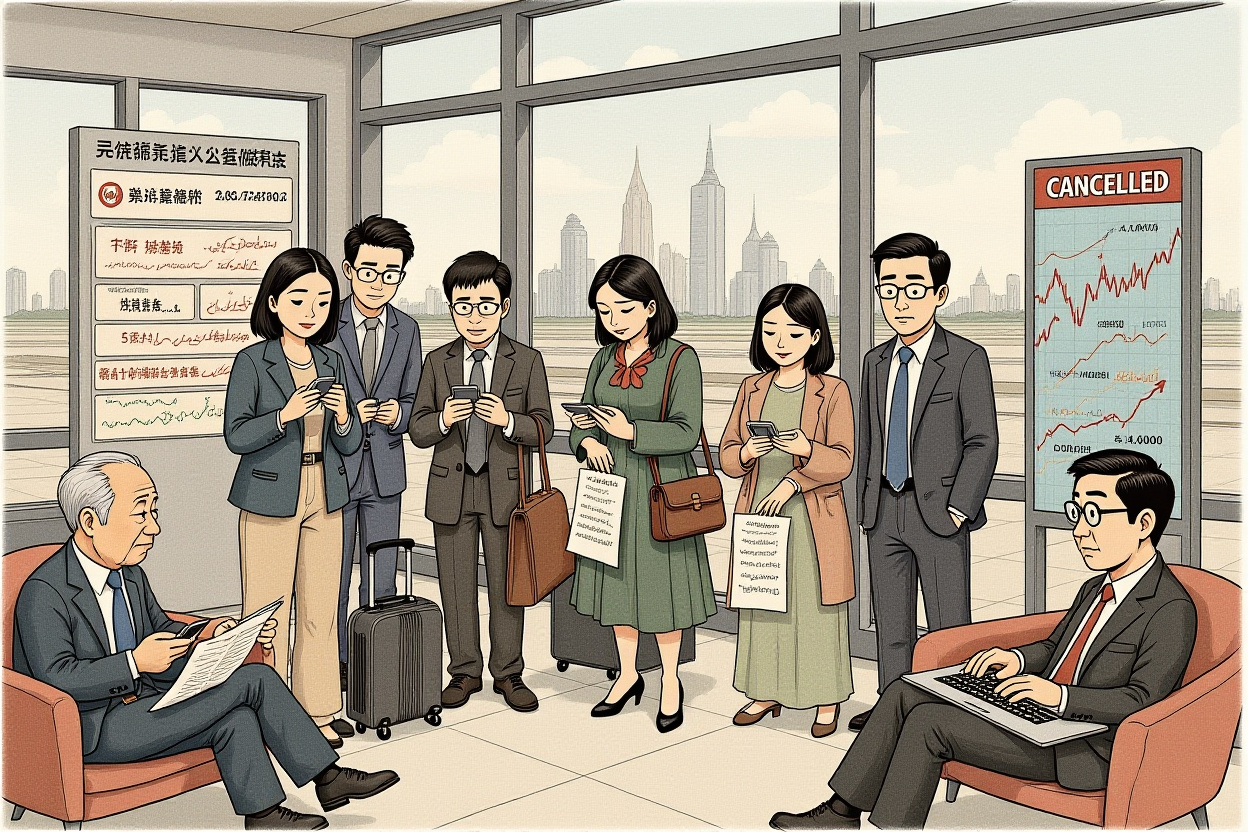
In late February 2025, what began as a routine trip to Dubai for Chinese tourist Liu Yi (刘怡) quickly descended into a nightmare of uncertainty and fear. Just one day after her arrival, explosions echoed across the city, forcing her to shelter in a hotel parking garage for hours. This personal ordeal mirrors the broader chaos that has engulfed the region, stranding hundreds of Chinese citizens and triggering a scramble for safe passage home. The flight cancellations in Dubai have not only disrupted travel plans but also exposed the fragility of global aviation networks in conflict zones, with direct implications for Chinese outbound tourism and related economic activities.
Liu Yi’s experience is stark: over six days, she attempted to book flights over a dozen times, facing seven consecutive cancellations before resorting to a 54,000 yuan first-class ticket—a desperate move reflecting the severity of the situation. Similarly, another traveler, Zhao Zhi (赵志), described a scene of pandemonium at Dubai International Airport, where passengers endured repeated evacuations due to air raid alerts, only to have flights canceled upon reboarding. These stories underscore the human cost of geopolitical instability, which often translates into financial volatility for sectors tied to mobility and consumer spending.
Scale of Disruption: Data and Anecdotes
– According to March 2025 data from China’s Ministry of Commerce, there are 200 weekly往返班次 (round-trip flights) between mainland China (excluding Hong Kong, Macao, and Taiwan) and the United Arab Emirates, serving 13 Chinese cities with direct connections.
– Social media platforms have seen a surge in posts from stranded tourists sharing alternative routes, such as “Dubai—Oman—Dhaka—Kunming—Shanghai” or “Dubai—Ho Chi Minh City—Guangzhou,” highlighting the creative yet costly workarounds necessitated by the flight cancellations in Dubai.
– A tour group of 32 elderly travelers from Ningbo was among those affected, with their initially booked 5,000-yuan Emirates Airlines flight from Dubai to Hangzhou canceled, forcing last-minute arrangements for a Beijing-bound alternative at higher costs.
Market Turmoil: Flight Operations and Pricing Chaos
The aviation market between China and the UAE has been thrown into disarray, with flight cancellations in Dubai creating a ripple effect across ticket pricing and airline operations. Data from online travel platforms like Ctrip (携程) reveals that economy-class seats on direct flights from Dubai to Chinese cities were nearly sold out by early March, while premium cabin fares soared to unprecedented levels. For instance, on March 6, a Dubai-to-Haikou flight was listed at over 15,000 yuan for economy, and Dubai-to-Beijing routes saw business and first-class tickets approaching 50,000 yuan. In contrast, flights from China to Dubai remained relatively affordable, below 3,000 yuan, illustrating the asymmetric impact of the crisis.
This pricing volatility signals deeper market inefficiencies. As a global aviation hub, Dubai International Airport handled 92.3 million passengers in 2024, ranking second worldwide and first for international traffic, according to industry analyst Lin Zhijie (林智杰). The flight cancellations in Dubai thus disrupt not only point-to-point travel but also critical中转枢纽 (transit hub) functions for routes between Asia, Europe, and Africa. For Chinese airlines, which operate significant portions of these flights, the operational halts could lead to revenue losses and increased costs, potentially affecting stock performance in the short term. Investors tracking companies like Air China (中国国际航空公司) or China Eastern Airlines (中国东方航空公司) should note the exposure to Middle East routes and the broader implications for international travel demand.
Financial Data and Airline Responses
– Emirates Airlines (阿联酋航空), Dubai’s flagship carrier, issued a公告 (announcement) limiting its schedule from March 5-7 due to airspace closures, prioritizing earlier bookings and warning passengers not to approach airports without confirmation—a move that echoes across the industry.
– The Civil Aviation Administration of China (中国民用航空局) has been closely monitoring the situation, with flights gradually resuming; for example, on March 4, the first return flight from Dubai landed in Guangzhou, and on March 5, Air China’s flight CA789 safely arrived in Riyadh, Saudi Arabia.
– Experts like Guo Jia (郭佳), a professor at Guangwai Nanguo Business School, explain that airspace closures are sovereign decisions, and民用航空器 (civil aircraft) risk being targeted if they fly without permission, underscoring the legal and safety dimensions driving the flight cancellations in Dubai.
Geopolitical Tensions: The Root Cause of Aviation Disruption
The core driver of the flight chaos is the escalating Middle East conflict, which has led multiple countries, including those with U.S. military bases, to close their airspaces, effectively trapping Dubai in a “包围圈” (encirclement). Professor Guo Jia (郭佳) likens this to drawing a circle that封锁 (blocks) all exit routes, making it impossible for flights to绕过去 (detour) safely. This geopolitical backdrop has turned Dubai, a neutral but centrally located hub, into a flashpoint for aviation risks, with direct consequences for Chinese tourism and business travel. The flight cancellations in Dubai are thus not merely logistical failures but symptoms of broader regional instability that can sway investor sentiment in travel and hospitality stocks.
On March 7, reports from央视新闻 (CCTV News) indicated interceptive actions over Dubai International Airport, with explosions prompting evacuations—a reminder that safety concerns persist. For financial professionals, this highlights the need to factor in geopolitical risk assessments when evaluating companies in the aviation and tourism sectors. The flight cancellations in Dubai serve as a case study in how sudden conflicts can paralyze critical infrastructure, leading to operational halts and financial losses. As Lin Zhijie (林智杰) notes, recovery depends on空域的安全 (airspace safety) and airport保障能力 (operational capacity), which may take time to restore even after ceasefires are declared.
Expert Insights on Recovery Timelines
– Lin Zhijie (林智杰) suggests that if tensions stabilize within a week or two,航班恢复 (flight recovery) could be swift, as航权时刻 (slot rights) and logistical frameworks remain intact, but prolonged closures might require重新调配 (reallocation) of aircraft and crews.
– Guo Jia (郭佳) points to possible “撤侨窗口期” (evacuation windows) facilitated by diplomatic negotiations, allowing limited航班运行 (flight operations) under安全承诺 (safety guarantees), though these are often temporary and non-public.
– Industry analysts caution that airlines face challenges in重新制订航班时刻表 (rescheduling flights) and obtaining安全飞行许可 (safe flight approvals), meaning that the flight cancellations in Dubai could have lingering effects on network planning and profitability.
Financial Implications for Chinese Aviation and Tourism Sectors
The disruption caused by flight cancellations in Dubai has immediate and long-term financial repercussions for Chinese companies. In the short term, airlines may experience revenue dips from canceled services and increased costs from rerouting or compensating passengers. For instance, carriers like China Southern Airlines (中国南方航空公司) and Spring Airlines (春秋航空), which operate routes to the UAE, could see quarterly earnings impacts, potentially affecting their stock prices on the Shanghai or Shenzhen exchanges. Additionally, tourism agencies and online travel platforms like Ctrip (携程) may face refund pressures and reduced booking volumes, influencing sector performance in Chinese equity markets.
Longer-term, the episode underscores the vulnerability of the travel industry to geopolitical shocks. Chinese outbound tourism, which saw迪拜旅客总数 (total Dubai visitors) reach 18.72 million in 2024, is a significant economic driver, contributing to airline revenues, hotel bookings, and retail spending. The flight cancellations in Dubai could dampen consumer confidence in international travel, leading to subdued demand and slower recovery for related stocks. Investors should consider diversifying portfolios or hedging against such risks, especially in sectors with high exposure to volatile regions. Data from the中国人民银行 (People’s Bank of China) and National Bureau of Statistics (国家统计局) on travel spending trends may provide further clues for market adjustments.
Sector Performance and Investor Guidance
– Monitor airline stocks for volatility: Companies like Air China (中国国际航空公司) and Hainan Airlines (海南航空) have significant Middle East operations; their Q1 2025 financial reports may reflect the impact of the flight cancellations in Dubai.
– Assess tourism ETFs and funds: Investment vehicles focusing on Chinese travel and leisure sectors could see downturns if consumer sentiment wanes; look for recovery signals in booking data from platforms like Fliggy (飞猪) or Meituan (美团).
– Consider geopolitical risk premiums: When evaluating aviation bonds or equity offerings, factor in potential disruptions from conflicts, as seen with the flight cancellations in Dubai, which may affect credit ratings and yield curves.
Navigating the Crisis: Recovery Paths and Risk Management
As the situation evolves, stakeholders from travelers to investors must adapt to the new normal. For airlines, the priority is restoring operations safely, which involves coordinating with authorities like the International Air Transport Association (IATA) and local governments to reopen airspaces. The gradual resumption of flights, such as the six赴华航班 (China-bound flights) from Dubai on March 7 to cities like Beijing, Shanghai, and Guangzhou, offers hope, but experts warn that full normalization could take weeks. The flight cancellations in Dubai highlight the importance of robust contingency planning, including diversified route networks and dynamic pricing strategies to mitigate revenue losses.
For financial professionals, this crisis presents both risks and opportunities. By analyzing real-time data on flight frequencies and ticket prices, investors can gauge market sentiment and identify undervalued assets in the aviation sector. Additionally, considering alternative investments in domestic tourism or logistics companies less exposed to international conflicts might provide a hedge. The flight cancellations in Dubai serve as a reminder that global events can have localized financial impacts, requiring agile decision-making. As Zhao Zhi (赵志) demonstrated with his script-based ticket抢购 (grab), innovation and persistence are key in turbulent times—lessons that apply equally to portfolio management.
Actionable Steps for Stakeholders
– Travelers: Book flexible tickets and monitor official advisories from the中国驻迪拜总领事馆 (Chinese Consulate General in Dubai) for updates on flight cancellations in Dubai and evacuation options.
– Airlines: Implement dynamic capacity management and enhance communication with passengers to build trust and reduce operational chaos during disruptions.
– Investors: Use tools like Bloomberg or Reuters to track airline stock performance and geopolitical news, setting alerts for developments related to the Middle East that could trigger further flight cancellations in Dubai.
Synthesis and Forward-Looking Market Guidance
The ordeal of stranded Chinese tourists in Dubai, culminating in exorbitant ticket purchases and repeated flight cancellations, reveals a complex interplay of geopolitics, market dynamics, and financial risk. The flight cancellations in Dubai have not only caused personal hardship but also exposed vulnerabilities in the Chinese aviation and tourism sectors, with potential ripple effects on equity markets. Key takeaways include the need for enhanced risk assessment in travel-related investments, the importance of diplomatic efforts in ensuring airspace safety, and the value of data-driven insights for navigating uncertainties.
Looking ahead, market participants should stay informed through reliable sources like the Civil Aviation Administration of China (中国民用航空局) and industry reports. Consider adjusting investment strategies to account for geopolitical volatility, perhaps by favoring companies with strong domestic footprints or diversified international exposures. The flight cancellations in Dubai may be a temporary disruption, but they underscore lasting lessons about resilience and adaptability in global finance. For sophisticated investors and corporate executives, this episode is a call to action: prioritize thorough due diligence, foster cross-sector collaboration, and remain vigilant to emerging risks that could shape the future of Chinese equity markets.