



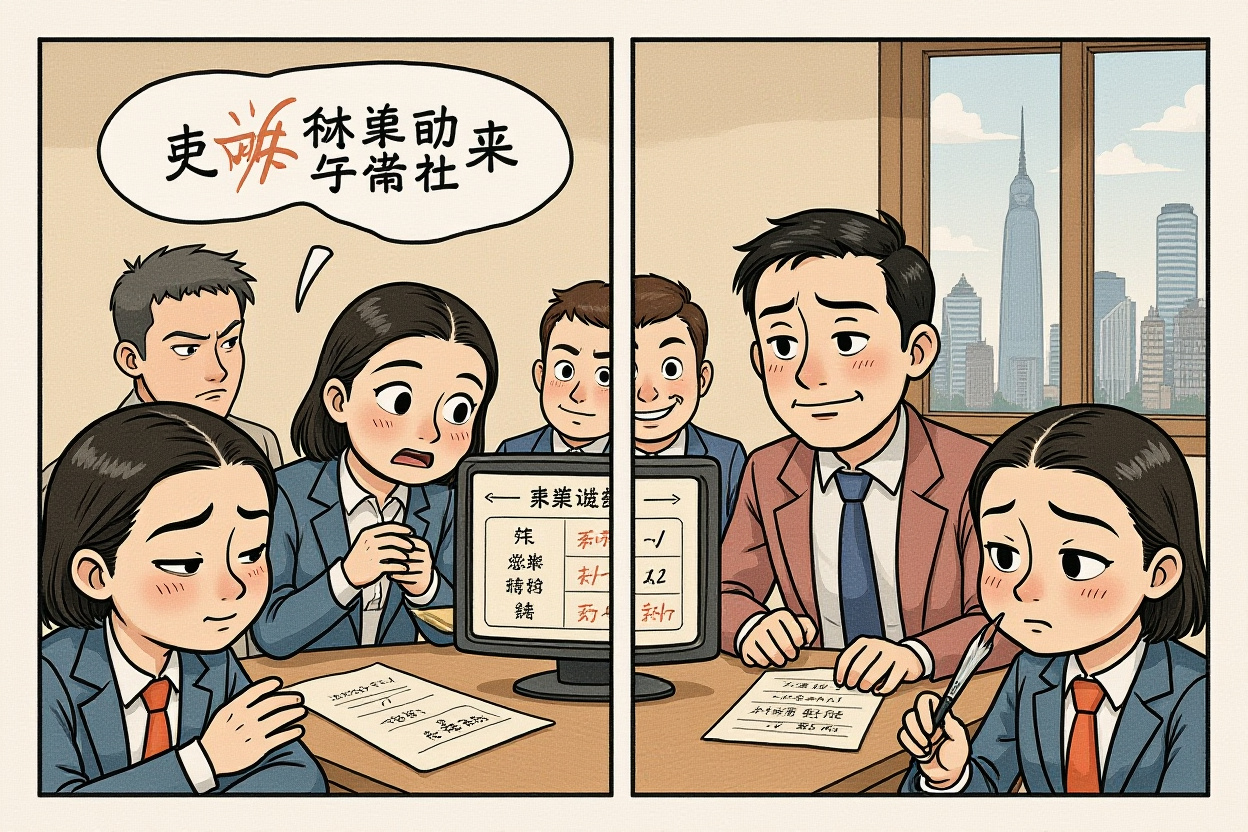
The Dawn of AI Writers: Efficiency Meets Artistic Void
Social media platforms are abuzz with posts promising fortunes through AI-generated fiction, boasting titles like ’28-Year-Old AI Writer: How to Earn Over 10,000 Monthly’ and ‘Craft a Million-Word Novel in Under a Day with AI.’ These viral claims, with thousands of saves and likes, hint at a seismic shift in the web novel industry. However, beneath the surface lies a pressing question: can AI truly replicate the depth of human creativity, or does it merely churn out soulless text? This article delves into the rise of AI writing in Chinese web novels, examining its impact on authors, platforms, and the very essence of storytelling. The focus phrase ‘AI writing lacks human touch’ underscores a central tension between technological prowess and artistic integrity, shaping investments and content strategies in this rapidly evolving market.
The Proliferation of AI-Generated Web Novels
The web novel landscape is witnessing an unprecedented influx of AI-assisted content, driven by generative AI models that promise efficiency but often sacrifice quality. As platforms grapple with this deluge, understanding the mechanics and market dynamics is crucial for stakeholders.
Efficiency Unmatched: AI’s Industrial-Scale Output
Traditional web novel authors, like Mao Zhihui (毛志慧), Vice Chairman of the Jiangxi Online Writers Association, have honed their craft over years, with daily outputs reaching 8,000 to 10,000 words through grueling hours. Yet, AI tools can generate tens of thousands of words in minutes, a capability described by Mao Zhihui (毛志慧) as ‘industrial production.’ This efficiency stems from advances in large language models, which analyze vast datasets to predict and assemble text. For instance, entrepreneur Tang Aiping (唐爱平) developed the ‘Tangku’ platform, claiming it can produce a 5-million-word novel in 48 hours based on minimal user input. However, this speed comes at a cost: the resulting content often lacks coherence in long-form narratives, with AI struggling to maintain logical consistency beyond 200,000 words. Key implications include:
– Increased competition: AI enables novice writers to flood platforms with content, squeezing out human authors who cannot match the volume.
– Quality degradation: Bulk-generated texts tend to be repetitive and formulaic, failing to engage readers seeking immersive stories.
– Market saturation: Platforms like Tomato Novel (番茄小说) reported a surge in ‘debut works,’ with daily submissions jumping from hundreds to over 5,000 in a month, overwhelming curation systems.
Market Impact: The Flood of Low-Quality ‘Water Content’
The rise of AI writing has led to a proliferation of what industry insiders term ‘water content’—low-quality, homogeneous stories designed to game platform algorithms for quick profits. Qiao Huan (乔欢), an editor at a traditional web novel platform, notes that AI-polished submissions now comprise 20-30% of weekly inbound manuscripts, ranging from short stories to lengthy serials. This trend forces platforms to implement stricter controls; for example, Tomato Novel (番茄小说) recently penalized 855 accounts for abusing AI to mass-produce unreadable works. The economic incentive is clear: AI reduces production costs to near zero, allowing creators to monetize through ad-revenue sharing models. However, this commodification risks devaluing the web novel ecosystem, as readers grow weary of predictable plots and robotic prose. The focus phrase ‘AI writing lacks human touch’ is evident here, as these texts often miss the emotional nuances that define compelling literature.
Platform Responses: Detection, Regulation, and Ethical Dilemmas
As AI-generated content spreads, web novel platforms are adopting multifaceted strategies to balance innovation with quality assurance. Their policies reflect broader debates on intellectual property and artistic standards in the digital age.
Strict Regulations: From Tomato Novel to Jinjiang’s Conservative Stance
Leading platforms have taken divergent approaches to AI integration. Tomato Novel (番茄小说) initially included an ‘AI training supplement’ in author contracts, requiring permission to use works for AI model training, but faced backlash from creators who saw it as exploitation. After protests, the platform added an opt-out clause. In contrast, Jinjiang Literature City (晋江文学城), a pioneer in Chinese online literature, maintains a conservative stance. Hu Huijuan (胡慧娟), Vice President of Beijing Jinjiang Original Network Technology Co., Ltd., emphasizes that Jinjiang explicitly bans AI from generating narrative plots, allowing only minor辅助 like proofreading or name generation. The platform has introduced AI detection tools, rejecting manuscripts with AI content exceeding 40% and blacklisting offenders. This regulatory framework highlights a commitment to human creativity, though it poses challenges in scaling content moderation.
The Role of AI Detection Tools and Editorial ‘Poisonous Eyes’
Beyond technology, platforms rely on human expertise to identify AI-generated text. Editors like Qiao Huan (乔欢) develop a ‘poisonous eye’ for spotting telltale signs: fixed prompt residues, overly mechanical language, and inconsistencies in character development. For instance, AI often recycles tropes from outdated web novel trends, such as clichéd battle scenes that lack emotional depth. Platforms employ a hybrid approach:
– Technical screening: AI detectors scan submissions for patterns indicative of machine generation.
– Manual review: Editors assess stylistic elements, ensuring stories resonate with human experiences.
– Reader feedback: Community reports help flag suspicious content, fostering collaborative governance.
This multi-layered defense aims to preserve the unique voice that defines successful web novels, underscoring why the focus phrase ‘AI writing lacks human touch’ remains a benchmark for quality control.
Author Perspectives: Collaboration, Competition, and Creative Identity
Web novel authors are navigating a complex relationship with AI, viewing it as both a threat and a tool. Their insights reveal the limitations of current technology and the enduring value of human intuition.
Traditional Authors on AI Assistance: A Limited Partnership
Seasoned writers like Mao Zhihui (毛志慧) acknowledge AI’s utility for ancillary tasks but stress its inability to drive core creativity. He uses AI for summarizing past plot points or generating names for fictional elements, but the overarching story arc—built on intricate world-building and emotional conflicts—remains a human endeavor. Similarly, author Wei Ying (魏颖), who earns tens of thousands from copyright deals, rejects AI for primary创作, citing its lack of ‘soul.’ These authors argue that AI excels in mimicry but fails at innovation; for example, when tasked with designing a fight scene, AI produces generic sequences devoid of the psychological tension that readers crave. This reinforces the notion that AI writing lacks human touch, as it cannot replicate the lived experiences and subtle empathies that enrich narratives.
AI Enthusiasts and Entrepreneurs: Optimism Amidst Skepticism
On the other side, innovators like Tang Aiping (唐爱平) champion AI’s potential to democratize writing. His ‘Tangku’ platform supports over 6,000 authors, primarily in short-form content, and he predicts that within three to four years, AI could generate original creative inspiration. This optimism aligns with broader trends in generative AI, where models are evolving to handle more complex tasks. However, even enthusiasts admit current shortcomings: AI-generated long stories require significant human polishing to reduce the ‘AI flavor.’ This dichotomy illustrates a market in flux, where early adopters bet on technological leaps while traditionalists uphold artistic integrity. The focus phrase ‘AI writing lacks human touch’ serves as a cautionary reminder for investors eyeing this sector, as consumer preferences may ultimately favor authenticity over automation.
The Essence of Creativity: Why Human Touch Remains Irreplaceable
Literary experts and cultural critics weigh in on the philosophical implications of AI in writing, highlighting fundamental gaps between algorithmic output and artistic expression.
Literary Perspectives: From Mo Yan to Xu Miaomiao on AI’s Limitations
Prominent voices underscore the qualitative divide between human and machine创作. Nobel laureate Mo Yan (莫言), in an article titled ‘I Wrote a Poem with AI,’ observed that while AI can mimic styles and search information, it lacks genuine thought and creativity. He asserts that literature must root itself in real-life experiences, a realm where AI cannot venture. Similarly, Xu Miaomiao (许苗苗), Director of the Network Literature Research Center at Capital Normal University, argues that AI can only produce mediocre works, unable to surpass conventional masterpieces. She contends that the belief ‘AI lets everyone write novels’ contradicts the spirit of network literature, which thrives on individual voice and cultural context. These insights affirm that the focus phrase ‘AI writing lacks human touch’ is not just a technical flaw but a core artistic principle, influencing how platforms curate content and readers make choices.
The Limitations of AI in Long-Form Narrative and Emotional Resonance
AI’s probabilistic nature—predicting the next word based on training data—renders it adept at producing ‘correct’ but平庸 text. As Hu Huijuan (胡慧娟) notes, AI-generated stories can deconstruct and imitate existing samples to cater to reader preferences, yet they fail to evoke the ‘tremors of the soul’ that arise from human emotion. For example, in web novels, character development relies on nuanced growth arcs shaped by authors’ personal insights, something AI cannot authentically emulate. Key drawbacks include:
– Logical breakdowns: In lengthy works, AI often introduces plot holes or inconsistencies, as seen in Mao Zhihui’s (毛志慧) tests where storylines became incoherent beyond 200,000 words.
– Emotional superficiality: AI misses subtext and cultural nuances, resulting in flat dialogues and stereotypical scenarios.
– Innovation deficit: While AI can replicate past trends, it struggles to pioneer new genres, unlike human authors who adapt to evolving reader tastes, such as shifting from ‘self-sacrificing protagonists’ to ‘self-interested heroes.’
This reinforces why many in the industry view AI as a supplementary tool rather than a replacement, ensuring that the human touch remains paramount.
Future Outlook: AI as ‘Pre-made Meals’ in Literature?
The trajectory of AI in web novels points toward a bifurcated future, where technology could either enhance creativity or commoditize it into a bland, mass-produced offering. Stakeholders must prepare for scenarios that reshape publishing economics and reader engagement.
Potential Shifts in Industry Models and Consumer Behavior
Market dynamics are poised for transformation. Xu Miaomiao (许苗苗) suggests that if AI web novels gain traction, they could spawn new platforms tailored to algorithm-driven content, potentially fragmenting the audience. This might not displace top authors or famous IPs but could heighten competition for newcomers, who must vie against both mediocre human writers and infinitely productive AI. Economically, platforms face a dilemma: embrace AI for cost-effective scalability or invest in human creators to foster loyalty. For instance, Jinjiang’s insistence on originality may attract premium readers willing to pay for quality, while AI-heavy sites could dominate the free-content segment. The focus phrase ‘AI writing lacks human touch’ will likely influence these strategies, as platforms that prioritize depth over volume may carve out sustainable niches.
Predictions from Sci-Fi Authors and Technological Evangelists
Forecasts from thought leaders vary widely. Sci-fi author Liu Cixin (刘慈欣) has publicly stated that AI could replace a significant portion of human literary创作 within decades, though its capacity for顶尖 works remains uncertain. Conversely, entrepreneurs like Tang Aiping (唐爱平) envision AI evolving into true ‘AI Agents’ that surpass human灵感 in a few years. These divergent views highlight the uncertainty in this space. For investors and corporate executives, key considerations include:
– Monitoring regulatory developments: Chinese authorities may introduce guidelines on AI-generated content, affecting platform compliance and risk profiles.
– Assessing technological advances: Breakthroughs in natural language processing could narrow the creativity gap, but ethical concerns about plagiarism and originality will persist.
– Engaging with community feedback: Reader preferences will ultimately dictate market success; surveys indicate growing skepticism toward AI-only stories, akin to preferring home-cooked meals over ‘pre-made dishes,’ as editor Qiao Huan (乔欢) analogizes.
This evolving landscape calls for a balanced approach, where AI augments rather than supplants the human element.
Synthesizing the AI Writing Paradigm: Pathways for Stakeholders
The integration of AI into web novel writing presents both opportunities and perils. While AI enables unprecedented efficiency and accessibility, its current limitations in creativity and emotional depth mean that the human touch remains indispensable. Key takeaways for institutional investors, fund managers, and industry professionals include: the need for robust AI detection mechanisms to maintain market integrity, the value of supporting human authors through fair compensation and版权 protection, and the importance of fostering innovation that complements rather than replaces artistic expression. As the debate on ‘AI writing lacks human touch’ continues, stakeholders should prioritize hybrid models that leverage AI for productivity gains while safeguarding the soul of storytelling. For those engaged in Chinese equity markets, this trend underscores investment potential in platforms that master this balance, driving sustainable growth in the digital content sector. Take action now by reviewing portfolio exposures to web novel platforms, engaging with management on AI strategies, and advocating for ethical standards that preserve creative diversity in the age of automation.