



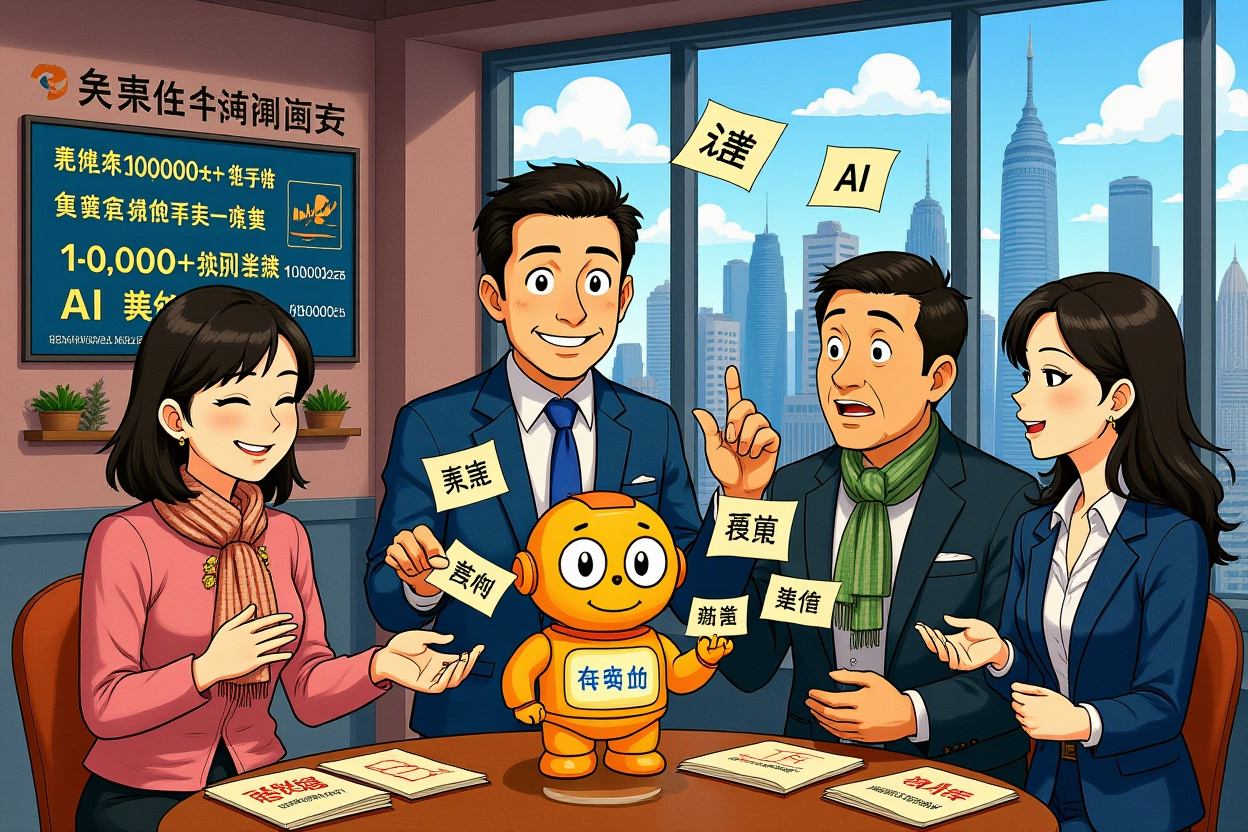
Executive Summary: Key Insights on AI in Web Novels
The rise of AI-generated web novels is reshaping China’s digital content landscape, with significant implications for markets and investors. Here are the critical takeaways:
– AI writing tools enable rapid content production, with some creators reporting monthly earnings exceeding 10,000 yuan, but quality concerns persist regarding the lack of “human touch.”
– Major platforms like 番茄小说 (Tomato Novel) and 晋江文学城 (Jinjiang Literature City) are adopting divergent strategies, from embracing AI to enforcing strict regulations, impacting content flows and user engagement.
– The proliferation of AI-generated web novels could disrupt traditional authorship, increasing competition for new writers and potentially driving consolidation in China’s tech and entertainment sectors.
– Investment angles emerge in listed companies involved in AI development and digital publishing, such as 腾讯控股 (Tencent Holdings) through its subsidiary 阅文集团 (China Literature), warranting close monitoring by equity analysts.
– Expert opinions vary, with figures like author Mo Yan (莫言) and sci-fi writer Liu Cixin (刘慈欣) highlighting AI’s limitations in creativity, while entrepreneurs like Tang Aiping (唐爱平) foresee near-term advancements.
The AI Writing Revolution Sweeping China’s Digital Literature Scene
In China’s booming web novel industry, artificial intelligence is no longer a futuristic concept but a present-day disruptor. Social media platforms are abuzz with posts boasting titles like “28-year-old AI writer, how to earn over 10,000 yuan monthly” and “Using AI to write a million-word novel in under a day,” attracting tens of thousands of likes and comments. This trend underscores a seismic shift where AI-generated web novels are gaining traction, driven by generative AI models that promise efficiency and scalability. For international investors tracking Chinese equity markets, this evolution signals potential growth in tech stocks tied to content creation and AI infrastructure.
The allure of AI lies in its ability to produce content at an industrial pace. As Mao Zhihui (毛志慧), Vice Chairman of the Jiangxi Online Writers Association, notes, human authors traditionally pride themselves on daily outputs of 10,000 to 20,000 words, but AI can generate tens of thousands of words in minutes. This efficiency is fueling a new wave of AI web novel studios, such as Tang Aiping’s “唐库” (Tang Ku) platform, which claims to produce 5 million-word novels in 48 hours. However, the surge in AI-generated web novels raises questions about sustainability and quality, key factors for platform viability and investor confidence.
From Hobby to High-Income: The AI Writer Phenomenon
Early adopters are capitalizing on AI to boost earnings, with some part-time writers leveraging tools for rapid story generation. For instance, web novel author Wei Ying (魏颖) shares that while AI tutorials often promise quick riches, the reality is more nuanced: AI-generated works frequently lack depth and are rejected by platforms. Despite this, platforms like 番茄小说 (Tomato Novel) have seen a spike in “首秀” (first show) submissions—a recommendation mechanism—with daily counts exceeding 5,000, up from previous norms of a few hundred. This data, reported by industry blog “网文大数据” (Web Novel Big Data), highlights how AI is flooding the market, potentially diluting content quality but also driving user metrics that appeal to advertisers and subscribers.
Platform Strategies: Embracing or Restricting AI Content
Network literature platforms are at a crossroads. 番茄小说 (Tomato Novel), known for free content, initially experimented with AI but later cracked down, banning 855 accounts for mass-producing low-quality AI-generated web novels. In contrast, 晋江文学城 (Jinjiang Literature City) takes a conservative approach, as explained by Vice President Hu Huijuan (胡慧娟). The platform permits only limited AI assistance, such as proofreading or name generation, and avoids integrating AI into core创作 (creation) processes. These divergent strategies reflect broader market uncertainties, where short-term traffic gains from AI content must be balanced against long-term brand integrity and reader loyalty—a dynamic that equity analysts should watch closely for impacts on parent company valuations.
Market Dynamics: Profits, Platforms, and the Proliferation of AI
The economic implications of AI-generated web novels extend beyond individual authors to entire ecosystems. China’s web novel market, valued at billions of yuan, is a critical segment of the digital entertainment sector, influencing stocks like 阅文集团 (China Literature) on the Hong Kong Exchange. As AI tools reduce production costs, platforms may see margin improvements, but they also risk alienating readers and creators. For instance, 番茄小说 (Tomato Novel) faced backlash after introducing an “AI training supplement协议” (agreement) that required authors to consent to their works being used for AI training, leading to a reversal after protests. This incident underscores the delicate balance between innovation and ethical considerations, which can sway investor sentiment in Chinese tech equities.
Data from industry insiders reveals that AI-generated web novels now account for 20-30% of submissions to some editors, like Qiao Huan (乔欢), who notes a rise in AI-polished works ranging from short stories to lengthy series. However, platforms employing AI detection tools reject content with over 40% AI involvement, citing issues like repetitive phrasing and logical flaws. This regulatory vigilance aims to maintain quality standards, but it also introduces operational costs that could affect profitability. For fund managers, monitoring these trends is essential to assess risks in companies exposed to content moderation and AI integration.
Revenue Models and Author Earnings in the AI Era
AI-generated web novels are reshaping revenue streams. Traditional authors rely on platform incentives, copyright sales, and reader tips, but AI enables bulk production that can capitalize on trending topics. Tang Aiping (唐爱平) advises writers to follow hot排行榜 (rankings) and use AI for framework development, potentially increasing output and ad revenue. However, as Mao Zhihui (毛志慧) points out, AI struggles with long-form narratives beyond 200,000 words, often resulting in incoherent plots that fail to engage readers. This limitation means human authors still dominate premium, high-value content, which drives platform differentiation and subscriber retention—key metrics for equity valuation in firms like 阿里巴巴集团 (Alibaba Group), which has stakes in digital media.
The Battle for Readership: Human Creativity vs. Machine Efficiency
Consumer preferences are evolving, with readers increasingly discerning between AI-generated and human-crafted stories. Qiao Huan (乔欢) compares reading AI web novels to eating “预制菜” (pre-made dishes)—predictable and lacking authenticity. This sentiment echoes expert views; Xu Miaomiao (许苗苗), Director of the Capital Normal University Network Literature Research Center, argues that AI can only replicate平庸 (mediocre) works, not true literary masterpieces. For investors, this dichotomy suggests that platforms prioritizing human creativity may sustain stronger user engagement, while those over-relying on AI could face churn, impacting ad revenues and stock performance in China’s competitive tech landscape.
The “Human Touch” Deficit: Why AI-Generated Web Novels Fall Short
At the heart of the debate is the concept of “人味儿” (human touch)—the emotional depth and originality that define compelling literature. AI-generated web novels, while efficient, often miss this mark, as highlighted by authors and critics. For example, Mao Zhihui (毛志慧) explains that AI fails to capture nuanced elements like character motivations or emotional stakes in fight scenes, resorting to clichéd patterns from years past. This deficiency limits AI’s role to辅助 (assistance) tasks, such as summarizing plots or generating names, rather than driving creative innovation. For the financial community, this underscores that AI is not yet a replacement for human talent, implying that investments in AI should be tempered with realism about its current capabilities.
Renowned author Mo Yan (莫言) shared his experience with AI in a public article, noting that while AI excels at信息搜索 (information retrieval) and stylistic mimicry, it lacks genuine thought and创造性 (creativity). Similarly, sci-fi writer Liu Cixin (刘慈欣) has speculated that AI might replace human literary创作 (creation) in the coming decades, but for now, it cannot produce顶尖 (top-tier) works. These insights reinforce that the market for high-quality web novels remains reliant on human authors, which may buffer against disruptive shocks from AI-generated web novels in the near term. Equity analysts should consider this when evaluating companies with significant exposure to content creation, as it affects growth projections and risk assessments.
Creative Limitations in Long-Form Narratives
AI’s weaknesses become pronounced in extended stories. Mao Zhihui (毛志慧) observes that beyond 200,000 words, AI-generated web novels suffer from logical errors and inconsistencies, making them unsuitable for serialized formats that dominate platforms. This aligns with Tang Aiping’s (唐爱平) admission that his “唐库” (Tang Ku) platform performs best with short fiction under 30,000 words, requiring human editing for longer works. For investors, this indicates that AI is more of a complementary tool than a wholesale disruptor, suggesting that firms integrating AI cautiously—like 晋江文学城 (Jinjiang Literature City)—may mitigate risks while exploring efficiencies in areas like审核 (auditing) and management.
Expert Perspectives on AI and Literary Value
Industry leaders emphasize the irreplaceable role of human experience. Hu Huijuan (胡慧娟) of 晋江文学城 (Jinjiang Literature City) states that AI-generated web novels lack the emotional resonance and互动 (interaction) that define successful网络文学 (network literature). This view is supported by data: platforms rejecting high-AI-content作品 (works) report better reader retention, which translates to stable subscription models. For corporate executives and institutional investors, these insights highlight the importance of quality control in sustaining market share, especially as Chinese regulators like the 国家新闻出版署 (National Press and Publication Administration) may step in to standardize AI use in creative industries.
Regulatory Landscape and Platform Policies on AI Content
As AI-generated web novels proliferate, regulatory and platform responses are shaping the market’s trajectory. In China, where digital content is closely monitored, platforms must navigate policies that balance innovation with cultural integrity. For instance, 晋江文学城 (Jinjiang Literature City) has implemented strict guidelines, allowing only minimal AI assistance and avoiding direct AI创作 (creation) tools. This conservative stance, detailed in internal forums and公告 (announcements), reflects a commitment to原创 (originality) that appeals to loyal readers and minimizes regulatory scrutiny. For global investors, such policies can influence the risk profiles of Chinese tech stocks, as compliance with evolving norms is crucial for long-term stability.
Meanwhile, 番茄小说 (Tomato Novel) has adopted a more reactive approach, using技术监测 (technical monitoring) and人工审核 (manual review) to curb AI abuse. Their处置 (disciplinary) actions against违规账号 (violating accounts) demonstrate a push for quality, but also reveal the challenges of scaling moderation in a fast-paced industry. These dynamics are relevant to equity markets because they affect operational costs and user trust—key drivers for companies like 字节跳动 (ByteDance), which owns Tomato Novel and is eyeing public listings. Tracking such developments can provide early signals for investment decisions in the broader Chinese internet sector.
Jinjiang’s Conservative Stance: A Case Study in Risk Management
Hu Huijuan (胡慧娟) outlines 晋江文学城 (Jinjiang Literature City)’s policy: AI is restricted to校对 (proofreading) and润色 (polishing), with no allowance for narrative generation. This approach minimizes legal and ethical risks, such as copyright disputes or public backlash, which could harm brand equity. For fund managers, this exemplifies prudent governance in tech firms, potentially reducing volatility in stocks associated with digital content. Additionally, Jinjiang’s plans to develop a proprietary “晋江风格AI” (Jinjiang-style AI) for审核 (auditing) purposes show how AI can be leveraged without compromising core创作 (creation) values—a model that other platforms may emulate.
Tomato Novel’s AI Training Controversy and Market Reactions
Last year, 番茄小说 (Tomato Novel) sparked industry-wide debate by inserting an AI training clause into author agreements, later retracting it after outcry. This incident, covered by媒体 (media) like 《中国新闻周刊》 (China News Weekly), highlights the tension between platform growth and creator rights. For investors, it serves as a cautionary tale: mishandling AI integration can lead to reputational damage and user attrition, impacting financial performance. As AI-generated web novels become more common, platforms that foster transparent partnerships with authors may gain a competitive edge, influencing stock valuations in China’s listed tech conglomerates.
Future Outlook: AI’s Role in Shaping Literary and Investment Landscapes
The trajectory of AI-generated web novels will likely influence China’s digital economy and equity markets in profound ways. Experts project varied scenarios: Xu Miaomiao (许苗苗) suggests that if AI content gains consumer acceptance, it could alter industry盈利模式 (profit models), diverting流量 (traffic) from human authors. Conversely, Tang Aiping (唐爱平) predicts that within three to four years, AI may achieve creative灵感 (inspiration), potentially surpassing human capabilities. For sophisticated investors, these forecasts underscore the need to monitor technological advancements and consumer trends, as they will drive mergers, acquisitions, and IPOs in sectors like AI development and online publishing.
From a market perspective, the rise of AI-generated web novels could catalyze new business models, such as subscription services for personalized AI stories or data analytics tools for content optimization. Listed companies involved in AI, such as 百度 (Baidu) with its ERNIE model or 科大讯飞 (iFlytek), may see increased demand from literary platforms. However, risks abound, including regulatory shifts and quality concerns that could dampen adoption. Equity analysts should assess these factors when advising on portfolios with exposure to Chinese tech, balancing optimism about innovation with caution regarding execution challenges.
Investment Angles: Stocks to Watch in China’s Tech Sector
Key players in the web novel and AI spaces offer compelling investment opportunities. For example:
– 阅文集团 (China Literature), a subsidiary of 腾讯控股 (Tencent Holdings), dominates the online literature market and is experimenting with AI tools for author assistance. Its stock performance may reflect trends in AI adoption and content monetization.
– 阿里巴巴集团 (Alibaba Group), through its digital media assets, invests in platforms like 书旗小说 (Shuqi Novel), where AI integration could enhance user experiences and ad targeting.
– Pure-play AI firms like 商汤科技 (SenseTime) and 云从科技 (Cloudwalk) provide underlying technologies for content generation, making them sensitive to demand shifts in creative industries.
Monitoring quarterly reports and regulatory filings from these companies can yield insights into how AI-generated web novels are impacting revenue streams and strategic priorities.
Market Sentiment and Growth Projections for AI Content
Industry data suggests mixed sentiment. While AI-generated web novels are growing in volume, reader feedback often criticizes their lack of depth, as noted by editors like Qiao Huan (乔欢). This could limit monetization potential, affecting platform valuations. However, entrepreneurs remain bullish; Tang Aiping (唐爱平) envisions AI evolving into true AI Agents that outperform humans. For institutional investors, conducting due diligence on user engagement metrics and platform policies is essential to gauge long-term viability. Resources like the 中国互联网信息中心 (China Internet Network Information Center) reports can provide macro insights into digital consumption patterns.
Synthesizing the Impact: Navigating AI’s Disruption in Web Novels
The emergence of AI-generated web novels represents both a challenge and an opportunity for China’s digital literature ecosystem. On one hand, AI drives efficiency and lowers barriers to entry, enabling new revenue streams for creators and platforms. On the other, it threatens to dilute quality and marginalize human authors, raising ethical and economic concerns. For financial professionals, this duality necessitates a nuanced approach: investing in tech firms that balance AI innovation with quality control, while hedging against risks from regulatory changes or consumer backlash.
Key takeaways include the enduring importance of “human touch” in content creation, the divergent strategies of major platforms, and the potential for AI to reshape market dynamics in China’s equity markets. As AI-generated web novels evolve, stakeholders must stay informed through sources like industry conferences, regulatory announcements, and financial disclosures. By doing so, investors can position themselves to capitalize on growth while mitigating uncertainties in this rapidly transforming sector. Consider subscribing to market analyses and engaging with expert networks to deepen your understanding of AI’s role in China’s tech-driven future.