



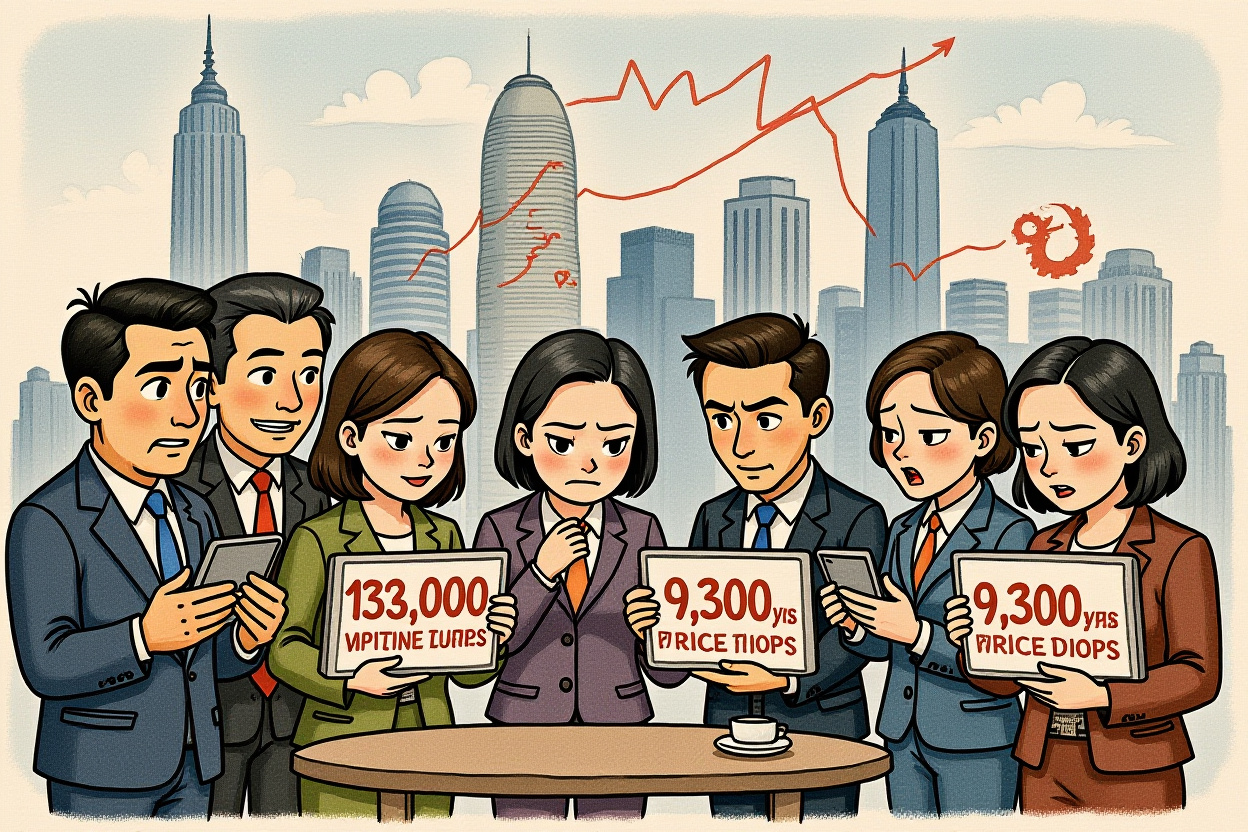
The Changsha Incident: A Catalyst for Scrutiny
A recent event in Changsha has sent shockwaves through China’s consumer markets and highlighted critical vulnerabilities in the second-hand recycling sector. A 15-year-old girl, with the help of classmates, sold luxury goods originally valued at over 130,000 yuan to the recycling platform 聚云奢 (Juyun She) for a paltry 9,300 yuan. This transaction, representing a loss of more than 90% of the items’ value, is not merely a tale of youthful indiscretion but a stark exposure of the second-hand recycling malpractices that erode consumer trust and pose regulatory risks. For investors monitoring Chinese consumer-facing companies, this case underscores the operational and reputational hazards lurking in fast-growing but poorly standardized markets.
Executive Summary: Key Takeaways for Market Participants
– Systemic Failures: The incident reveals profound gaps in age verification protocols and transaction integrity at major recycling platforms.
– Widespread Consumer Harm: Complaints of malicious price-cutting and arbitrary quality inspections are rampant across leading players like 爱回收 (Aihuishou) and 转转 (Zhuanzhuan).
– Market Scale Meets Governance Void: China’s second-hand recycling market, valued in the hundreds of billions, lacks unified standards, creating a ‘gray zone’ ripe for exploitation.
– Investment Implications: Companies engaged in recycling face heightened regulatory scrutiny and potential valuation impacts due to consumer backlash.
– Call for Action: Enhanced due diligence by investors and urgent regulatory reforms are needed to stabilize this burgeoning sector.
Deconstructing the Changsha Case: A Failure at Multiple Levels
The details of the Changsha transaction are as alarming as they are instructive. The 15-year-old, along with two peers, sold items including a 卡地亚 (Cartier) watch bought for 46,200 yuan (recovered for 2,000 yuan), a 迪奥 (Dior) bag purchased at 29,500 yuan (recovered for 1,500 yuan), and a 浪琴 (Longines) watch worth 12,500 yuan (recovered for 850 yuan). The total original value of 132,175 yuan was slashed to 9,300 yuan upon recovery.
Lax Age Verification and Legal Negligence
A critical failure was the platform’s disregard for the sellers’ ages. According to the mother, Ms. Ding, 聚云奢 (Juyun She) did not conduct substantive checks on whether the sellers were minors. The children admitted to using an adult’s identification, allegedly a sibling’s, to bypass safeguards. This blatant oversight violates basic industry norms and legal standards concerning contracts with minors, as individuals under 18 lack full civil capacity. The platform’s subsequent defense—claiming it does not accept items from minors—was directly contradicted by the facts, highlighting a culture of negligence. This aspect of second-hand recycling malpractices points to broader compliance risks that can trigger legal liabilities and damage brand equity.
The Anatomy of Predatory Pricing
The price disparity in this case is extreme but indicative of a common tactic: luring customers with high initial estimates only to drastically reduce offers after physical inspection. Here, the recovery price was less than 10% of the original value, far below reasonable market depreciation for luxury goods. This practice exploits information asymmetry, where consumers, especially in distress or hurried sales, have little recourse. The second-hand recycling malpractices evident here are not isolated; they reflect a systemic issue where pricing power is unilaterally held by platforms, often without transparent criteria.
China’s Second-Hand Recycling Market: Boom Amidst Disorder
To understand the context, one must appreciate the scale of China’s second-hand economy. The market for recycled goods, particularly electronics and luxury items, has expanded rapidly. For instance, the二手手机回收市场 (second-hand phone recycling market) is projected to be a ‘100-billion-yuan’ scale industry, with annual growth around 20%, as per the 2025 China Second-Hand Phone Recycling Market Supply-Demand Pattern and Future Development Trends Report. Online channels dominate, accounting for over 70% of transaction volume, led by platforms like 爱回收 (Aihuishou), 闲鱼 (Xianyu), and 转转 (Zhuanzhuan).
Key Players and Their Operational Models
– 爱回收 (Aihuishou): Now part of ATRenew Inc., it operates both online and through physical kiosks, often integrated with e-commerce platforms like JD.com for trade-in programs.
– 转转 (Zhuanzhuan): A major player in C2C and B2C second-hand transactions, facing significant scrutiny over quality issues and pricing disputes.
– 聚云奢 (Juyun She): Focuses on luxury goods recycling, with a network of offline stores in major cities, co-founded by Liu Junhong (刘俊鸿) and Meng Xiang (孟翔).
– Others: Platforms like 估吗 (Guma) under 杭州意象科技有限公司 (Hangzhou Yixiang Technology Co., Ltd.) and 同城帮 (Tongchengbang) under 北京奇立软件技术有限公司 (Beijing Qili Software Technology Co., Ltd.) also face similar complaints.
The concentration of market power among these few platforms has not translated into better consumer protection, instead often enabling the very second-hand recycling malpractices that plague the industry.
Unveiling the Common Tactics: How Malpractices Manifest
The Changsha case is a symptom of widespread issues. Consumers consistently report being baited with high online estimates, only to have prices slashed after items are shipped for inspection. This ‘bait-and-switch’ strategy is a hallmark of the current second-hand recycling chaos.
The ‘High Estimate, Lowball Offer’ Cycle
Platforms frequently attract sellers with optimistic initial quotes. Once the item is in their possession, they cite vague or unverifiable ‘defects’ to justify severe price reductions. For example, in complaints against 爱回收 (Aihuishou), a phone initially valued at 5,086 yuan was downgraded to 1,825 yuan due to alleged screen replacement, with the returned device found damaged. Similarly, 转转 (Zhuanzhuan) has been accused of reducing offers for items like an iPhone 15 from 2,595 yuan to 1,911 yuan based on disputed functionality issues. These actions erode trust and demonstrate the opacity inherent in second-hand recycling malpractices.
Arbitrary and Non-Transparent Quality Standards
Consumer Backlash and the Surge of Formal ComplaintsDocumented Cases from Major PlatformsRegulatory and Investment Implications: Navigating a Risky TerrainRegulatory Gaps and the Path to StandardizationValuation Risks and Due Diligence ImperativesMoving Forward: Building a Transparent and Trustworthy MarketThe revelations from Changsha and countless complaints serve as a wake-up call. For the second-hand recycling industry to mature and attract sustained investment, fundamental reforms are necessary.