



Executive Summary
– The case of a borrower repaying nearly double the principal on mini-loans from platforms like Fenqile (分期乐) highlights pervasive issues of opaque fee structures and effective annualized rates approaching 36%.
– Despite regulatory guidelines capping comprehensive financing costs at 24%, platforms employ stretched repayment terms and hidden charges to maintain profitability, leading to a snowballing debt crisis for young consumers.
– Fenqile’s origins in controversial campus lending practices persist, with ongoing reports of aggressive data collection and violent debt collection methods targeting students and other vulnerable groups.
– Investors and regulators must scrutinize the sustainability of mini-loan business models as tightened rules from the People’s Bank of China (中国人民银行) and National Financial Regulatory Administration (国家金融监督管理总局) aim to curb excesses by 2027.
– This scrutiny is crucial for maintaining trust in China’s fintech sector and protecting consumer financial health in an era of increasing digital credit accessibility.
The Alarming Reality of Mini-Loan Debt Traps
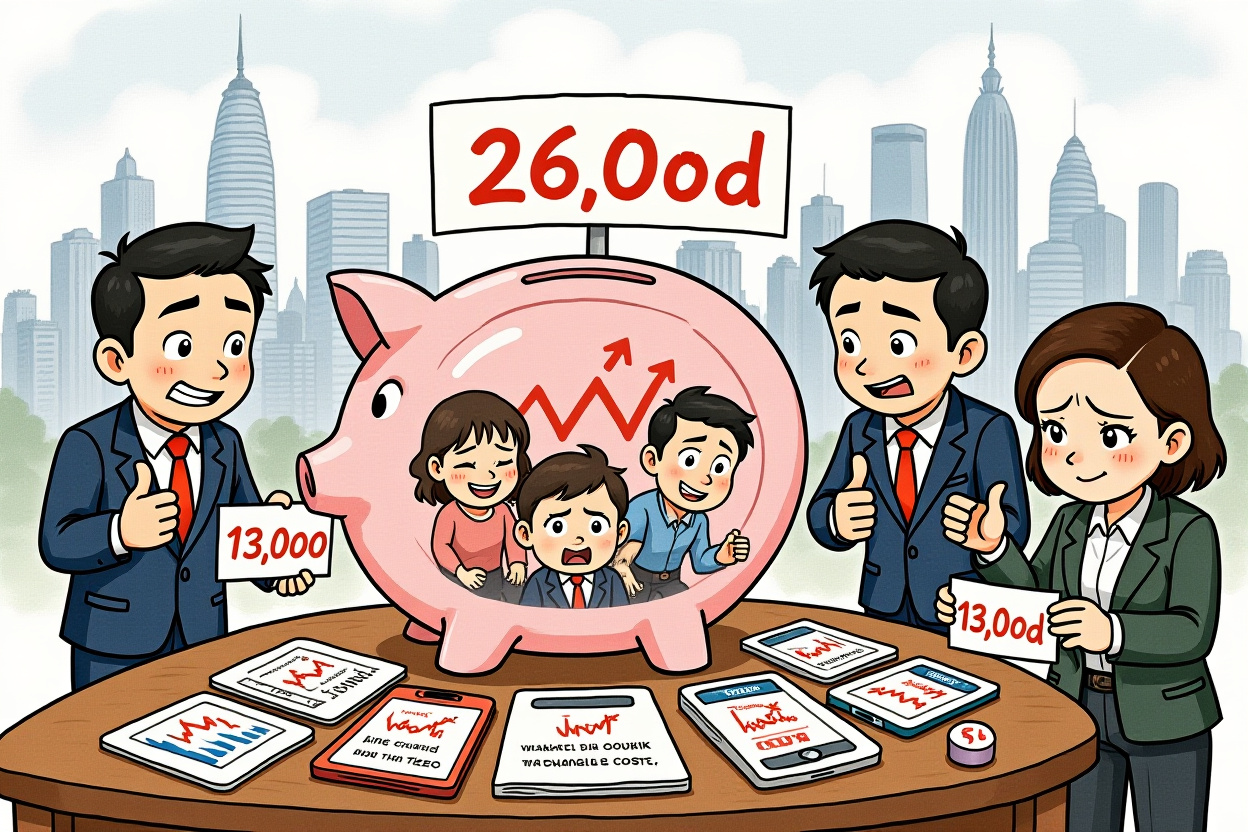
As the Lunar New Year approaches, many young Chinese find themselves short on cash for traditions like red envelopes and family trips. Platforms like Fenqile (分期乐) capitalize on this with enticing offers, such as credit limits soaring to 50,000 yuan. However, behind the glossy facade of financial technology lies a harsh truth: borrowers are often ensnared in cycles of debt that dwarf their original loans. The recent viral case of a user repaying 26,859 yuan on a 13,674 yuan loan underscores how mini-loans, designed for small, manageable amounts, can morph into financial nightmares through extended terms and high effective interest rates. This phenomenon is not isolated but symptomatic of broader issues in China’s burgeoning digital lending space, where regulatory oversight struggles to keep pace with innovative, yet predatory, practices.
The Case of Ms. Chen: A Cautionary Tale
In a stark example, a borrower identified as Ms. Chen took out five mini-loans totaling 13,674 yuan between 2020 and 2021 while in university, lured by promises of low monthly payments as minimal as 18.23 yuan. The loans, with terms stretching up to 36 months, carried annual percentage rates (APRs) ranging from 32.08% to 35.90%. By February 2024, her debt had ballooned to 26,859 yuan—nearly double the principal—after she defaulted for over 1,000 days. The psychological toll was severe, with debt collectors harassing her family and friends, exacerbating her distress. This case, highlighted in reports from Southern Daily and China Consumer, illustrates how mini-loans can exploit youthful impulsivity and lack of financial literacy, pushing effective costs to the legal brink.
Opaque Fees and the Snowballing Debt Crisis
The mini-loan business model thrives on transparency deficits. Platforms like Fenqile advertise appealing rates, such as annual interest as low as 8%, but bury additional charges in complex electronic agreements. These include membership fees, guarantee fees, and credit assessment fees, which collectively drive the comprehensive financing cost toward the 36% ceiling. On the Black Cat Complaint platform (黑猫投诉), over 160,000 grievances target Fenqile, with users alleging undisclosed fees that inflate repayments. For instance, one complainant noted in February 2024 that a loan with a 36% effective rate exceeded the 24% regulatory红线 (red line), urging authorities to investigate the hidden costs. Another from January 2024 detailed how a 1,450 yuan credit assessment fee was tacked onto interest, distorting the true cost of borrowing.
Regulatory Guidelines and Platform Evasion Tactics
In December 2023, the People’s Bank of China (中国人民银行) and National Financial Regulatory Administration (国家金融监督管理总局) jointly issued the Guidelines for the Management of Comprehensive Financing Costs of Small Loan Companies,明确 (explicitly) prohibiting new loans with comprehensive costs exceeding 24% annually. The rules mandate that by the end of 2027, all new loans should align with four times the one-year Loan Prime Rate (LPR). However, mini-loan platforms circumvent these limits by extending repayment periods—like splitting a 400 yuan expense over 36 installments—which masks the high effective interest. This strategy allows debts to snowball, as seen in cases from Hangzhou and Liangshan, where borrowers repaid thousands more than contractual amounts due to hidden担保费 (guarantee fees) and other charges. The lack of prominent disclosure violates consumer protection norms, keeping borrowers in the dark until they are deep in debt.
The Lingering Shadow of Campus Lending Practices
Fenqile’s operator, Jishan Fenqile Network Small Loan Co., Ltd. (吉安市分期乐网络小额贷款有限公司), is backed by Nasdaq-listed Lexin Fintech Holdings Ltd. (乐信集团), founded by Xiao Wenjie (肖文杰). Lexin’s growth was fueled by early forays into campus lending, targeting students with easy credit for electronics and other goods. Despite regulatory crackdowns on校园贷 (campus loans) in 2016, Fenqile’s ties to this controversial past persist. On Black Cat, over 922 complaints reference campus lending, with reports of promoters setting up booths in universities to entice students into loans. This ongoing exposure of young, financially inexperienced individuals to high-cost credit raises ethical questions about the mini-loan industry’s target demographics and its impact on financial stability.
Aggressive Data Collection and Violent Debt Collection
Beyond high interest, mini-loan platforms engage in intrusive data practices. As investigated by Economic Reference Report (经济参考报), Fenqile’s software collects extensive personal information—including ID photos, bank details, income data, and facial recognition—upon user agreement. This data is shared with third parties like payment partners and credit enhancers, creating privacy risks. Coupled with this, over 20,000 complaints describe violent collection methods, such as harassing family members, colleagues, and even village leaders, and爆通讯录 (exploding contact lists) to shame borrowers. These tactics, combined with opaque fees, form a coercive chain that traps consumers from the moment they click agree, undermining trust in fintech innovations.
Market Implications for Investors and Regulators
The mini-loan sector’s practices pose significant risks for institutional investors and fund managers eyeing China’s equity markets. While companies like Lexin showcase rapid growth and technological prowess, their reliance on high-margin, high-risk lending could face intensified regulatory scrutiny. The guidelines from Chinese authorities signal a tightening environment, with potential impacts on profitability if platforms are forced to cap rates at 24% or lower. Investors must assess whether current business models are sustainable amid evolving compliance demands, especially as consumer advocacy grows and defaults could spike in a slowing economy. For regulators, balancing innovation with consumer protection is key to maintaining market integrity and preventing systemic risks from widespread indebtedness among youth.
Expert Insights and Forward-Looking Analysis
Financial analysts note that the mini-loan industry’s evolution mirrors broader trends in China’s fintech landscape, where agility often outpaces oversight. Quotes from industry reports suggest that platforms may need to diversify revenue streams or enhance transparency to align with new rules. For example, linking loan costs directly to LPR benchmarks could standardize pricing, but implementation challenges remain. As one expert cited in China Consumer emphasized, without robust enforcement, guidelines alone may not curb predatory practices. This underscores the need for continuous monitoring and adaptive policies to protect vulnerable borrowers while fostering responsible innovation.
Navigating the Future of Consumer Credit in China
The mini-loan dilemma highlights a critical junction for China’s financial ecosystem. On one hand, digital lending fills gaps for underserved populations, promoting financial inclusion. On the other, abuses threaten to erode consumer confidence and spark regulatory backlash. For corporate executives and fund managers, due diligence on lending platforms’ compliance and ethical standards is essential. They should prioritize companies with clear disclosures, fair pricing, and robust collection ethics, as these traits may indicate long-term resilience. Moreover, engaging with regulatory developments—such as the phased reduction of cost caps—can inform strategic investments in sectors aligned with sustainable growth.
Actionable Steps for Stakeholders
– Consumers: Scrutinize loan agreements for hidden fees and calculate effective annualized rates before borrowing. Utilize resources from consumer protection agencies to report violations.
– Investors: Conduct deep dives into mini-loan providers’ financials, focusing on default rates, fee structures, and regulatory adherence. Consider environmental, social, and governance (ESG) factors in portfolio decisions.
– Regulators: Enhance enforcement of existing guidelines, promote financial literacy campaigns, and collaborate with platforms to standardize cost disclosures. Monitor data privacy practices to prevent misuse.
– Companies: Adopt transparent pricing models, limit loan terms to prevent debt spirals, and invest in ethical collection methods to build brand trust.
Key Takeaways and Strategic Guidance
In summary, the mini-loan industry in China presents both opportunities and perils. The case of Fenqile illustrates how opaque fees and high effective interest rates can drain young borrowers, while regulatory frameworks are gradually tightening to impose clearer cost caps. For global investors, understanding these dynamics is crucial for navigating Chinese equity markets, as shifts in lending practices could impact fintech valuations and sector stability. Moving forward, a collaborative approach among regulators, companies, and consumers is needed to foster a healthier credit environment. By prioritizing transparency and responsibility, stakeholders can mitigate risks and harness the potential of digital finance for inclusive growth, ensuring that mini-loans serve as tools for empowerment rather than entrapment.