



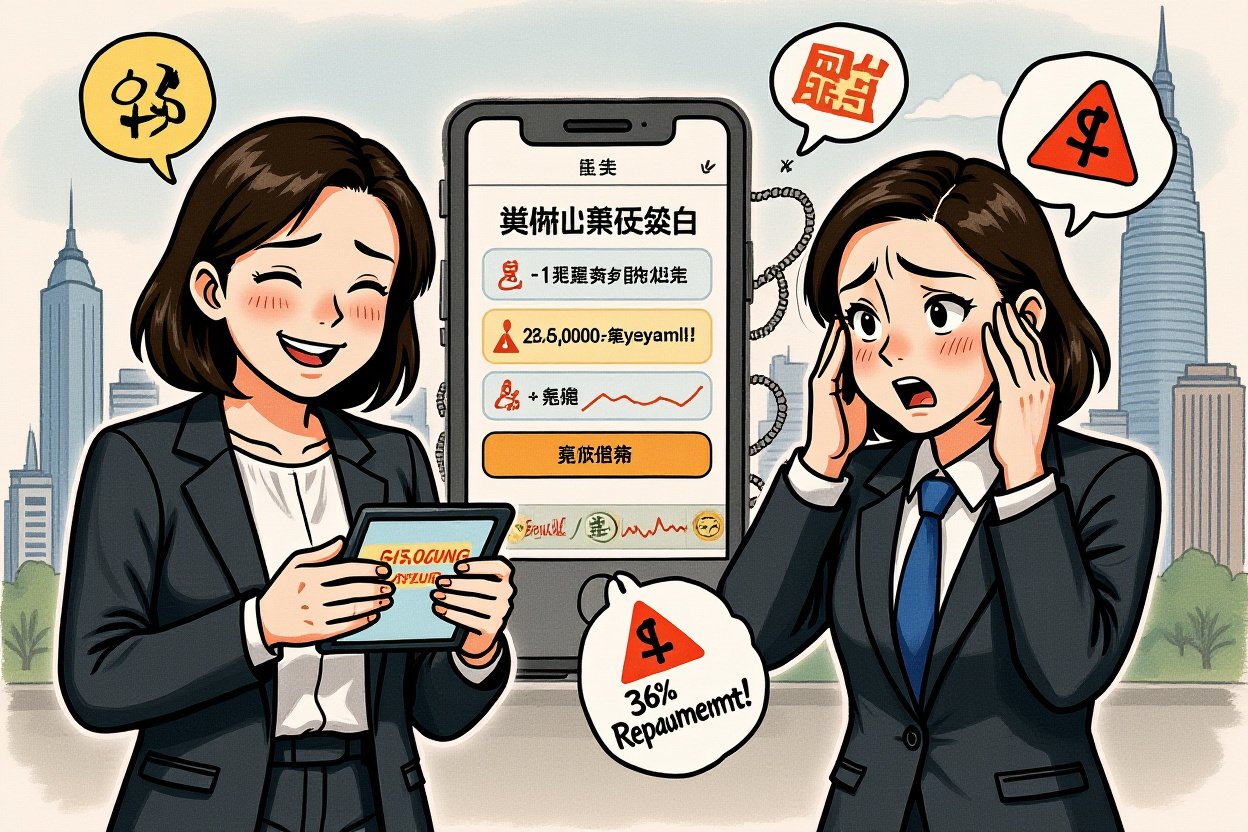
Executive Summary
– Fenqile’s ‘mini loans’ lure young borrowers with low apparent payments but trap them with effective annualized rates nearing 36%, far exceeding regulatory caps.
– Opaque fee structures, including hidden membership and guarantee charges, inflate debt burdens, leading to a snowball effect where small loans balloon to double the principal.
– Despite regulatory crackdowns, platforms like Fenqile, operated by Lexin Fintech Holdings Ltd. (乐信集团), continue to face allegations of targeting students and employing aggressive collection tactics.
– The case highlights systemic issues in China’s consumer lending market, urging tighter enforcement of cost transparency and responsible lending practices to protect financial health.
The Hidden Cost of Convenience: A Debt Trap for the Digital Generation
As Chinese consumers, particularly young adults, navigate festive seasons and daily expenses, the allure of quick cash from online lenders is undeniable. Platforms like Fenqile (分期乐) promise easy access with minimal friction, but beneath the glossy fintech facade lies a troubling reality: ‘mini loans’ are systematically draining the financial resources of a vulnerable demographic. This investigation delves into how a borrowed 13,000 yuan can morph into a 26,000 yuan repayment nightmare, exposing the mechanisms that push effective costs to the legal brink. The focus on mini loans reveals a critical flaw in the market’s evolution, where innovation often outpaces consumer protection.
The Allure and Trap of Mini Loans
Fenqile’s marketing brilliantly taps into the immediacy of modern financial needs. Advertisements tout ‘annual rates as low as 8%’ and ‘daily interest from 2.2 yuan for 10,000 yuan,’ creating an illusion of affordability. This strategic presentation makes mini loans seem like a harmless tool for managing cash flow, especially for non-essential purchases or emergency covers.
Deceptive Marketing and Easy Access
The platform’s user interface is designed for maximum conversion, with prominent buttons for ‘instant approval’ and ‘credit line activation.’ However, the true cost is buried in complex agreements. Borrowers like Ms. Chen, featured in recent reports, were enticed by promises of ‘low monthly payments as little as 18.23 yuan’ for a 400-yuan purchase spread over 36 months. This fragmentation masks the cumulative interest, a hallmark of the mini loan model that prioritizes long tenures to maximize revenue.
Real-World Case: Ms. Chen’s Debt Nightmare
A vivid example comes from a borrower, Ms. Chen, who during her university years took five separate loans from Fenqile totaling 13,674 yuan. The loans, with tenures from 12 to 36 months, carried stated annual rates between 32.08% and 35.90%. Years later, she faces a total repayment demand of 26,859 yuan—nearly double the principal. The psychological toll has been severe, with aggressive collection tactics exacerbating her stress. This case underscores how mini loans can escalate from a convenience to a crippling burden.
Opaque Fees and the Debt Snowball Effect
Beyond the stated interest, additional charges are the engine that drives the effective cost upward. Fenqile and similar platforms often layer on fees for membership, credit assessment, and guarantees, which are not transparently disclosed at the point of sale. This lack of clarity violates both ethical standards and emerging regulatory guidelines.
Hidden Costs and Complaints on Black Cat Platform
On the consumer complaint platform Hei Mao Tou Su (黑猫投诉), searches for ‘Fenqile’ yield over 160,000 entries. Common grievances include unauthorized deductions and obscured fees. One user from February 12, 2024, alleged a comprehensive annualized rate of 36%, demanding a refund for amounts exceeding the 24% cap. Another from January 2024 cited a ‘credit evaluation fee’ that artificially inflated costs. These complaints point to a systemic issue where the true cost of mini loans is obscured until repayment begins.
Regulatory Red Lines and Platform Evasion
In December 2025, the People’s Bank of China (中国人民银行) and the National Financial Regulatory Administration (国家金融监督管理总局) jointly issued the ‘Guidelines for the Management of Comprehensive Financing Costs of Small Loan Companies.’ This directive explicitly prohibits new loans with comprehensive annualized costs exceeding 24% and mandates a phased reduction to within four times the one-year Loan Prime Rate (LPR) by end-2027. However, platforms adapt by restructuring fees or extending terms, keeping effective yields high. The persistence of mini loans at near-36% rates suggests enforcement gaps, allowing the debt snowball to continue rolling.
Lingering Ties to Controversial Campus Lending
Fenqile’s operator, Lexin Fintech Holdings Ltd. (乐信集团), has roots deeply embedded in the student loan market. Founded in 2013 by Xiao Wenjie (肖文杰), Lexin initially grew by providing credit to university students for electronics and other goods, a practice that fueled rapid expansion but attracted regulatory scrutiny during the 2016 crackdown on ‘campus loans’ (校园贷).
Fenqile’s Origins in Student Loans
Despite rebranding as a fintech pioneer and listing on Nasdaq in 2017, Lexin’s flagship platform, Fenqile, has not fully shed its associations. Searches on Hei Mao Tou Su for ‘Fenqile campus loan’ still yield hundreds of complaints, with users reporting that promotional agents actively target students on university grounds. This ongoing practice raises questions about the ethical boundaries of mini loans, especially when marketed to financially inexperienced youths.
Ongoing Issues with Youth Targeting and Data Privacy
The platform’s data collection practices further complicate its profile. As reported by Economic Reference News (经济参考报), Fenqile’s privacy policy mandates sharing of sensitive personal information—including ID photos, bank details, and facial recognition data—with third parties such as payment processors and credit enhancers. This extensive data net, combined with aggressive collection tactics that involve contacting friends and family, creates a cycle of vulnerability. Borrowers, often young, find themselves trapped not just by debt but by a loss of privacy, making the mini loan ecosystem particularly predatory.
Regulatory Crackdown and Compliance Challenges
Chinese authorities are increasingly vigilant, but the dynamic nature of fintech presents hurdles. The 2025 guidelines set clear cost ceilings, yet implementation at the provincial level, where entities like Jishou Fenqile Network Microfinance Co., Ltd. (吉安市分期乐网络小额贷款有限公司) are licensed, requires robust monitoring. The disconnect between national rules and local execution allows some mini loan products to skirt intent if not letter.
New Rules from PBOC and NFRA
The joint directive emphasizes that from 2026, local financial regulators must ‘immediately correct’ loans exceeding 24%, halt new issuance, and incorporate dynamic credit reporting. This is a step toward curbing the excesses of mini loans. However, as seen with Fenqile, historical loans issued at higher rates remain a burden, and platforms may delay compliance through appeals or technical reinterpretations. The case of Ms. Chen’s loans, originated years ago, highlights the legacy debt problem that new regulations must address retroactively.
Gaps in Enforcement and Consumer Protection
Consumer advocates point to the need for more stringent disclosure requirements. Publications like China Consumer (中国消费者) have documented cases where borrowers, such as Mr. Meng from Hangzhou, repaid significantly more than the contract implied due to hidden fees. For instance, a loan of 10,300 yuan at a stated 6% rate resulted in overpayments of approximately 1,782 yuan. These discrepancies underscore that without real-time cost calculators and mandatory plain-language summaries, the mini loan market will continue to exploit information asymmetries.
The Broader Impact on Young Consumers and Financial Health
The proliferation of high-cost mini loans carries societal implications beyond individual debt. As young adults—often first-time borrowers—accumulate liabilities, their long-term financial stability is compromised, potentially affecting consumption patterns and economic resilience. The psychological impact, including stress and depression as reported by borrowers like Ms. Chen, adds a human cost to the financial one.
Psychological and Social Consequences
Aggressive collection methods, such as broadcasting debt details to social circles, not only violate privacy but can lead to social ostracization and mental health issues. This tactic, employed by some third-party agencies working for Fenqile, turns mini loans into instruments of social pressure, undermining the very fabric of trust and community. For a generation already facing economic pressures, such practices can be devastating.
Call for Transparency and Responsible Lending
Moving forward, the solution lies in enhanced transparency and ethical practices. Platforms must clearly itemize all costs—interest, fees, and penalties—before loan confirmation, using standardized formats approved by regulators. Moreover, targeting minors or students should be strictly prohibited, with algorithms adjusted to exclude high-risk demographics. Investors and institutions funding these mini loans must conduct due diligence to ensure alignment with regulatory spirit, not just loopholes.
Navigating the Future of Consumer Credit in China
The Fenqile case is a microcosm of larger tensions in China’s fintech sector: innovation versus exploitation, growth versus stability. While mini loans fill a genuine need for accessible credit, their current incarnation often harms the most vulnerable. Regulatory bodies must accelerate enforcement of cost caps and transparency rules, perhaps leveraging technology for real-time monitoring. Consumers, especially the young, should be educated on financial literacy to recognize debt traps. Ultimately, the sustainability of China’s consumer finance market depends on balancing access with protection, ensuring that mini loans serve as a bridge to financial health, not a barrier. Stakeholders—from regulators to lenders to borrowers—must collaborate to reform practices, making the next generation of financial products truly empowering.