



Executive Summary
– The case of a borrower repaying nearly double the principal on mini-loans from platforms like Fenqile (分期乐) highlights pervasive issues with high interest rates and opaque fee structures in China’s fintech sector.
– Regulatory guidelines from the People’s Bank of China (中国人民银行) and the National Financial Regulatory Administration (国家金融监督管理总局) cap lending costs at 24%, but enforcement gaps allow platforms to push rates toward 36% through hidden charges.
– Mini-loan providers, including Fenqile’s parent company Lexin (乐信集团), face scrutiny for historical ties to campus lending and ongoing practices like aggressive debt collection and data privacy violations.
– Consumer complaints on platforms like Hei Mao Tousu (黑猫投诉) exceed 160,000 for Fenqile alone, indicating systemic risks that could affect investor confidence in Chinese fintech equities.
– International investors must monitor regulatory tightening and consumer protection trends, as these factors will shape the sustainability and profitability of mini-loan business models in China’s evolving credit market.
The Hidden Crisis in China’s Booming Fintech Sector
As Chinese consumers gear up for festive spending during the Lunar New Year, platforms like Fenqile (分期乐) dangle tempting loan offers with promises of low interest and high credit limits. Yet, beneath this veneer of financial accessibility lies a troubling reality: mini-loans are ensnaring young borrowers in debt cycles where repaying double the principal has become commonplace. This article delves into the mechanics of China’s mini-loan industry, exposing how regulatory gaps, opaque pricing, and aggressive tactics are draining the financial vitality of a generation. For global investors tracking Chinese equity markets, understanding these dynamics is crucial, as the sustainability of fintech giants hinges on navigating tightening oversight and rising consumer backlash. The focus on mini-loans reveals broader vulnerabilities in a sector once hailed for innovation, now facing a reckoning over ethics and compliance.
The Allure and Trap of Mini-Loans: A Case Study in Debt Multiplication
Mini-loans, characterized by small amounts and extended repayment periods, appeal to young consumers seeking quick cash for daily expenses or seasonal needs. However, the true cost often remains shrouded until borrowers are deep in debt.
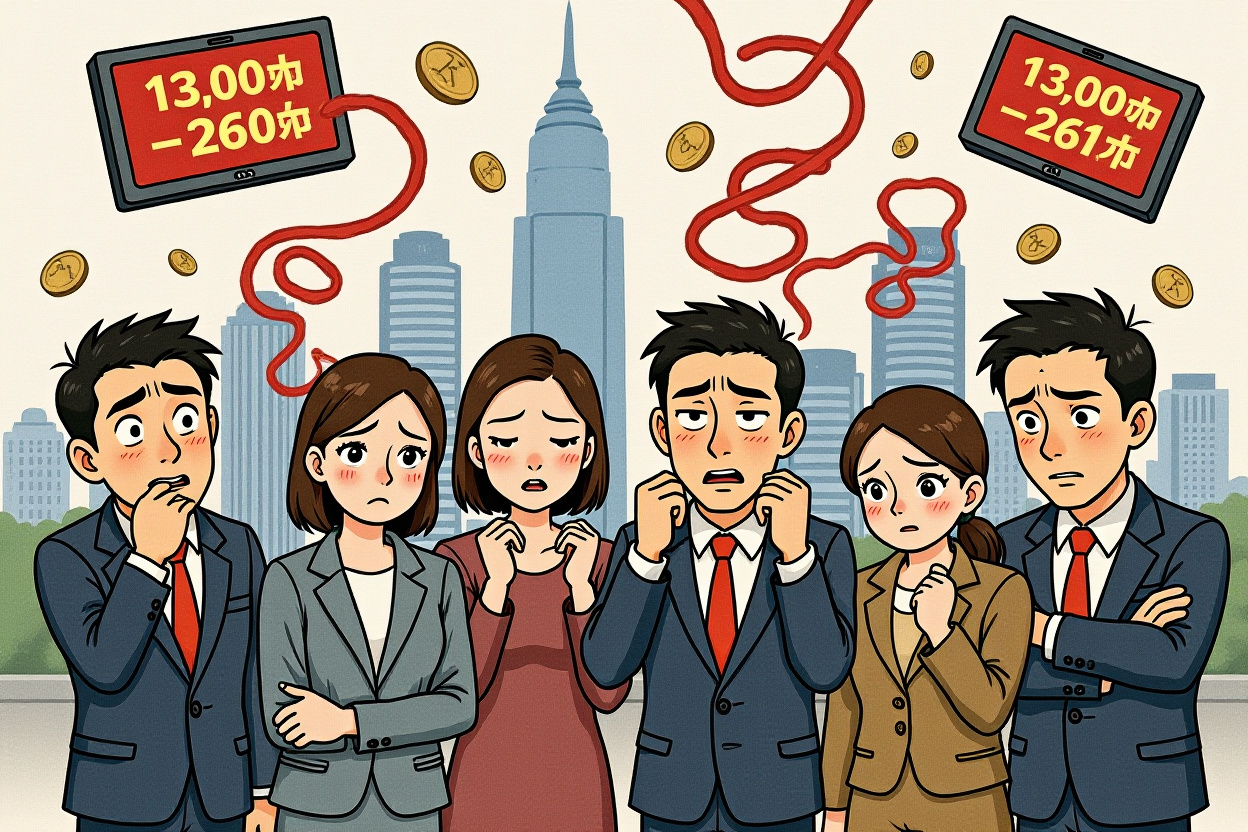
Borrowing 13,000 Yuan, Repaying 26,000: The Mathematics of Exploitation
The viral case of Ms. Chen, who borrowed 13,674 yuan from Fenqile (分期乐) only to owe 26,859 yuan after six years, exemplifies the mini-loan trap. Her loans, split into five tranches with amounts as low as 400 yuan stretched over 36 months, carried annualized interest rates between 32.08% and 35.90%. Promoters touted “low interest” and “monthly payments as low as 18.23 yuan,” masking the cumulative burden. This scenario is not isolated; similar complaints plague platforms across China, where the mini-loan model leverages behavioral economics to encourage over-borrowing. For investors, such cases signal potential reputational risks and regulatory liabilities that could impact stock valuations of listed entities like Lexin (乐信集团), Fenqile’s parent company traded on Nasdaq.
How Fees and Interest Snowball into Unmanageable Debt
Beyond stated interest rates, mini-loan providers embed additional charges that inflate costs. Common fees include:
– Membership fees: Often mandatory but poorly disclosed during sign-up.
– Guarantee fees: Charged by third parties without clear consent, as seen in complaints from Sichuan province where borrowers paid over 1,100 yuan unknowingly.
– Credit assessment fees: Tacked onto loans, pushing effective annualized rates toward the 36% legal ceiling.
These practices create a debt snowball effect, where borrowers struggling with payments face compounded penalties. The mini-loan industry’s reliance on such revenue streams highlights a business model under pressure, as regulators clamp down on excessive costs.
Regulatory Landscape: Tightening Noose on Lending Costs
Chinese authorities have introduced guidelines to curb predatory lending, but implementation challenges persist, allowing mini-loan platforms to operate in gray areas.
New Guidelines Capping Costs at 24% and Below
Enforcement Gaps and Platform AdaptationsDespite rules, platforms like Fenqile (分期乐) continue to offer products with effective rates near 36%, exploiting loopholes such as:
– Bundling services: Adding non-loan components to justify higher fees.
– Prolonged tenures: Extending repayment periods to lower monthly payments while increasing total interest.
– Opaque disclosures: Burying cost details in lengthy electronic agreements, as reported by China Consumer (《中国消费者》) where borrowers discovered hidden charges only after signing.
These adaptations suggest that regulatory scrutiny must evolve beyond rate caps to address fee transparency and consumer education. For market participants, monitoring provincial-level enforcement will be key, as oversight is decentralized under China’s financial regulatory framework.
The Campus Loan Legacy: Fenqile’s Controversial Origins
Fenqile (分期乐) emerged from China’s campus lending boom, a history that continues to shadow its operations and brand reputation in the mini-loan market.
From Campus Loans to Fintech Giant: Lexin’s Evolution
Persistent Issues with Student Targeting and Aggressive CollectionComplaints allege that Fenqile (分期乐) still extends loans to students, contrary to regulations, and employs harsh debt recovery tactics, including:
– Contacting family and friends: As in Ms. Chen’s case, where collectors informed her social circle, causing psychological distress.
– Harassment and threats: Over 20,000 complaints cite verbal abuse, doxxing, and even outreach to community leaders like village heads.
These practices not only harm consumers but also expose Lexin to legal and regulatory risks, potentially affecting its stock performance and investor confidence in China’s fintech sector.
Consumer Backlash and Opaque Business Practices
Mounting grievances on public platforms underscore systemic flaws in the mini-loan industry, with transparency and fairness at the core of consumer outrage.
Black Cat Platform: A Barometer of Discontent
Hidden Fees and the Illusion of AffordabilityInvestigations by media outlets reveal how mini-loans mask true costs. For example, China Consumer (《中国消费者》) documented a borrower from Zhejiang who took a 10,300 yuan loan at a 6% stated rate but repaid 12,425 yuan due to undisclosed fees. Similarly, Economic Reference Report (《经济参考报》) noted that Fenqile’s privacy policy authorizes sharing personal data—from ID photos to location—with third parties like banks and credit enhancers, often without explicit consent. This lack of transparency extends from pricing to data handling, eroding consumer safeguards in the mini-loan ecosystem.
Privacy Risks and Data Exploitation in Digital Lending
The mini-loan business model relies heavily on data collection, raising concerns about security and misuse that could attract regulatory penalties.
Extensive Data Collection Without Adequate Safeguards
Upon using Fenqile (分期乐), consumers grant access to dozens of personal data points, including biometrics like facial recognition and financial details. As per the platform’s privacy policy, this information is “shared” with entities such as payment processors and industry associations, potentially exposing users to fraud or discrimination. In China’s tightening data governance landscape, under laws like the Personal Information Protection Law (个人信息保护法), such practices could trigger fines or operational restrictions, affecting mini-loan providers’ bottom lines.
Sharing with Third Parties: Implications for Consumer Rights
Data flows to partners like Shanghai Bank (上海银行), a reported funding source for Fenqile, blur accountability when disputes arise. For international investors, this underscores the need to assess fintech firms’ compliance with China’s cybersecurity and data regulations, as violations may lead to sanctions that ripple through equity markets.
Market Implications and Guidance for Global Investors
The mini-loan sector’s challenges offer critical insights for stakeholders in Chinese equities, from fund managers to corporate executives navigating regulatory shifts.
Impact on Fintech Valuations and Sector Outlook
Lexin’s (乐信集团) stock performance, for instance, may face volatility as mini-loan controversies draw regulatory attention. Key indicators to watch include:
– Complaint volumes: Rising grievances on platforms like Hei Mao Tousu (黑猫投诉) can foreshadow regulatory actions.
– Enforcement actions: Fines or licensing suspensions by local authorities in jurisdictions like Jiangxi, where Fenqile’s small-loan entity is based.
– Profitability pressures: As cost caps squeeze revenue from high-interest mini-loans, firms may pivot to lower-margin products, affecting growth projections.
Investors should diversify exposure within China’s fintech space, favoring companies with robust compliance frameworks and transparent pricing.
Forward-Looking Strategies for Informed Decision-Making
To mitigate risks, consider these steps:
– Monitor regulatory updates: Track announcements from bodies like the National Financial Regulatory Administration (国家金融监督管理总局) for policy shifts affecting mini-loans.
– Engage with consumer sentiment: Use data from complaint platforms to gauge brand resilience and potential litigation risks.
– Assess ethical governance: Prefer firms with clear codes of conduct on debt collection and data privacy, as these align with China’s broader social stability goals.
The mini-loan narrative is not just a consumer issue but a litmus test for China’s fintech maturation, with implications for equity valuations and portfolio strategies worldwide.
Synthesizing the Mini-Loan Dilemma: Pathways to Reform
The mini-loan crisis in China underscores a clash between innovation and exploitation, where platforms like Fenqile (分期乐) profit from opacity while young borrowers bear the brunt. Regulatory frameworks are evolving, but without stringent enforcement and consumer education, debt traps will persist. For the financial community, this signals a call to action: investors must pressure for greater transparency, regulators need to close loopholes, and consumers should seek alternatives like formal banking products. As China’s credit market matures, the mini-loan sector’s transformation will be a bellwether for sustainable growth in fintech equities. Stay vigilant by subscribing to updates on Chinese regulatory changes and diversifying investments to hedge against sector-specific shocks.