



Executive Summary: Key Takeaways on China’s Mini-Loan Crisis
- Mini-loans offered by platforms like Fenqile (分期乐) often carry hidden fees and effective annualized interest rates approaching 36%, far exceeding regulatory caps and trapping borrowers in cycles of debt.
- Despite new guidelines from the People’s Bank of China (中国人民银行) and National Financial Regulatory Administration (国家金融监管总局) aiming to cap comprehensive financing costs, enforcement gaps allow lenders to maintain profitable but predatory practices.
- The business model relies on targeting young, financially vulnerable consumers, including students, with opaque cost structures and aggressive debt collection methods, raising severe consumer protection concerns.
- For investors, listed fintech companies like Lexin Group (乐信集团) face significant regulatory and reputational risks that could impact valuations in the Chinese equity market.
- Consumers must exercise extreme caution, scrutinize loan terms, and leverage new regulatory protections to avoid falling victim to these mini-loan traps.
A Financial Nightmare Unfolds During the Chinese New Year
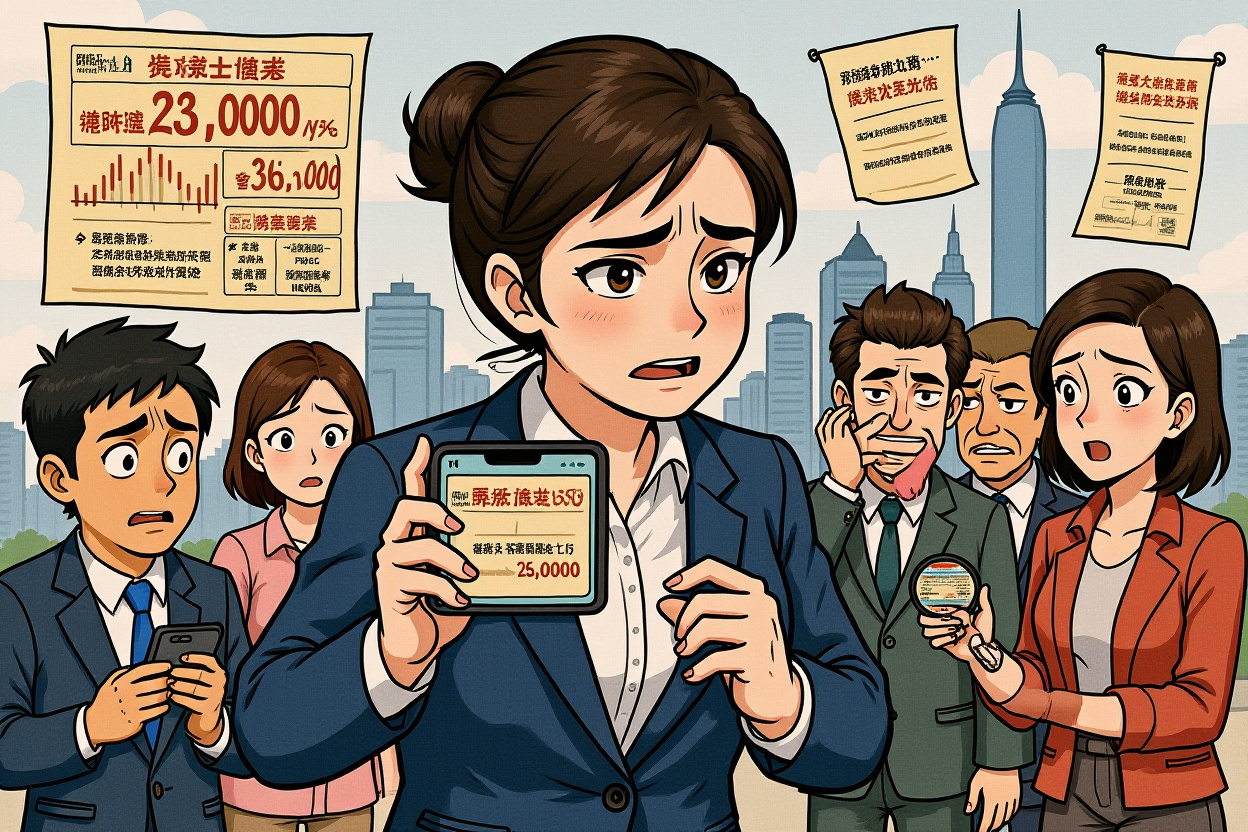
As families across China prepared for the Lunar New Year, facing pressures to give red envelopes and fund celebrations, many turned to easy credit solutions advertised online. Platforms like Fenqile (分期乐) promoted loan increases with catchy slogans, promising quick cash for festive expenses. However, beneath the surface of these convenient mini-loans lies a disturbing reality: borrowers like Ms. Chen are finding themselves repaying nearly double their original loan amounts, caught in a web of high interest and opaque fees. This phenomenon underscores the pervasive risks in China’s burgeoning consumer credit sector, where mini-loans are increasingly draining the financial health of young consumers.
The case of Ms. Chen, which recently sparked outrage on social media, highlights how these mini-loans can escalate from a small financial boost to a crippling debt burden. With regulatory scrutiny intensifying, understanding the mechanics and implications of these lending practices is crucial for market participants. The mini-loan model, characterized by small amounts and long tenures, masks true costs until borrowers are deeply entangled.
The Mini-Loan Trap: A Case Study in Debt Accumulation
The story of Ms. Chen serves as a stark warning for anyone considering mini-loans in China. During her university years, she borrowed a total of 13,674 yuan from Fenqile (分期乐) across five loans, with amounts as small as 400 yuan stretched over 36 months. Promised low monthly payments and attractive interest rates, she soon discovered the harsh truth: her total repayment ballooned to 26,859 yuan, with annualized rates ranging from 32.08% to 35.90%. This mini-loan structure, designed to appear manageable, effectively doubled her debt through extended periods and compounded costs.
Ms. Chen’s Ordeal: From 13,674 Yuan to 26,859 Yuan in Debt
Ms. Chen’s loans included terms like 400 yuan over 36 months, with monthly payments touted as low as 18.23 yuan. However, the cumulative interest and fees transformed this into a financial nightmare. After stopping payments in August 2022 due to inability to repay, she faced over 1,000 days of delinquency, accompanied by aggressive debt collection that harassed her family and friends, exacerbating mental health issues. This mini-loan experience reveals how platforms leverage psychological tactics to lure borrowers into unsustainable obligations.
How Mini-Loans Inflate Costs Through Extended Tenures
Mini-loans often advertise low periodic payments by extending loan tenures to extremes, such as 36 months for trivial amounts. This stretches the interest accumulation, making the effective annual percentage rate (APR) skyrocket. For instance, a 400 yuan loan over 36 months might seem cheap monthly, but the total interest can exceed the principal. This snowball effect is central to the mini-loan business model, trapping borrowers in long-term debt cycles they cannot escape.
Regulatory Framework: Capping Costs in China’s Lending Market
In response to such abuses, Chinese regulators have stepped up efforts to rein in high-cost lending. On December 19, 2025, the People’s Bank of China (中国人民银行) and National Financial Regulatory Administration (国家金融监管总局) jointly issued the “Guidelines for the Management of Comprehensive Financing Costs of Small Loan Companies,” which prohibit new loans with comprehensive costs exceeding 24% annualized. Furthermore, by the end of 2027, all new loans must align with four times the one-year Loan Prime Rate (LPR), a stricter benchmark. These rules aim to protect consumers from predatory mini-loans and ensure market stability.
The 2025 Guidance from PBOC and NFRA
The guidelines mandate that local financial authorities correct violations, halt new loans exceeding caps, and integrate oversight into credit reporting systems. For mini-loan providers, this means a potential overhaul of pricing strategies. However, the transition period allows some leeway, and platforms may exploit loopholes through fee reclassification. The regulatory push reflects growing concern over the societal impact of high-interest lending, especially on youth.
The Gap Between Policy and Practice
Despite these regulations, enforcement remains inconsistent. Platforms like Fenqile (分期乐) continue to offer loans with effective rates near 36%, using add-on fees to circumvent caps. Complaints on consumer platforms indicate that transparency is lacking, with borrowers unaware of hidden charges until they receive bills. This gap highlights the challenge of regulating digital lending, where complex fee structures can obscure true costs, making mini-loans a persistent threat.
Fenqile and Lexin Group: A FinTech Giant’s Controversial Roots
Fenqile (分期乐) is operated by Jishan Fenqile Network Small Loan Co., Ltd. (吉安市分期乐网络小额贷款有限公司), a subsidiary of the Nasdaq-listed Lexin Group (乐信集团). Founded in 2013 by Xiao Wenjie (肖文杰), Lexin pioneered installment e-commerce in China, but its growth was fueled by controversial campus lending. Initially targeting students, the company expanded rapidly before regulatory crackdowns forced a rebranding as a fintech firm. Yet, the legacy of campus loans persists, raising questions about its current practices.
The Campus Loan Legacy
Lexin’s early success relied heavily on providing loans to university students, a practice that drew regulatory ire in 2016. Although the company shifted focus post-IPO, evidence suggests that mini-loans are still marketed to students. On complaint platforms, users report campus promotions and loans taken during student years, indicating that the mini-loan model remains intertwined with vulnerable demographics. This history complicates Lexin’s narrative as a responsible fintech leader.
Current Business Practices and Consumer Backlash
Today, Fenqile (分期乐) partners with licensed institutions like Shanghai Bank (上海银行) to offer credit, but consumer grievances abound. The platform’s privacy policy allows extensive data sharing with third parties, including merchants and credit enhancers, raising privacy concerns. Moreover, aggressive debt collection tactics, such as contacting relatives and employers, violate ethical standards. These practices underscore how mini-loans can exploit both financial and personal vulnerabilities.
Consumer Complaints and the Dark Side of Digital Lending
The scale of dissatisfaction is staggering. On the Hei Mao Complaint Platform (黑猫投诉平台), searches for “Fenqile” yield over 160,000 complaints, with many citing opaque fees like membership charges, guarantee fees, and credit assessment costs that push comprehensive borrowing costs toward 36%. Cases documented by media outlets like “China Consumer” (《中国消费者》) reveal systematic overcharging, where actual repayments exceed contractually stated amounts by thousands of yuan. These mini-loan issues are not isolated but symptomatic of broader industry flaws.
Hei Mao Platform: A Repository of Grievances
Recent complaints highlight specific abuses: one user from February 12, 2025, alleged a 36% annualized rate and demanded refunds for excess fees, while another from January 20 cited hidden credit evaluation charges. These align with reports of borrowers like Meng from Hangzhou, whose loans from Fenqile (分期乐) resulted in overpayments of 1,782 yuan and 2,053 yuan respectively, due to undisclosed costs. The mini-loan structure often buries such details in lengthy electronic agreements, leaving consumers unaware.
Privacy Intrusions and Aggressive Debt Collection
Beyond financial harm, mini-loans compromise personal data. Fenqile’s (分期乐) privacy policy authorizes collection of sensitive information—from ID photos to location data—and sharing with numerous third parties. This, coupled with violent collection methods reported in over 20,000 complaints, creates a cycle of harassment. Borrowers describe threats to family and colleagues, exacerbating the stress of debt. Such practices tarnish the fintech sector’s image and call for stronger consumer safeguards.
Implications for the Chinese Equity Market and Global Investors
For sophisticated investors monitoring Chinese equities, the mini-loan crisis presents both risks and opportunities. Lexin Group’s (乐信集团) stock performance could be impacted by regulatory actions or reputational damage, as seen in past fintech crackdowns. Similarly, other lenders face scrutiny, potentially leading to market consolidation. However, enhanced regulation may also foster healthier growth in consumer credit, benefiting companies that adapt transparently. Understanding these dynamics is key for portfolio decisions in China’s volatile market.
Assessing Risks for Listed FinTech Companies
Lexin Group (乐信集团), as a major player, must navigate evolving rules on comprehensive financing costs. Failure to comply could trigger penalties, loan suspensions, or credit reporting implications, affecting profitability. Investors should analyze quarterly reports for fee structure changes and compliance metrics. The mini-loan segment, while lucrative, poses sustainability questions if consumer backlash escalates or regulators tighten enforcement further.
The Future of Consumer Credit Regulation in China
Looking ahead, China’s regulatory trajectory suggests a gradual tightening, with mini-loans likely facing more caps and transparency requirements. The 2025 guidelines signal a shift toward protecting borrowers, potentially reducing industry margins but promoting stability. Global investors should watch for policy updates from the People’s Bank of China (中国人民银行) and adapt strategies accordingly. Diversifying into sectors with lower regulatory risk may be prudent, while advocating for ethical lending standards.
Navigating the Mini-Loan Landscape: A Call to Action
The mini-loan phenomenon in China reveals deep-seated issues in consumer finance, from opaque pricing to aggressive tactics. For borrowers, vigilance is essential: always read terms carefully, calculate total costs, and report violations to authorities like the National Financial Regulatory Administration (国家金融监管总局). For investors, due diligence on fintech firms should include regulatory compliance assessments and consumer sentiment analysis. As China’s market matures, embracing transparency and ethics will be crucial for sustainable growth. The mini-loan trap can be avoided, but only through informed decisions and collective action.