



Executive Summary
- Fenqile’s mini-loan model, offering small, easy-access credit, often results in effective annualized costs approaching 36%, far exceeding China’s 24% regulatory cap through hidden fees and extended terms.
- The platform faces over 160,000 consumer complaints on platforms like Black Cat, alleging opaque fee structures, aggressive debt collection, and historical ties to controversial campus lending practices.
- Despite new guidelines from the People’s Bank of China (中国人民银行) and the National Financial Regulatory Administration (国家金融监督管理总局), enforcement challenges persist, allowing some fintech firms to maintain high-profit models.
- Borrowers report severe psychological distress and social stigma due to invasive collection tactics, including contacting family and friends, raising critical data privacy and ethical concerns.
- This case highlights urgent needs for enhanced financial literacy, stricter regulatory oversight, and transparent pricing in China’s rapidly evolving digital lending sector.
The Alluring Trap: How Mini-Loans Turn Small Debt into Mountainous Burdens
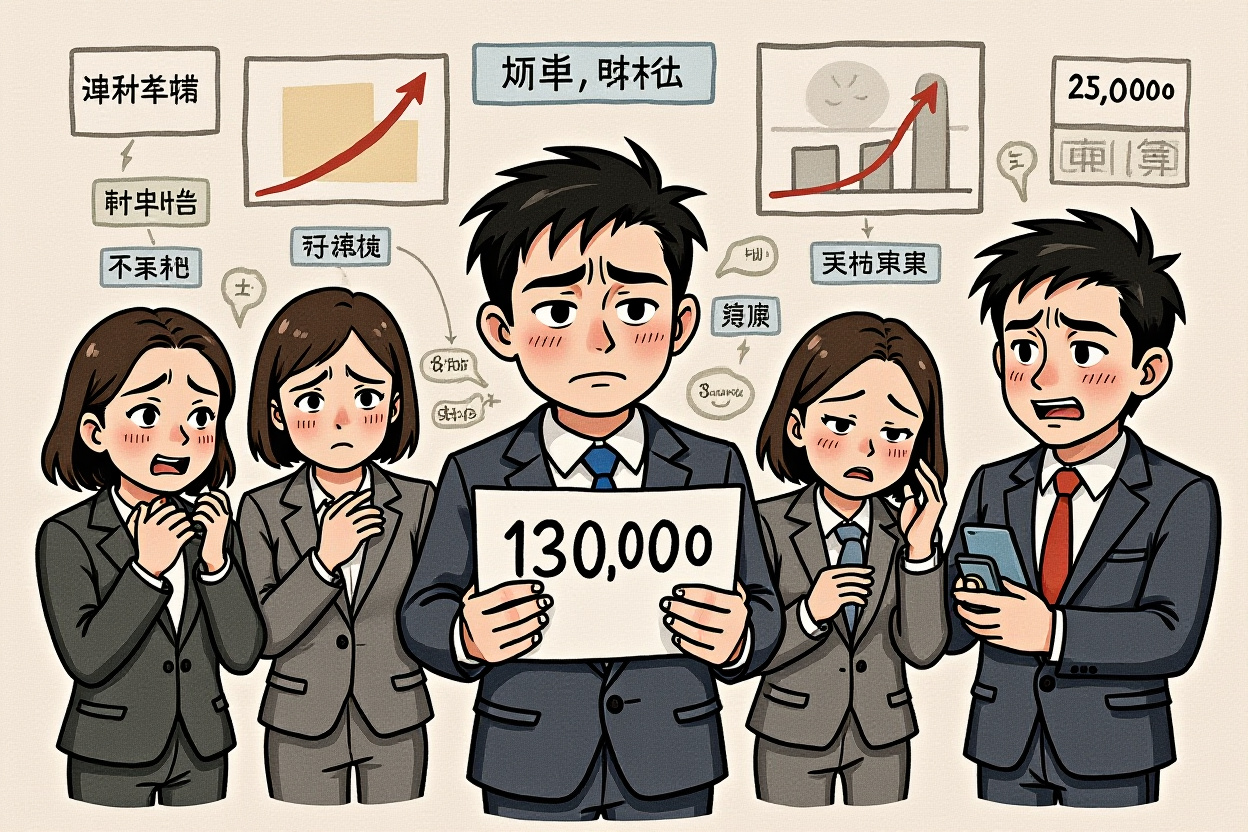
As the Lunar New Year approached, many young Chinese found themselves short on cash for traditions like red envelopes and family trips. Platforms like Fenqile (分期乐) offered a tempting solution: instant credit with promises of low monthly payments. However, behind the veneer of financial technology lies a harsh reality where borrowing 13,000 yuan can balloon into a 26,000 yuan repayment obligation. This mini-loan phenomenon is systematically draining the financial health of a generation, embedding consumers in cycles of debt under the guise of convenience.
The case of Ms. Chen (陈女士) exemplifies this crisis. A university student lured by the promise of manageable installments, she took multiple small loans from Fenqile for everyday expenses, including a 400 yuan purchase stretched over 36 months. Years later, her total borrowed amount of 13,674 yuan demands a repayment of 26,859 yuan—nearly double the principal. With effective annualized interest rates ranging between 32.08% and 35.90%, she represents thousands trapped by these deceptive lending practices. The psychological toll is immense, exacerbated by debt collectors who notified her entire social circle, leading to depression and a desperate desire for normalcy.
Deconstructing the Debt Spiral: A Case Study in Opaque Costs
Ms. Chen’s loan portfolio reveals the mechanics of the mini-loan trap. She took five separate loans between 2020 and 2021:
- 6,800 yuan over 36 periods
- 1,000 yuan over 24 periods
- 3,500 yuan over 36 periods
- 400 yuan over 36 periods
- 1,974 yuan over 12 periods
While advertised monthly payments seemed minimal—as low as 18.23 yuan—the extended terms and high rates compounded the debt exponentially. By August 2022, she defaulted, and her overdue period now exceeds 1,000 days. This pattern is not isolated. On the Black Cat Complaint platform (黑猫投诉), over 160,000 complaints target Fenqile, with users consistently reporting that the true cost of borrowing is obscured until it is too late.
The Regulatory Reality Check: Guidelines Versus Ground-Level Practice
In December 2025, the People’s Bank of China (中国人民银行) and the National Financial Regulatory Administration (国家金融监督管理总局) jointly issued the “Guidelines for the Management of Comprehensive Financing Costs of Small Loan Companies” (小额贷款公司综合融资成本管理工作指引). These rules explicitly forbid new loans with comprehensive annualized costs exceeding 24% and mandate that, in principle, all new loans by the end of 2027 must have costs within four times the one-year Loan Prime Rate (LPR). From 2026, local financial authorities must correct violations, halt new lending, and incorporate dynamic credit reporting management.
Despite this, Fenqile’s mini-loan model appears to sidestep these caps. The platform’s mini-app promotes “annual interest rates as low as 8%,” but the fine print reveals additional charges like membership fees, guarantee fees, and credit assessment fees. A complaint from February 12, 2025, stated, “My comprehensive annualized rate with Fenqile is 36%, far exceeding the 24% red line… Please order the return of all fees above 24%.” This gap between regulation and practice underscores the challenges in reigning in digital lenders.
From Campus Roots to Mainstream Menace: The Evolution of Mini-Loans
Fenqile’s origins are deeply intertwined with the controversial campus lending sector that boomed in China earlier last decade. Its parent company, Lexin Fintech Holdings Ltd. (乐信集团), which is listed on Nasdaq, was founded by Xiao Wenjie (肖文杰). Lexin began as “Shenzhen Fenqile Network Technology Co., Ltd.” (深圳市分期乐网络科技有限公司) in 2013, marketing itself as a pioneer in installment e-commerce. Its initial growth was fueled by providing credit to university students, a practice that drew regulatory ire and was heavily restricted after 2016.
In response, Lexin rebranded as a fintech giant, but evidence suggests its core mini-loan business still disproportionately affects young, financially inexperienced demographics. Searches for “Fenqile campus loan” (分期乐 校园贷) on Black Cat yield 922 results, with users recounting how promotion agents operated on university grounds, enticing students with easy credit. This historical baggage casts a long shadow over its current operations, raising questions about whether it has truly reformed or merely repackaged its risky lending habits.
The Aggressive Collection Machine: When Debt Turns Harassment
Beyond high costs, the mini-loan experience is marred by aggressive recovery tactics. Over 20,000 complaints detail instances of so-called “violent debt collection,” where collectors contact borrowers’ family members, friends, colleagues, and even village heads to apply pressure. This practice, known as “blasting the address book” (爆通讯录), not only violates privacy but inflicts severe emotional distress. For Ms. Chen, it meant her entire social network learned of her debt, compounding her financial struggle with shame and anxiety.
Such methods highlight a systemic issue where fintech platforms prioritize recovery over ethical conduct. The Economic Reference News (经济参考报) investigated how Fenqile’s app, upon user agreement, collects extensive personal data—from ID photos and bank details to facial recognition and location information. This data is then shared with third parties, including payment partners, clearing banks, and credit enhancement agencies, creating a surveillance network that empowers intrusive collection practices.
The Business Model Unveiled: How Mini-Loans Generate Outsized Profits
Fenqile operates through its licensed network micro-lender, Ji’an Fenqile Network Small Loan Co., Ltd. (吉安市分期乐网络小额贷款有限公司), based in Jiangxi province. It partners with licensed institutions like Shanghai Bank (上海银行) to disburse funds, targeting what it calls “credit consumption populations.” The mini-loan model is deceptively simple: offer small principal amounts with stretched repayment periods to make each installment seem affordable, while layering on fees that push the effective interest rate to the legal maximum.
For example, a report by China Consumer (中国消费者) documented cases where borrowers faced significant cost overruns. A user from Hangzhou borrowed 10,300 yuan at a contracted annual rate of 6% for 12 months, which should have resulted in a total repayment of 10,643 yuan. However, bank records showed actual monthly payments of 1,034.78 yuan, leading to a total of 12,425.4 yuan—an excess of approximately 1,782 yuan. Similarly, a second loan of 15,000 yuan at 7.5% ended up costing 17,650.43 yuan even after early repayment, over 2,053 yuan more than the agreed sum.
The Fee Maze: Unpacking Hidden Charges in Mini-Loan Agreements
The profitability of mini-loans hinges on complex fee structures that are rarely disclosed transparently. Complaints frequently mention unexpected charges for “credit evaluation,” “guarantee fees,” or “member services” that are buried in lengthy electronic agreements. A borrower from Sichuan’s Liangshan Prefecture reported being charged 1,102.14 yuan in guarantee fees for two loans of 49,880 yuan each through Fenqile’s “Lehua Borrow” (乐花借钱) product, without clear prior notification.
This opacity violates basic consumer protection principles. As China Consumer pointed out, platforms often fail to prominently disclose fees beyond principal and interest, nor do they explain the pricing basis for additional services. This lack of transparency transforms mini-loans from a financial tool into a predatory scheme, where borrowers only grasp the full cost when they are already entrenched in debt.
Regulatory Crossroads and Market Implications for Chinese Fintech
The scrutiny on Fenqile’s mini-loan operations arrives at a critical juncture for China’s financial technology sector. As authorities tighten oversight on consumer finance, the industry faces pressure to align with stricter compliance standards. The 2025 guidelines represent a significant step, but their enforcement will test the resolve of local regulators and the adaptability of firms like Lexin. Investors in Chinese equities, particularly in the fintech space, must monitor these developments closely, as regulatory actions could impact profitability and valuation models.
For institutional investors and fund managers, the mini-loan controversy underscores broader risks in China’s consumer credit market. While digital lending offers growth potential, ethical lapses and regulatory non-compliance can lead to reputational damage, legal penalties, and operational disruptions. The case of Fenqile serves as a cautionary tale, highlighting the need for due diligence on corporate governance and customer protection practices when evaluating fintech stocks.
The Path Forward: Consumer Empowerment and Systemic Reform
Addressing the mini-loan crisis requires a multi-faceted approach. First, enhancing financial literacy among young consumers is paramount. Educational initiatives should demystify loan terms, emphasize the dangers of high-interest debt, and promote responsible borrowing. Second, regulators must bolster enforcement mechanisms, ensuring that platforms adhere to transparent pricing and ethical collection standards. The dynamic credit reporting system mentioned in the 2025 guidelines could be a powerful tool if implemented effectively.
For affected borrowers, practical steps include documenting all communications with lenders, filing formal complaints with local financial oversight bureaus, and seeking legal advice. Resources like the Black Cat Complaint platform provide a channel for collective grievance redressal, though systemic change depends on regulatory action.
Navigating the Mini-Loan Landscape: Key Takeaways for Stakeholders
The proliferation of mini-loans in China reflects both the demand for accessible credit and the vulnerabilities in a rapidly digitizing financial ecosystem. For consumers, the allure of “easy money” must be tempered with caution: always scrutinize the fine print, calculate the total repayment cost, and be wary of extended terms that mask high interest. For regulators, the challenge is to close loopholes that allow fees to inflate costs beyond legal limits, ensuring that innovation does not come at the expense of consumer welfare.
For the financial community, this saga reinforces the importance of ESG (Environmental, Social, and Governance) criteria in investment decisions. Companies that prioritize short-term profits over long-term sustainability and ethical conduct may face increasing headwinds. As China continues to refine its regulatory framework, transparency and accountability will become key differentiators in the fintech sector.
In conclusion, the mini-loan model epitomized by Fenqile is a double-edged sword. While it provides liquidity to underserved segments, its current implementation often exploits financial naivety through opaque pricing and aggressive tactics. The staggering case of borrowing 13,000 yuan to repay 26,000 yuan is not an anomaly but a symptom of a broader issue. As China marches toward a more mature financial market, stakeholders—from policymakers to investors to borrowers—must collaborate to foster a responsible lending environment. The call to action is clear: demand transparency, support robust regulation, and invest in financial education to prevent mini-loans from becoming a macro-problem for China’s economic future.