



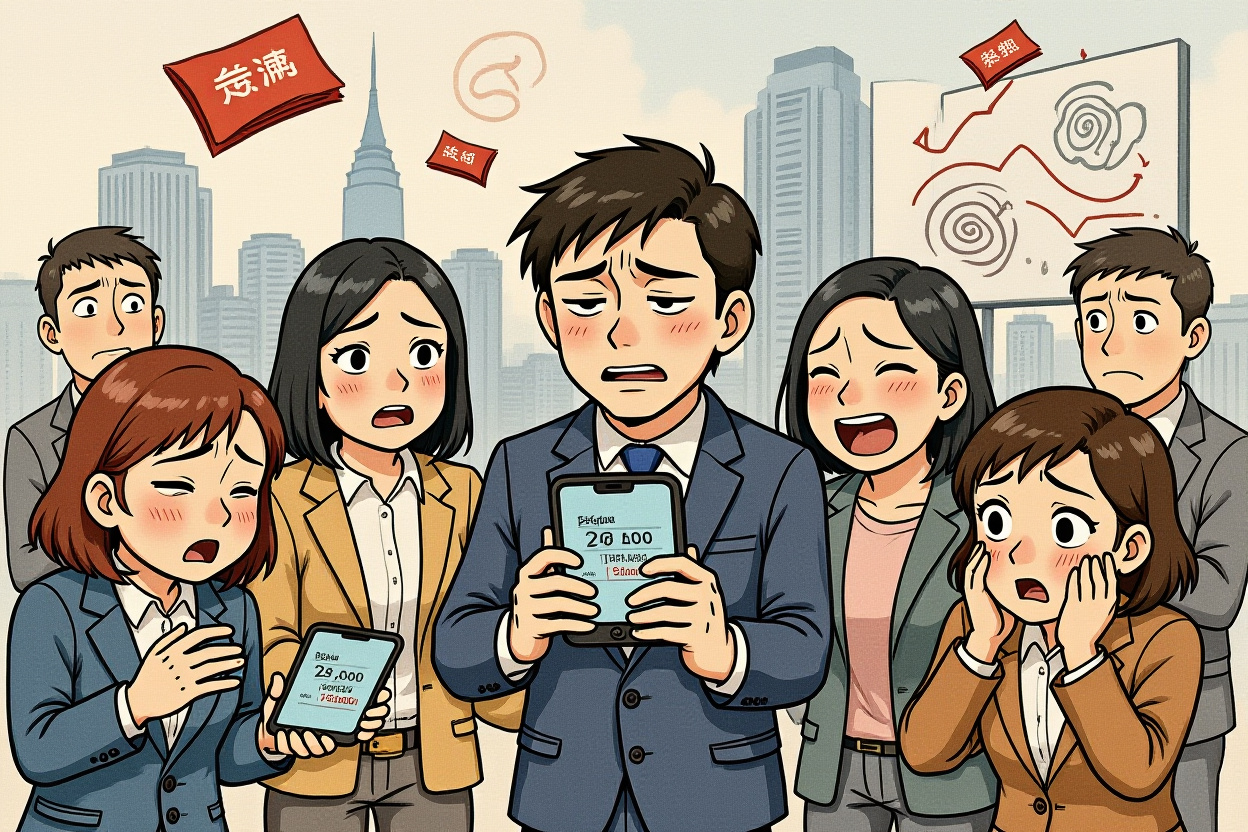
As the Lunar New Year approaches, many young consumers in China face financial pressure to give red envelopes, fund family trips, or cover daily expenses. Platforms like Fenqile (分期乐) offer tempting solutions with promises of high credit limits and low monthly payments, but beneath the surface lies a dangerous reality. This article delves into the mini-loans phenomenon, where borrowing small amounts can lead to repayment burdens doubling the principal, exposing regulatory gaps, and highlighting the urgent need for consumer protection in China’s evolving fintech landscape.
Executive Summary: Key Takeaways
- Mini-loans, often marketed as low-interest, short-term credit, can carry effective annualized rates nearing 36%, far exceeding regulatory caps of 24%, leading to debt spirals for young borrowers.
- Platforms like Fenqile (分期乐) face over 160,000 complaints on platforms like Hei Mao Tousu (黑猫投诉), citing opaque fees, hidden charges, and aggressive debt collection practices that violate privacy and mental well-being.
- Despite regulatory efforts such as the 2025 guidelines from the People’s Bank of China (中国人民银行) and the National Financial Regulatory Administration (国家金融监督管理总局), enforcement gaps allow mini-loans to persist, often targeting students and low-income groups.
- The legacy of campus loans continues to haunt China’s fintech sector, with data privacy concerns and unethical lending practices posing risks to financial stability and consumer trust.
- Investors and policymakers must balance innovation with stricter oversight to prevent mini-loans from exacerbating debt crises among youth, while consumers should seek transparent alternatives and legal recourse.
The Alarming Rise of Mini-Loans and Their Debt Spiral
In recent years, mini-loans have gained popularity among young Chinese consumers, offering quick access to cash for everything from holiday spending to emergency needs. However, these seemingly convenient products often mask exorbitant costs that trap borrowers in cycles of debt. The case of Ms. Chen, who borrowed 13,674 yuan and now faces repayment of 26,859 yuan, illustrates how mini-loans can double financial obligations through extended tenures and hidden fees.
Case Study: Ms. Chen’s Ordeal with Fenqile
Ms. Chen, a university student at the time, took out five loans from Fenqile (分期乐) between 2020 and 2021, totaling 13,674 yuan. The loans, with amounts as small as 400 yuan spread over 36 months, carried annual interest rates ranging from 32.08% to 35.90%. Lured by promotional terms like low monthly payments of 18.23 yuan, she soon found herself overwhelmed. After defaulting in August 2022, her debt ballooned due to penalties and fees, leading to over 1,000 days of delinquency. Aggressive debt collectors exposed her situation to family and friends, contributing to depression and financial distress. This mini-loans model, which extends repayment periods to minimize monthly burdens, ultimately inflates total costs, creating a snowball effect that devastates young borrowers.
Hidden Fees and Opaque Pricing Structures
Beyond stated interest rates, mini-loans platforms frequently impose additional charges that escalate effective costs. On Hei Mao Tousu (黑猫投诉), users report unexplained fees for membership, guarantee services, and credit assessments, pushing comprehensive annualized rates toward the 36% ceiling. For instance, one borrower complained on February 12, 2025, that Fenqile (分期乐) refused to disclose the actual lender, obscuring accountability. Another case from January 2025 involved a 1,450 yuan fee for credit evaluation, added without clear consent. According to China Consumer (中国消费者), examples like Mr. Meng from Hangzhou show discrepancies where actual repayments exceeded contract amounts by thousands of yuan, highlighting the lack of transparency in mini-loans agreements.
- Complaint Volume: Over 160,000 complaints against Fenqile (分期乐) on Hei Mao Tousu (黑猫投诉), with many citing hidden fees.
- Regulatory Violation: Effective rates often surpass the 24% cap set by authorities, despite guidelines from the People’s Bank of China (中国人民银行).
- Consumer Impact: Borrowers like Ms. Chen face mental health issues and social stigma due to debt collection tactics.
The Lingering Shadow of Campus Loans in Fintech
Fenqile (分期乐) and its parent company, Lexin Fintech (乐信集团), have roots in the controversial campus loan sector, which targeted university students with high-risk credit products. Although regulatory crackdowns in 2016 forced a rebranding, mini-loans continue to attract young, vulnerable demographics, raising questions about ethical lending practices and data privacy.
Historical Context: From Campus Loans to Mini-Loans
Lexin Fintech (乐信集团), founded by Xiao Wenjie (肖文杰), launched Fenqile (分期乐) in 2013 as a分期购物电商 (installment shopping e-commerce) platform, initially gaining traction by financing smartphone purchases for students. This campus loan model fueled rapid growth but drew scrutiny for predatory lending. After going public on NASDAQ in 2017, Lexin Fintech (乐信集团) shifted its focus to broader consumer credit, yet mini-loans remain accessible to students. Searches for campus loan-related complaints on Hei Mao Tousu (黑猫投诉) yield 922 results, indicating ongoing issues with on-campus promotions and student targeting.
Data Privacy and Aggressive Collection Practices
Mini-loans platforms often require extensive personal data授权 (authorization), including ID photos, bank details, and location信息 (information), which are shared with third parties like payment processors and credit enhancers. The privacy policy of Fenqile (分期乐) allows data sharing with entities such as Shanghai Bank (上海银行), raising concerns about misuse. Combined with暴力催收 (violent debt collection)—where collectors harass borrowers’ social circles—this creates a coercive environment. Reports from Economic Reference News (经济参考报) detail how unauthorized data sharing and relentless calls exacerbate the psychological toll on young consumers, undermining trust in fintech innovations.
Regulatory Scrutiny and Compliance Challenges
Chinese regulators have introduced measures to curb excessive financing costs in mini-loans, but enforcement remains inconsistent. The 2025 guidelines aim to limit comprehensive annualized rates to 24%, with further reductions tied to the Loan Prime Rate (LPR), yet loopholes allow platforms to maintain high profitability through fee structures.
New Guidelines and Their Limitations
On December 19, 2025, the People’s Bank of China (中国人民银行) and the National Financial Regulatory Administration (国家金融监督管理总局) issued the “Guidelines for the Management of Comprehensive Financing Costs of Small Loan Companies,” prohibiting new loans with costs above 24% and mandating alignment with LPR multiples by 2027. However, mini-loans providers exploit ambiguities by labeling extra charges as services rather than interest. For example, Fenqile (分期乐) advertises annual rates as low as 8% but adds担保费 (guarantee fees) and other costs, effectively circumventing caps. Local financial authorities are tasked with enforcement, but resource constraints and regulatory arbitrage hinder effective oversight.
Enforcement Gaps and Consumer Advocacy
Despite rules, mini-loans continue to thrive due to weak monitoring and high consumer demand. Platforms like Fenqile (分期乐) operate through吉安市分期乐网络小额贷款有限公司 (Jian Fenqile Network Small Loan Co., Ltd.), leveraging partnerships with licensed institutions to appear compliant. Consumer advocates, citing sources like Southern Daily (南方日报), urge stricter audits and penalties for violations. Legal experts note that borrowers can seek redress through complaints to the China Banking and Insurance Regulatory Commission (CBIRC) or lawsuits, but the complexity of电子协议 (electronic agreements) often leaves them disadvantaged.
- Regulatory Timeline: By 2027, all new mini-loans must have costs within 4 times the 1-year LPR, currently around 15-20%.
- Platform Tactics: Use of延长分期 (extended installments) and fee stacking to maintain high yields.
- Advocacy Resources: Links to Hei Mao Tousu (黑猫投诉) for complaint filing and reference to official guidelines for consumer education.
Impact on Young Consumers and Financial Health
The proliferation of mini-loans poses significant risks to the financial well-being of China’s youth, exacerbating debt stress and limiting long-term economic mobility. With many borrowers aged 18-30, the consequences extend beyond individual cases to broader societal concerns.
Psychological and Social Repercussions
Debt from mini-loans often leads to anxiety, depression, and social isolation, as seen in Ms. Chen’s experience. The stigma of default, amplified by aggressive collection methods, can damage personal relationships and career prospects. Surveys indicate that over 70% of young borrowers feel overwhelmed by repayments, with mini-loans accounting for a growing share of household debt. This trend threatens to undermine financial literacy efforts and foster a cycle of dependency on high-cost credit.
Strategies for Mitigation and Protection
Consumers can protect themselves by scrutinizing loan terms, avoiding unnecessary extensions, and using official channels like the National Financial Regulatory Administration (国家金融监督管理总局) for disputes. Financial education initiatives, promoted by organizations such as the China Consumers Association (中国消费者协会), emphasize budgeting and alternative savings options. For investors, due diligence on fintech firms should include assessments of compliance records and consumer complaint histories to gauge sustainability.
The Future of Mini-Loans in China’s Financial Ecosystem
As China’s fintech sector evolves, mini-loans must adapt to stricter regulations and shifting consumer expectations. The balance between innovation and protection will define the trajectory of this market, with implications for global investors eyeing Chinese equities.
Innovation Versus Consumer Protection
Fintech companies like Lexin Fintech (乐信集团) argue that mini-loans democratize credit access, but critics warn of exploitative practices. Moving forward, platforms could adopt transparent pricing, ethical collection, and data safeguards to rebuild trust. Regulatory tech (RegTech) solutions, such as real-time monitoring of lending rates, may enhance enforcement. For international investors, this signals a need to focus on firms with robust governance and alignment with China’s dual goals of financial inclusion and stability.
Recommendations for Stakeholders
Policymakers should strengthen penalties for violations and promote financial literacy programs targeting youth. Consumers must educate themselves on the true costs of mini-loans and seek advice from certified financial planners. Investors should monitor regulatory developments and favor companies with clear compliance strategies. The mini-loans sector, if reformed, could contribute to healthy credit markets, but unchecked, it risks perpetuating debt crises that harm economic growth.
Synthesizing Insights and Moving Forward
The mini-loans phenomenon in China reveals a critical junction in fintech development, where便捷 (convenience) often comes at a high price. From Ms. Chen’s doubled debt to regulatory struggles, the issues underscore the urgency of transparent lending practices. As authorities tighten rules, consumers and investors alike must stay vigilant. By prioritizing education, advocacy, and ethical innovation, stakeholders can transform mini-loans from a debt trap into a responsible financial tool. For those affected, seeking legal counsel and reporting violations remain key steps toward reclaiming financial control.