



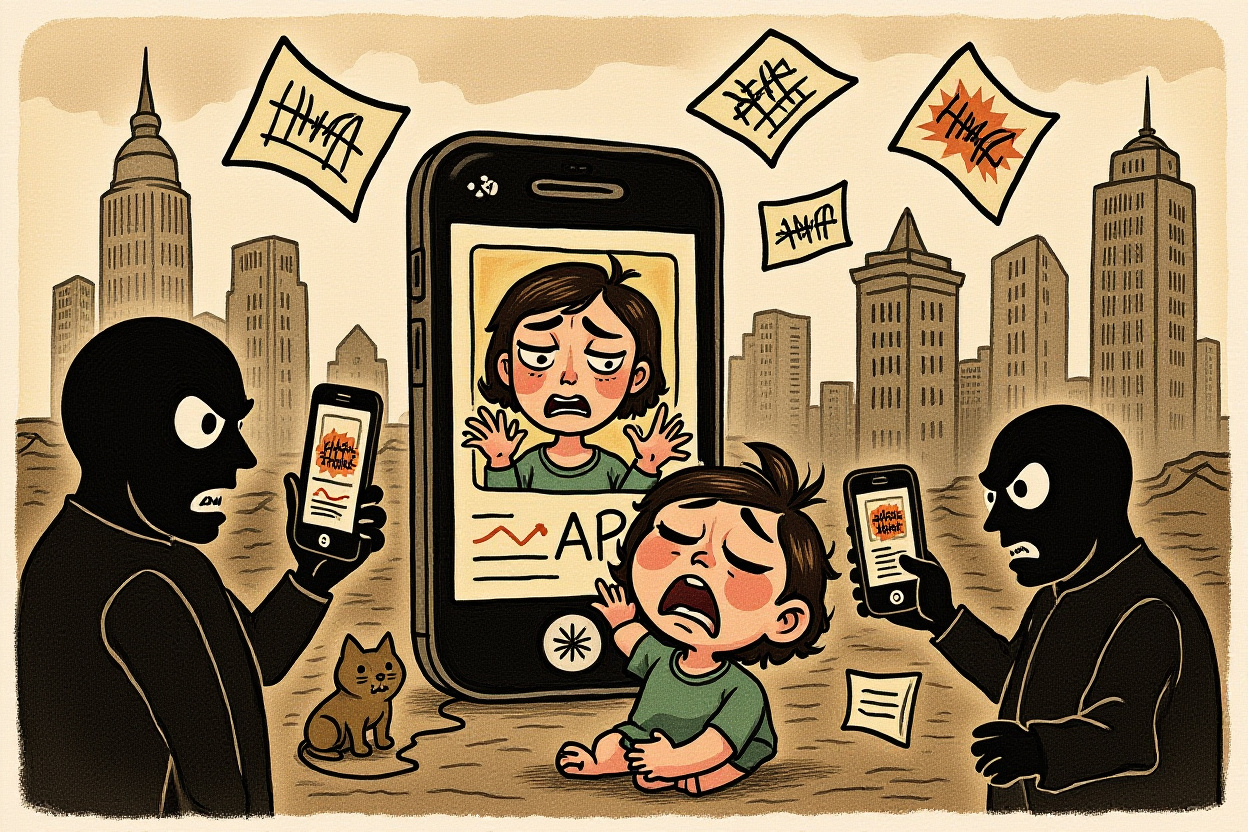
– Mini-loan platforms in China, led by Fenqile, are imposing effective annual interest rates as high as 36%, far exceeding regulatory caps and forcing borrowers to repay nearly double their principal amounts.
– Opaque fee structures, including hidden charges for membership, guarantees, and credit assessment, inflate the true cost of borrowing, ensnaring young and financially vulnerable individuals in debt cycles.
– Despite regulatory crackdowns, including new guidelines from the People’s Bank of China and the National Financial Regulatory Administration, platforms continue to exploit loopholes through extended repayment terms and fee bundling.
– Fenqile’s origins in campus lending persist, with evidence of continued targeting of students and aggressive debt collection practices that violate privacy and cause psychological harm.
– The case highlights systemic risks in China’s fintech sector, urging stricter enforcement, borrower education, and investor caution as the industry faces heightened scrutiny.
As the Lunar New Year prompts a surge in consumer spending, many young Chinese are turning to convenient online lending platforms for quick cash to cover gifts, travel, and festivities. However, beneath the allure of instant credit lies a dangerous reality: mini-loans that can double debt through exorbitant interest rates and hidden fees. The recent controversy surrounding Fenqile (分期乐), a prominent mini-loan provider, underscores a growing crisis in China’s consumer finance sector. With a borrower reporting a need to repay 26,859 yuan on a 13,674 yuan loan, the mini-loan trap is draining the financial health of a generation, even as regulators strive to rein in abusive practices. This article delves into the mechanics of these loans, regulatory challenges, and the broader implications for markets and investors, shedding light on how mini-loans are reshaping risk perceptions in Chinese equities.
The Mechanics of Mini-Loans: From Alluring Promises to Debt Traps
The promise of mini-loans is simple: small amounts, manageable monthly payments, and quick approval, tailored for young consumers seeking instant gratification. Platforms like Fenqile market themselves with slogans such as “borrow up to 200,000 yuan with annual interest as low as 8%,” appealing to those in urgent need during events like the Lunar New Year. Yet, the reality is far grimmer, as borrowers often find themselves locked into cycles of debt due to compounded costs and opaque terms. Mini-loans, often dubbed “迷你贷” in Chinese, have become a double-edged sword, offering accessibility while masking exorbitant true costs that can spiral out of control.
Case Study: Chen’s Debt Spiral and the Snowball Effect
Ms. Chen (陈女士), a university student, fell into the mini-loan net while pursuing超前消费 (pre-consumption) for daily expenses. Between 2020 and 2021, she borrowed five loans totaling 13,674 yuan from Fenqile, with amounts ranging from 400 yuan to 6,800 yuan, split over 12 to 36 months. The advertised monthly payments were as low as 18.23 yuan, but the annual interest rates hovered between 32.08% and 35.90%. By 2022, unable to repay, she defaulted, and over 1,000 days of逾期 (overdue) have accumulated, with debt collectors harassing her family and friends, exacerbating her depression. This case exemplifies how mini-loans can transform small borrowings into overwhelming liabilities, with the debt snowballing to nearly double the principal.
This situation is not isolated. On the Black Cat投诉平台 (Black Cat Complaint Platform), over 160,000 complaints target Fenqile, with users alleging undisclosed fees that push effective costs to the 36% ceiling. For instance, one borrower in February noted a 36% comprehensive annual rate, while others reported extra charges for信用评估费用 (credit assessment fees) and担保费 (guarantee fees). Data from complaints reveal a pattern: borrowers are lured by low apparent rates but end up paying far more due to hidden add-ons, turning mini-loans into financial quagmires.
How Fee Opacity and Extended Terms Inflate Costs
Mini-loans operate by extending repayment periods to make installments seem affordable, but this stretches interest accrual and hides true expenses. Fenqile’s model involves several tactics that inflate costs:
– Bundling loans with ancillary services that carry separate fees, such as membership or insurance, often buried in lengthy电子协议 (electronic agreements).
– Failing to disclose all costs upfront, as highlighted in reports by 中国消费者 (China Consumer), where cases from Zhejiang and Sichuan show actual repayments exceeding contracted amounts by thousands of yuan.
– Using terms like “low monthly payments” to distract from high annualized rates, a common ploy in the mini-loan industry.
For example, in one documented case, a borrower from Zhejiang took a 10,300 yuan loan at a 6% stated rate but ended up repaying 12,425.4 yuan due to undisclosed fees. This fee opacity turns mini-loans into snowballing liabilities, contradicting platforms’ claims of serving young consumers responsibly and highlighting the need for greater transparency in the sector.
Regulatory Crackdown: New Guidelines and Enforcement Gaps
In response to widespread abuses in the mini-loan space, Chinese authorities have stepped up oversight to protect consumers. On December 19, 2025, the中国人民银行 (People’s Bank of China, PBOC) and the国家金融监管总局 (National Financial Regulatory Administration, NFRA) issued the 小额贷款公司综合融资成本管理工作指引 (Guidelines for the Management of Comprehensive Financing Costs of Small Loan Companies). These rules prohibit new loans with comprehensive annual costs exceeding 24% and mandate that by the end of 2027, all new loans should be capped at four times the one-year Loan Prime Rate (LPR), which is currently around 3.45%, aiming for a cap near 13.8%. From 2026, violations will trigger corrective actions, suspension of new lending, and credit reporting implications, signaling a tightening noose on high-interest lending.
Platform Evasion Tactics and Compliance Challenges
Despite these guidelines, mini-loan platforms like Fenqile adapt by innovating their profit models to skirt regulations. They may employ strategies such as:
– Introducing new fee categories under different names, like “service charges” or “processing fees,” to circumvent interest caps while maintaining high effective rates.
– Relying on partnerships with持牌机构 (licensed institutions), such as Shanghai Bank, to distribute loans, obscuring accountability and making it harder for regulators to pinpoint violations.
– As seen in complaints, Fenqile often refuses to disclose the actual放款方 (lender), complicating regulatory追查 (investigation) and enforcement.
This cat-and-mouse game highlights the need for more robust monitoring and penalties. For instance, in a complaint from February 12, a user noted that Fenqile’s refusal to reveal the lender hindered action against the 36% rate. Regulatory bodies must enhance coordination to close these gaps, ensuring that mini-loans do not exploit loopholes at the expense of vulnerable borrowers.
The Lingering Shadow of Campus Lending and Aggressive Tactics
Fenqile’s roots trace back to campus lending, a practice that fueled its early growth but remains contentious in China’s financial landscape. Founded in 2013 by Xiao Wenjie (肖文杰), the platform initially targeted students with分期购物 (installment shopping) for electronics, evolving into the Lexin Group (乐信集团) listed on Nasdaq. While it has rebranded as a fintech firm, evidence suggests continued ties to校园贷 (campus loans), raising questions about whether mini-loans have truly shed their predatory origins. The persistence of such targeting underscores the ethical risks in the industry, especially as young borrowers are often less financially literate.
Targeting Students and Privacy Violations in the Digital Age
On the Black Cat platform, 922 complaints specifically mention “分期乐 校园贷” (Fenqile campus loans), with reports of推广人员 (promoters) operating on campuses and摆摊 (setting up stalls) to lure students. This ongoing targeting exposes young, inexperienced borrowers to high-risk debt, often for non-essential purchases. Moreover, Fenqile’s privacy policy, as investigated by 经济参考报 (Economic Reference News), reveals extensive data collection—from身份证号码 (ID numbers) to人脸信息 (facial recognition)—shared with third parties like payment partners and增信机构 (credit enhancement agencies). This data exploitation amplifies the risks, as borrowers lose control over personal information upon agreeing to terms, creating privacy concerns that extend beyond financial harm.
Violent Debt Collection and Its Psychological Toll
Over 20,000 complaints detail暴力催收 (violent debt collection) by Fenqile, including爆通讯录 (contacting entire phonebooks), harassment of family and colleagues, and even threats to community leaders. Such tactics, as experienced by Ms. Chen, cause severe psychological distress, leading to depression and social isolation. In one instance, a borrower from Sichuan reported that debt collectors contacted their village head, amplifying shame and pressure. This underscores the human cost of mini-loans, beyond mere financial strain, and highlights why regulatory action must address not just rates but also collection practices to protect consumer well-being.
Market Implications for Fintech and International Investors
The mini-loan controversy has broader ramifications for China’s equity markets, particularly the fintech sector, which attracts significant international investment. As a Nasdaq-listed entity, Lexin Group’s practices could affect investor confidence and regulatory perceptions globally, making it a case study in the risks of high-growth lending models. Mini-loans, while profitable, pose sustainability challenges as regulators clamp down, potentially impacting valuations and sector stability.
Risks to Fintech Valuation and Compliance Pressures
Investors in Chinese fintech must scrutinize mini-loan business models for sustainability amid evolving regulations. Platforms like Fenqile that rely on high-interest margins may face:
– Earnings volatility from potential fines or forced refunds, as seen in past cases where regulators mandated compensation for overcharged fees.
– Reputational damage that could deter users and partners, reducing market share and growth prospects.
– Increased scrutiny from both Chinese and international regulators, impacting stock performance; for example, Lexin’s shares have shown sensitivity to regulatory news in the past.
Financial analyst Zhang Wei (张伟) notes, “The mini-loan sector’s profitability hinges on fee opacity, but regulatory winds are shifting toward transparency, which could squeeze margins for players like Fenqile.” This aligns with data showing that since the PBOC guidelines, some fintech stocks have experienced increased volatility, reflecting investor uncertainty.
Opportunities for Responsible Lending and Sector Evolution
This crisis also presents opportunities for ethical fintech firms that prioritize transparency and compliance. By adopting fair pricing, clear disclosures, and robust consumer protection, companies can differentiate themselves in a crowded market. Investors should favor platforms aligned with the PBOC’s guidelines, as they are likely to be more resilient in the long term. For instance, some smaller lenders are already pivoting to lower-rate models, leveraging technology for better risk assessment rather than relying on high fees. This shift could reshape the mini-loan landscape, promoting healthier competition and financial inclusion.
Navigating Forward: Recommendations for Stakeholders
To address the mini-loan trap and mitigate risks, coordinated efforts are needed from borrowers, regulators, and the industry. Mini-loans, if reformed, could serve as tools for financial access, but current practices demand urgent action to prevent further exploitation of young consumers.
For Borrowers: Empowerment and Financial Literacy
Young consumers should take proactive steps to protect themselves from mini-loan pitfalls:
– Educate themselves on the true cost of borrowing, including all fees and effective annual rates, using resources like regulatory websites or consumer advocacy groups.
– Avoid impulsive loans for non-essential spending, especially during festive seasons when marketing is intense.
– Utilize complaint platforms like Black Cat to report abuses and seek redress, building collective pressure for change.
As the case of Ms. Chen shows, awareness is key to resisting the allure of mini-loans that promise easy money but deliver financial ruin. Financial literacy programs, potentially supported by schools or community organizations, could play a crucial role in this empowerment.
For Regulators and Policymakers: Strengthening Oversight and Enforcement
Authorities must enhance their approach to curb mini-loan abuses effectively:
– Implement real-time monitoring of platform practices to ensure compliance with the 24% cost cap, using technology to track fee structures and interest calculations.
– Mandate clearer disclosure of all fees in loan agreements, requiring plain language summaries that borrowers can easily understand before signing.
– Impose stricter penalties for violations, including吊销执照 (license revocation) for repeat offenders, and enhance coordination between local and national regulators.
Outbound link: For more details on the PBOC guidelines, refer to the official announcement on the PBOC website (link to be inserted in WordPress). Additionally, resources from the National Financial Regulatory Administration can provide updates on enforcement actions.
China’s mini-loan epidemic, exemplified by Fenqile’s practices, reveals a stark contradiction between fintech innovation and consumer protection. With borrowers repaying double their principal due to opaque fees and high interest, the societal cost is immense, particularly for the youth who are the future of the economy. Regulatory frameworks are evolving, but gaps persist, allowing platforms to exploit vulnerabilities through extended terms and hidden charges. For international investors, this underscores the importance of due diligence in China’s fintech sector, where compliance risks can translate to market volatility and reputational damage. As the industry stands at a crossroads, embracing transparency and ethical lending is not just a regulatory imperative but a business necessity for sustainable growth. Stakeholders—from borrowers to regulators to investors—must act now to ensure that mini-loans evolve into responsible financial tools, rather than remaining instruments of exploitation that drain the financial vitality of a generation.