



Executive Summary
As Chinese regulators tighten rules on lending costs, the controversial practices of platforms like Fenqile (分期乐) underscore persistent risks in the consumer finance sector. This analysis delves into the mechanics of mini loans and their impact.
– Case Study Revelation: A borrower’s 13,674 yuan loan ballooned to 26,859 yuan in repayment, exemplifying how mini loans with extended tenors and hidden fees can double debt burdens.
– Regulatory Gap: Despite new caps from the People’s Bank of China (中国人民银行) and the National Financial Regulatory Administration (国家金融监督管理总局), enforcement challenges allow effective annual percentage rates (APRs) to hover near 36%.
– Business Model Scrutiny: Fenqile’s evolution from campus loan pioneer to mini loan provider remains fraught with complaints over opaque pricing, aggressive data collection, and violent debt collection tactics.
– Market Implications: Investors in Chinese fintech must assess sustainability amid consumer backlash and potential regulatory crackdowns on high-cost lending practices.
– Consumer Advisory: Borrowers are urged to scrutinize loan agreements for hidden costs and seek legal recourse against unlawful fees.
The Alarming Case: From 13,000 Yuan to 26,000 Yuan in Debt
As Chinese families prepared for Lunar New Year celebrations, many young consumers faced financial strain, turning to quick-credit solutions like mini loans. This trend masks a darker reality, where accessible debt spirals into unmanageable burdens. The case of Ms. Chen, highlighted in a recent viral social media post, underscores how mini loans can drain financial resources through deceptive practices.
Details of the Loan and Repayment Structure
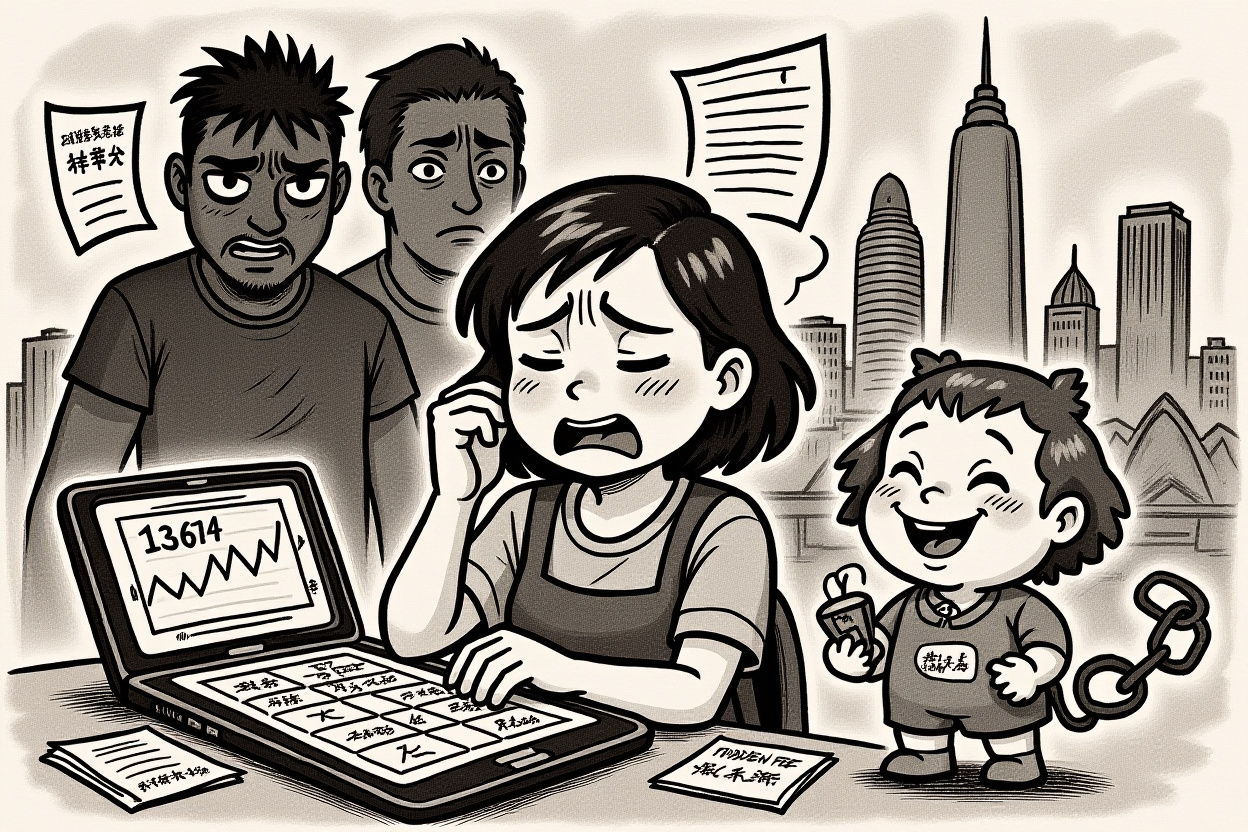
During her university years, Ms. Chen borrowed five times from Fenqile (分期乐), totaling 13,674 yuan, for everyday expenses including a 400 yuan purchase stretched over 36 installments. The loans, with tenors from 12 to 36 months, carried stated annual interest rates between 32.08% and 35.90%. Promoted as low-interest with monthly payments as low as 18.23 yuan, the true cost emerged later: she now owes 26,859 yuan, nearly double the principal. After ceasing payments in August 2022, her delinquency exceeds 1,000 days, compounded by psychological distress from aggressive collection tactics that notified her family and friends.
Impact on Borrower Well-being and Financial Health
The psychological toll is severe, with Ms. Chen reporting depression and social isolation due to the collection harassment. This case is not isolated; it reflects a broader pattern where mini loans, designed for small, manageable amounts, exploit elongated repayment periods to maximize interest accrual. The focus on mini loans here reveals how they trap young, often financially inexperienced individuals in cycles of debt that far exceed initial borrowing.
Opaque Fee Structures and Snowballing Debt Mechanics
Beneath the surface of Fenqile’s marketing—promising loans up to 200,000 yuan with annual rates as low as 8%—lies a complex web of additional charges. These mini loans often incorporate hidden fees that inflate the true cost of borrowing, pushing effective APRs to the legal limit of 36% or beyond.
How Hidden Costs Inflate True Borrowing Expenses
Complaints on platforms like the Black Cat Complaints Platform (黑猫投诉平台) reveal pervasive issues. With over 160,000 complaints against Fenqile, users report unauthorized fees for membership, guarantee services (担保费), and credit assessments. For instance, one borrower noted on February 12, 2025, that their comprehensive APR reached 36%, exceeding the 24% cap, and requested regulatory intervention to identify the funder and refund excess charges. Another complaint from January 20, 2025, cited a 1,450 yuan credit assessment fee added without clear disclosure.
Data from a report by The Chinese Consumer (《中国消费者》) illustrates this opacity:
– A borrower from Hangzhou, Zhejiang, took a 10,300 yuan loan at a 6% stated rate but repaid 12,425.4 yuan, overpaying by approximately 1,782 yuan due to undisclosed fees.
– Similarly, a 15,000 yuan loan at 7.5% resulted in 17,650.43 yuan repaid after early settlement, an excess of 2,053 yuan.
– In Sichuan, a borrower was charged 1,102.14 yuan in guarantee fees for two loans of 49,880 yuan each, with terms buried in lengthy electronic agreements.
Regulatory Framework and Enforcement Challenges
On December 19, 2025, the People’s Bank of China (中国人民银行) and the National Financial Regulatory Administration (国家金融监督管理总局) issued the “Guidelines for the Management of Comprehensive Financing Costs of Small Loan Companies” (《小额贷款公司综合融资成本管理工作指引》), prohibiting new loans with comprehensive costs exceeding 24% APR and mandating a reduction to within four times the one-year Loan Prime Rate (LPR) by end-2027. From 2026, violations will trigger corrective actions, halted lending, and credit reporting implications. However, gaps in monitoring and the creative fee structures of mini loans allow platforms to circumvent these rules, as seen in Fenqile’s practices where ancillary charges push costs to the brink.
Fenqile’s Business Model: From Campus Loans to Mini Loans
The operator behind Fenqile is Jian’xi Fenqile Network Small Loan Co., Ltd. (吉安市分期乐网络小额贷款有限公司), a entity established in 2016 and controlled by the NASDAQ-listed Lexin Fintech Holdings Ltd. (乐信集团). The core company, Shenzhen Fenqile Network Technology Co., Ltd. (深圳市分期乐网络科技有限公司), was founded in 2013 by Xiao Wenjie (肖文杰), who now leads Lexin. Initially partnering with licensed institutions like Shanghai Bank (上海银行) to target “credit consumers,” Fenqile’s growth is rooted in the controversial campus loan sector.
Historical Evolution and Lingering Controversies
Lexin’s origin story revolves around Fenqile’s role as a pioneer in installment e-commerce, selling its first phone through campus-focused lending. After regulatory crackdowns on campus loans in 2016, the company rebranded as a fintech firm and went public in 2017. Yet, mini loans today still echo past issues. Searches for “campus loans” on complaint platforms yield 922 results, with reports of on-campus promotion booths and loans to students. Over 20,000 complaints cite violent collection methods, including doxxing, harassment of family and colleagues, and even village heads.
Data Privacy and Consumer Vulnerability
As investigated by Economic Reference News (《经济参考报》), using Fenqile requires consent to collect extensive personal data: name, ID photos, bank details, income, facial recognition, location, and more. This information is shared with third parties like merchants, payment partners, and credit enhancers, creating a chain where consumers lose control over privacy and finances from the moment of agreement. This integration of data exploitation with high-cost mini loans amplifies risks for young borrowers.
Regulatory Scrutiny and Market Implications for Investors
The increasing regulatory attention on mini loans signals a shifting landscape for China’s fintech sector. For institutional investors and fund managers, understanding these dynamics is crucial to assessing the viability of companies like Lexin.
Compliance Risks and Financial Performance
Lexin’s reliance on mini loans for revenue—with transactions once reaching trillions of yuan—faces headwinds from stricter cost caps. If enforced, the 24% APR limit could compress margins, potentially impacting profitability. Investors should monitor quarterly reports for adjustments in fee structures and loan volumes. The company’s stock performance may reflect sentiment shifts as more cases like Ms. Chen’s gain publicity, highlighting systemic issues in mini loan practices.
Broader Sector Trends and Due Diligence
Other players in the mini loan space, such as those offering similar products, may face analogous pressures. A report by Southern Daily (《南方日报》) on this case underscores growing media scrutiny. When evaluating Chinese equity opportunities in consumer finance, analysts should prioritize transparency in pricing, adherence to new guidelines, and consumer complaint trends. Links to regulatory announcements, like those from the National Financial Regulatory Administration, provide essential context for investment decisions.
Consumer Protection and Legal Recourse Pathways
For borrowers entangled in mini loan debts, several avenues exist to challenge unfair practices. Awareness and action are key to mitigating the drain caused by these high-cost products.
Steps to Address Unlawful Fees and Collection Harassment
– Document all loan agreements, payment records, and communication with lenders to identify hidden charges.
– File complaints with local financial supervision bureaus and platforms like the Black Cat Complaints Platform, citing specific violations of the 24% APR cap.
– Seek legal advice to pursue refunds for excess fees; lawyers note that courts may invalidate contracts with opaque terms, as referenced in analyses of mini loan cases.
– Utilize credit reporting systems to dispute inaccuracies stemming from unlawful collection actions.
Role of Advocacy and Industry Reform
Consumer groups and media outlets, such as Phoenix Net Finance’s Company Research Institute (凤凰网财经《公司研究院》), play a vital role in exposing abuses. Their reporting on mini loans has spurred regulatory discussions. Investors can support ESG initiatives that promote fair lending, aligning with global standards for responsible finance.
Synthesizing the Risks and Forward-Looking Guidance
The mini loan phenomenon, exemplified by Fenqile’s operations, reveals critical vulnerabilities in China’s consumer credit market. While these products offer short-term liquidity, their long-term costs—both financial and psychological—are substantial. The regulatory push toward lower APRs is a positive step, but effective enforcement will determine whether mini loans evolve into sustainable tools or remain predatory traps.
For market participants, the takeaways are clear: scrutinize the fine print of lending agreements, advocate for transparent pricing, and stay informed on regulatory updates. As China’s economy navigates post-pandemic recovery, ensuring that credit access does not come at the expense of young consumers’ financial health is paramount. Investors should factor these risks into their valuations of fintech stocks, while corporate executives in the sector must prioritize compliance to avoid reputational damage and legal penalties.
Moving forward, engage with industry reports and regulatory filings to track progress on cost reduction mandates. Consider diversifying exposure to lenders with proven ethical practices, and support initiatives that enhance financial literacy among young borrowers. The future of mini loans hinges on balancing innovation with protection, a challenge that will shape China’s equity landscape for years to come.