



Executive Summary
– Mini-loans offered by platforms like Fenqile (分期乐) often disguise exorbitant costs through opaque fees and extended terms, pushing effective annual percentage rates (APRs) to nearly 36%, far above regulatory caps.
– Despite new rules from the People’s Bank of China and National Financial Regulatory Administration capping comprehensive financing costs at 24%, enforcement remains inconsistent, with lenders innovating evasion tactics to maintain profitability.
– The legacy of campus lending persists, with reports of Fenqile and similar platforms targeting students through on-campus promotions and aggressive marketing, despite regulatory bans.
– Data privacy concerns are rampant, as these platforms harvest extensive personal information and share it with third parties, exacerbating risks for vulnerable borrowers.
– For international investors in Chinese fintech, this highlights critical compliance and reputational risks that could impact valuations and long-term sustainability in the equity markets.
A Lunar New Year Debt Nightmare
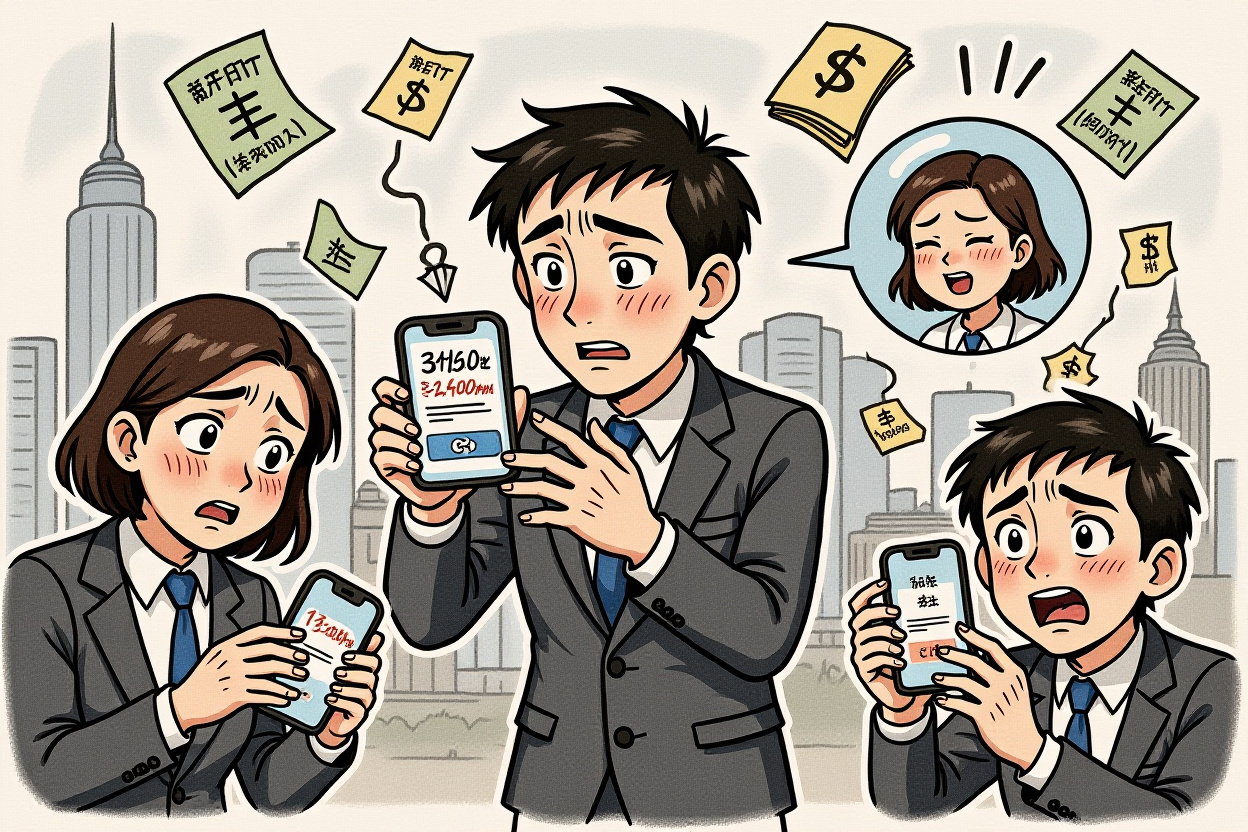
As the Lunar New Year approached, many young Chinese faced the familiar pressure of gifting red envelopes to parents, preparing cash for children’s holidays, and funding family trips. Short on cash, some turned to quick-fix solutions promoted by financial technology platforms. Just 18 days before the festival, Fenqile (分期乐), a popular lending app, announced on its official account that it was raising user credit limits, with maximum amounts soaring to 50,000 yuan. The promise of easy money was tempting, but for borrowers like Ms. Chen, this mini-loan gateway spiraled into a financial and psychological crisis. Her story, where borrowing 13,000 yuan required repaying 26,000 yuan, epitomizes the hidden dangers of these seemingly convenient mini-loans. This case, which recently trended on Weibo, underscores how mini-loans are systematically eroding the financial health of China’s youth, trapping them in cycles of debt under the guise of financial inclusion.
The Hidden Costs of Mini-Loans: A Debt Trap
Mini-loans, characterized by small principal amounts and stretched repayment periods, appear manageable but often conceal catastrophic costs. The case of Ms. Chen reveals how these products operate.
Case Study: From 13,674 Yuan to 26,859 Yuan in Debt
During her university years, Ms. Chen fell into the网贷 (online lending) web through超前消费 (pre-consumption). She took five loans from Fenqile between 2020 and 2021, totaling 13,674 yuan, including one for just 400 yuan spread over 36 months. The loans carried APRs ranging from 32.08% to 35.90%, with promoters highlighting low monthly payments as low as 18.23 yuan. By August 2022, unable to repay, she defaulted, and after over 1,000 days of delinquency, her total owed ballooned to 26,859 yuan—nearly double the principal. This mini-loan structure, with its extended terms and high rates, functions like a snowball, amplifying debt until borrowers are overwhelmed.
Opacity in Fees and the Push Beyond 24%
The effective cost often exceeds stated rates due to附加条款 (additional clauses). On the Black Cat投诉平台 (complaint platform), over 160,000 complaints target Fenqile, citing莫名收取的会员费、担保费、信用评估费 (unexplained membership, guarantee, and credit assessment fees). For instance, one borrower reported a comprehensive APR of 36% in February 2025, while another in January 2025 noted hidden信用评估费用 (credit evaluation fees) adding 1,450 yuan. As reported by《中国消费者》 (China Consumer), cases from Zhejiang and Sichuan show actual repayments exceeding contract calculations by thousands of yuan, with fees buried in冗长的电子协议 (lengthy electronic agreements). This lack of transparency directly contravenes regulatory efforts to protect consumers from predatory mini-loans.
Regulatory Landscape and Compliance Gaps
The 24% Cap and Future BenchmarksEvasion Tactics and Enforcement ChallengesThe Lingering Shadow of Campus LendingFrom Campus Loans to Fintech RebrandingAggressive Collection and Social ShamingData Privacy and Aggressive Collection PracticesThe mini-loan ecosystem thrives on data extraction, often at the expense of borrower privacy.
Information Harvesting and Third-Party Sharing
As《经济参考报》 (Economic Reference News) investigated, Fenqile’s app, upon user agreement, collects数十项个人信息 (dozens of personal data points)—from ID photos to income details and facial recognition data. This敏感信息 (sensitive information) is共享 (shared) with第三方商家、支付服务合作商、资金清算银行等 (third-party merchants, payment partners, clearing banks, etc.), per its privacy policy. For mini-loan users, this means losing control over personal data from the first click, amplifying risks in an era of digital surveillance.
The Psychological and Social Fallout
The convergence of high debt, opaque fees, and intrusive collection creates a vicious cycle. Borrowers like Ms. Chen face not just financial ruin but also anxiety and stigma, as lenders leverage social networks for pressure. This undermines the purported benefits of mini-loans as financial tools, instead positioning them as instruments of exploitation.
Market Implications and Investor Considerations
Risks for Fintech Companies like LexinGuidance for Consumers and Regulatory OutlookNavigating the Mini-Loan MazeThe mini-loan phenomenon in China exposes a troubling gap between fintech promise and reality. While these products offer accessibility, they often degenerate into debt traps through hidden fees, regulatory evasion, and aggressive practices. For young borrowers, the cost extends beyond money to mental health and privacy. For the market, it signals urgent need for robust enforcement and ethical lending standards. As an actionable step, investors should demand greater transparency from fintech firms, while consumers must educate themselves on true borrowing costs. Ultimately, curbing the mini-loan drain requires collective vigilance—from regulators clamping down on excesses to individuals resisting the lure of easy credit in times of need.