



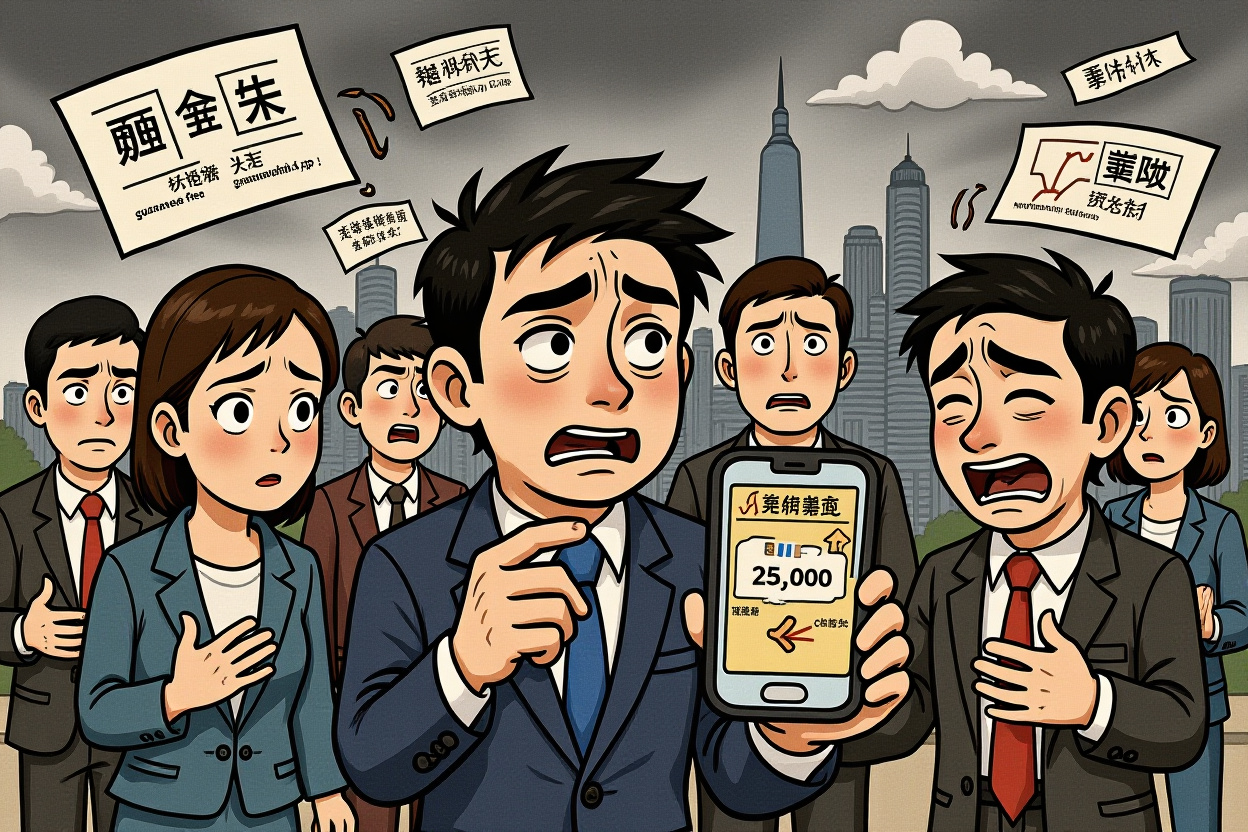
As Chinese consumers navigate holiday spending pressures, a stark reality emerges: the allure of easy credit from ‘mini loan’ platforms is creating a generation buried in debt. Recent cases, such as a borrower repaying double her principal, highlight systemic issues in China’s online lending sector, where regulatory measures clash with aggressive fintech business models. This deep dive explores the mechanics, risks, and future of these high-cost loans targeting young adults.
Executive Summary: Key Takeaways on China’s Mini Loan Crisis
Before delving into the details, here are the critical insights for investors and policymakers:
– Mini loans, characterized by small amounts and long tenors, often mask effective annual percentage rates (APRs) approaching 36%, far exceeding regulatory limits and trapping borrowers in cycles of debt.
– Platforms like 分期乐 (Fenqile) face mounting complaints over fee opacity, with hidden charges for membership,担保费 (guarantee fees), and credit assessment inflating costs beyond disclosed interest rates.
– Despite 2025 regulations capping comprehensive financing costs at 24% APR, enforcement gaps allow lenders to use structural loopholes, sustaining profitability while consumer protection lags.
– The legacy of 校园贷 (campus lending) persists, with mini loans aggressively marketed to students and young workers, leading to severe psychological distress and social repercussions from coercive collection practices.
– Data privacy concerns abound, as loan agreements grant extensive access to personal information, shared with third parties, amplifying risks in China’s digital finance ecosystem.
The Anatomy of a Debt Spiral: How Mini Loans Inflate Borrowing Costs
The case of Ms. Chen epitomizes the dangers lurking within mini loan products. As a university student, she borrowed 13,674 yuan through five separate loans from 分期乐 (Fenqile), lured by promises of low monthly payments as small as 18.23 yuan. However, with APRs ranging from 32.08% to 35.90% and tenors extending to 36 months, her total repayment ballooned to 26,859 yuan—nearly double the principal. After defaulting in 2022, she endured over 1,000 days of harassment, with collectors contacting her family and friends, exacerbating mental health struggles.
Fee Opaquety and the Snowball Effect
Mini loans thrive on perceived affordability, but complex fee structures drive real costs upward. On Fenqile’s platform, advertised rates as low as 8% APR contrast with user reports of effective rates hitting 36%, achieved through add-ons like:
– Membership fees billed monthly without clear service benefits.
– 担保费 (Guarantee fees) automatically deducted, often buried in lengthy电子协议 (electronic agreements).
– Credit assessment charges that vary unpredictably, seldom justified upfront.
For instance, a borrower from Zhejiang documented a 10,300-yuan loan at a 6% stated rate, but actual repayments totaled 12,425.4 yuan due to undisclosed fees. Similarly, a Sichuan user faced a 1,102.14-yuan担保费 (guarantee fee) on a 49,880-yuan loan, highlighting transparency failures. The 中国消费者 (China Consumer) association has cited multiple such cases, noting platforms frequently omit detailed disclosures beyond本金 (principal) and年利率 (annual interest rate).
Regulatory Limits Versus Market Reality
In December 2025, the 中国人民银行 (People’s Bank of China) and 国家金融监管总局 (National Financial Regulatory Administration) issued the “小额贷款公司综合融资成本管理工作指引” (Guidelines for Comprehensive Financing Cost Management of Small Loan Companies), mandating that new loans not exceed 24% APR in comprehensive costs. By 2027, rates should align with four times the 1-year LPR. However, mini loan providers exploit transitional periods, using fee bundling to maintain yields. As of 2026, local regulators are tasked with correcting violations, but slow adaptation persists. For example, Fenqile’s current marketing still emphasizes low daily costs, while user complaints on platforms like黑猫投诉 (Hei Mao Tousu) exceed 160,000, citing APRs above 24%.
Targeting the Vulnerable: Mini Loans and the Youth Debt Crisis
Mini loans are meticulously designed to appeal to young, digitally-native consumers seeking quick cash for lifestyle expenses. During holidays, promotions like “最高额度飙升至50000元” (maximum limits soaring to 50,000 yuan) tempt users with instant liquidity. Yet, this accessibility masks predatory practices, particularly toward students and low-income earners.
The Lingering Shadow of Campus Lending
分期乐 (Fenqile) originated as a campus-focused lender, with founder 肖文杰 (Xiao Wenjie) building 乐信集团 (Lexin Group) on early growth from student loans. After regulatory crackdowns on校园贷 (campus lending) in 2016, the rebranded fintech firm went public on Nasdaq, but traces remain. Searches for “分期乐 校园贷” (Fenqile campus loans) yield 922 complaints on consumer platforms, with reports of on-campus promotions and loans issued to enrolled students. This continuity underscores how mini loans evolved from outright bans to subtler, high-cost offerings, still ensnaring young demographics.
Psychological and Social Fallout
The consequences extend beyond finance. Borrowers like Ms. Chen experience depression and social isolation due to coercive collection tactics, including:
– 爆通讯录 (Blasting contact lists), where collectors message friends, family, and even employers.
– Public shaming and threats, violating privacy and exacerbating stress.
– Data exploitation, as loan apps harvest sensitive information—from身份证号码 (ID numbers) to人脸信息 (facial recognition data)—shared with third parties per privacy policies. The 经济参考报 (Economic Reference Daily) investigated how such practices erode consumer control, creating cycles of vulnerability.
Deconstructing the Mini Loan Business Model: Fenqile and Beyond
At its core, the mini loan ecosystem balances regulatory compliance with profit maximization. Fenqile operates under 吉安市分期乐网络小额贷款有限公司 (Ji’an Fenqile Network Small Loan Co., Ltd.), a licensed entity in Jiangxi, while partnering with banks like 上海银行 (Bank of Shanghai) for fund disbursement. This structure allows it to tap into formal credit channels while deploying aggressive marketing.
From Fintech Innovation to Regulatory Scrutiny
乐信集团 (Lexin Group) portrays itself as a tech-driven disruptor, yet its reliance on high-margin mini loans invites scrutiny. The platform’s algorithm-driven approvals and seamless user experience obscure true costs, a tactic common among peers. As regulators tighten oversight on综合融资成本 (comprehensive financing costs), lenders may shift to fee-based revenues, but consumer advocates warn of persistent loopholes. For instance, Fenqile’s “乐花借钱” (Le Hua Jie Qian) product has faced backlash for hidden担保费 (guarantee fees), suggesting business model resilience despite rules.
Data Privacy Risks in the Digital Chain
Mini loan apps collect extensive personal data, ostensibly for risk assessment. However, privacy policies often authorize sharing with第三方商家 (third-party merchants), 支付服务合作商 (payment service partners), and增信机构 (credit enhancement agencies), raising concerns about misuse. In China’s interconnected digital economy, this data flow can impact credit scores and future borrowing, trapping users in broader surveillance networks. The case of四川凉山 (Sichuan Liangshan) borrower沙某 (Mr. Sha), who unknowingly paid fees, illustrates how opacity fuels exploitation.
Regulatory Crossroads: Enforcing Change in China’s Lending Landscape
The 2025 guidelines represent a pivotal step, but effective implementation hinges on local enforcement and industry adaptation. Currently, mini loan providers navigate a gray area: while new loans must cap at 24% APR, existing portfolios and fee structures allow circumvention. For investors, this signals both risk and opportunity in Chinese fintech stocks.
Monitoring Compliance and Market Response
As 2026 progresses, watch for actions by地方金融管理机构 (local financial management agencies) against violators. Key indicators include:
– Reduction in complaint volumes on platforms like黑猫投诉 (Hei Mao Tousu).
– Adjustments in Fenqile’s and competitors’ product terms, such as shorter tenors or eliminated fees.
– Financial disclosures from 乐信集团 (Lexin Group) showing impact on profitability from compliance costs.
Investors should scrutinize quarterly reports for shifts in net interest margins and provisions for regulatory penalties.
Consumer Empowerment and Future Trends
Forward-looking strategies involve consumer education and technological safeguards. Initiatives like China’s social credit system could integrate lending data to flag over-indebtedness, while apps must enhance transparency per the “中国消费者” (China Consumer) recommendations. For mini loans to evolve sustainably, platforms might pivot to lower-APR products tied to financial literacy, but market forces currently favor high-yield models. Global investors in Chinese equities should assess exposure to lenders reliant on mini loan revenues, considering potential regulatory shocks.
Synthesizing the Mini Loan Dilemma: Paths Forward for Stakeholders
The mini loan phenomenon underscores deeper tensions in China’s financial inclusion efforts. While providing access to credit, unchecked practices drain young consumers’ resources, prompting calls for balanced reform. For regulators, harmonizing national rules with local enforcement is critical; for platforms, ethical redesign of products is overdue. Consumers, especially youth, must vet loan terms meticulously, leveraging resources like the National Financial Regulatory Administration’s投诉渠道 (complaint channels).
As China’s economy emphasizes domestic consumption, healthy credit markets are vital. Investors should monitor regulatory announcements and consumer sentiment indices, adjusting portfolios toward firms with robust compliance. The mini loan sector’s transformation will test China’s fintech governance, offering lessons for global markets grappling with high-cost lending. Ultimately, sustainable finance requires aligning innovation with protection, ensuring loans empower rather than impoverish the next generation.