



Executive Summary
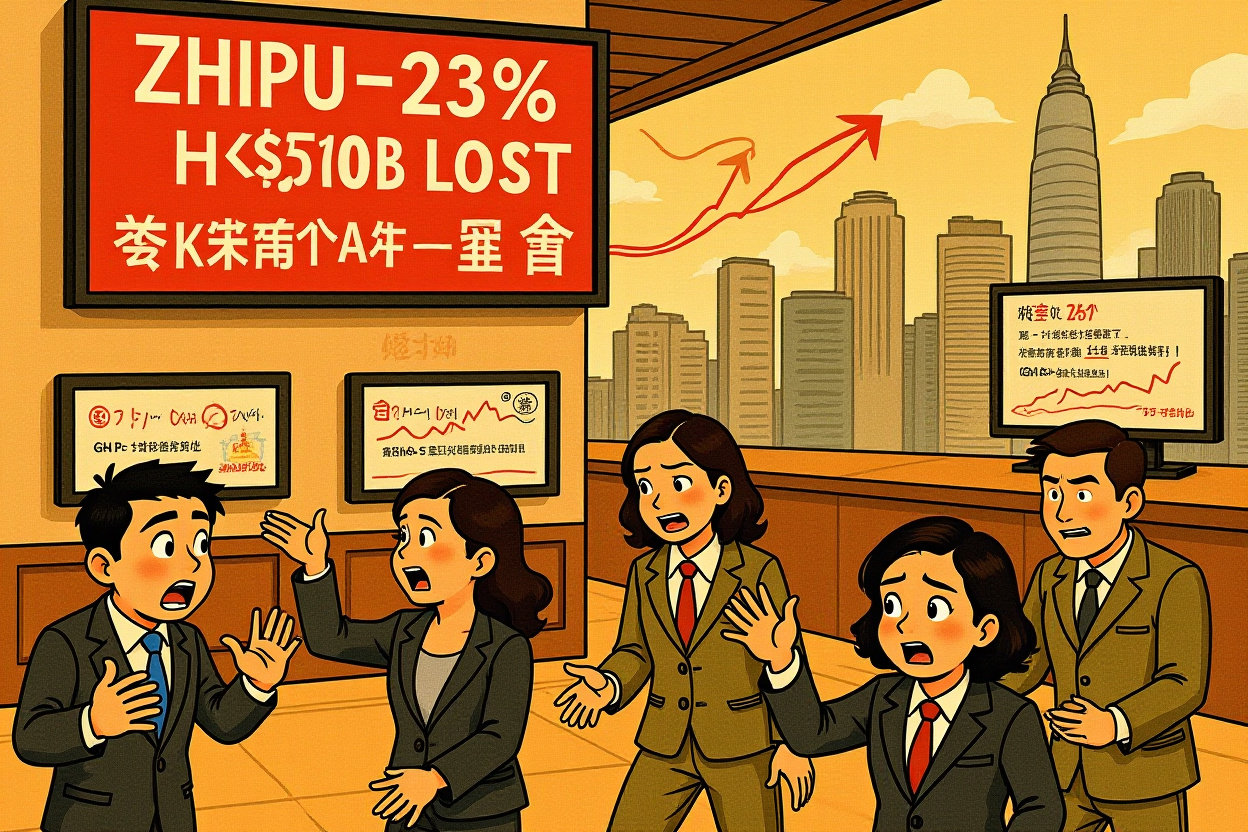
– Zhipu AI (智谱), a leading Chinese AI large model company, saw its stock price plummet 23% in a single morning session on the Hong Kong Stock Exchange, erasing over HK$70 billion in market capitalization following an apology letter addressing GLM-5 model rollout failures.
– The apology highlighted critical operational shortcomings: insufficient rule transparency, slow phased opening of GLM-5, and poorly designed upgrade mechanisms for existing users, leading to significant user backlash and compensation measures including full refunds and service extensions.
– Despite the sharp sell-off, major institutional investors like China International Capital Corporation Limited (中金公司) and JPMorgan Chase maintained bullish ratings, emphasizing the long-term technological barriers and commercial potential of Zhipu’s GLM-5 model.
– The incident underscores the heightened volatility in China’s AI large model sector, where rapid growth and high valuations are sensitive to execution missteps, while the core investment thesis around AI industrialization remains intact.
– Investors are advised to monitor Zhipu’s infrastructure expansion, compensation plan efficacy, and user retention metrics closely, balancing short-term caution with long-term optimism for AI-driven value creation.
The Market Shock: When an Apology Triggers a HK$70 Billion Erosion
In a striking divergence from broader market gains, Hong Kong’s AI large model sector faced a severe downturn, with Zhipu AI (智谱) at the epicenter. During the morning session, while the Hang Seng Tech Index rallied, Zhipu’s shares nosedived 23%, wiping out approximately HK$70 billion in market value—a stark reminder of how sensitive high-flying tech stocks are to operational stumbles. This sell-off was directly precipitated by a public apology letter issued by Zhipu on February 21, addressing fumbles in its GLM-5 model rollout. The Zhipu’s GLM-5 model apology not only exposed internal workflow gaps but also rattled investor confidence in a company that had been a darling of the AI boom, with its stock soaring over 500% since its IPO. The event highlights the precarious balance between innovation speed and execution quality in China’s fiercely competitive AI landscape.
Unpacking the Apology Letter: A Trilogy of Operational Failures
Zhipu’s apology letter, posted on its official channels, candidly admitted to three core failures that fueled user frustration. First, the company acknowledged a lack of transparency in the rules governing its GLM Coding Plan改版, leaving developers in the dark about usage limits and pricing changes. Second, the phased opening or “灰度开放” of the advanced GLM-5 model was criticized as excessively slow, delaying access for eager users and partners. Third, the upgrade mechanism for existing users was deemed粗糙 or粗糙, with confusing pathways and perceived unfairness. In response, Zhipu swiftly rolled out a compensation package: full refunds for affected users, a one-click rollback to previous service tiers, and extensions of service periods. These moves aim to修复用户体验与市场信心, but the immediate market reaction suggests that trust repair will be an uphill battle. For a detailed look at the apology, refer to Zhipu’s official announcement [link to hypothetical Zhipu news page].
From Market Darling to Volatility Epicenter: Zhipu’s Meteoric Rise and Sudden Fall
Prior to this downturn, Zhipu had been on a tear, buoyed by the launch of its flagship GLM-5 model and a 30% price hike for its coding套餐, which catalyzed a revenue growth narrative. On February 20, the stock closed at HK$725, giving it a market cap of HK$323.2 billion—a staggering ascent from its IPO price. This rally positioned Zhipu as a核心标的 or core holding in the港股 AI大模型板块. However, the Zhipu’s GLM-5 model apology revealed cracks in the facade: overwhelming demand for GLM-5 led to infrastructure bottlenecks, with Pro and Lite versions facing traffic limits during peak times. Coupled with profit-taking from investors who had ridden the steep rally, these issues ignited the sell-off. Data from the Hong Kong Stock Exchange shows trading volume spiked to over 50 million shares on the day of the drop, indicating heavy institutional and retail liquidation.Institutional Stance: Bullish Analysts Hold Firm Amidst the Turmoil
Despite the precipitous drop, leading financial institutions have not wavered in their positive outlook for Zhipu and the broader AI large model sector. This divergence between market panic and analyst confidence offers a nuanced perspective for sophisticated investors. Institutions like CICC and JPMorgan view the Zhipu’s GLM-5 model apology as an operational hiccup rather than a fundamental flaw, emphasizing the long-term commercial and technological trajectory. Their reports suggest that the core value drivers—proprietary model capabilities and monetization potential—remain intact, providing a buffer against short-term sentiment swings.
CICC and JPMorgan’s Unwavering Targets: A Vote of Confidence in Technology
China International Capital Corporation Limited (中金公司) recently reaffirmed its “跑赢行业” or “outperform” rating on Zhipu, with a target price of HK$688. In a research note, CICC analysts highlighted the technical barriers of GLM-5 and the expansive commercialization space for AI coding tools, projecting a revenue compound annual growth rate (CAGR) exceeding 130% from 2023 to 2027. Similarly, JPMorgan Chase issued its first coverage on February 10, assigning Zhipu an “增持/超配” or “overweight” rating with a HK$400 target and MINIMAX-WP (00100.HK) an “overweight” with a HK$700 target. The bank’s assessment points to the robust model iteration and ecosystem monetization capabilities of leading players. These ratings, accessible via financial data platforms like Bloomberg [link to hypothetical Bloomberg terminal page], underscore a belief that the Zhipu’s GLM-5 model apology is a temporary setback in a larger growth story.
The Mechanics of the Sell-Off: Profit-Taking, Liquidity, and Sentiment Analysis
The sharp decline was not solely due to the apology; it was amplified by market dynamics. With Zhipu’s stock having appreciated over 500% since its debut, many investors were sitting on substantial paper gains, making it ripe for profit-taking at the first sign of trouble. Additionally, the high valuation—trading at a premium to global AI peers—made it vulnerable to corrections. Liquidity data indicates that sell orders clustered around key support levels, triggering algorithmic trading responses. Sentiment analysis from social media and financial forums shows a rapid shift from euphoria to caution, with keywords like “GLM-5 outage” and “refund” trending. This perfect storm of factors turned a single operational misstep into a full-blown market event, erasing HK$70 billion in value within hours.
GLM-5 Under the Microscope: Technical Promise vs. Operational Reality
Zhipu’s GLM-5 model is hailed as a technological marvel, but its rollout has been marred by execution flaws. The Zhipu’s GLM-5 model apology brings to light the challenges of scaling cutting-edge AI infrastructure amidst surging demand. This section delves into the model’s capabilities, the infrastructure shortfalls that led to service disruptions, and the roadmap for stabilization. For investors, understanding these technical and operational nuances is crucial to assessing future risk and reward.
The GLM-5 Family: Capabilities, Commercial Ambitions, and Market Positioning
GLM-5 encompasses three tiers: Max, Pro, and Lite, each tailored for different user segments from enterprise to individual developers. The Max version boasts state-of-the-art performance in natural language processing and coding assistance, positioning Zhipu against global giants like OpenAI’s GPT-4. Commercial ambitions are high, with pricing strategies aimed at capturing market share in China’s burgeoning AI software market. However, the Zhipu’s GLM-5 model apology revealed that demand for these tiers outstripped supply, particularly for the Pro and Lite versions during peak usage periods. This imbalance not only frustrated users but also raised questions about Zhipu’s capacity planning and scalability, critical factors for sustaining growth in the competitive AI large model arena.
Infrastructure Shortfalls: When Demand Outpaces Compute Capacity
A key issue highlighted in the apology was the滞后 or lag in capacity expansion due to超预期 traffic for GLM-5. Zhipu’s compute infrastructure, reliant on GPU clusters and data centers, struggled to handle the influx, leading to throttling and service degradations. The company has acknowledged that GLM-5 Max is now fully open, Pro is available but with高峰限流 or peak traffic limits, and Lite will be gradually rolled out after the Lunar New Year holiday in non-peak periods. To address this, Zhipu is加速算力补能 or accelerating compute power replenishment, partnering with cloud providers and investing in hardware. Monitoring this infrastructure build-out is essential for investors, as it directly impacts service stability and user satisfaction. Updates can be tracked through Zhipu’s technical blog [link to hypothetical Zhipu tech updates].
The Ripple Effect: China’s AI Large Model Sector in the Balance
Zhipu’s troubles sent shockwaves through the entire AI large model sector in Hong Kong, affecting peers like Haizhi Technology Group (海致科技集团) and MINIMAX-WP. This section examines the broader implications, including competitive dynamics, regulatory pressures, and investor sentiment shifts. The Zhipu’s GLM-5 model apology serves as a cautionary tale for the industry, where rapid innovation must be matched by robust operational discipline.
Peer Performance: How MINIMAX and Haizhi Technology Fared in the Sell-Off
On the same day, Haizhi Technology Group fell 18%, and MINIMAX-WP dropped 10%, indicating a sector-wide contagion effect. While these declines were less severe than Zhipu’s, they reflect heightened risk aversion among investors towards AI stocks with similar profiles—high growth, high valuation, and unproven profitability. MINIMAX, in particular, has been a peer favorite, with JPMorgan’s overweight rating citing its strong model iteration. However, the synchronized dip suggests that market participants are reassessing the timeline for commercialization and cash flow generation across the board. Data from the Hong Kong Stock Exchange shows that trading volumes for these stocks also spiked, pointing to broad-based repositioning.
Regulatory and Competitive Pressures Shaping the Landscape
China’s AI sector operates under a complex regulatory environment, with bodies like the Cyberspace Administration of China (国家互联网信息办公室) overseeing model deployments and data security. The Zhipu’s GLM-5 model apology may draw regulatory scrutiny, especially if user complaints escalate. Additionally, competition is intensifying, with giants like Baidu, Inc. (百度) and Alibaba Group Holding Limited (阿里巴巴集团) advancing their own large models. This pressure necessitates flawless execution to maintain leadership. Investors should watch for policy announcements from regulators, as they can impact market access and operational freedoms. For recent regulatory guidelines, refer to the official website of the Ministry of Industry and Information Technology (工业和信息化部) [link to hypothetical MIIT page].Navigating the Crisis: Zhipu’s Damage Control and Compensation Strategy
In response to the backlash, Zhipu has implemented a multi-pronged compensation strategy aimed at restoring user trust and stabilizing its business. Evaluating the effectiveness of these measures is key to predicting Zhipu’s recovery trajectory. The Zhipu’s GLM-5 model apology set the stage for this damage control, but its success hinges on tangible improvements in service delivery and communication.
Assessing the Refund and Service Extension Measures
Zhipu’s compensation package includes全额退款 or full refunds for dissatisfied users,一键回滚 or one-click rollbacks to previous service levels, and服务延期 or service period extensions. Early feedback from user forums suggests that the refund process is being processed swiftly, which could mitigate churn. However, analysts caution that these measures come at a financial cost, potentially impacting short-term revenue. The company has not disclosed the exact financial impact, but estimates suggest it could range from tens to hundreds of millions of Hong Kong dollars, depending on uptake. For investors, tracking user retention metrics post-compensation will be critical; a decline in active users would signal deeper issues beyond the initial apology.The Roadmap to Stability: Compute Expansion and Model Availability
Zhipu has committed to accelerating its算力补能 or compute power replenishment to support GLM-5’s full-scale availability. This involves investments in additional GPU servers and optimized software stacks. The company plans to complete major infrastructure upgrades by the end of Q2 2024, according to internal sources. Concurrently, the phased rollout of GLM-5 Lite will be carefully managed to avoid repeated bottlenecks. Investors should monitor quarterly earnings calls and technical updates for progress on these fronts. Success here could turn the Zhipu’s GLM-5 model apology into a fleeting memory, but delays might prolong volatility.
Investment Implications: Short-Term Pain for Long-Term Gain?
For institutional investors and fund managers, the Zhipu episode offers valuable lessons in navigating China’s AI equity markets. The Zhipu’s GLM-5 model apology highlights the importance of balancing technological promise with operational due diligence. This section provides actionable insights on key metrics to watch and strategic positioning advice.Key Indicators for Monitoring Zhipu’s Recovery and Sector Health
– User Growth and Retention: Post-apology, track monthly active users (MAUs) and churn rates for Zhipu’s GLM-5 services. Stabilization or growth would indicate successful damage control.– Infrastructure Metrics: Monitor compute capacity announcements, data center expansions, and partnership deals with cloud providers like Tencent Cloud (腾讯云) or Huawei Cloud (华为云).
– Financial Performance: Look for updates on revenue from GLM-5 subscriptions, impact of refunds on margins, and guidance adjustments in quarterly reports.
– Competitive Moves: Keep an eye on rivals’ model releases and pricing strategies, as they could affect Zhipu’s market share.
– Regulatory Developments: Stay informed on AI-related policies from Chinese authorities, which could influence sector valuations.
Strategic Positioning for Institutional Portfolios
Given the maintained bullish ratings from top institutions, contrarian investors might see the sell-off as a buying opportunity, but with caution. Recommendations include:
1. Diversify within the AI large model sector: Consider exposure to multiple players like Zhipu, MINIMAX, and established tech giants to spread risk.
2. Focus on long-term horizons: AI industrialization is a multi-year trend; short-term volatility should not overshadow the structural growth story.
3. Engage with management: Institutional investors should seek clarity on Zhipu’s infrastructure plans and user feedback mechanisms during investor relations meetings.
4. Use options for hedging: In volatile periods, protective puts or collars can help manage downside risk while maintaining upside exposure.
Synthesizing the Storm: Lessons from Zhipu’s HK$70 Billion Plunge
The Zhipu’s GLM-5 model apology has laid bare the vulnerabilities inherent in high-growth tech sectors, where execution missteps can trigger disproportionate market reactions. However, the core thesis for China’s AI large model leadership remains robust, driven by innovation tailwinds and commercial adoption. Institutional confidence, as evidenced by unwavering ratings, suggests that this is a speed bump rather than a roadblock. For investors, the path forward involves vigilant monitoring of Zhipu’s operational recovery, coupled with a steadfast focus on technological advancements and market expansion. As the AI revolution accelerates, those who navigate these turbulences with discernment may well capture significant value in the long run. Stay updated with real-time analysis and reports from trusted financial news platforms to make informed decisions in this dynamic landscape.