



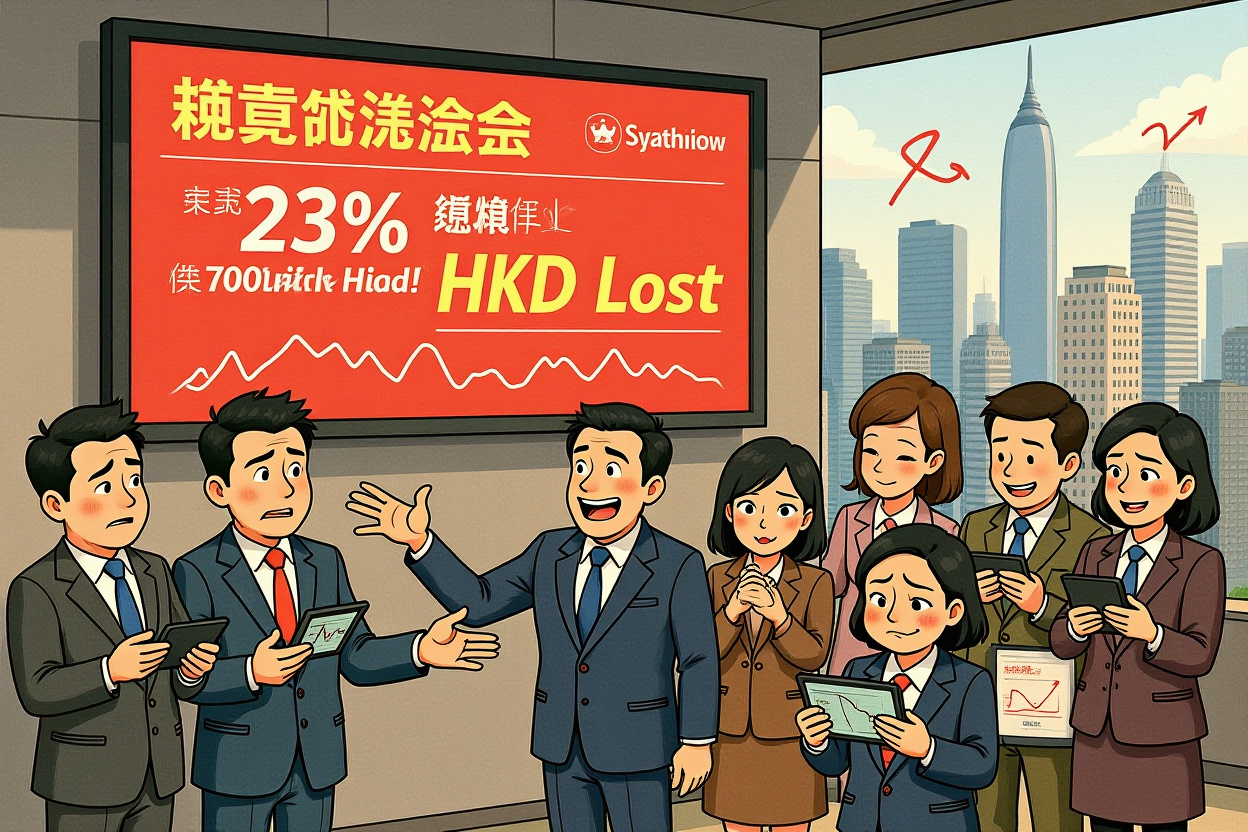
Hong Kong’s equity markets opened with robust gains on February 23, 2026, but a stark divergence emerged as the AI large model sector bucked the bullish trend. Leading this downward spiral was Zhipu AI (智谱), whose market capitalization evaporated over 700 billion Hong Kong dollars in a matter of hours, directly triggered by a public apology letter addressing operational shortcomings. This episode of apology letter and market cap loss serves as a potent reminder of how user-centric execution and transparent communication are paramount in the high-growth, high-volatility arena of artificial intelligence investments. For global investors attuned to Chinese equities, the event underscores the nuanced risks beyond technological prowess, where operational missteps can swiftly translate into severe financial repercussions.
Executive Summary: Key Takeaways from the Zhipu AI Crisis
The immediate fallout from Zhipu’s apology letter has significant implications for the Hong Kong AI landscape and investor portfolios. Key points include:
– Zhipu AI (02513.HK) shares plummeted 23% at the midday break, wiping approximately 700 billion HKD from its market value, following its apology for issues with the GLM Coding Plan revision.
– Major financial institutions, including CICC (China International Capital Corporation Limited 中金公司) and JPMorgan, have maintained their positive ratings on Zhipu, characterizing the crisis as an operational hiccup rather than a fundamental deterioration of its technology or commercial roadmap.
– The AI large model sector in Hong Kong exhibited clear divergence, with peers like Haizhi Technology Group and MINIMAX-WP (00100.HK) also declining, highlighting broad sentiment sensitivity despite a rally in the broader technology sector.
– Investors are advised to closely monitor Zhipu’s progress in scaling computing power, the rollout of its compensation packages, and subsequent user retention metrics to gauge the recovery trajectory.
– The long-term investment thesis for China’s AI industrialization, driven by model iteration and ecosystem monetization, remains intact, suggesting potential entry points amid current volatility.
Market Turmoil: Dissecting the Apology Letter and Its Immediate Impact
The February 21 apology letter from Zhipu AI became the catalyst for a dramatic repricing of its stock. This public mea culpa, addressing user grievances around its GLM Coding Plan, directly led to a loss of investor confidence and a massive sell-off.
The Apology Letter: A Breakdown of Operational Failures
In the letter, Zhipu’s management candidly admitted to three critical failures in the rollout of its updated GLM Coding service. First, the company acknowledged insufficient transparency in the new plan’s rules, creating confusion among developers and enterprise clients. Second, it conceded that the grayscale open rollout for its flagship GLM-5 model was excessively slow, limiting access for eager users. Third, the mechanism designed for existing users to upgrade to the new plan was criticized as poorly designed and unfair. In response, Zhipu swiftly announced a comprehensive compensation package, including full refunds for dissatisfied customers, a one-click service rollback feature, and extended service periods. This rapid response was aimed at damage control, but the market’s reaction was swift and severe.
Immediate Financial Repercussions: 700 Billion HKD Evaporates
The market’s verdict was delivered forcefully during the morning session on February 23. While the Hang Seng Tech Index rallied, Zhipu’s stock crashed 23%, translating to a loss of over 700 billion HKD in its half-day market capitalization. This stark underperformance against the sector highlighted the intense focus on execution risk. For context, just days prior on February 20, Zhipu’s share price had closed at a record 725 HKD, boasting a total market cap of 3,232 billion HKD and representing a gain of over 500% since its IPO. The apology letter and market cap loss thus marked a dramatic reversal of fortune, triggering profit-taking from investors who had ridden the stock’s meteoric rise.
Zhipu AI: From High-Flying Leader to Crisis Management Mode
To understand the magnitude of the sell-off, one must appreciate Zhipu’s rapid ascent as a cornerstone of Hong Kong’s AI narrative before this operational stumble.
The Meteoric Rise Fueled by GLM-5 and Pricing Power
Zhipu’s valuation surge was primarily driven by the successful launch of its GLM-5 flagship large language model and a subsequent 30% price increase for its Coding service packages. This demonstrated potent pricing power and strong market demand for its AI capabilities. The company had effectively positioned itself as a pure-play leader in China’s domestic AI model race, attracting significant institutional and retail investor interest. Its journey from IPO to a multi-trillion HKD market cap entity symbolized the market’s bullish bet on the commercialization of generative AI.
Operational Growing Pains in a Scalability Crunch
The core of the current crisis lies in operational scalability. The overwhelming user demand for the GLM-5 model exceeded the company’s infrastructure forecasts, leading to server capacity lag. This resulted in service throttling for Pro and Lite version users and a surge in refund requests. The apology letter was a direct admission of these growing pains. While the technology—epitomized by the fully open GLM-5 Max model—is considered competitive, the ability to deliver a stable, scalable service emerged as a critical bottleneck. This incident of apology letter and market cap loss underscores a universal challenge for AI firms: bridging the gap between technological innovation and robust, user-friendly service delivery.
Institutional Perspectives: Maintaining the Long-Term View Amidst Short-Term Noise
Despite the precipitous drop, leading global investment banks have not abandoned their positive stance on Zhipu, drawing a clear line between operational teething problems and core technological value.
CICC and JPMorgan: Reiterating Confidence in Core Fundamentals
Analysts at CICC (中金公司) had previously assigned Zhipu an “outperform the industry” rating with a target price of 688 HKD. In their view, the long-term investment case rests on GLM-5’s technical barriers and the vast commercialization potential of AI-assisted coding, forecasting a revenue compound annual growth rate (CAGR) exceeding 130% from 2023 to 2027. Similarly, JPMorgan, in its February 10 initiation report, gave Zhipu an “overweight/overweight” rating with a 400 HKD target and extended a similar “overweight” rating to MINIMAX. The bank’s analysts, including noted Asia TMT expert Gokul Hariharan, emphasized the strong model iteration and ecosystem monetization capabilities of these leading players. Their sustained optimism suggests that the apology letter and market cap loss are perceived as a corrective event rather than a paradigm shift.
Core Technology vs. Operational Execution: A Vital Distinction for Investors
The consistent message from institutions is that the current issues are largely confined to the operational and customer service layers. The core intellectual property—the AI models themselves—and their commercial applicability remain uncompromised. This distinction is crucial for investors assessing whether the drop represents a permanent impairment or a temporary dislocation. The market’s focus, as per these analysts, should remain on long-term indicators such as research and development milestones, developer adoption rates, and enterprise contract wins, rather than being overly swayed by short-term service availability metrics.
The Broader Hong Kong AI Landscape: Sector Divergence and Future Trajectory
The event has cast a spotlight on the entire AI large model cohort in Hong Kong, revealing underlying vulnerabilities and strengths.
Peer Performance and Sentiment Spillover
The sell-off was not isolated to Zhipu. Haizhi Technology Group saw its shares fall 18%, and MINIMAX-WP declined 10%, indicating a sector-wide risk reassessment. This contrasts sharply with the positive performance of other technology sub-sectors, highlighting the unique sensitivity of AI model stocks to company-specific execution news. The divergence signals that investors are applying greater scrutiny to the path to profitability and user monetization, moving beyond mere hype around AI capabilities.
Enduring Growth Drivers in China’s AI Ecosystem
Beneath the short-term volatility, the long-term growth engines for China’s AI model industry remain powerful. These include sustained government policy support through initiatives like the “Next Generation Artificial Intelligence Development Plan,” a vast domestic market for digital transformation, and significant investments in computing infrastructure. The competitive landscape is also fostering rapid innovation. The apology letter and market cap loss for Zhipu may, in fact, accelerate industry-wide improvements in customer service and operational transparency, ultimately strengthening the sector’s foundation for sustainable growth.
Strategic Navigation for Investors: Actionable Insights and Risk Mitigation
For institutional and sophisticated investors, the current environment demands a calibrated approach that balances acknowledged risks with long-term opportunity.
Monitoring Critical Recovery Indicators
Investors should track several tangible metrics to assess Zhipu’s recovery and the sector’s health:
– Computing Power Expansion: The pace at which Zhipu adds server capacity to alleviate service throttling for GLM-5 Pro and Lite versions is a key operational milestone.
– Commercialization Momentum: New enterprise partnerships, API call volume growth, and updates on the Coding plan’s revised rollout will signal commercial resilience.
– Compensation Plan Efficacy: User sentiment trends and churn rate data following the implementation of refunds and service extensions will be telling.
– Regulatory Developments: Updates from bodies like the Cyberspace Administration of China (国家互联网信息办公室) on AI model licensing and compliance can affect the entire sector’s operating environment.
Portfolio Strategy: Balancing Conviction with Prudence
The volatility induced by the apology letter presents both a warning and a potential opportunity. A prudent strategy involves maintaining a long-term bullish outlook on the AI transformation theme while adopting tactical caution in the near term. Investors might consider:
– Using dollar-cost averaging to build or add to positions during periods of extreme sentiment-driven weakness, rather than attempting to time the absolute bottom.
– Diversifying within the AI theme across companies with different risk profiles, such as those focused on application layers or hardware, to mitigate single-stock operational risk.
– Setting clear stop-loss levels based on technical analysis to manage downside risk in what remains a volatile segment.
– Engaging directly with company management through investor relations channels to gain firsthand clarity on remediation plans and capacity roadmaps.
Synthesis and Forward-Looking Guidance
The dramatic episode of apology letter and market cap loss for Zhipu AI serves as a case study in the maturation of China’s AI investment landscape. It highlights that in the race for AI supremacy, superior technology must be matched by excellent user operations and stakeholder communication. While the short-term price action is undeniably painful for shareholders, the fundamental drivers of value—technological innovation, a supportive policy backdrop, and massive addressable markets—remain firmly in place. The market’s reaction is a healthy correction that separates robust business models from speculative froth. For the astute investor, this turbulence offers a moment to reaffirm conviction in the secular AI trend while sharpening the focus on execution quality and management accountability. The path forward requires vigilant monitoring of Zhipu’s operational recovery, but the destination—a profoundly transformed economy powered by artificial intelligence—continues to hold immense promise. Stay informed by following official announcements on the Hong Kong Exchanges and Clearing Limited (香港交易及結算所有限公司) website and reputable financial analysis from firms like CICC and JPMorgan to navigate this dynamic sector with confidence.