



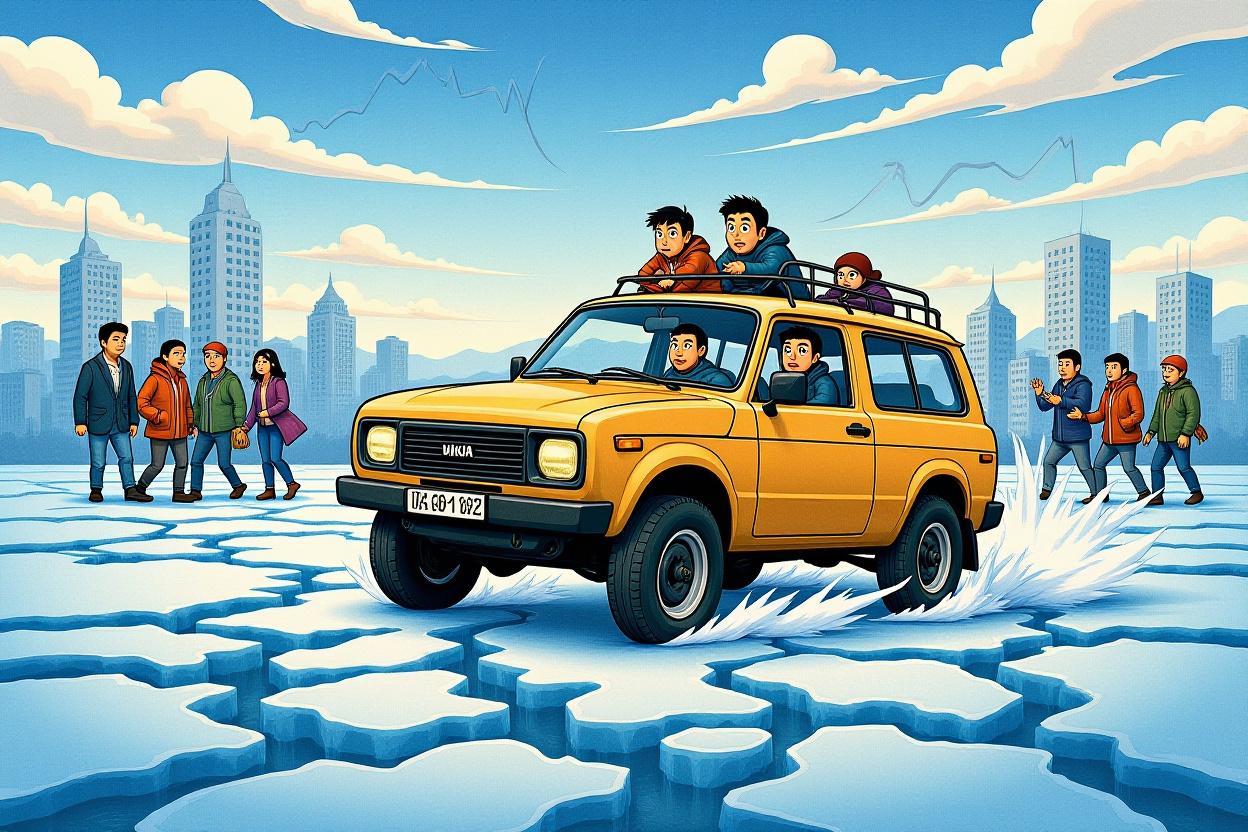
– A tourism boom to Baikal Lake, driven by visa-free policies and natural wonders like blue ice, has exposed critical safety gaps in ice travel.
– The ubiquitous UAZ ‘Little Steel Cannon’ vehicles, often operating without permits or oversight, are central to recent fatal accidents involving Chinese tourists.
– Unseasonably warm winters have prevented official ice road openings, increasing reliance on risky, unregulated transport and exacerbating hazards from thin ice and hidden cracks.
– Experts emphasize that safe ice travel requires local expertise, proper licensing, and tourist vigilance, yet enforcement remains inconsistent.
– Recommendations include booking through reputable agencies, verifying vehicle credentials, and advocating for stronger regulatory measures to prevent future tragedies.
The frozen surface of Baikal Lake, shimmering with deep blue ice, presents a breathtaking allure for winter adventurers, particularly from China. However, this natural spectacle has become the backdrop for a series of tragic accidents, revealing a dangerous ecosystem of unregulated transport. At the heart of this crisis are the so-called ‘Little Steel Cannon’ vehicles—ubiquitous UAZ越野车 that ferry tourists across the perilous ice. With recent fatalities highlighting systemic failures, understanding the risks and regulatory voids is crucial for anyone considering a journey onto Baikal’s frozen expanse.
The Frozen Frontier: Baikal Lake’s Allure and Escalating Dangers
Baikal Lake, holding approximately 20% of the world’s freshwater, transforms each winter into a vast, seemingly tranquil ice plain. Its famous blue ice formations draw photographers, explorers, and a growing number of Chinese tourists, especially since Russia implemented a visa-free policy for Chinese citizens on December 1, 2025. This policy sparked an immediate surge, with platforms like Tongcheng Travel reporting a over 200% increase in Russia-related searches within half an hour of the announcement.
Tourist Influx and the Promise of Adventure
Olkhon Island is the epicenter of this ice tourism boom, renowned as the prime location for witnessing Baikal’s blue ice. The island’s remote beauty, accessible via冰上通道 in normal winters, has made it a bucket-list destination. Russian tourism officials, such as Maya Lomidze (玛雅·洛米泽), Executive Director of the Russian Tourism Operators Association, predict a 30% year-on-year growth in Chinese visitors by summer 2026. This influx, however, has strained local infrastructure and safety protocols, placing unprecedented pressure on informal transport networks.
A Series of Fatal Wake-Up Calls
In a grim sequence this winter, two accidents on Baikal’s ice resulted in multiple Chinese tourist fatalities. On January 28, a UAZ越野车 carrying 10 Chinese tourists翻车 after hitting an ice裂缝, killing a 75-year-old woman. Just weeks later, on February 20, another ‘Little Steel Cannon’ plunged through the ice near Khoboy Cape on Olkhon Island, drowning seven of the eight Chinese passengers onboard. These incidents, investigated by the Russian Investigative Committee, have exposed the lethal consequences of unregulated ice travel and prompted urgent safety reassessments.
The ‘Little Steel Cannon’: Indispensable Yet Deadly Workhorse
The UAZ-452, colloquially known as the ‘Little Steel Cannon’, is a boxy, high-clearance vehicle that has become synonymous with winter transport on Baikal Lake. Its rugged design is ideal for navigating the island’s rough terrain and, in winter, the frozen湖面. For locals and tourists alike, these vehicles are often the only practical means of travel, especially when official ice roads are closed.
Cultural and Economic Lifeline
From Essential Service to Unregulated HazardTragically, this reliance has fostered a灰色地带 where many ‘Little Steel Cannon’ operations lack合法客运资质. In the February 20 accident, the driver was a 44-year-old local resident running an illegal tour service. Similarly, the January incident involved a driver without a valid license. These cases highlight how the very vehicles meant to enable access have become death traps due to absent oversight, turning the ‘Little Steel Cannon’ into a symbol of uncontrolled risk.
Precarious Ice: Nature’s Unpredictable Canvas
Safe travel on Baikal Lake’s ice depends on consistent sub-zero temperatures to form thick, stable layers. This winter, however,异常偏高 temperatures led to repeated冻融 cycles, creating酥冰 (crumbly ice) and隐性裂缝 that are difficult to detect. The Irkutsk Oblast交通管理部门 confirmed that ice厚度 never reached安全标准, preventing the official冰上通道 from opening—a first in recent years.
The Impact of Climate Change on Stability
The Science Behind Safe PassageRegulatory Gaps and Enforcement ChallengesThe absence of an official ice road this season created a regulatory vacuum. While patrol vehicles, often ‘大脚车’ (large-wheeled trucks), advise against停留 on the ice, their warnings are frequently ignored by local drivers who trust their own judgment over official decrees.
Official Warnings Versus Local Practice
The Chinese Consulate General in Irkutsk has issued multiple安全提醒, explicitly stating that “冰上交通可优先选择乘坐气垫船” (ice travel should优先考虑 hovercraft). However, as A Yu observed, enforcement seems uneven: “执法人员的劝诫,感觉更多是针对我们这些外地车辆…本地车很多时候依然在跑.” This disparity underscores a cultural divide where locals prioritize self-reliance, believing they can assess and mitigate risks independently.
The Limitations of Bans and Tourist Awareness
Charting a Safer Course ForwardTo prevent further loss of life, concerted efforts from tourists, operators, and authorities are essential. The ‘Little Steel Cannon’ need not be a hazard if operated within a robust safety framework.