



Executive Summary: Key Market Takeaways
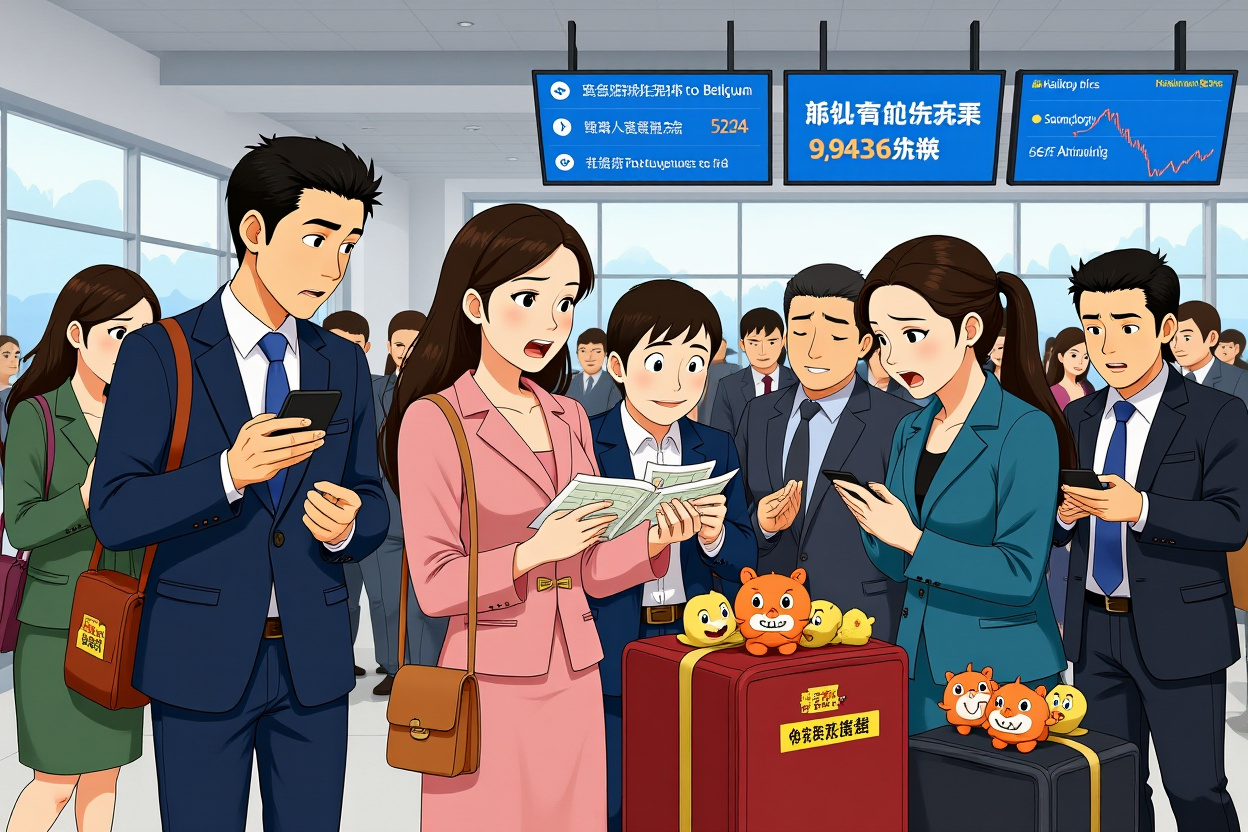
– Surging post-Chinese New Year travel demand has pushed one-way business class fares on routes like Haikou to Beijing near 10,000 yuan, highlighting extreme pricing volatility during peak periods.
– Major Hainan airports, including 海口美兰国际机场 (Haikou Meilan International Airport) and 三亚凤凰国际机场 (Sanya Phoenix International Airport), reported over 215,000 passengers on February 19 alone, with traffic peaks expected through February 23.
– The price shock is driving consumer behavior shifts, with netizens actively sharing cost-saving detour strategies via Guangdong province, reflecting broader affordability concerns in China’s domestic travel market.
– This demand surge presents both revenue opportunities and operational challenges for airlines like 海南航空 (Hainan Airlines) and 东方航空 (China Eastern Airlines), influencing short-term stock performance and investor sentiment.
– Market normalization is anticipated after February 24, with ticket prices expected to gradually decline, offering a potential entry point for investors monitoring cyclical trends in travel-related equities.
The Chinese New Year Travel Surge: Data and Demand Dynamics
The culmination of the Spring Festival holiday has triggered an intense return travel rush across China, with Hainan Island at the epicenter. This post-Chinese New Year travel demand is not merely a seasonal anomaly but a critical stress test for the aviation industry’s pricing power and operational resilience. As millions of travelers seek to return from holiday destinations, the convergence of limited capacity and soaring demand has created a perfect storm in ticket pricing.
Airport Traffic and Passenger Volume Analysis
According to data released by 海南机场集团 (Hainan Airport Group), the archipelago’s three major airports have been operating at near-capacity levels. On February 19, these hubs collectively handled 1,176 flights and transported over 215,000 passengers, marking a 6.3% year-on-year increase. The group forecasts that the peak will hit on February 23, the seventh day of the lunar new year, with an estimated 232,000 passengers. This volume underscores the immense scale of the post-Chinese New Year travel demand, which strains existing infrastructure and amplifies pricing pressures. For investors, such high-frequency traffic data serves as a real-time indicator of consumer mobility and discretionary spending strength within the world’s second-largest economy.
Ticket Price Inflation: A Market Under Pressure
The most glaring manifestation of this demand surge is the astronomical rise in airfares. A spot check for February 23 revealed that on 厦门航空 (Xiamen Airlines) flight MF8330 from Haikou to Beijing, only business class seats remained available, priced at approximately 9,980 yuan—a stark contrast to off-peak rates. This represents a premium of over 300% compared to typical advance booking fares. The phenomenon is not isolated; 在线旅游平台 (Online Travel Agency, OTA) data indicates that routes from Sanya to major cities like 上海 (Shanghai), 广州 (Guangzhou), and 深圳 (Shenzhen) are also facing severe ticket shortages. This pricing environment directly impacts corporate travel budgets and leisure spending, with ripple effects across the broader tourism value chain.
Economic Implications for Aviation and Tourism Sectors
The current post-Chinese New Year travel demand spike offers a microcosm of the larger economic forces shaping China’s domestic consumption landscape. For the aviation sector, peak-period pricing is a double-edged sword: while it boosts top-line revenue, it also risks consumer backlash and regulatory scrutiny. The situation provides a clear case study in revenue management elasticity and its limits.
Impact on Airline Revenues and Profit Margins
Broader Effects on Chinese Consumer Spending and Tourism GDPThe travel cost surge influences broader economic indicators. When consumers allocate disproportionate shares of their holiday budgets to transportation, spending on hotels, retail, and entertainment in destination cities may contract. According to 国家统计局 (National Bureau of Statistics) historical data, the Spring Festival period typically accounts for a significant portion of annual tourism revenue. Elevated travel costs could dampen overall holiday expenditure growth, a metric closely watched by economists assessing domestic consumption resilience. For market participants, this underscores the interconnectedness of transport costs with the performance of consumer discretionary stocks in the 沪深300指数 (CSI 300 Index).
Investor Insights: Market Reactions and Strategic Opportunities
Airline Stock Performance During Seasonal PeaksHistorically, shares of major Chinese airlines have shown sensitivity to peak travel periods. In the days leading up to the current return rush, stocks like 海南航空控股股份有限公司 (Hainan Airlines Holding Co., Ltd.) and 中国东方航空股份有限公司 (China Eastern Airlines Corporation Limited) experienced modest upticks on anticipated revenue boosts. However, sustained outperformance depends on capacity management and cost control. Investors should analyze load factors and passenger yield data from the 中国民用航空局 (Civil Aviation Administration of China, CAAC) to gauge whether price hikes translate to improved earnings per share (EPS). For example, a link to CAAC’s statistical reports, such as Monthly Air Transport Production Indicators, can provide authoritative backup.
Alternative Investment Angles in Travel Logistics and Infrastructure
Beyond airlines, the travel surge highlights investment themes in supporting infrastructure. Companies involved in airport operations, such as 上海机场集团 (Shanghai Airport Authority) or 广东省机场管理集团有限公司 (Guangdong Airport Authority), benefit from increased non-aeronautical revenue (e.g., retail concessions) during high-traffic periods. Additionally, the netizen-driven trend of detouring via 广州 (Guangzhou) or 深圳 (Shenzhen) points to opportunities in ground transportation and intermodal connectivity. Stocks in high-speed rail operators like 中国国家铁路集团有限公司 (China State Railway Group Co., Ltd.) and expressway toll collectors may see correlated demand spikes, offering diversification within the travel ecosystem.
Regulatory and Operational Responses to Peak Demand
Airport and Airline Mitigation StrategiesTo alleviate pressure, 海南机场集团 (Hainan Airport Group) has collaborated with carriers to offer flexible change options. Eligible passengers can modify their departure or destination airports once, leveraging the combined capacity of Haikou, Sanya, and 琼海博鳌机场 (Qionghai Boao Airport). This initiative aims to distribute traffic more evenly and reduce oversaturation on key routes. From an operational standpoint, airlines have deployed larger aircraft and optimized flight schedules to maximize throughput. Such measures are critical for maintaining service quality and minimizing disruptions that could erode brand equity and customer loyalty.
Government Policies Affecting Travel Demand and Pricing
The 中国民用航空局 (Civil Aviation Administration of China) maintains oversight on fare regulations, particularly during national holidays. While market-based pricing is generally encouraged, authorities may intervene if prices are deemed excessively speculative or anti-competitive. Investors should monitor for any official statements or guidance from regulators, as these can impact airline pricing strategies and, consequently, revenue projections. Additionally, provincial governments in Hainan and Guangdong may implement temporary transport subsidies or coordinate additional ferry services across the 琼州海峡 (Qiongzhou Strait) to ease congestion, influencing travel cost dynamics.
Consumer Adaptations: Netizen Detour Experiences and Cost-Saving Strategies
The viral sharing of detour experiences on social media platforms like 微博 (Weibo) and 小红书 (Xiaohongshu) reflects a pragmatic consumer response to the post-Chinese New Year travel demand shock. These grassroots strategies offer real-time insights into travel behavior and cost sensitivity.
Popular Alternative Routes via Guangdong Province
Faced with prohibitive direct flight costs, many travelers are opting for multi-modal journeys. A common workaround involves taking a ferry from Hainan to 湛江 (Zhanjiang) or 徐闻 (Xuwen) in Guangdong, then proceeding by high-speed rail or domestic flight from hubs like 广州白云国际机场 (Guangzhou Baiyun International Airport) or 深圳宝安国际机场 (Shenzhen Bao’an International Airport). This detour can reduce total travel expenses by 30-50%, albeit at the cost of longer transit times. For example, a Haikou-to-Beijing trip via Guangzhou might save over 5,000 yuan per ticket, making it an attractive option for budget-conscious travelers.
Financial Calculations: Assessing the Viability of Detours
From an investment perspective, the prevalence of detours signals price elasticity in the travel market. When direct airfares exceed a certain threshold—often around 8,000 yuan for this route—consumers actively seek substitutes, potentially dampening airline revenue potential on premium routes. This behavior can be modeled using demand curve analysis, providing valuable data for revenue management systems. Moreover, it highlights growth opportunities for intermodal transport providers and OTAs that facilitate complex itinerary planning. Companies like 携程旅行网 (Trip.com Group) and 同程旅行 (Tongcheng Travel) are likely seeing increased traffic for multi-segment bookings during this period.
Future Outlook: Market Adjustments and Long-Term Trends
Projected Price Corrections and Demand NormalizationIndustry analysts, including those from 中金公司 (China International Capital Corporation Limited), anticipate a gradual decline in airfares from late February onward. As passenger volumes ebb, airlines will recalibrate pricing to stimulate demand on less congested routes. This correction phase often presents a buying opportunity for value investors in travel stocks, as prices may temporarily dip before stabilizing. Monitoring forward booking data on OTA platforms can provide early signals of this trend, enabling proactive portfolio adjustments.
Long-Term Investment Opportunities in Chinese Domestic Travel
The recurring nature of the post-Chinese New Year travel demand underscores the structural growth of China’s domestic tourism market. Despite short-term volatility, underlying drivers—such as rising disposable incomes, improved transportation infrastructure, and government policies promoting domestic consumption—remain intact. Investors with a longer horizon should consider exposure to a basket of stocks across airlines, airports, hotels, and online travel services. Exchange-traded funds (ETFs) focusing on the 消费板块 (consumer sector) or specific themes like 春运 (Spring Festival travel season) can provide diversified access to this theme. Additionally, sustainable travel and digitalization trends, accelerated by events like this peak, may favor companies innovating in smart airport solutions and eco-friendly aviation technologies.
Synthesis and Strategic Guidance for Market Participants
The current surge in Hainan-to-Beijing flight prices to nearly 10,000 yuan is a vivid illustration of the potent forces of post-Chinese New Year travel demand. For financial professionals, this episode serves as a real-time laboratory for assessing pricing power, consumer adaptability, and sectoral interdependencies within China’s travel economy. Key takeaways include the critical importance of monitoring high-frequency traffic data, understanding regulatory frameworks, and recognizing behavioral shifts like detour strategies that can alter market dynamics.
Moving forward, investors are advised to incorporate seasonal travel analytics into their models for airlines and tourism-related equities. Consider setting alerts for CAAC announcements and OTA pricing trends to capture opportunistic entry points. Furthermore, engage with management teams during earnings calls to query their peak-season strategies and capacity planning. By staying attuned to these rhythms, you can better navigate the volatilities and capitalize on the enduring growth of China’s domestic travel market, turning periodic surges into strategic advantages for your portfolio.