



Executive Summary
This article delves into the profound shift where artificial intelligence is dismantling professions in reverse order of their historical emergence. Key takeaways include:
– The reverse historical evolution of AI replacement means that 20th-century cognitive roles, from financial analysis to middle management, are most vulnerable to automation.
– Serious media outlets like The Atlantic Monthly have issued urgent warnings, highlighting data showing rising unemployment among degree-holders and the explosive growth of AI agents.
– A cognitive divide exists between general users of chatbots and tech insiders leveraging autonomous AI agents, masking the imminent disruption to white-collar jobs.
– Structural unemployment from AI threatens to overwhelm economic safety nets, with global implications, including for China’s tech-driven equity markets and professional class.
– Adaptation strategies involve embracing physical-world skills or learning to command AI systems, crucial for investors and professionals navigating this transformation.
The Ticking Clock: AI’s Assault on Modern Professions
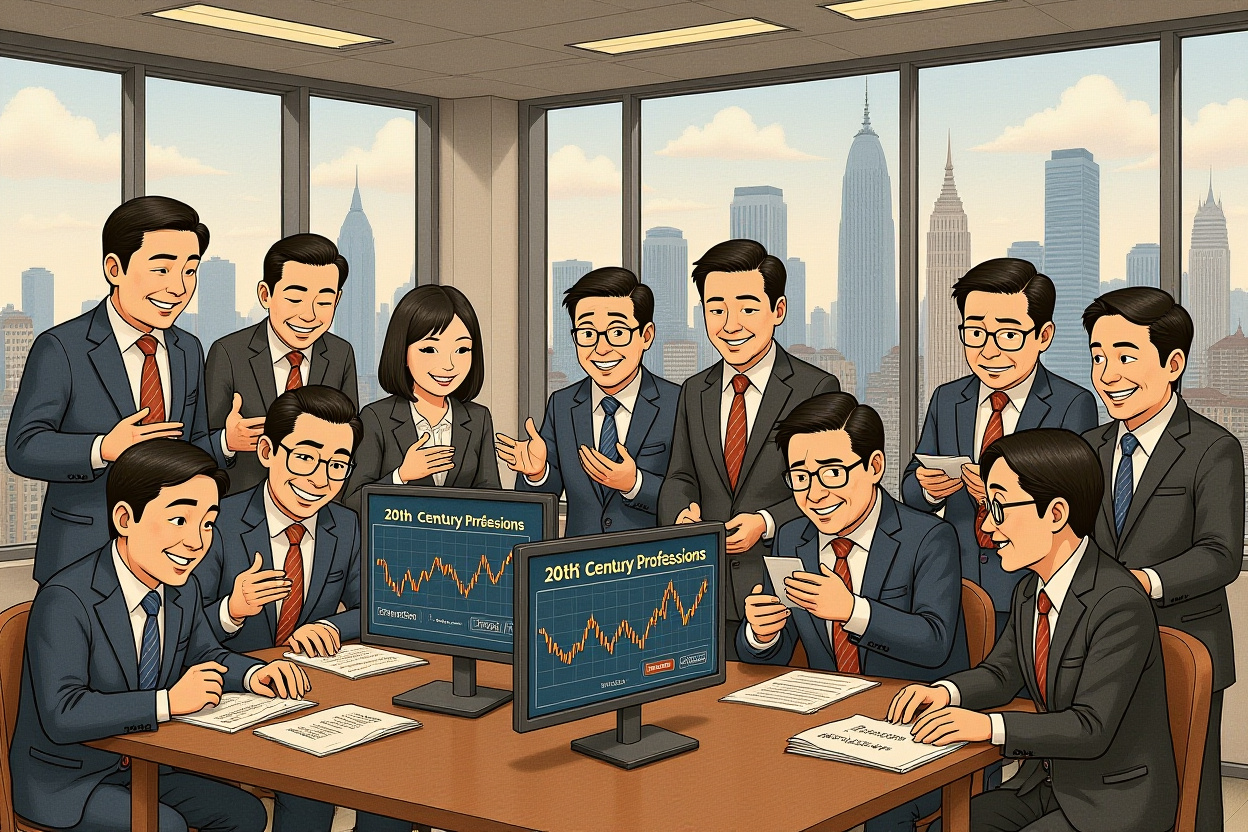
When Nassim Taleb (纳西姆·塔勒布), the renowned author of “The Black Swan,” tweeted that “all professions invented in the 20th century are hard to escape the impact of AI,” it struck a chord with forward-thinking analysts. This observation aligns with the reverse historical evolution of AI replacement, a concept predicting that skills developed most recently in human history—particularly abstract, information-based white-collar work—are the first targets for automation. For institutional investors and corporate executives focused on Chinese equity markets, this trend isn’t just theoretical; it’s a seismic force reshaping labor productivity, corporate cost structures, and sector valuations. As AI tools advance, the very foundation of 20th-century professional roles is eroding, demanding a reassessment of investment theses in technology, consumer discretionary, and industrial sectors.
From Tweet to Trend: Validating the Reverse Historical Evolution
The reverse historical evolution of AI replacement posits that human skills evolved from physical prowess to cognitive abstraction, but AI is attacking this hierarchy backwards. Professions like coding, legal drafting, and financial modeling—hallmarks of the 20th-century office—are built on symbolic manipulation, which AI models excel at. In contrast, ancient skills such as plumbing or hairstyling require embodied interaction, making them harder to automate. This reversal means that the white-collar safety net, long assumed in developed economies and burgeoning Chinese megacities, is vanishing. Data from the U.S. shows college graduates facing higher unemployment than high school peers, a historic inversion signaling that the AI impact on 20th-century professions is already unfolding, with parallel risks for China’s educated workforce driving its tech boom.
Serious Media Sounds the Alarm: A Paradigm Shift in Coverage
The gravity of this shift is underscored by mainstream media, which has moved from skepticism to stark warnings. The Atlantic Monthly (大西洋月刊), a venerable publication dating to 1857, recently published a trio of in-depth articles on AI’s employment impact, signaling a critical turning point in public discourse. This coverage shift reflects the reverse historical evolution of AI replacement, as evidence mounts that cognitive roles are disproportionately at risk.
The Atlantic Monthly’s Triple Feature: From Fringe to Forefront
In rapid succession, The Atlantic Monthly ran pieces titled “America Isn’t Ready for AI’s Impact on Jobs,” “AI Agents Are Sweeping Through America,” and “The Worst-Case Scenario for White-Collar Workers.” Authors like Josh Tyrangiel (乔什·泰兰吉尔) and Annie Lowrey (安妮·劳里) presented data showing bachelor’s degree holders accounting for a quarter of U.S. unemployment, while AI-automatable occupations see spiking joblessness. For Chinese market participants, this mirrors concerns in sectors like fintech and e-commerce, where companies like Alibaba Group (阿里巴巴集团) and Tencent (腾讯) are integrating AI, potentially displacing administrative and analytical roles. The media’s urgency highlights that the AI impact on 20th-century professions is not a distant threat but a present disruption, with implications for labor costs and innovation in Chinese equities.
A Reversal in Narrative: From Bubble to Breakdown
Notably, The Atlantic Monthly previously questioned AI hype, making its recent focus a deliberate correction. This underscores the reverse historical evolution of AI replacement, as tools like AI agents—autonomous systems that plan and execute tasks—accelerate adoption. The publication’s pivot warns that complacency is dangerous, especially for investors in Chinese tech stocks, where AI integration could boost margins but also trigger social and regulatory responses affecting market stability.
The Hidden Chasm: AI Agents vs. Chatbot Illusions
A critical gap in perception exacerbates the risk. While many professionals use ChatGPT for drafting emails or queries, a more radical transformation is underway with AI agents. These are not passive chatbots but active digital workers that operate independently, embodying the reverse historical evolution of AI replacement by targeting complex cognitive tasks.
Understanding AI Agents: The Autonomous Workforce
AI agents, such as those developed by Anthropic or OpenAI, exhibit “agentic” behavior: given a goal, they decompose it, search the web, write code, run tests, and self-correct. For example, Anthropic’s employee Boris Cerny noted that Claude Code “begins to have its own ideas and actively proposes what to build.” This autonomy means that a single engineer can oversee multiple agents handling databases, front-end development, and algorithms simultaneously, compressing work that once took months into days. In China, tech giants like Baidu (百度) and SenseTime (商汤科技) are advancing similar agents, poised to disrupt software development, customer service, and back-office operations. The reverse historical evolution of AI replacement is evident here, as these tools bypass human cognitive limits, threatening roles rooted in information processing.
The Two AI Universes: A Divide with Dire Consequences
Reporter Lila Shroff’s article describes Americans living in parallel AI universes: one where free chatbots seem mildly useful, and another where engineers are “radicalized” by agent capabilities. This divide masks the speed of displacement, as easier-to-use agents will soon reach every desk. For Chinese professionals, particularly in financial hubs like Shanghai and Shenzhen, this means that skills in data analysis or report writing—once lucrative—may become obsolete overnight. The AI impact on 20th-century professions hinges on this cognitive gap; those unaware of agent tools risk being sidelined, affecting career trajectories and investment decisions in human-capital-intensive companies.
Why White-Collar Jobs Are First: The Historical Rewind
The vulnerability of white-collar work stems from its recent origins in the 20th century, aligning with the reverse historical evolution of AI replacement. Human history saw skills progress from physical labor to industrial craftsmanship to abstract symbol manipulation, but AI inverts this path, targeting the newest cognitive layers first.
The Reverse Evolution in Action: From Brain to Body
As the article’s author posited, AI finds it easier to replicate decades-old cognitive training than millennia-evolved physical dexterity. Professions like accounting, project management, and legal review involve structured information flows—ideal for AI’s pattern recognition. In contrast, trades like electrical work or massage therapy require spatial reasoning and tactile feedback, creating a “moat” against automation. Data from the U.S. Bureau of Labor Statistics shows faster job placement for high school graduates than college graduates, a trend never seen before, confirming the reverse historical evolution of AI replacement. For China, with its massive push in higher education and white-collar expansion, this poses acute risks: sectors like banking, insurance, and tech services could see rapid deskilling, impacting earnings and stock performance for firms like Ping An Insurance (平安保险) or China International Capital Corporation Limited (中金公司).
Structural vs. Cyclical Unemployment: A Critical Distinction
Annie Lowrey’s analysis emphasizes that AI-induced job loss is structural, not cyclical. Past recessions saw temporary layoffs, but AI enables permanent elimination of roles once workflows are automated. This structural shift undermines traditional buffers like unemployment insurance or retraining programs, which assume eventual recovery. In China, where economic planning often addresses cyclical swings, the reverse historical evolution of AI replacement could strain social stability, affecting consumer spending and equity valuations. For instance, if AI automates clerical jobs in manufacturing or logistics, it could depress wages in urban centers, altering demand for consumer goods and services tracked by investors.
The Calm Before the Storm: Systemic Failures and Elite Denial
Despite mounting evidence, a false calm persists, driven by institutional blind spots. Economists, corporate leaders, and policymakers are ill-equipped to gauge the reverse historical evolution of AI replacement, leading to dangerous complacency.
Economists’ Rearview Mirror: Misreading the Data
Chicago Fed President Austan Goolsbee acknowledged that productivity data is high without corresponding labor market erosion, a puzzle he attributes to lagging statistics. Economist Anton Korinek (安东·科里内克) critiqued this approach, noting that economists “look in the rearview mirror” while AI “self-deploys” due to its intelligence. For Chinese markets, this mirrors debates at the People’s Bank of China (中国人民银行), where officials balance growth with technological disruption. The AI impact on 20th-century professions may not yet show in headline numbers, but leading indicators like software investment and job postings in AI-heavy industries suggest impending shifts, relevant for equity analysts monitoring tech earnings.
Corporate Silence and Labor Hoarding: A Strategic Pause
CEOs like Dario Amodei (达里奥·阿莫戴伊) of Anthropic and Sam Altman (萨姆·奥特曼) of OpenAI once warned of massive white-collar job loss but have since gone quiet. This reflects a “labor hoarding” phase, where companies integrate AI with legacy systems before cutting staff. In China, firms like Huawei (华为) or Xiaomi (小米) may follow suit, optimizing operations before announcing layoffs. This silence is a tactical move, as capital seeks to maximize efficiency without triggering backlash. For investors, it signals that margin improvements from AI could be offset by social costs, influencing ESG ratings and regulatory risks in Chinese equities.
Political Inaction and Tool Failure: A Governance Vacuum
As noted, tools like universal basic income (UBI) or retraining programs are inadequate for structural unemployment. In the U.S., political gridlock allows tech lobbying to dominate; in China, the government’s proactive industrial policy may offer more cushion, but challenges remain. The reverse historical evolution of AI replacement tests all systems, with former UK Deputy Prime Minister Nick Clegg (尼克·克莱格) warning that democracies may fail this test. For Chinese markets, state-led initiatives in AI ethics and job transition could become key differentiators, affecting investor confidence in tech sectors under the China Securities Regulatory Commission (中国证券监督管理委员会) oversight.
Global Ripples: AI’s Borderless Impact on China
The AI impact on 20th-century professions is not confined to the West; it resonates deeply in China, where white-collar aspirations are entrenched and tech adoption is rapid. The reverse historical evolution of AI replacement poses unique vulnerabilities and opportunities for Chinese professionals and investors.
No Borders for Disruption: Software’s Universal Reach
AI, as software, transcends geography, meaning Chinese accountants, marketers, and developers face similar risks as their global peers. However, China’s emphasis on STEM education and digital infrastructure, like the “Digital China” initiative, could accelerate AI integration, potentially displacing jobs faster. For equity markets, this implies volatility in sectors reliant on human capital, such as education services or business consulting. Companies like New Oriental (新东方) or TAL Education Group (好未来) might see demand shifts as professionals retrain, while AI-driven firms like ByteDance (字节跳动) could gain market share.
China’s Unique Context: Strengths and Vulnerabilities
China’s labor market has long prized white-collar stability, but the reverse historical evolution of AI replacement threatens this narrative. With a large population of university graduates and a booming tech sector, job displacement could impact domestic consumption, a key driver of GDP growth. Conversely, China’s prowess in hardware and manufacturing might bolster physical-world skills, aligning with the “downward roots” survival strategy. Investors should monitor policy responses, such as subsidies for AI safety nets or incentives for human-AI collaboration, which could influence stock performances in renewable energy or robotics, sectors where China leads globally.
Navigating the Future: Strategies for Adaptation and Investment
In light of the reverse historical evolution of AI replacement, individuals and investors must pivot strategically. The AI impact on 20th-century professions demands a rethinking of career paths and portfolio allocations, especially in Chinese equities.
Downward Roots: Embracing Physical and Emotional Skills
Since AI struggles with complex physical interactions, professions like healthcare, skilled trades, or creative arts offer resilience. In China, this could boost sectors like healthcare services or luxury experiences, where human touch is irreplaceable. For investors, companies in these domains, such as Aier Eye Hospital Group (爱尔眼科医院集团) or Midea Group (美的集团), may present stable opportunities amid tech disruption.
Upward Command: Becoming AI Orchestrators
Rather than competing with AI on speed, professionals should learn to command agent systems, focusing on high-level decision-making, ethical oversight, and creative direction. This aligns with the reverse historical evolution of AI replacement, as human value shifts to leadership and innovation. In Chinese markets, firms that train employees in AI management, like Tencent’s cloud division or Alibaba’s DAMO Academy, could see enhanced productivity, appealing to growth-focused investors. Additionally, venture capital in AI startups, such as those in Shenzhen’s tech clusters, may offer high returns as automation proliferates.
Embracing the Inevitable: A Call to Action for Professionals and Investors
The reverse historical evolution of AI replacement is not a speculative trend but an unfolding reality, with the AI impact on 20th-century professions reshaping economies globally. For sophisticated stakeholders in Chinese equity markets, this demands proactive engagement: monitor AI adoption rates in portfolio companies, assess labor cost exposures, and diversify into sectors resilient to automation. Individuals should upskill in areas where AI complements rather than replaces, such as data science oversight or cross-cultural negotiation. As the storm gathers—evidenced by media warnings and technological leaps—complacency is the greatest risk. By understanding and adapting to this reverse evolution, we can navigate the disruption, turning threat into opportunity for sustainable growth in the AI era.