



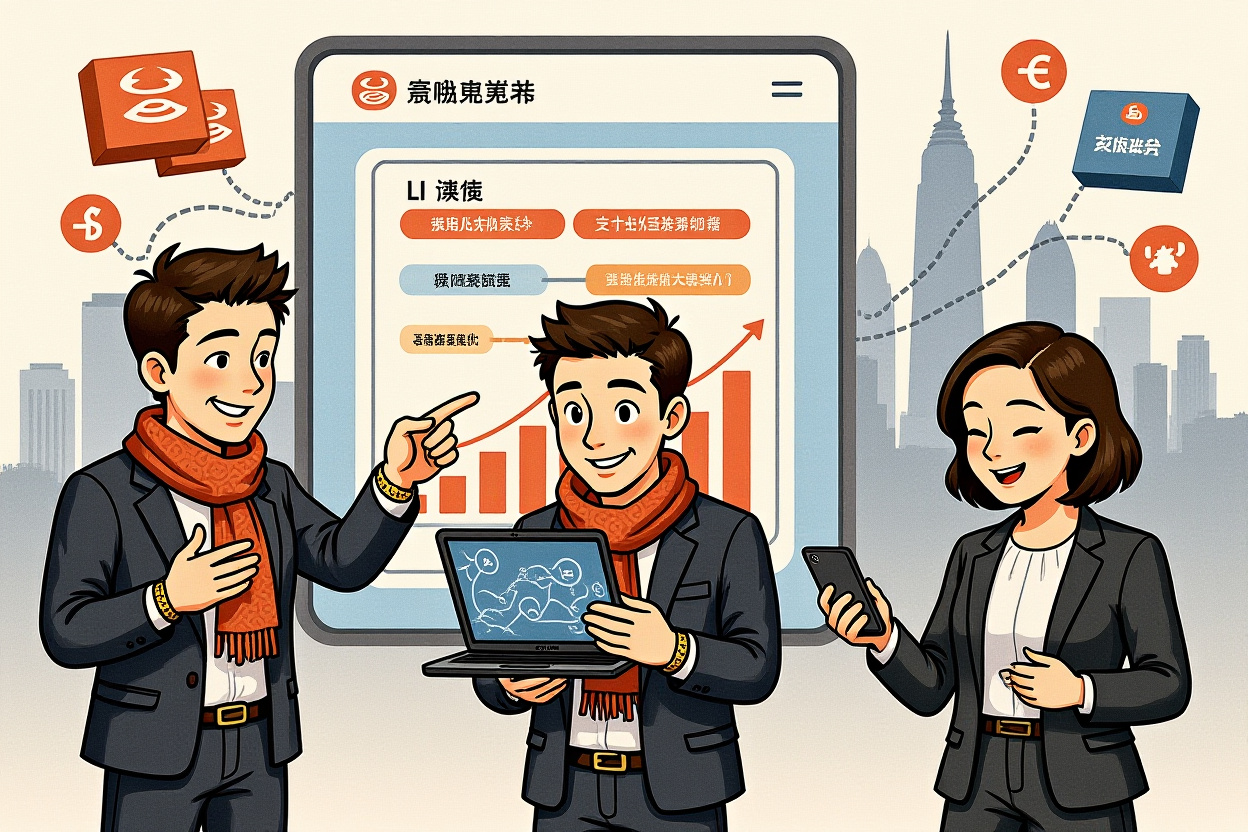
Executive Summary
This article delves into the remarkable journeys of young graduates from Zhengzhou Sias University (郑州西亚斯学院) who have built thriving foreign trade businesses, demonstrating that silent success in foreign trade is attainable through determination, digital tools, and strategic niche selection. Key takeaways include:
– Despite hailing from a private university and lacking extensive resources, these Gen Z entrepreneurs have scaled their companies to annual revenues of millions of yuan by leveraging platforms like Alibaba International Station (阿里巴巴国际站).
– Their approach often involves starting as “super individuals,” handling all aspects of trade solo—from marketing and customer service to logistics—before gradually expanding teams.
– The entrepreneurial culture at Zhengzhou Sias University, inspired by alumni like Wang Ning (王宁), founder of Pop Mart (泡泡玛特), plays a crucial role in fostering business acumen and risk-taking.
– Adaptation to market shifts, such as post-pandemic changes and rising shipping costs, alongside the integration of AI tools, has been pivotal in sustaining growth and achieving silent success in foreign trade.
– These stories offer valuable insights for investors and aspiring traders, highlighting the potential of China’s small and medium-sized enterprise (SME) export sector amid global demand.
The Wind of Opportunity: Riding China’s Export Wave
In recent years, China’s foreign trade sector has witnessed unprecedented growth, creating a fertile ground for young entrepreneurs to achieve silent success in foreign trade. The COVID-19 pandemic, while disruptive, accelerated e-commerce adoption and exposed gaps in global supply chains that agile traders could fill. According to China Customs data, 2021 saw goods trade imports and exports reach 39.1 trillion yuan, a year-over-year increase of over 20%, with exports surging 21.4% to a historical peak. This momentum continued into 2025, with the first 11 months recording a total trade value exceeding 41 trillion yuan, up 3.6%, and exports growing 6.2% to about 24.46 trillion yuan. For Gen Z graduates from non-elite backgrounds, this represented a golden opportunity to enter the market with minimal barriers.
Pandemic-Era Entry Points and Initial Struggles
Li Jiale (李佳乐), a graduate of Zhengzhou Sias University, exemplifies this trend. He entered the foreign trade arena in 2020 at age 19, registering a store on Alibaba International Station (阿里巴巴国际站) with a startup capital of just over 40,000 yuan borrowed from family. Focusing on inflatable swim rings—a low-cost, niche product—he aimed to break even first before pursuing profits. For months, his daily inquiry count stagnated at zero, but by the fourth month, it skyrocketed to over 1,500, landing him a 300,000-yuan order for 10,000 units. “The wind came suddenly,” Li recalls, attributing his silent success in foreign trade to timing and persistence rather than elaborate planning. Similarly, He Jiakun (何佳坤), another graduate, started in 2023 with 60,000 yuan in savings and loans, targeting fitness equipment for欧美 (Europe and America) markets. He avoided the earlier surge in sea freight costs, which had spiked during the pandemic, and instead benefited from stabilized logistics and growing demand for home gym gear.
Strategic Product Selection and Market Adaptation
Both entrepreneurs emphasized starting small to minimize risk. Li Jiale kept profit margins around 10%, sometimes accepting near-loss orders to build customer relationships. “If I had overanalyzed initially, I might have talked myself out of it,” he says, highlighting the importance of action over perfection. He Jiakun spent months researching suppliers across河南 (Henan), 广东 (Guangdong), and 福建 (Fujian) provinces, comparing prices and factory conditions, while dissecting dozens of successful competitors on Alibaba International Station to identify gaps in pricing, quality, and service. This hands-on approach allowed them to carve out sustainable niches, demonstrating that silent success in foreign trade often begins with humble, focused efforts.
Becoming Super Individuals: The Solo Entrepreneur Journey
A defining characteristic of these young traders is their initial reliance on a “super individual” model—handling every aspect of the business alone to maintain control and reduce costs. This phase is critical for achieving silent success in foreign trade, as it forces entrepreneurs to master diverse skills, from digital marketing to international logistics. For Li Jiale, this meant 24-hour workdays, where he managed product listings, customer communications, order tracking, and shipping single-handedly. He adopted a strict daily task list, prioritizing urgent matters and avoiding distractions until all items were completed. “Without a team, I had to be the amplifier of my own efforts,” he notes, a sentiment echoed by his peers.
Communication Strategies and Relationship Building
Effective communication with international clients proved vital. Li Jiale learned from trial and error, initially using informal terms like “宝贝” (baby) for male customers and “亲爱的” (dear) for females, but later switching to direct names after feedback. He documented successful phrases and discarded ineffective ones, creating a reusable toolkit. Wang Teng (王腾), an English major from the same university, took a gentler approach, spending months building rapport with clients through casual chats about culture, travel, and daily life before discussing business. Her patience paid off, with one client taking nearly a year from initial contact to placing an order. “I don’t push sales until trust is established,” she explains, underscoring how relational depth can drive silent success in foreign trade by fostering loyalty and repeat purchases.
Leveraging AI Tools for Efficiency and Scale
Technology, particularly AI, has been a game-changer. He Jiakun, who scored only 50 in English during高考 (gaokao, the national college entrance exam), initially struggled with terms like FOB (Free On Board) and DDP (Delivered Duty Paid). By integrating AI tools like ChatGPT and DeepSeek, he automated translation, copywriting, and even product listing, reducing the time to list an item from hours to 30 seconds. “AI gives ordinary people a shortcut, making super individuals no longer a privilege for the few but a starting point for many,” he says. However, he cautions that AI cannot replace human oversight in critical areas like quality control and logistics coordination, where personal attention ensures accuracy and prevents costly errors. This blend of digital efficiency and hands-on management is key to sustaining silent success in foreign trade.
Navigating Challenges: From Market Volatility to Personal Growth
The path to silent success in foreign trade is not without obstacles. These entrepreneurs faced logistical hiccups, supplier inconsistencies, and the psychological pitfalls of rapid wealth accumulation. During the pandemic, sea freight prices fluctuated wildly, squeezing margins for early entrants like Li Jiale. By 2023, as travel restrictions eased, larger clients began visiting Chinese factories directly, marginalizing some trade intermediaries. This forced adaptability—Li expanded into wedding supplies and home gardening products, while He Jiakun diversified his fitness equipment line to cover over 60 countries. Their ability to pivot underscores the resilience required in this sector.
Learning from Mistakes and Maintaining Humility
Setbacks served as valuable lessons. Li Jiale recalls an incident where a supplier changed packaging specifications without notice, increasing shipping costs that he had to absorb. Similarly, quality control issues led to returns, teaching him to meticulously document every shipment. On a personal level, success brought temptations; in 2022, with liquid assets exceeding 800,000 yuan, Li indulged in luxury goods and social gatherings, only to see his daily orders drop sharply. “When actions distort, disaster begins,” he reflects, realizing that flashy networking without substantive business growth was futile. He Jiakun experienced a similar “膨胀” (inflated) feeling after buying an Audi A6 and a 3-million-yuan apartment, but was grounded by his girlfriend’s reminder to stay focused. Wang Teng, upon winning a second-place award at an Alibaba International Station event, consciously avoided vanity, telling herself, “Stay calm, don’t let this cloud your judgment.” These episodes highlight that silent success in foreign trade demands not just commercial savvy but emotional discipline.
The Role of Education and Environment in Fostering Entrepreneurs
The entrepreneurial ecosystem at Zhengzhou Sias University (郑州西亚斯学院) has been instrumental in nurturing these success stories. As a Sino-American joint institution, its campus features European-style architecture and themed commercial streets like “法国园” (French Garden) and “伦敦街” (London Street), creating an international ambiance that familiarizes students with global contexts. The university’s culture, inspired by alumnus Wang Ning (王宁)—who started with a campus格子铺 (grid store) and later took Pop Mart public with a market cap exceeding 250 billion Hong Kong dollars—encourages practical business ventures from dormitory小卖部 (small shops) to campus-wide markets. This environment normalizes risk-taking and provides a low-stakes training ground for future traders.
Family Support and Societal Perceptions
While not always initially supportive, families often became backbones. Wang Teng’s father, though skeptical of her career choice due to gender norms, assisted with English translations and client接待 (reception) when she was overwhelmed. He Jiakun’s parents, who run a small workshop, inspired his initial foray into trade, even if their products weren’t export-ready. Societal acknowledgment, such as elders praising He Jiakun at a friend’s wedding, reinforced their sense of achievement. This blend of institutional and familial support illustrates that silent success in foreign trade often thrives within collaborative networks, challenging the myth of the lone wolf entrepreneur.
Scaling Up and Paying It Forward: The Future of Young Traders
Having established their businesses, these entrepreneurs are now focused on expansion and mentorship, aiming to replicate their silent success in foreign trade for others. Li Jiale has diversified into metal factory ownership and targets 30 million yuan in annual revenue, while He Jiakun aims to double his 2025 goal of 30 million yuan to 60 million yuan by 2026. Wang Teng, starting later, sets a 2026 target of 9 million yuan, emphasizing professionalization over haste. Their growth trajectories reflect the scalability of digital trade platforms when coupled with strategic planning.
Inspiring the Next Generation
Recognized as industry mentors by Zhengzhou Sias University, Li Jiale and He Jiakun now guide aspiring students through programs like the Alibaba International Station talent基地 (base), which has trained over 108 participants in digital外贸操盘官 (foreign trade operation) skills. They emphasize practical tryouts over theoretical knowledge, echoing Wang Ning’s legacy. “I may not become the next Wang Ning,” Li says, “but if we can light the way for others, that’s success.” This mentorship cycle ensures that silent success in foreign trade becomes a reproducible model, democratizing access to global markets for China’s youth.
Key Takeaways and Forward-Looking Guidance
The stories of Li Jiale, He Jiakun, and Wang Teng reveal that silent success in foreign trade is achievable through a combination of timing, tenacity, and technology. By starting with niche products, embracing AI tools, and cultivating deep client relationships, young entrepreneurs can overcome traditional barriers of学历 (educational background) and资源 (resources). The supportive environment of institutions like Zhengzhou Sias University further amplifies these opportunities, proving that innovation often springs from unexpected places.
For international investors and business professionals, these narratives highlight the robustness of China’s SME export sector and the potential for high returns by backing agile, digitally-native traders. As global supply chains evolve, keeping an eye on such grassroots success stories can uncover lucrative opportunities. To aspiring entrepreneurs, the message is clear: begin with action, leverage available platforms, and remain adaptable—your journey toward silent success in foreign trade might just be a product listing away. Explore resources like Alibaba International Station and stay informed on海关总署 (General Administration of Customs) data to navigate this dynamic landscape effectively.