



Executive Summary
- AI integration in Chinese cinema reached unprecedented levels during the 2026 Lunar New Year season, with all eight released films leveraging AI for production, marketing, and distribution, fundamentally altering industry dynamics.
- Top-grossing films like Pegasus 3 and Silent Awakening demonstrated how AI-powered effects and narratives can drive box office success, with Pegasus 3 alone generating nearly 1.8 billion RMB in revenue.
- AI tools enabled massive efficiency gains, reducing animation rendering times from weeks to days and slashing short-form content production costs by 70-90%, as seen with ByteDance’s Seedance 2.0 model.
- Despite technological advances, films like Dreams of the Stars underperformed, proving that over-reliance on AI without strong storytelling leads to box office failure, emphasizing the need for balanced content creation.
- The trend highlights a strategic battle among tech giants like Alibaba Group (阿里巴巴集团), ByteDance (字节跳动), and Tencent (腾讯) for B2B AI dominance in entertainment, with long-term implications for investors and industry players.
The AI Revolution in China’s Lunar New Year Film Season
When the race cars in Pegasus 3 disintegrate with microsecond precision on screen, audiences might not realize—that’s not just special effects, but a 150 million RMB AI experiment. This year’s Lunar New Year film season has been utterly reconstructed by AI, marking a pivotal moment for the AI integration in Chinese cinema. Tech giants like Alibaba Group (阿里巴巴集团), ByteDance (字节跳动), and Tencent (腾讯) flooded the market with flagship AI models, offering 3 billion RMB in incentives to capture user attention, while robots dazzled on Spring Festival Gala stages, igniting a technological transformation.
The eight films released during the season unprecedentedly embraced AI technology. From script generation to post-production rendering, and from marketing pushes to box office predictions, AI has deeply restructured China’s film industry battle for the lucrative holiday period. This shift is not merely cosmetic; it represents a fundamental evolution in how movies are made, marketed, and monetized, with significant implications for global investors eyeing Chinese equities.
Box Office Breakdown and AI’s Role
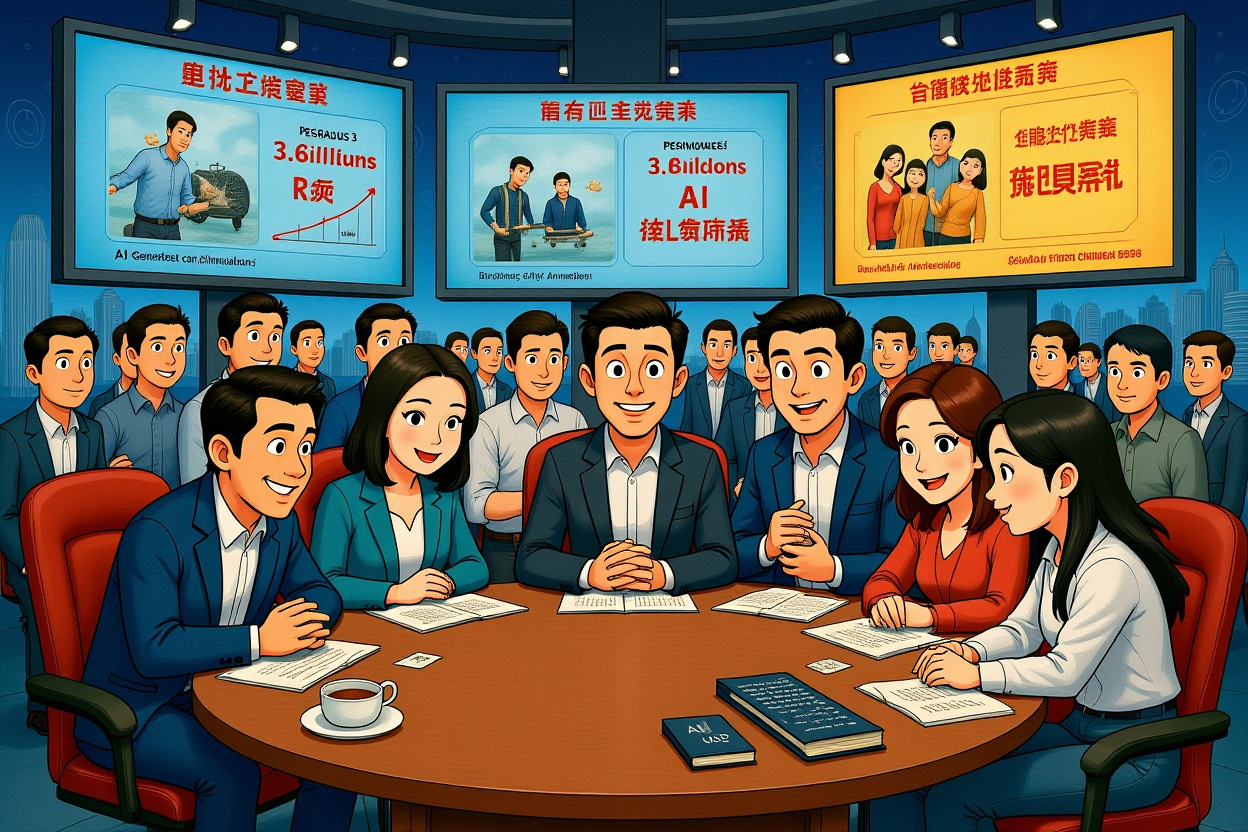
As of February 20, 17:00, according to data from Maoyan Professional Edition (猫眼专业版), the 2026 Lunar New Year season total box office (including pre-sales) surpassed 3.6 billion RMB. Pegasus 3, Silent Awakening, and Boonie Bears: Year of the Bear topped the charts, becoming the period’s main drivers. This performance underscores a clear trend: films deeply integrated with AI technology while maintaining content quality have become absolute frontrunners, showcasing the effective AI integration in Chinese cinema.
The box office success directly correlates with strategic AI deployment. For instance, Pegasus 3 led with nearly 1.8 billion RMB, emerging as the season champion and a benchmark for AI-empowered film effects. The production allocated 150 million RMB specifically for AI特效 (special effects), using machine learning on millions of real crash data sets to simulate metal disintegration dynamics at microsecond levels. This immersive visual impact became its core competitive edge, attracting audiences and boosting revenue.
Key Players and Their Strategies
The AI integration in Chinese cinema during this season involved diverse players, from major studios to tech providers. Enlight Media (光线传媒), for example, leveraged AI rendering engines to compress jungle vegetation特效 production time from weeks to 72 hours, translating efficiency gains into cost optimizations. Similarly, Silent Awakening incorporated AI elements like face-swapping and quantum communication对抗, earning over 560 million RMB and pushing AI applications in realistic genres.
This technological embrace extends beyond blockbusters. The animation film Boonie Bears: Year of the Bear used AI to optimize rendering efficiency and capture character表情细节, helping it cross 400 million RMB in票房 and propelling the series into the top five of China’s film history by franchise revenue. Behind the scenes, AI service providers gained market share, becoming core suppliers for亲子动画 (family animation).
Invisible Winners: AI as Co-Director
The AI integration in Chinese cinema has created invisible winners—those who mastered AI to reduce costs, enhance efficiency, and empower content. This section delves into case studies that highlight how AI acted as a co-director, reshaping production pipelines and delivering commercial success.
Case Study: Pegasus 3 and AI-Powered Effects
Pegasus 3 stands out as a prime example of AI integration in Chinese cinema. The film’s production team disclosed that the 150 million RMB AI fund was used to train models on百万组 (millions of sets) of real车祸 data, enabling hyper-realistic crash simulations. This not only saved time but also allowed for creative risks that traditional methods might prohibit. The result was a visually stunning experience that resonated with audiences, driving its box office dominance.
Moreover, the AI应用 (application) extended to marketing. By generating multiple trailer styles tailored to different demographics—cyberpunk for youth,温情向 (warm-hearted) for families—the film achieved low-cost, high-conversion promotional campaigns. A research report from财信证券 (Caixin Securities) noted that this AI-driven marketing model provided significant support for Pegasus 3‘s success, highlighting the holistic impact of AI integration in Chinese cinema.
Animation and Niche Films Leveraging AI
In animation, AI tools have revolutionized production. For Boonie Bears: Year of the Bear, AI rendering services reduced周期 (cycles) and costs while maintaining quality, allowing the franchise to thrive. The背后的 (behind-the-scenes) AI渲染服务商 (rendering service providers) expanded their market presence, becoming key players in the亲子动画 sector.
Another niche winner was Blade Man: Wind in the Desert, which adopted a differentiated strategy. In an era of特效泛滥 (excessive special effects), the film坚持 (persisted) with实拍风格 (live-action style), using AI only for辅助后期剪辑 (assisting post-production editing) and scene optimization. This “AI as辅助, content as king” approach enhanced efficiency and won口碑 (word-of-mouth), with票房 exceeding 400 million RMB. It demonstrates that AI integration in Chinese cinema can be subtle yet effective, catering to authenticity-seeking audiences.
Beyond the Screen: AI’s Backstage Revolution
The AI integration in Chinese cinema isn’t limited to what audiences see; it’s fueling an industrial revolution behind the scenes. From production to宣发 (promotion and distribution), AI is redefining workflows and economics, offering lucrative opportunities for tech-savvy players.
Production Efficiency with AI Models
ByteDance’s Seedance 2.0 model has emerged as a cost killer. Its technical whitepaper reveals that producing a 2-minute sci-fi短片 (short film) traditionally cost数十万元 (hundreds of thousands of RMB), but now requires only 330.6 RMB. Chinese Online’s (中文在线) report confirms that using this technology,短剧 (short drama) production costs dropped by 70-90%, with cycles compressed to days, and AI短剧播放量 (playback volume) surpassing 500 million. This efficiency leap is transforming content creation, making high-quality production accessible to smaller studios.
Additionally, AI剧本生成 (script generation) tools are aiding writers by providing data-driven insights on plot trends and audience preferences. While not replacing human creativity, these tools optimize the development process, reducing time-to-market for film projects. The AI integration in Chinese cinema thus extends to pre-production, enhancing overall pipeline agility.
Marketing and Distribution Enhanced by AI
AI has become a精准引流 (precise traffic diversion) tool in film marketing. Gone are the days of粗放式的宣发 (extensive promotion); now, AI-driven campaigns批量生成 (batch-generate)不同风格的预告片 (trailers of different styles) and二创内容 (user-generated content) based on用户画像 (user profiles). For example,年轻群体 (young demographics) receive cyberpunk-themed promotions, while家庭群体 (family groups) get温情向 content.
This approach not only cuts costs but also improves conversion rates. For Pegasus 3, AI marketing helped achieve a high ROI by targeting potential viewers with personalized content. The National Radio and Television Administration (国家广播电视总局) has noted the rise of such practices, though it also monitors for ethical concerns, as discussed later. The AI integration in Chinese cinema is thus creating a more data-driven, responsive marketing ecosystem.
The Limits of AI: When Technology Falls Short
While AI integration in Chinese cinema has brought profits, it’s not a panacea. This season also showcased instances where over-reliance on AI led to box office disappointments, underscoring the technology’s limitations and the enduring value of human creativity.
Box Office Flops Despite AI
Dreams of the Stars pushed AI into奇幻维度 (fantasy dimensions), constructing a良梦系统 (dream customization system) with赛博都市 (cyber city) and水墨国风 (ink painting style) scenes. However, its票房不及预期 (box office fell short of expectations). According to奈落影视录 (Nailuo Film Record), it was the only New Year film that failed to break 100 million RMB in three days, highlighting that AI alone can’t guarantee success.
The issue often lies in execution: some films had生硬 (stiff) AI换脸 (face-swapping) effects or缺乏灵气 (lacking vitality) in scene rendering, losing the人味 (human touch). This validates an industry axiom: AI can help films find audiences, but retaining them requires优质内容 (quality content). In core creative areas like情感共鸣 (emotional resonance),叙事创新 (narrative innovation), and人性洞察 (human insight), AI still cannot replace the intuition and warmth of human directors and writers.
Ethical and Copyright Challenges
The AI integration in Chinese cinema faces significant hurdles beyond creativity. In early 2026, AI魔改 (AI-modified) videos泛滥 (flooded) the internet, with creators using AI to make低俗 (vulgar) or扭曲 (distorted) adaptations of classics, eroding cultural symbols. Others employed AI一键洗稿 (one-click plagiarism) on热门短剧 (popular short dramas),批量生成 (mass-producing) highly similar content for profit.
The National Radio and Television Administration (国家广播电视总局) launched专项治理行动 (special governance actions) to clean up违规内容 (non-compliant content). In film创作 (creation), unauthorized replication of明星形象 (celebrity images) or魔改经典片段 (modifying classic scenes) easily infringes on肖像权 (portrait rights) and改编权 (adaptation rights). These issues warn the industry: the boundaries of技术应用 (technology application) need规范 (standardization), and ethical bottom lines must be upheld. For investors, this implies regulatory risks that could impact companies heavily invested in AI tools.
The Bigger Picture: Tech Giants’ Battle for B2B Dominance
The AI integration in Chinese cinema during the Lunar New Year season表面 (superficially) pits film studios against each other, but实质上 (in essence) it’s a生态卡位战 (ecosystem positioning battle) among tech giants in the B2B market. This has broader implications for the financial and technological landscapes.
Alibaba, ByteDance, and Tencent’s Moves
Alibaba’s千问 (Qianwen) model, ByteDance’s豆包 (Doubao)互动 (interaction) tools, and Tencent’s AI offerings are竞相 (competing) to provide services to film companies. For instance, Alibaba千问’s recommendation algorithms helped Silent Awakening reach下沉市场 (lower-tier markets), while ByteDance豆包导入 (imported) massive traffic through interactive campaigns. These moves are not just about film success; they’re about capturing market share in the burgeoning AI services sector, which is projected to grow exponentially in China.
For影视公司 (film companies), AI投入 (investment) has shifted from可选项 (optional) to必选项 (mandatory). This reshapes成本结构 (cost structures) and creates new技术依赖关系 (technological dependencies). Short-term, AI boosts票房确定性 (box office certainty) for top films; long-term, it amplifies the value of内容创意 (content creativity), as similar tools become ubiquitous. The AI integration in Chinese cinema is thus a microcosm of a larger tech war, with stakes for global investors monitoring Chinese equities.
Implications for the Film Industry
The trend signals a permanent shift. AI tools are democratizing production, allowing smaller players to compete, but also consolidating power among tech providers. Data from the China Film Administration (中国电影局) suggests that AI adoption could reduce average production costs by 20-30% over the next five years, potentially increasing profitability for listed film companies. However, it also raises concerns about homogenization and intellectual property risks.
Investors should watch for companies that balance AI integration with strong IP portfolios, such as Huace Film & TV (华策影视) or Beijing Enlight Media (北京光线传媒), which have reported efficiency gains from AI. The AI integration in Chinese cinema is creating new revenue streams and investment opportunities, from AI software firms to content studios leveraging these tools.
Forward-Looking Insights for the Global Market
The AI integration in Chinese cinema during the 2026 Lunar New Year season offers critical lessons for international investors and industry professionals. This transformation is not isolated; it reflects broader trends in technology adoption and content consumption that could influence global entertainment markets.
First, the success of AI-driven films like Pegasus 3 demonstrates that technological innovation can directly impact financial performance, making it a key metric for evaluating Chinese entertainment stocks. Second, the rise of AI service providers highlights investment opportunities in tech subsidiaries of giants like Alibaba Group (阿里巴巴集团) or ByteDance (字节跳动), which are expanding their B2B offerings. Third, regulatory developments around AI ethics and copyright, led by bodies like the National Radio and Television Administration (国家广播电视总局), will shape market dynamics, requiring careful monitoring.
Ultimately, the AI integration in Chinese cinema underscores a universal truth: technology enhances, but does not replace, compelling storytelling. As the industry evolves, players who master this balance will thrive. For sophisticated investors, this means focusing on companies with robust content pipelines coupled with strategic AI adoption, as they are best positioned to capitalize on China’s booming film market. Stay informed on regulatory updates and tech advancements to navigate this rapidly changing landscape effectively.