



Executive Summary
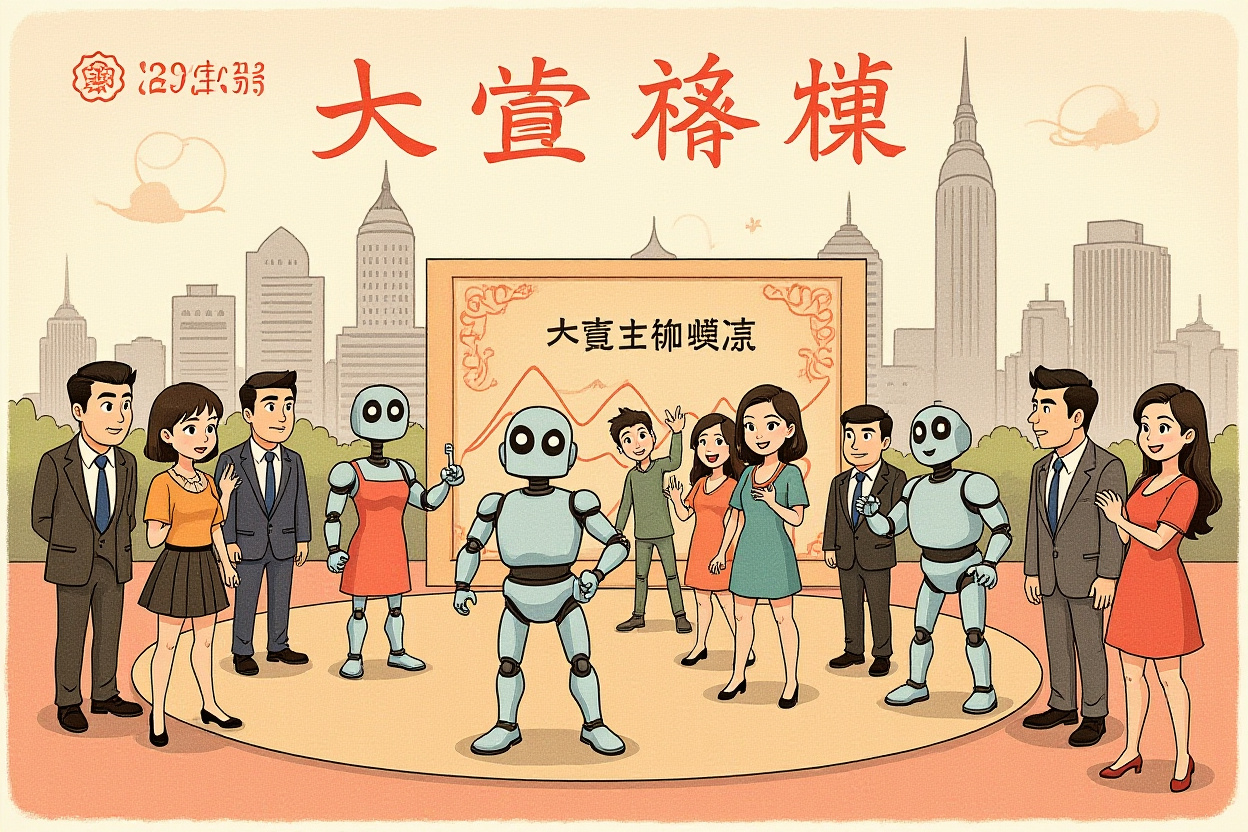
The annual CCTV Spring Festival Gala has long been a bellwether for technological trends in China, and the 2026 edition delivered a landmark moment for the embodied intelligence sector. This article delves into the implications of humanoid robots taking center stage, analyzing what it means for investors, the market, and the future of automation.
- The 2026 Gala featured a coordinated debut of four major Chinese embodied AI companies—魔法原子 (Magic Atom), 银河通用 (Galaxy Universal), 宇树科技 (Unitree Robotics), and 松延动力 (Songyan Power)—signaling collective industry maturation.
- Beyond spectacle, the event acts as the ultimate proving ground for embodied AI, transitioning technology from lab concepts to public acceptance and commercial scrutiny.
- IDC projects the Chinese embodied intelligent robot market will reach $770 billion in user spending by 2030, growing at a 94% CAGR, highlighting immense investment potential.
- The industry faces a pivotal shift in 2026, moving from performance-based hype to solving hard problems in industrial, commercial, and domestic deployment.
- For investors, the key metrics are evolving from funding rounds to tangible orders, reliability, and scalable revenue models in real-world applications.
The National Stage: Where Technology Meets Tradition
For decades, the CCTV Spring Festival Gala has not only entertained billions but also spotlighted China’s technological ambitions. In 2026, this tradition reached a new zenith as humanoid robots shared the spotlight with human performers, transforming the gala into a definitive platform for embodied AI validation. This convergence of culture and cutting-edge tech offers a unique lens into China’s strategic push to lead in next-generation robotics. The ultimate proving ground for embodied AI is no longer a secluded laboratory; it is under the glaring lights of the world’s most-watched television event.
The 2026 Lineup: A Strategic Showcase of Domestic Prowess
The selection of 魔法原子 (Magic Atom), 银河通用 (Galaxy Universal), 宇树科技 (Unitree Robotics), and 松延动力 (Songyan Power) was deliberate, representing a cross-section of China’s burgeoning embodied AI ecosystem. 宇树科技 (Unitree Robotics), building on its breakout appearance in the 2025 gala, participated in a martial arts performance titled 武 BOT with the renowned Henan Tagou Martial Arts School. 松延动力 (Songyan Power) featured in a comedy sketch, while 魔法原子 (Magic Atom) supported a musical number, and 银河通用 (Galaxy Universal) appeared in a micro-movie. This diverse integration across program genres demonstrated not just technical capability but also the flexibility required for real-world adoption.
More Than Performance: The Gala as a Commercial and Cultural Catalyst
The gala’s role extends far beyond a few minutes of airtime. It serves a dual purpose: educating the public on the imminent reality of human-robot coexistence and providing a state-endorsed stamp of approval for domestic technology. For institutional investors and corporate clients watching globally, the broadcast is a powerful credibility booster. It signals that these companies have progressed from prototype stages to a level of reliability deemed fit for a flawless, high-stakes national broadcast. This endorsement is crucial for attracting further investment and securing B2B contracts, making the gala a critical milestone on the path to commercialization.
Decoding the Partnership Titles: A Map of Strategic Positioning
A subtle yet telling detail from the 2026 gala was the variance in official designations given to the four participating firms. 宇树科技 (Unitree Robotics) was labeled the “Spring Festival Gala Robot Partner,” 松延动力 (Songyan Power) the “Spring Festival Gala Humanoid Robot Partner,” 魔法原子 (Magic Atom) the “Spring Festival Gala Intelligent Robot Strategic Partner,” and 银河通用 (Galaxy Universal) the “Spring Festival Gala Designated Embodied Large Model Robot.” These nuanced titles are not mere semantics; they reflect core differences in technical architecture, product focus, and market strategy.
Implications for Technology Stack and Market Focus
The terminology hints at underlying specializations. For instance, a “Designated Embodied Large Model Robot” suggests 银河通用 (Galaxy Universal) emphasizes AI brainpower and cognitive capabilities, likely integrating advanced multimodal large language models. In contrast, a “Humanoid Robot Partner” might indicate 松延动力 (Songyan Power)’s focus on biomimetic movement and hardware durability. For investors, these distinctions are vital for portfolio allocation. They reveal which companies are betting on superior mechanics, which on AI-driven decision-making, and which on full-stack integrated solutions. Understanding this landscape is key to identifying leaders in specific application niches.
The Hard Road Ahead: From Stage to Factory Floor
While the gala provides unparalleled visibility, it is merely the opening act. The ultimate proving ground for embodied AI lies in harsh, unforgiving real-world environments. As industry insiders starkly note, “Robots can’t dance on stage forever.” The transition from curated performances to consistent utility involves conquering three progressively difficult arenas, each with its own set of financial and technical hurdles.
The First Frontier: Industrial Automation and Manufacturing
The most immediate and lucrative market for embodied AI is industrial automation. Factories worldwide face acute labor shortages in repetitive, hazardous, or precision tasks like sorting, assembly, and quality inspection. The barrier to entry here is not elegance but relentless reliability. A robot on a production line must operate with near-perfect uptime, minimal maintenance, and tolerance for variables like dust, vibration, and electromagnetic interference. Performance is measured in metrics like Mean Time Between Failures (MTBF) and overall equipment effectiveness (OEE). Companies that can deliver here will generate the stable, recurring revenue needed to fuel further R&D. Success in this domain turns the ultimate proving ground into a profit center.
- Key Challenge: Achieving 99.9%+ operational reliability in unstructured or semi-structured industrial settings.
- Investor Watch: Look for announced partnerships with major manufacturers like 富士康 (Foxconn) or 比亚迪 (BYD) and pilot-to-production contract conversions.
The Complex World of Commercial Deployment
Beyond the factory, commercial spaces such as warehouses, retail stores, hospitals, and hotels represent a more dynamic challenge. Here, robots must navigate crowded, ever-changing environments, interact safely with the public, and execute a wider range of non-repetitive tasks. This requires robust sensor suites, advanced simultaneous localization and mapping (SLAM) algorithms, and natural language processing for basic interactions. The gala interaction was scripted; a hotel lobby is not. The ability to handle exceptions—a dropped item, a lost child, a confused customer—is what separates viable products from novelties. This phase tests the integrated system’s intelligence, not just its mechanics.
The Long-Term Vision: Integration into the Home
The final and most demanding frontier is the domestic sphere. The home is the ultimate unstructured environment, filled with unpredictable variables: cluttered floors, pets, children, varying lighting, and ambiguous user commands. Safety, affordability, simplicity, and emotional design become paramount. While this market holds the largest potential user base, it is likely decades away from mass adoption due to current cost and technology constraints. However, companies making strategic strides in perception and adaptive learning today will be best positioned for this future. The journey through each of these stages constitutes the true ultimate proving ground for the industry’s ambitions.
Market Realities: Growth Projections and the Inflection Point
The optimism surrounding embodied AI is underpinned by substantial market forecasts. According to IDC, China’s embodied intelligent robot user spending is projected to reach $770 billion by 2030, expanding at a compound annual growth rate (CAGR) of 94% . This almost doubling year-over-year trajectory highlights why global capital is flooding into the sector. However, 2026 is widely seen as an inflection point where the market narrative must evolve.
From Capital Valuation to Customer Validation
The previous phase was characterized by fundraising prowess, flashy prototypes, and visionary keynotes. The new phase, heralded by the gala’s mainstream exposure, demands a focus on hard business metrics. Investors are shifting their scrutiny from total funding raised to more tangible indicators: the size and growth of order books, customer retention rates, average contract values, and path to profitability. The ultimate proving ground is now the balance sheet. Companies like 宇树科技 (Unitree Robotics), which has reportedly participated in over 12 major events and 7 dedicated robot competitions since 2025, must translate that visibility into sustainable commercial contracts. The gala spotlight intensifies the pressure to perform financially.
- Critical Data Point: IDC’s 94% CAGR forecast for China’s embodied AI market through 2030 .
- Risk Factor: High burn rates without corresponding revenue growth could lead to a consolidation wave among the dozens of startups in the space.
Investment Implications and Strategic Considerations
For institutional investors and corporate strategists observing China’s tech landscape, the embodied AI sector presents a high-risk, high-reward proposition. The gala showcase reduces some early-stage technology risk by demonstrating basic competency, but it amplifies the execution risk. The key is to differentiate between companies with robust platforms capable of navigating the ultimate proving ground and those reliant on theatrical demonstrations.
Key Performance Indicators for Sustainable Growth
Moving forward, savvy investors should monitor a specific set of KPIs beyond top-line revenue. These include:
- Deployment Density: Number of robots deployed per customer site and the scalability of those deployments.
- Operational Cost Reduction: Tangible savings delivered to clients, measured in labor cost reduction, efficiency gains, or error rate decreases.
- Software Recurrence: Revenue from software updates, service subscriptions, and data analytics services, which offer higher margins than hardware sales.
- Supply Chain Resilience: Ability to secure critical components like actuators, sensors, and chips amid global geopolitical tensions.
Quotes from industry leaders underscore this shift. As a veteran robotics investor noted, “The applause after a dance routine doesn’t pay the bills. The silent, uninterrupted 18-hour shift in a logistics hub does.” The ultimate proving ground separates entertainment from enterprise.
Regulatory and Macroeconomic Factors
The development of embodied AI does not occur in a vacuum. It is influenced by policies from bodies like the 工业和信息化部 (Ministry of Industry and Information Technology, MIIT) and the 国家发展改革委 (National Development and Reform Commission, NDRC). Supportive policies, such as “Made in China 2025” and subsequent initiatives, provide subsidies and regulatory sandboxes. However, investors must also consider broader macroeconomic factors like China’s demographic decline, which increases demand for automation, and global trade dynamics affecting supply chains. Monitoring announcements from these agencies is essential for anticipating market shifts.
Synthesizing the Path Forward
The 2026 CCTV Spring Festival Gala will be remembered as the moment embodied AI stepped out of niche circles and into the national consciousness. It provided a spectacular snapshot of progress, but the real work begins now. The participating companies have passed the audition; the marathon of commercialization lies ahead. The ultimate proving ground for embodied AI is a multi-stage process: first on the gala stage for public acceptance, then in factories for reliability, in commercial spaces for adaptability, and finally, perhaps, in homes for ubiquity.
For the global investment community, this represents a call to rigorous due diligence. Look beyond the headline-grabbing performances. Engage deeply with company engineering roadmaps, scrutinize pilot project results, and assess management’s grasp of unit economics. The companies that succeed will be those that view the gala not as a peak achievement but as the starting gun for the relentless race toward practical, profitable utility. The ultimate proving ground awaits, and its verdict will reshape not just portfolios, but the future of work and daily life worldwide.