



Executive Summary
For global investors tracking Chinese equity markets, the 2026 CCTV Spring Festival Gala served as a critical barometer for the embodied intelligence sector. This annual spectacle transcended entertainment, becoming a high-stakes showcase for domestic robotics firms. The event highlighted both the immense potential and the formidable challenges facing this nascent industry. Key takeaways include:
- The Gala featured four leading embodied AI companies—Magic Atom, Galaxy Universal, Yushu Technology, and Songyan Power—signaling a coordinated push from lab demonstrations towards commercial validation.
- IDC projects China’s embodied intelligent robot user expenditure to surge to $770 billion by 2030, representing a compound annual growth rate (CAGR) of 94%, making it one of the world’s fastest-growing tech segments.
- Stage success must quickly translate into real-world applications across industrial, commercial, and eventual household settings to justify soaring valuations and secure long-term viability.
- Investors must shift focus from promotional metrics to fundamental business indicators: confirmed orders, client diversification, recurring revenue, and path to profitability.
- The Gala functions as the ultimate testing ground, separating marketing hype from commercially viable technology that can attract serious capital and enterprise adoption.
From National Stage to Global Markets: Decoding the Gala’s Financial Signal
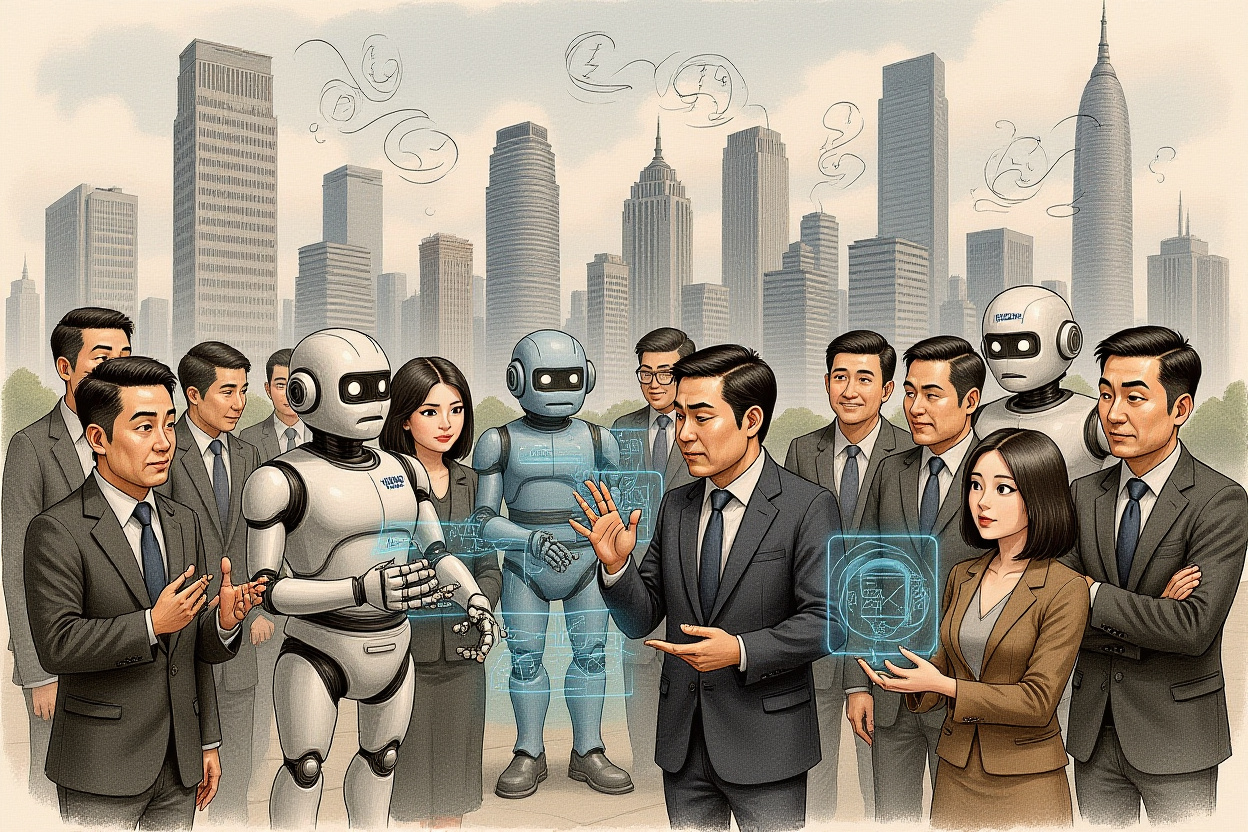
The glittering lights of the 2026 CCTV Spring Festival Gala did more than entertain a billion viewers; they illuminated a strategic inflection point for China’s technology and capital markets. For sophisticated investors, the coordinated appearance of four humanoid robotics firms was a deliberate signal from Beijing and industry leaders. This event underscores China’s ambition to dominate the next frontier of artificial intelligence—embodied AI, where intelligence is embedded in physical robots. The Spring Festival Gala has evolved into the ultimate testing ground for commercial readiness, providing a unique, high-pressure environment to evaluate which companies might lead a sector poised for explosive growth.
Historically, the Gala has previewed technological trends, from 5G broadcasts to digital payment integrations. Its 2026 edition, however, marked a pivotal shift. It moved beyond showcasing single technologies to presenting a cohesive narrative of China’s robotics ecosystem ready for prime time. This narrative is crucial for international fund managers and corporate executives assessing where to allocate capital in the volatile Chinese tech landscape. The performance was a live beta test watched by potential clients, partners, and regulators, making its outcomes directly relevant to investment theses and portfolio decisions.
A Strategic Showcase for Domestic Champions
The selection of Magic Atom, Galaxy Universal, Yushu Technology, and Songyan Power was not random. It reflected a curated display of China’s homegrown innovation, aimed at bolstering domestic supply chain confidence and attracting global investment. Yushu Technology, having gained significant traction after the 2025 Gala, demonstrated advanced capabilities in a martial arts performance with the Henan Tagou Martial Arts School. Songyan Power participated in a comedy sketch, while Magic Atom supported a musical act, and Galaxy Universal appeared in a micro-film. Each company’s specific role—subtly differentiated by official titles like “strategic partner” or “specified embodied large-model robot”—hints at their unique technological approaches and market positioning.
For the financial community, this differentiation is critical. It suggests varying levels of integration with artificial intelligence models, mechanical design philosophies, and target applications. Understanding these nuances allows investors to gauge which firms are likely to capture specific market segments. The Gala’s ultimate testing ground environment forced these robots to operate under unpredictable live conditions, offering a rare public stress test of their reliability and software stability—key factors for future scalability and risk assessment.
Deconstructing the Embodied AI Ecosystem: Players, Profiles, and Projections
To make informed investment decisions, a deep dive into the key companies featured is essential. Their post-Gala trajectories will significantly influence sector valuations and merger and acquisition activity.
Yushu Technology: The Frontrunner’s Path to Commercialization
Yushu Technology emerged as the standout performer, leveraging its 2025 Gala appearance to secure over a dozen high-profile event bookings and seven dedicated robot competitions in the following year. This visibility translates to brand equity and potential B2B (business-to-business) interest. From an investment perspective, the key question is whether this fame can be monetized. The company needs to pivot from entertainment contracts to sustained industrial or commercial service agreements. Its collaboration with a traditional martial arts school also symbolizes a blend of Chinese cultural heritage with cutting-edge technology, a theme that resonates well with both domestic policy goals and certain consumer markets.
Magic Atom, Galaxy Universal, and Songyan Power: Diversified Strategies
While Yushu may lead in public recognition, the other players reveal the sector’s breadth. Magic Atom’s involvement in a song about intelligent manufacturing aligns it with industrial 4.0 narratives. Galaxy Universal’s pairing with popular comedians Shen Teng (沈腾) and Ma Li (马丽) in a micro-film suggests a focus on consumer-facing interaction and accessibility. Songyan Power’s role in a family-themed sketch hints at aspirations for personal companionship or domestic assistance roles. For analysts, this diversity means the embodied AI market is not a winner-take-all race but may fragment into specialized verticals, each with its own financial metrics and growth curves.
The Crucial Transition: Performance on Stage vs. Profitability in the Field
The applause has faded, but the real work—and the real investment opportunity—begins now. The industry faces a stark reality check: robots cannot dance on stage forever. The ultimate testing ground of the Gala must be followed by success in three progressively challenging commercial arenas.
Conquering the Industrial Frontier
The first and most immediate market is manufacturing. China’s factories, facing labor shortages and rising wages, represent a massive addressable market for automation. Tasks like sorting, assembly, loading, inspection, and搬运 (handling) are ripe for disruption. However, the financial viability here depends on extreme reliability, low cost of ownership, and seamless integration. A robot that falters on a production line causes direct financial loss, unlike a misstep on stage. Investors should scrutinize companies for partnerships with major manufacturers like Foxconn or automotive firms, pilot program results, and mean time between failure (MTBF) data. The ability to secure repeat orders from industrial clients is the first true sign of passing the ultimate testing ground of real-world economics.
Navigating Complex Commercial Environments
The next phase involves deployment in dynamic settings such as retail stores, warehouses, hotels, and hospitals. These environments require advanced perception, navigation, and human-robot interaction skills. The financial model shifts from capex-heavy equipment sales to potential robotics-as-a-service (RaaS) subscriptions, which can provide more predictable revenue streams. Success here depends on software prowess—particularly the integration of vision AI and large language models for natural communication. Companies that demonstrated robust interactive capabilities at the Gala may have an edge. Key metrics for investors include pilot deployments with major retail chains, logistics giants like SF Express, or healthcare providers, and data on task completion rates in unstructured spaces.
The Distant but Lucrative Household Dream
The final and most challenging frontier is the home. This market offers the largest long-term growth potential but demands robots that are safe, intelligent, simple to use, and affordable. The chaotic, non-standardized home environment is the ultimate testing ground for embodied AI’s robustness. While mass adoption may be years away, early movers in educational, elderly care, or high-end domestic assistance could build valuable market positions. Investors should monitor research and development spend on safety protocols, cost-reduction initiatives in actuators and sensors, and any regulatory advancements concerning home-use robots.
Financial Markets and the Embodied AI Valuation Conundrum
The explosive growth projected by IDC—94% CAGR leading to a $770 billion market by 2030—has naturally attracted speculative and strategic capital. However, 2026 is poised to be a watershed year that separates ventures built on substance from those buoyed by hype.
From Funding Frenzy to Fundamentals Focus
In recent years, the sector has seen vigorous competition in funding rounds, flashy prototype reveals, and conference appearances. The Gala’s spotlight accelerates a necessary market correction. Attention is now turning to hard numbers: purchase orders, contracted service revenue, gross margins, and burn rates. Publicly listed companies in the robotics supply chain, or those planning IPOs (Initial Public Offerings), will face intense scrutiny on these points. The ultimate testing ground for their stock prices will be quarterly earnings reports that detail commercial progress beyond one-off performances.
Regulatory Tailwinds and Strategic Investments
China’s industrial policy actively supports advanced manufacturing and AI sovereignty. Initiatives like “Made in China 2025” and subsequent five-year plans provide a favorable backdrop. Government-backed guidance funds and venture capital are likely to continue flowing into core technologies like precision reducers, servo motors, and AI chips that underpin embodied intelligence. For global investors, this means assessing not just the robot companies but also their upstream suppliers. Furthermore, partnerships with state-owned enterprises or inclusion in government procurement lists can be significant positive catalysts, reducing market entry barriers and providing early, scalable demand.
Strategic Imperatives for the Global Investment Community
For institutional investors and fund managers worldwide, navigating China’s embodied AI boom requires a disciplined, multi-faceted approach.
Key Performance Indicators to Monitor
Move beyond headline-grabbing demos. Prioritize due diligence on the following:
- Order Book Quality: Analyze the diversity and creditworthiness of clients. A handful of pilot projects with top-tier manufacturers is more valuable than numerous small, unproven engagements.
- Technology Moats: Evaluate proprietary advantages in AI training simulators, actuator design, or energy efficiency. Patents and research publication quality can be indicators.
- Capital Efficiency: Scrutinize cash flow statements. How much capital is consumed per unit of revenue generated? Companies that require endless funding rounds without a clear path to profitability carry higher risk.
- Ecosystem Integration: Assess partnerships with cloud providers (e.g., Alibaba Cloud, Tencent Cloud), AI model developers, and industry-specific software firms. A robust ecosystem enhances stickiness and scalability.
Constructing a Risk-Aware Portfolio Stance
Given the sector’s volatility, a balanced exposure is prudent. Consider a tiered investment strategy:
- Direct Plays: For high-conviction investors, identifying potential leaders through private equity or pre-IPO rounds in companies with strong industrial contracts.
- Enabler Plays: Investing in publicly traded Chinese companies that manufacture critical components for robotics, such as sensors (Amphenol), motors (Estun Automation), or AI semiconductors (Cambricon Technologies).
- Diversified Tech Funds: Gaining exposure through broader technology or automation-themed ETFs (Exchange-Traded Funds) that include emerging robotics holdings, thus mitigating single-company risk.
Beyond the Spotlight: The Long Road to Sustainable Value Creation
The 2026 Spring Festival Gala provided a magnificent snapshot, but the feature film of China’s embodied AI industry is just beginning. The sector stands at a classic crossroads between boundless potential and pragmatic hurdles. For the companies involved, the coming 18-24 months will be decisive. They must leverage the credibility earned on the ultimate testing ground of the national stage to secure anchor customers, refine their technologies in field deployments, and build sustainable business models.
For the investment community, this period offers a unique window to engage with and critically analyze one of the most dynamic segments of the global technology landscape. The winners will likely be those firms that view the Gala not as a pinnacle achievement, but as the starting gun for the real marathon—the race to solve tangible problems at a competitive cost. Diligence now, focused on real-world adoption metrics rather than stagecraft, will separate those who capture the exponential growth of this market from those left with outdated narratives. The call to action is clear: look past the performance, analyze the fundamentals, and position strategically for the era where embodied intelligence moves from the春晚 (Chunwan) stage into the global economy.