



Executive Summary
– The 2026 CCTV Spring Festival Gala (央视春晚) featured four leading embodied intelligence companies—魔法原子 (Magic Atom), 银河通用 (Galaxy Universal), 宇树科技 (Yushu Technology), and 松延动力 (Songyan Power)—marking a pivotal moment for the industry’s visibility and credibility.
– This national stage acts as a crucial test field for embodied intelligence, transitioning from laboratory concepts to real-world applications, with implications for investment and market validation.
– Commercialization hurdles include industrial deployment, commercial场景 (scenarios), and domestic adoption, requiring reliability, cost-effectiveness, and scalability to drive sustainable growth.
– Market projections from IDC indicate explosive growth, with China’s embodied intelligent robot user支出 (expenditure) expected to reach $770 billion by 2030, but success depends on overcoming technical and operational challenges.
– Investors should focus on companies demonstrating tangible订单 (orders) and场景 (scenario) stability, as the industry shifts from表演 (performance)-based hype to application-driven revenue models.
The National Spotlight: Spring Festival Gala as a Technological Crucible
For decades, the CCTV Spring Festival Gala (央视春晚) has served as a barometer for China’s technological ambitions, showcasing innovations that capture the nation’s imagination. In 2026, this tradition reached a new zenith with the debut of humanoid robots from four domestic embodied intelligence firms, transforming the gala into a high-stakes proving ground. This event underscores how embodied intelligence—the integration of artificial intelligence with physical robotic forms—is moving from fringe research to mainstream consciousness. As global investors monitor Chinese equity markets, the gala’s impact reverberates beyond entertainment, signaling a maturation phase for a sector poised to redefine industries from manufacturing to healthcare.
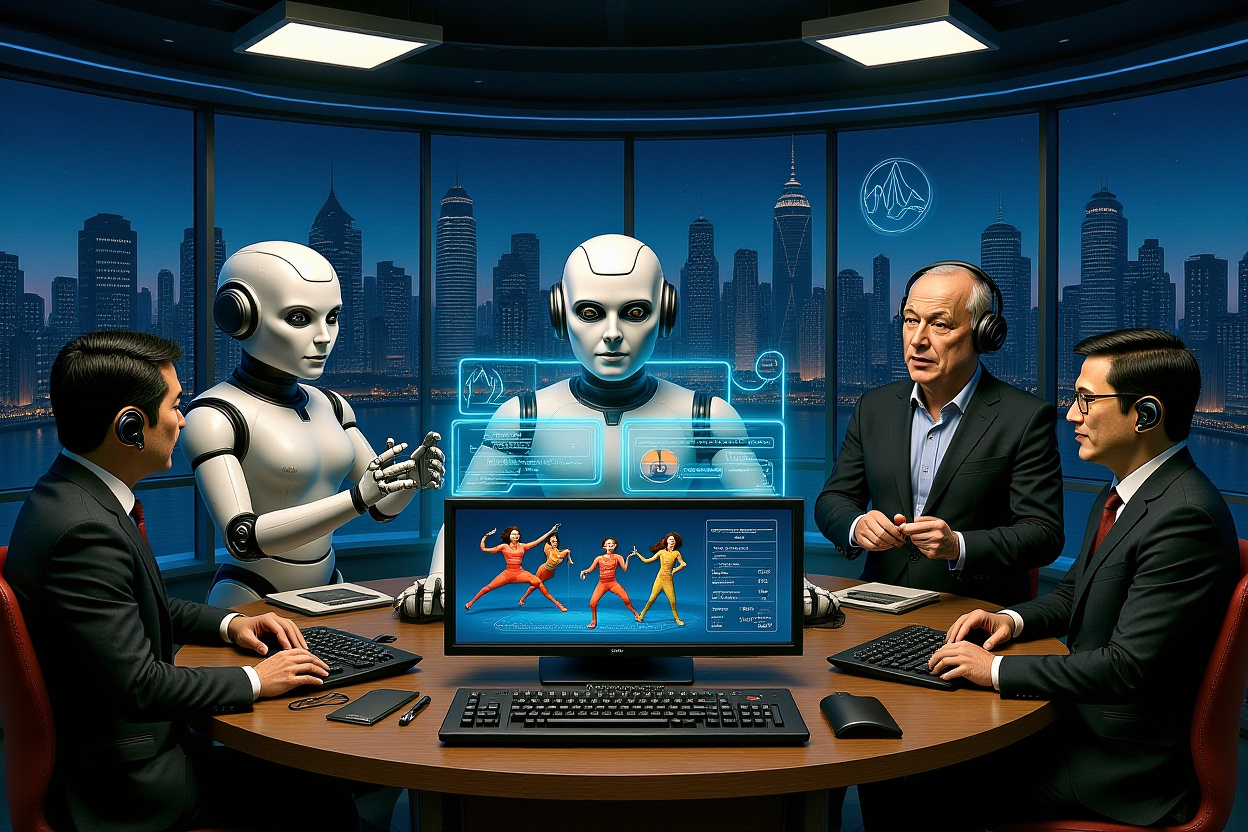
The 2026 edition saw 魔法原子 (Magic Atom), 银河通用 (Galaxy Universal), 宇树科技 (Yushu Technology), and 松延动力 (Songyan Power) take center stage, each presenting distinct robotic performances. Unlike previous years where technological displays were fragmented, this coordinated appearance represented a “集团军” (group army) approach, highlighting collective progress in embodied intelligence. For instance, 宇树科技 (Yushu Technology)—building on its 2025 gala breakthrough—collaborated with 河南塔沟武术学校 (Henan Tagou Martial Arts School) for a武术 (martial arts) routine, while 松延动力 (Songyan Power) featured in a comedy sketch with actors 蔡明 (Cai Ming) and 王天放 (Wang Tianfang). This convergence of art and technology not only captivated audiences but also provided a transparent lens into the capabilities and limitations of current systems, making the gala an essential test field for evaluating commercial readiness.
Historical Context and 2026’s Significance
The Spring Festival Gala has long been a platform for tech giants like 阿里巴巴集团 (Alibaba Group) and 腾讯控股 (Tencent Holdings) to unveil advancements, but 2026 marked a shift toward硬件 (hardware)-focused innovations. According to industry analysts, this reflects China’s strategic push in embodied intelligence, aligned with policies such as “中国制造2025” (Made in China 2025) and subsequent initiatives. The gala’s role extends beyond publicity; it serves as a de facto regulatory endorsement, reassuring供应链 (supply chain) partners and capital markets about the viability of domestic technologies. For international fund managers, this event offers actionable insights into which companies might lead in the race for robotics dominance, akin to how electric vehicle showcases influenced investment trends in prior decades.
Performance Analysis and Market Reactions
Each company’s segment revealed subtle不同的 (differences) in technical prowess and strategic positioning. 宇树科技 (Yushu Technology) emphasized agility and coordination in group舞蹈 (dance), while 魔法原子 (Magic Atom) focused on interactive歌唱 (singing) displays. Market data post-gala indicates a surge in online搜索 (searches) for these firms, with 宇树科技 (Yushu Technology) reportedly seeing a 300% increase in investor inquiries. However, financial professionals caution that such spikes are often short-lived; sustained interest hinges on subsequent announcements of partnerships or订单 (orders). The embodied intelligence sector’s valuation in Chinese equity markets has been volatile, with this test field moment potentially stabilizing perceptions if followed by concrete商业 (commercial)进展 (progress).
Decoding the Terminology: Strategic Positioning and Investment Implications
A nuanced detail from the gala was the varied official titles accorded to the four companies: 宇树科技 (Yushu Technology) as “春晚机器人合作伙伴” (Spring Festival Gala Robot Partner), 松延动力 (Songyan Power) as “春晚人形机器人合作伙伴” (Spring Festival Gala Humanoid Robot Partner), 魔法原子 (Magic Atom) as “春晚智能机器人战略合作伙伴” (Spring Festival Gala Intelligent Robot Strategic Partner), and 银河通用 (Galaxy Universal) as “春晚指定具身大模型机器人” (Spring Festival Gala Designated Embodied Large Model Robot). These distinctions are not merely semantic; they reflect deep-seated differences in技术路线 (technical pathways),产品形态 (product forms), and战略定位 (strategic positioning) that savvy investors must decipher to assess long-term potential.
Company Profiles and Technological Divergence
– 宇树科技 (Yushu Technology): Leveraging its春晚 (gala) exposure, the company has expanded into entertainment and sports events, but its core advantage lies in动态 (dynamic) control systems for complex movements. Financial disclosures suggest a focus onB端 (business-to-business) markets, with pilot projects in logistics and assembly lines.
– 松延动力 (Songyan Power): With a emphasis on人形 (humanoid) design, this firm targets交互 (interactive) scenarios, as seen in its小品 (comedy sketch) appearance. Its partnerships with automotive manufacturers hint at cross-industry applications, though scalability remains a concern.
– 魔法原子 (Magic Atom): Positioned as a智能 (intelligent) robotics strategist, it integrates AI algorithms for认知 (cognitive) tasks, making it suitable for educational and retail environments. Recent funding rounds have valued it at over $1 billion, but profitability is yet unproven.
– 银河通用 (Galaxy Universal): The “具身大模型” (embodied large model) tag indicates a focus on generative AI capabilities, enabling adaptability in unstructured settings. This approach aligns with global trends in multimodal AI, attracting venture capital from firms like 红杉资本中国基金 (Sequoia Capital China).
For institutional investors, these profiles underscore the importance of due diligence: the embodied intelligence test field at the gala reveals initial strengths, but deeper analysis of专利 (patents),客户 (clientele), and现金流 (cash flow) is essential for portfolio decisions.
Market Segmentation and Growth Vectors
The IDC预测 (forecast) cited in the original article—projecting China’s embodied intelligent robot user支出 (expenditure) to hit $770 billion by 2030 with a 94% CAGR—highlights the sector’s potential. However, growth will be uneven across segments. Industrial robots may see rapid adoption due to labor shortages in manufacturing, while commercial and domestic robots face slower penetration because of higher complexity and cost barriers. Investors should monitor companies with clear paths to these markets, as the gala’s test field effect can accelerate partnerships but not guarantee execution. Regulatory support from bodies like 工业和信息化部 (Ministry of Industry and Information Technology) will also play a role, with policies expected to incentivize research and development in embodied intelligence.
The Commercial Reality: Beyond the Stage Lights
As the gala’s curtains close, the embodied intelligence industry confronts its true test field: the transition from表演 (performance) to practical application. Industry insiders often quip, “机器人,不能永远只在舞台上跳舞” (Robots can’t dance on stage forever), a reminder that technological dazzle must translate to economic value. For companies like 魔法原子 (Magic Atom) and 宇树科技 (Yushu Technology), the post-gala period involves navigating three critical hurdles that will determine their survival and profitability in China’s competitive equity landscape.
Industrial Applications: The First Frontier
The factory floor represents the most immediate and lucrative test field for embodied intelligence. Tasks such as分拣 (sorting),装配 (assembly), and搬运 (transportation) in sectors like electronics and automotive offer stable demand, but require robots that are可靠 (reliable),低成本 (low-cost), and capable of 7×24小时不间断运行 (24/7 operation). Unlike stage performances, where errors can be masked, industrial environments demand near-perfect精度 (precision) and耐久性 (durability). Companies that demonstrated协调 (coordination) at the gala must now prove they can handle extreme conditions, such as high temperatures or electromagnetic interference, to secure contracts with manufacturers like 华为技术有限公司 (Huawei Technologies Co., Ltd.) or 比亚迪股份有限公司 (BYD Company Limited). Early adopters in this space may benefit from government initiatives like “智能制造” (smart manufacturing), but investment returns will hinge on reducing故障率 (failure rates) and total cost of ownership.
Commercial and Domestic Scenes: Future Challenges
– Commercial场景 (Scenarios): In settings like商超 (supermarkets),仓储 (warehouses), and医院 (hospitals), robots must manage dynamic environments with人流 (human traffic) and unexpected obstacles. The gala’s interactive segments, such as 银河通用 (Galaxy Universal)’s微电影 (micro-movie) appearance, tested basic交互 (interaction), but real-world deployment requires advanced感知 (perception) and决策 (decision-making) systems. For example, a robot in a retail store must navigate crowded aisles while assisting customers, a challenge that current embodied intelligence systems are still refining. Investors should look for companies with pilot programs in these areas, as成功案例 (success cases) can drive scalability.
– Domestic Adoption: The ultimate test field for embodied intelligence is the home, where unstructured environments with宠物 (pets),儿童 (children), and杂乱 (clutter) pose significant hurdles. Safety and affordability are paramount; a robot priced above $10,000 will struggle for mass appeal. While the gala sparked public interest, consumer adoption will depend on breakthroughs in AI reasoning and cost reduction, likely taking a decade or more. Companies focusing on this segment, such as those developing companion robots, may offer long-term growth but present higher risks for equity investors in the short term.
The embodied intelligence test field thus extends far beyond the gala stage, requiring continuous innovation and market validation to achieve sustainable commercial success.
Market Outlook and Investment Implications
The 2026 Spring Festival Gala has illuminated the embodied intelligence sector as a burgeoning component of China’s technology equity markets, but prudent investment strategies must account for both opportunities and pitfalls. With the IDC data pointing toward a $770 billion market by 2030, the potential for outsized returns is tantalizing, yet the path is fraught with technical, regulatory, and competitive uncertainties. For fund managers and corporate executives, the gala serves as a test field not only for robots but for investment theses centered on disruptive technologies.
Growth Projections and Sector Dynamics
IDC’s forecast of 94% CAGR for embodied intelligent robot user支出 (expenditure) in China suggests a market on the cusp of explosion, driven by factors like aging demographics, rising labor costs, and政策支持 (policy support). However, this growth may be concentrated in specific niches initially. Industrial robots could capture 60% of the market by 2025, according to some analysts, while service robots lag due to higher development costs. Investors should diversify across the value chain, from component suppliers like传感器 (sensor) manufacturers to integrators like 宇树科技 (Yushu Technology). The embodied intelligence test field at the gala highlights leaders, but smaller players with specialized expertise might offer better risk-adjusted returns as the ecosystem matures.
Risks and Strategic Considerations
– Technological Risk: Many embodied intelligence systems remain in prototype stages, with issues like电池寿命 (battery life) andAI偏差 (AI bias) unresolved. The gala performances, while impressive, were choreographed in controlled settings; real-world variability could expose flaws. Investors must assess R&D pipelines and partnerships with academic institutions like 清华大学 (Tsinghua University) for technological moats.
– Regulatory and Economic Factors: Chinese regulations on robotics safety and data privacy, overseen by bodies like 国家市场监督管理总局 (State Administration for Market Regulation), will shape market entry. Additionally, economic slowdowns could dampen capital expenditure in industries like manufacturing, affecting adoption rates. Monitoring announcements from 中国人民银行 (People’s Bank of China) on monetary policy can provide clues to funding availability for tech startups.
– Competitive Landscape: The four gala participants face rivalry from global giants like Boston Dynamics and domestic contenders like 小米集团 (Xiaomi Group), which has invested in robotics. The embodied intelligence test field is becoming crowded, necessitating a focus on proprietary advantages. Equity analysts recommend looking for companies with strong intellectual property portfolios and recurring revenue models, rather than those reliant on one-off表演 (performances).
For international investors, this sector offers a play on China’s innovation drive, but due diligence should extend beyond gala hype to fundamentals like订单簿 (order books) and盈利路径 (profitability pathways).
From Showcase to Scalability: The Path Forward for Embodied Intelligence
The 2026 Spring Festival Gala has undeniably elevated embodied intelligence into the national spotlight, but the true measure of success will be its translation into scalable, profitable enterprises. As the industry moves from this test field to broader implementation, key stakeholders—from company executives to institutional investors—must navigate a landscape defined by rapid innovation and intense competition. The gala’s legacy should not be seen as an endpoint, but as a catalyst for the hard work of commercialization that lies ahead.
Technological Hurdles and Innovation Needs
To thrive beyond the test field, embodied intelligence companies must address core challenges: improving能源效率 (energy efficiency) for longer operation times, enhancingAI泛化能力 (AI generalization capabilities) for diverse scenarios, and reducing硬件成本 (hardware costs) through economies of scale. Collaborations with research entities, such as 中国科学院 (Chinese Academy of Sciences), can accelerate progress. For example, advances in柔性电子 (flexible electronics) and边缘计算 (edge computing) could enable robots to perform more dexterous tasks at lower power consumption, opening new markets. Investors should track patent filings and conference presentations for signs of breakthrough innovations that could disrupt existing models.
Strategic Recommendations for Market Participants
– For Companies: Focus on niche applications with clear ROI, such as healthcare assistance or precision agriculture, to build credibility before expanding. The embodied intelligence test field at events like the gala should be used to showcase reliability, not just flair, through demonstrations of error-free operation in simulated real-world conditions.
– For Investors: Adopt a phased investment approach, starting with companies showing traction in industrial sectors before venturing into commercial or domestic plays. Monitor metrics like客户留存率 (customer retention rates) and单位经济效益 (unit economics) to gauge sustainability. Resources like 上海证券交易所 (Shanghai Stock Exchange) filings and analyst reports from 中金公司 (China International Capital Corporation Limited) can provide valuable data.
– For Policymakers: Continue supporting the sector through grants and standards development, but avoid over-subsidization that could lead to bubbles. Initiatives like “新基建” (new infrastructure) should incorporate embodied intelligence to foster ecosystem growth.
The embodied intelligence test field presented by the Spring Festival Gala is a microcosm of China’s broader tech ambition—a blend of spectacle and substance that will define the next decade of innovation. As the market evolves, those who balance optimism with rigor will be best positioned to capitalize on this transformative trend.
Synthesizing the Journey from Stage to Market
The 2026 CCTV Spring Festival Gala has served as a pivotal test field for China’s embodied intelligence sector, highlighting both its potential and its perils. From the coordinated performances of 魔法原子 (Magic Atom), 银河通用 (Galaxy Universal), 宇树科技 (Yushu Technology), and 松延动力 (Songyan Power) to the underlying strategic divisions, the event has provided a rare public benchmark for technological readiness. However, the real work begins now, as companies must prove their worth in factories, commercial spaces, and eventually homes, translating stage success into sustainable revenue. For the global investment community, this moment offers a clear signal: embodied intelligence is no longer a speculative fantasy but a tangible market segment with explosive growth prospects, albeit one requiring careful navigation of technical and commercial hurdles. As the industry stands at this crossroads, stakeholders are urged to look beyond the gala’s glow, focusing on companies that demonstrate not just表演 (performance) prowess, but practical problem-solving and scalable business models. The ultimate test field is the market itself, and the race to dominate it has only just begun.