



Key Takeaways for Financial Market Participants
– The power infrastructure on China’s high-speed rail networks introduces unique risks to personal electronic devices, including high-frequency pulses and intermittent outages, which could affect consumer electronics stocks and warranty liabilities.
– Investors should monitor companies in power supply solutions, surge protection, and railway infrastructure, as demand for safer charging options rises, potentially driving innovation and regulatory changes.
– The Spring Festival travel season highlights these issues, with implications for device manufacturers, insurance providers, and sectors tied to China’s transportation and technology ecosystems.
– Practical strategies for device protection can mitigate risks, but broader market trends suggest opportunities in related tech segments, from premium charging accessories to railway component suppliers.
The Spring Festival Rush and the Dependency on In-Transit Power
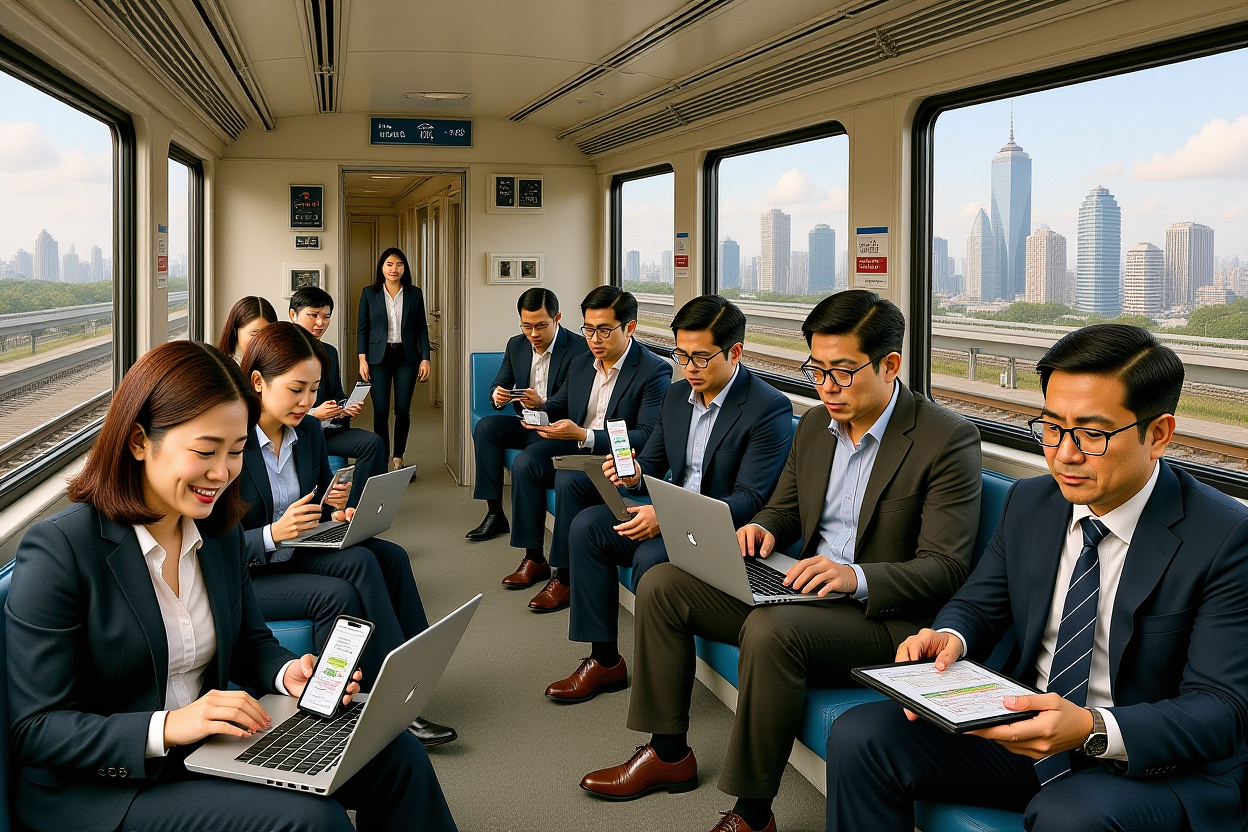
As the annual Spring Festival (春运) travel season approaches, millions of passengers across China embark on long journeys via high-speed rail, relying increasingly on in-carriage power outlets to charge smartphones, laptops, and tablets. This reliance underscores a critical nexus of technology, consumer behavior, and financial market dynamics, centered on the issue of high-speed rail power outlet safety. For institutional investors and corporate executives, understanding these nuances is essential, as they impact sectors from consumer electronics to railway infrastructure. The question of whether these outlets damage devices isn’t just a traveler’s concern—it’s a factor in assessing risks for companies like Xiaomi (小米), Huawei (华为), and those within the China Railway High-speed (CRH) network. With the global focus on Chinese equity markets, this analysis delves into the electrical systems of high-speed trains, their potential hazards, and the investment implications, ensuring that stakeholders can make informed decisions in a rapidly evolving market.
Understanding the Electrical Infrastructure of China’s High-Speed Rail
Power Sourcing and Distribution Mechanisms
China’s high-speed rail system, operated primarily by the China State Railway Group (中国国家铁路集团), relies on electric locomotives that draw power from overhead catenary lines via pantographs. This electricity serves dual purposes: propelling the train at speeds up to 350 km/h and, after transformation, providing 220-volt, 50-hertz single-phase AC power to onboard sockets. Unlike portable batteries, this grid-connected system ensures a continuous supply, but it involves complex conversions—from AC to DC for traction and back to AC for passenger use—that can introduce power quality issues. For investors, this infrastructure represents a stable segment within the transportation sector, with companies like CRRC Corporation (中国中车) supplying rolling stock and power components. However, the technical intricacies, such as voltage stabilization and frequency control, directly influence the high-speed rail power outlet safety, a factor that can affect device longevity and, by extension, consumer electronics market performance.
Specifications and Capacity Constraints
Each carriage typically features multiple 220V outlets, with a total capacity ranging from 2,000 to 3,000 watts per car, designed primarily for low-power devices like phones and laptops. High-power appliances—such as hair dryers or electric kettles—are prohibited, similar to restrictions in university dormitories, to prevent overheating and fire hazards. This limitation highlights operational risks that could impact railway operators’ liability and insurance costs. Data from the National Railway Administration (国家铁路局) indicates that adherence to these guidelines mitigates short-circuit risks, but passenger non-compliance remains a concern. For market analysts, this underscores the importance of monitoring safety regulations and their enforcement, as changes could affect companies involved in electrical safety equipment or smart grid solutions within China’s rail ecosystem.
Assessing the Risks: Is High-Speed Rail Power Outlet Safety a Concern?
Comparative Safety with Residential Electricity
At first glance, the risk of electric shock on trains appears comparable to home environments, as both use standard 220V AC power. Outlets are strategically placed in less accessible areas to reduce exposure to water or accidental contact, potentially making them safer than domestic setups. However, the dynamic nature of train travel—with vibrations, temperature fluctuations, and power sourcing from moving pantographs—introduces variables that can compromise safety over time. From a financial perspective, this affects sectors like insurance and consumer electronics, where device failure rates during travel could lead to increased warranty claims. Companies such as Ping An Insurance (平安保险) might see shifts in coverage trends, while electronics manufacturers may need to enhance product durability to address these unique high-speed rail power outlet safety challenges.Potential Hazards and Technological Mitigations
The conversion processes in train power systems can generate high-frequency pulses—small, rapid voltage spikes—that may damage sensitive electronics. These pulses, if unmitigated, can cause touchscreen malfunctions or accelerate component aging in devices. Premium charging accessories with enhanced voltage regulation and filtering capabilities can absorb these pulses, reducing risk. This creates market opportunities for firms specializing in power adapters and surge protectors, such as Anker (安克) or Baseus (倍思), whose stocks could benefit from rising consumer awareness. Additionally, the China Electronics Standardization Institute (中国电子技术标准化研究院) has issued guidelines on power quality for transportation, suggesting that regulatory scrutiny may increase, impacting compliance costs and innovation in related industries.
Technological Nuances: Power Quality and Device Damage
The Issue of High-Frequency Pulses and Device Vulnerability
High-frequency pulses are a byproduct of the AC-DC-AC conversion in train electrical systems, and they pose a subtle threat to mobile devices. Unlike stable home power, these pulses can interfere with device circuitry, leading to issues like “ghost touching” on screens or reduced battery life. Studies by industry experts, including analysts from CITIC Securities (中信证券), note that such problems could elevate repair costs and affect brand loyalty for smartphone makers like Oppo (OPPO) or Vivo (VIVO). For investors, this underscores the need to evaluate companies’ research into power resilience, as those investing in robust charging technologies may gain a competitive edge. The high-speed rail power outlet safety issue thus extends beyond consumer inconvenience to influence supply chain decisions and market valuations in the tech sector.Intermittent Power Outages and Their Effects
Trains experience brief power interruptions—lasting about three seconds—when passing between electrical sections of the overhead grid, spaced roughly 50 kilometers apart. During these intervals, non-essential systems, including some passenger outlets, may lose power, causing transient voltage spikes upon reconnection. This phenomenon, known as in-rush current, can stress device components, particularly in cheaper chargers. For financial professionals, this highlights risks in the consumer electronics market, where device failure during peak travel times like the Spring Festival could impact sales and stock performance. Companies that produce uninterruptible power supplies (UPS) or advanced power management chips, such as those listed on the Shenzhen Stock Exchange (深圳证券交易所), may see increased demand as solutions are sought to mitigate these high-speed rail power outlet safety concerns.
Market Implications for Investors and Companies
Impact on Consumer Electronics and Related Stocks
Opportunities in Power Supply and Railway InfrastructureOn the infrastructure side, upgrades to train power systems present opportunities for companies involved in electrical components, smart grid technology, and safety certifications. Firms like NARI Technology (国电南瑞) or Sieyuan Electric (思源电气) supply equipment for railway power networks, and their stock performance may be influenced by regulatory changes aimed at improving high-speed rail power outlet safety. Moreover, as China expands its high-speed rail network under initiatives like the Belt and Road (一带一路), international investors can look for exposure to companies exporting related technologies. The China Securities Regulatory Commission (CSRC) (中国证券监督管理委员会) has highlighted transportation infrastructure as a key growth area, making this sector ripe for analysis. By focusing on power quality improvements, investors can identify undervalued stocks poised for growth as safety standards evolve.Practical Guide for Spring Festival Travel and Investment Insights
Device Protection Strategies for Travelers
To mitigate risks, travelers are advised to use high-quality chargers with robust voltage regulation, carry power banks within the 100-watt-hour limit set by China Railway (中国铁路), and avoid using devices during known power interruption zones. These practices not only protect personal electronics but also reduce the likelihood of market-wide issues, such as spikes in insurance claims or device returns. For investors, this consumer behavior translates into trends that can inform stock picks—for example, increased sales of reliable charging accessories might boost companies like Xiaomi or Anker, whose products are popular among Chinese travelers. The high-speed rail power outlet safety concern thus bridges personal precaution with broader market movements, offering actionable insights for portfolio management.Investment Takeaways and Sectoral Recommendations
From a financial perspective, stakeholders should consider diversifying into sectors that benefit from improved power safety on trains. This includes:
– Electronics manufacturers with strong R&D in power management, as they may lead in durability standards.
– Railway component suppliers involved in electrical system upgrades, particularly those aligned with government safety directives.
– Insurance providers offering device protection plans, which could see higher uptake during travel seasons.
– Tech firms developing smart charging solutions or IoT devices for transportation, tapping into China’s digitalization trends.
Monitoring announcements from the National Development and Reform Commission (NDRC) (国家发展和改革委员会) on infrastructure investments can provide early signals. Additionally, engaging with industry reports from sources like the China Academy of Railway Sciences (中国铁道科学研究院) can yield deeper insights into technological advancements affecting high-speed rail power outlet safety.
Future Outlook and Strategic Actions for Market Participants
The interplay between high-speed rail power systems and device safety is more than a travel anecdote—it’s a lens through which to view technological resilience and market opportunities in China’s equity landscape. As the Spring Festival amplifies these issues, investors should prioritize due diligence on companies exposed to power quality challenges, while also advocating for enhanced safety standards that could drive innovation. The high-speed rail power outlet safety topic underscores the importance of interdisciplinary analysis, blending technology, consumer behavior, and financial metrics. For those engaged in Chinese markets, proactive monitoring of regulatory updates and consumer trends will be key to capitalizing on this niche yet impactful segment. Consider reviewing portfolio allocations to include firms at the forefront of power infrastructure and device protection, ensuring alignment with China’s ongoing transportation and tech evolution.