



Political Storm Brewing
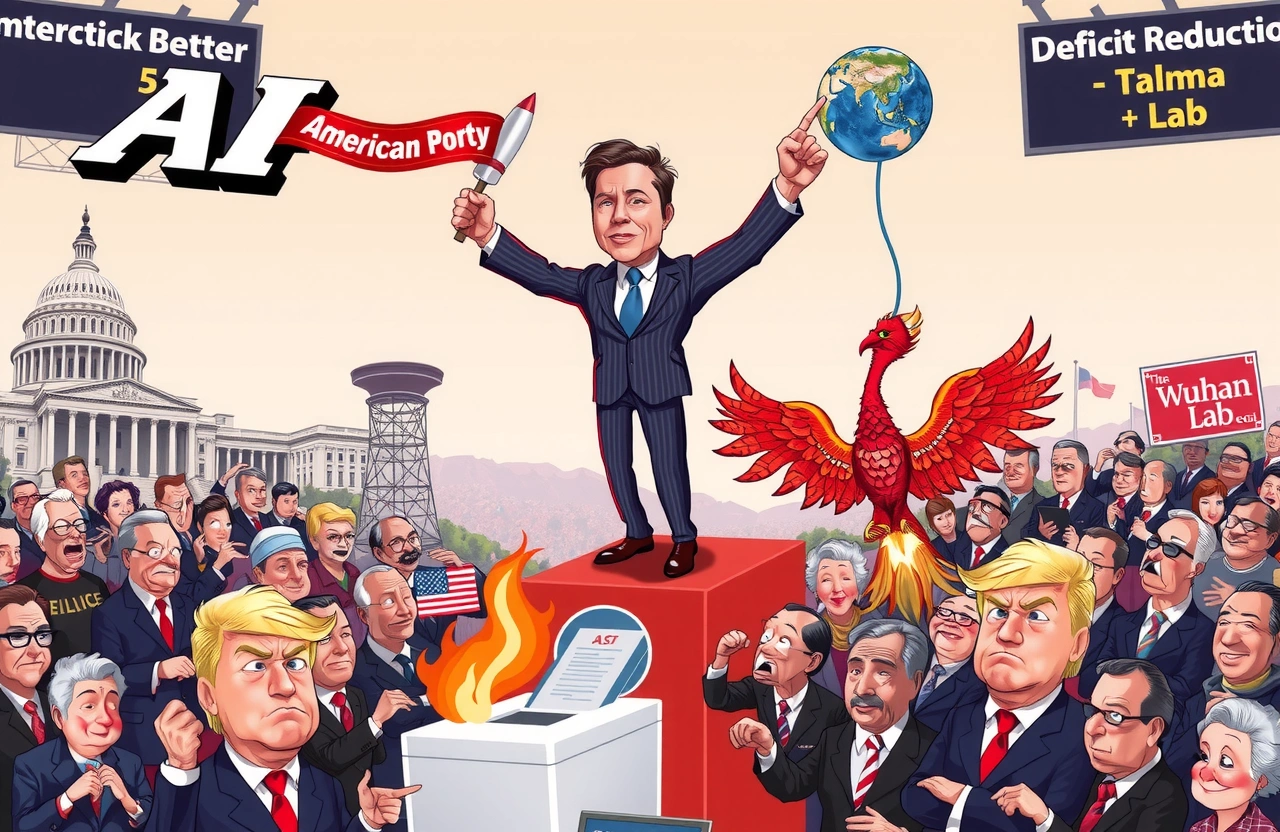
Elon Musk has detonated a political earthquake with his announcement creating the American Party, declaring its inaugural convention “will be incredibly entertaining” via social media platform X. This bombshell comes amid escalating tensions between Musk and former President Donald Trump, shifting dramatically from their alliance earlier this summer to open hostility over the ‘Build Back Better’ legislation. Musk claims his American Party will field candidates in 2024 elections, despite complex ballot access protocols necessitating formal conventions, temporary officers, and state-by-state registrations.
The tech billionaire’s explosive political entry arrives during America’s polarized climate, with polling revealing 62% of voters express dissatisfaction with two-party dominance according to Gallup. Musk described his initiative as offering “balanced voices” to frustrated centrists while promising substantive policies considerably transforming America’s political ecosystem.
Key Developments
- Announced June 6 via X platform
- Calls for conventions across America
- Confirms candidates contesting 2024 elections
The American Party Founding Principles
While Musk hasn’t released formal documentation, he publicly confirmed seven foundational pillars for his American Party blueprint when queried by supporters on X. The party commits to systematic deficit reduction, defense modernization via AI robotics, technological acceleration to secure US competitive advantages particularly in artificial intelligence, revolutionary regulatory reforms in energy sectors, protection of First Amendment freedoms, proactive birth-rate incentives, plus centrist policy positions on divisive cultural issues.
Policy Innovations
These pillars represent distinct decentralization approaches. Unlike Democrats’ green subsidies or GOP fossil-fuel advocacy, Musk’s American Party champions nuclear energy and private-sector carbon capture abandoning incentive systems altogether according to policy analysts.
The American Party seeks technology-driven governance transformations utilizing automation wherever feasible shifting bureaucratic management toward algorithmic efficiency models accelerating permitting reviews by 80% based on Tesla’s regulatory compliance dashboard.
The Trump-Musk Fracture
Rupture occurred when Trump signed Build Back Better Act provisions eliminating electric vehicle tax credits previously benefiting Tesla consumers worldwide. Musk reacted furiously declaring congressional supporters “political targets” for defeat.
Trump counterattacked calling Musk “subsidies vampire” and hinting at deportation proceedings regarding Musk’s South African origins during Tennessee rally remarks intensifying hostilities. Financial stakes escalated substantially: Morgan Stanley calculates Tesla facing $1.2 billion annual losses from credit terminations coinciding with Q1 sales plunging 20%.
Bloomberg analysis shows Musk prioritizing profit motives throughout conflict evolving beyond ideological divergence.
Third-Party Election History
American Party faces historical barriers statistically:
| Last third-party electoral votes earned | George Wallace (1968) |
| Best popular vote percentage since 1912 | Ross Perot (1992) |
| Most signature requirements per state | California (220,000) |
The Washington Post archives reveal Wallace captured Deep South electors via segregationist platform while Perot’s billionaire-backed Reform Party coordinating nationally remained subdued failing securing statewide vote pluralities thus nullifying electoral votes through “democracy trap” constitutional framers designed.
Election Historians note Bernie Sanders managed penetrating electoral mechanics temporarily aligning Democratic infrastructure during presidential campaigns before submerging independent pathways.
The Electoral Efficiency Gap
Ballot access requires navigating varying statutory labyrinths across states including registration thresholds, convention attendance minimums validated by Secretaries States within stringent timelines averaging 160 days before Election Day per FEC documentation.
Electoral Strategy Insights
Musk articulated targeted American Party approaches avoiding presidential ticket complications instead prioritizing congressional contests creating balance-of-power leverage. Musk tweeted: “Understanding congressional margins narrow, providing decisive votes ensuring legislation breathing majority sentiments” – referencing razor-thin partisan divides.
Former Federal Election Commission chair Kevin McCarthy warns American Party efforts could spell electoral disaster for Republican candidates citing North Carolina, Arizona Senate seats where slight vote splintering substantially alters outcomes favoring Democrats unexpectedly.
The American Party recruitment focuses strategically mobilizing communities benefiting SpaceX operations transforming capability mismatches opponents underestimate.
Resource Calculations
While Musk possesses unparalleled personal treasury exceeding $200 billion, institutionalized GOP-Democrat fundraising infrastructures dominate spending:
- Democratic Congressional Campaign Committee: $87M funding
- Senate Leadership Fund (Republican): $78M
Trump-allied financier James Fischbach launched Federal PAC recruiting megadonors concentrating opposition resources against American Party penetrations where ballots permit newcomer contestants.
Political science professor Nathan Noel observes “organizational indispensability money cannot purchase” emphasizing localized recruiting efforts sustaining volunteers through electoral defeats characterizing troubled startup phases historically crushing wealthy entrants abandoning projects prematurely.
Musk confronted Wisconsin judicial defeat April despite $20+ million investments revealing limitations around exclusively monetized campaigning strategies.
Marketing Constraints
Corporate contracting dependencies potentially handicap Musk messaging austerity since SpaceX secured $4.9 billion NASA contracts during current presidential administration raising perceptions of conflicts compromising ideological independence displays.
Prospects Assessment
Electoral specialists classify American Party undertakings authentic disruption vectors despite predictable obstacles confounding ambitious entrants historically. Polling indicates potential appeal among Gen Z voters expressing strongest bipartisan dissatisfaction indexes hovering near 73% disengagement according to Harvard Institute Politics surveys.
Romney campaign alumnus Ryan Clancy argues “tornado politics” radically differs conventional campaigning exploiting volatility adaptive capabilities: “Musk understands acceleration factors completely revolutionizing stale templates” referencing SpaceX’s iterative failure-to-success modeling.
Path Forward
The American Party needs establishing organizational presence rapidly conducting convention preparations distributing voter mobilization handbooks coordinating petition drives matching state-specific deadlines concerning ballot qualifications designing messaging channels overcoming media blackouts facing insurgent candidates historically.
Grassroots participation subsequently determines scalability versus billionaire vanity project classifications now confronting skeptical electorate distracted ongoing national turbulence shaking faith governance institutions systematically. Volunteer registration portals must emerge facilitating decentralized leadership development nationwide.
Observers suggest electoral breakthroughs possibly emerging transforming congressional chamber dynamics towards genuine compromise legislating energizing disillusioned Americans seeking alternatives beyond polarizing binaries paralyzing Washington governance functions functionally.
Track ballot certifications procedures monthly identifying earliest states welcoming American Party conventions later summertime pioneering unforeseen political realignments signaling democracy renewal possibilities awakening vast unrepresented citizens currently disengaged.