



Executive Summary
The long-awaited delivery of the first phase of the BaiShizhou (白石洲) urban renewal project in Shenzhen marks a critical moment for China’s property sector. This mega-development, featuring residential towers up to 74 stories, encapsulates the opportunities and perils of large-scale urban redevelopment. Key takeaways for investors and market watchers include:
- Project delivery occurred under a cloud of controversy regarding delayed timelines, unmet promotional promises on school facilities, and debates over construction quality standards, particularly for underground parking.
- Developer Lvjing China Real Estate (绿景中国地产) faces significant financial pressure, with high short-term debt and limited cash reserves, raising questions about the viability of subsequent project phases without external partnership or state-backed intervention.
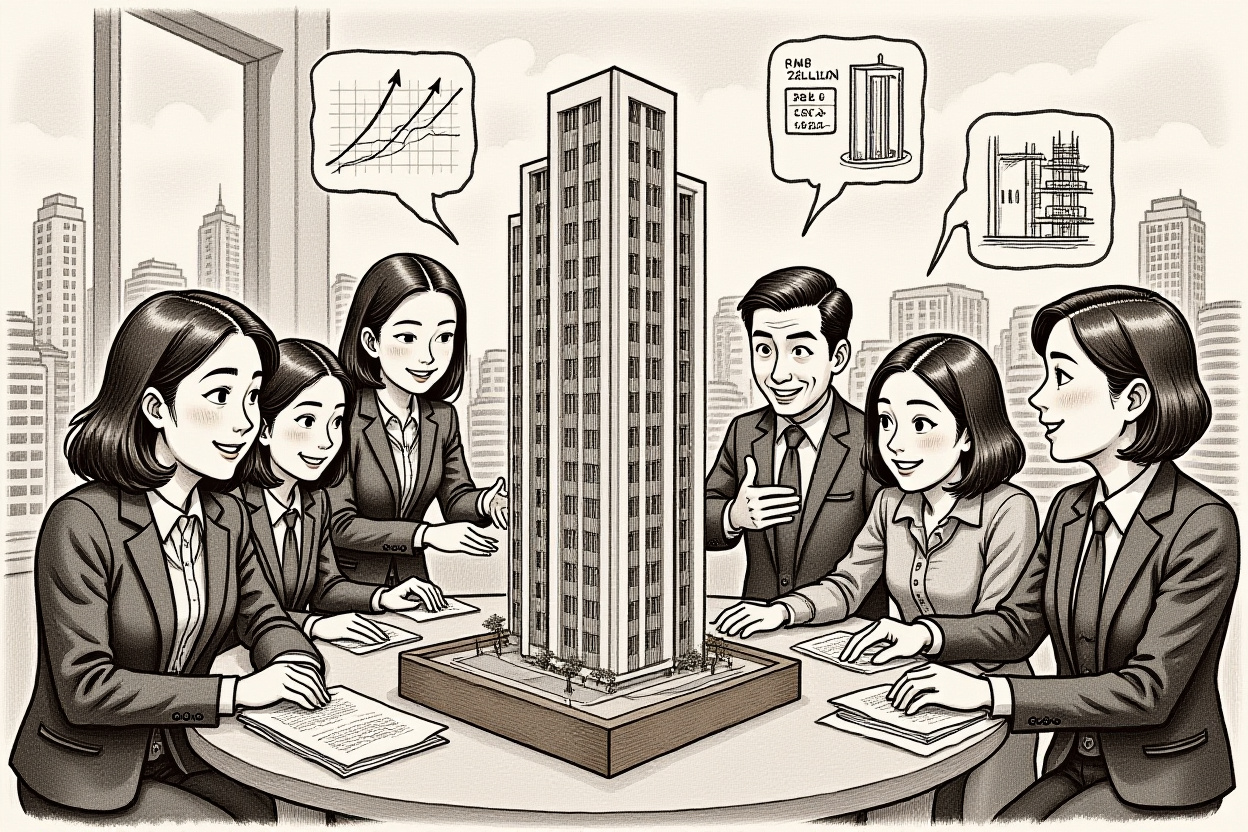
- The scale of the project—with a total buildable area of 3.58 million square meters and an estimated sales value of RMB 220 billion—makes it a bellwether for the health of Shenzhen’s high-end residential market and the broader urban renewal financing model.
- Expert analysis points to an increasing likelihood of state-owned enterprise (SOE) or local government platform involvement in future phases, highlighting a shift towards more financially stable entities leading complex urban redevelopment in China’s key cities.
- This Shenzhen’s 74-story residential delivery serves as a critical case study for institutional investors assessing risk in Chinese real estate, emphasizing the importance of scrutinizing developer covenants, government coordination, and the execution of ancillary infrastructure promises.
A Watershed Moment for Shenzhen’s Skyline and Real Estate Market
The formal commencement of unit handovers for the Lvjing BaiShizhou Jingting (绿景白石洲璟庭) development is more than just a property milestone; it is a stress test for China’s urban renewal ambitions. After years of anticipation and mounting skepticism, the delivery of this phase provides a tangible outcome for one of the country’s most watched real estate endeavors. For global investors focused on Chinese equities, the event offers crucial insights into the operational and financial hurdles facing even premium projects in prime locations. The saga of Shenzhen’s 74-story residential delivery underscores the complex interplay between private capital, government planning, and homeowner expectations in the world’s second-largest economy.
Shenzhen, as a pioneer of China’s reform and opening-up, has seen its urban fabric transform through massive redevelopment projects. The BaiShizhou initiative, located in the core Nanshan District (南山区), represents the city’s largest single urban renewal undertaking. Its progression from planning to partial delivery illuminates the evolving risk profile for investments in Chinese real estate developers, especially those with heavy exposure to long-gestation, capital-intensive urban regeneration. The focus phrase, Shenzhen’s 74-story residential delivery, will echo throughout this analysis as we examine the implications for market stability, regulatory oversight, and investment strategy.
Delivery Amidst Doubts: Unpacking the Controversies
The announcement by Lvjing China Real Estate on February 4th that major construction was complete and government acceptance procedures were finalized for the first phase was met with relief but also significant resident discontent. The path to this Shenzhen’s 74-story residential delivery has been fraught with challenges that reveal deeper systemic issues.
Timeline Shifts and the ‘Grace Period’ Clause
According to sales contracts reviewed by homeowners, the official delivery date for the residential units was January 15, 2026. The developer, however, invoked a contractual clause allowing for a one-month grace period, asserting that delivery before February 14th would not constitute a breach. A project representative stated in late January that this clause was explicitly included in all digitally signed contracts, which homeowners had acknowledged. While legally permissible, this reliance on a grace period so early in the delivery process raised eyebrows among buyers who had invested significant capital, with unit prices ranging from RMB 10.12 million to RMB 52.84 million based on a recorded average price of RMB 113,500 per square meter.
The Broken Promise of Prestigious Schooling
A more contentious issue has been the developer’s promotional materials, which heavily featured access to the renowned Nanshan Foreign Language School (南山外国语学校). Homeowner representative Mr. Wu (吴先生) expressed the collective frustration, stating that a primary motivator for purchase was the advertised ‘nine-year consistent education system’ expected to be operational by September 2026. However, current information indicates the school land plot has not yet commenced construction, with estimates pointing to a 2027 start and 2029 completion. The developer has responded that early plans involved them building the school, but due to adjustments in government fiscal planning, the Shenzhen Municipal Education Bureau (深圳市教育局) and Public Works Department now lead the project. They claim all school-related marketing ceased by mid-2024 and that materials were reviewed by the Market Supervision Administration (市场监督管理局). This disconnect between sales pitch and reality is a stark reminder of the risks associated with off-plan purchases reliant on future public infrastructure.
Quality Concerns and the Battle Over Standards
Beyond timelines and promises, the physical delivery of Shenzhen’s 74-story residential project has sparked debates over construction quality and whether the final product aligns with the ‘luxury’ positioning used in its marketing.
The Underground Garage Debate
Visits by homeowners to the site revealed unfinished conditions in the underground parking area, notably the absence of epoxy floor paint. Mr. Wu (吴先生) and others argued this did not meet expectations for a high-end community. In response, the developer issued a stamped garage rendering and stated that the garage upgrade was an additional investment beyond contractual delivery standards. A project负责人 (responsible person) explained that a enhancement plan was agreed with homeowners in April-May 2024 and is being re-evaluated based on feedback. This incident highlights the delicate balance between contractual obligations, marketing-induced expectations, and the cost pressures developers face in finalizing such large-scale projects.
Engineering Scrutiny in a Super-Tall Structure
With the highest tower reaching 74 floors, the project is among the tallest residential buildings in China. This super-tall designation brings inherent engineering complexities and heightened safety scrutiny. While the project has passed government acceptance procedures, the delivery controversy has inevitably drawn attention to the long-term maintenance, structural integrity, and livability of such vertical communities. For institutional investors, the quality disputes at BaiShizhou serve as a cautionary tale to factor in execution risk and potential post-delivery liabilities when evaluating developers engaged in super-high-rise construction.
Financial Precariousness: The Developer’s All-In Bet
The delivery of this phase occurs against a backdrop of severe financial strain for the Hong Kong-listed developer, Lvjing China Real Estate (绿景中国地产). The company’s commitment to the BaiShizhou renewal has been a decade-long gamble that now tests its solvency.
A Stressed Balance Sheet
According to the company’s 2025 interim report, Lvjing held current liabilities of RMB 60.57 billion. It reported new borrowings of RMB 7.703 billion in the first half of the year, with approximately RMB 2.914 billion in borrowings due within one year. Alarmingly, its bank balances and cash stood at only RMB 342.5 million, with an additional RMB 1.449 billion in restricted and pledged deposits. This liquidity crunch underscores the immense capital demands of urban renewal and raises valid concerns about the funding for the remaining three phases of the BaiShizhou project. The successful delivery of phase one, therefore, is critical not just for homeowner satisfaction but for maintaining creditor confidence and unlocking potential sales revenue.
The Scale of the BaiShizhou Ambition
The sheer size of the BaiShizhou urban renewal project is staggering. With a total floor area of 3.58 million square meters and an estimated total sales value of approximately RMB 220 billion, it is a city-within-a-city. The first phase, ‘Jingting,’ involved 1,257 pre-sold residential units. The scale necessitates a master developer with exceptional financial engineering capabilities, government relations, and sales execution—a combination that appears to be straining Lvjing’s resources. This context makes the delivery of Shenzhen’s 74-story residential units a make-or-break moment for the company’s future in the Shenzhen market.
Market Implications and the Search for White Knights
The challenges at BaiShizhou have broader ramifications for China’s real estate sector, particularly the model of private-led urban renewal. The focus now shifts to how the remaining phases will be financed and developed.
The Rising Role of State-Backed Entities
Industry experts point to an increasing inevitability of involvement from state-owned enterprises (SOEs) or local government financing platforms. Zhi Peiyuan (支培元), Vice President of the China Investment Association Listed Company Investment Professional Committee, noted that SOEs have lower capital costs and are adept at navigating complex government-business coordination, making them likely candidates to take a stake in future phases. A project insider confirmed that phases two through four are in planning, with adjustments expected under Shenzhen’s new regulations, and did not rule out introducing central or state-owned enterprise partners. This potential pivot underscores a key trend: in post-deleveraging China, large-scale urban regeneration increasingly requires the financial heft and implicit government backing that SOEs provide.
The ‘Four Criteria’ for a Rescue
Lu Kelin (卢克林), International Certified Innovation Manager and founder/CEO of Looker Island Technology (鹿客岛科技), distilled the requirements for taking on such a project into four points: a war chest of tens of billions in RMB,默契 (tacit understanding) in negotiating demolition compensation with district and street-level governments, the product iteration capability to make revised planning economically viable, and the financial engineering skill to repackage the RMB 220 billion asset into manageable tranches. This analysis suggests that few private developers currently meet all these criteria, further reinforcing the argument for state-linked participation. The journey of Shenzhen’s 74-story residential delivery thus becomes a precursor to a more government-guided phase in urban redevelopment.
Expert Analysis and Forward-Looking Perspectives
The BaiShizhou project is a microcosm of the forces shaping Chinese real estate. It combines the legacy issues of urban villages, the ambition of creating global city centers, and the financial realities of a sector in transition.
Regulatory and Economic Context
The project’s progression has been intertwined with evolving policies from bodies like the Ministry of Housing and Urban-Rural Development (住房和城乡建设部) and the Shenzhen Municipal Government (深圳市政府). The shift in school construction responsibility from developer to government is one example of how fiscal and planning priorities can change mid-stream, introducing uncertainty. For investors, this underscores the necessity of conducting deep due diligence not only on a developer’s finances but also on the status and commitment level of associated public infrastructure projects promised in marketing materials. The delivery of this landmark project offers a data point on how these risks are crystallizing in the market.
Investment Takeaways for a Cautious Market
The saga of Shenzhen’s 74-story residential delivery yields several actionable insights for fund managers and corporate executives. First, the premium for ‘core location’ must be balanced against execution risk and developer financial health. Second, contractual terms, especially regarding delivery grace periods and fit-out standards, require meticulous review. Third, promotional claims about unbuilt public amenities should be heavily discounted unless backed by firm government commitments. Finally, the increasing role of SOEs in complex projects may create new investment opportunities in these entities or in public-private partnership structures, while potentially sidelining over-leveraged private developers.
Synthesis and Strategic Guidance for Market Participants
The handover of units at Lvjing BaiShizhou Jingting is a qualified success—a critical step forward for a beleaguered project but one that leaves numerous questions unanswered. It demonstrates that even the most prominent urban renewal projects in China’s most dynamic cities are not immune to the pressures of liquidity, quality control, and shifting government priorities. The focus on Shenzhen’s 74-story residential delivery has revealed the fault lines in a development model that relies on pre-sales to fund construction and bold promises to drive sales.
For international investors, this case reinforces the need for a selective, research-intensive approach to Chinese real estate equities and bonds. Prioritize developers with strong balance sheets, proven execution track records on complex projects, and transparent relationships with local governments. Monitor the BaiShizhou project closely, as the resolution of its remaining phases—whether through SOE partnership, asset sales, or debt restructuring—will send powerful signals about the future of urban renewal financing in China. The call to action is clear: engage with detailed project-level analysis, look beyond headline sales figures, and factor in the growing influence of state capital in shaping the next chapter of China’s urban landscape. The delivery of this tower is not an endpoint, but a beginning of a new, more cautious era for investment in the sector.