



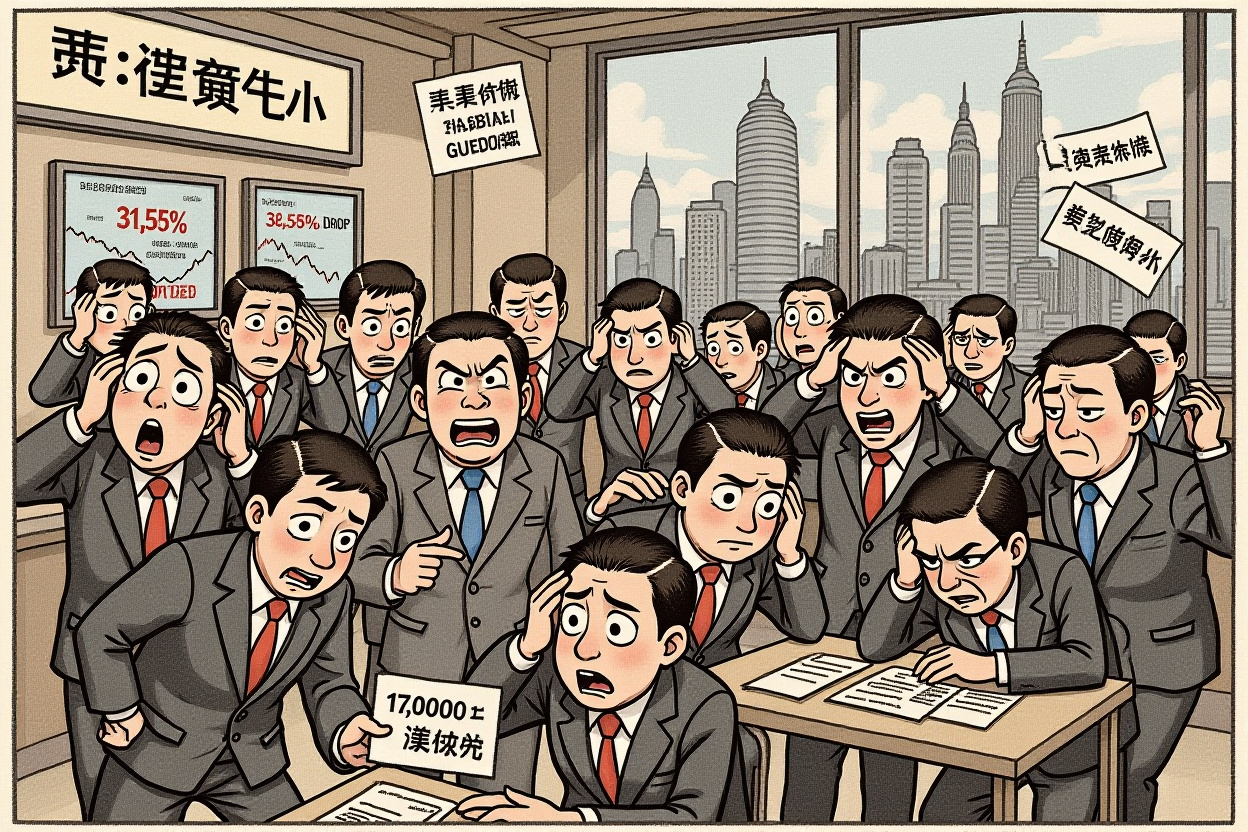
The Chinese fund management industry is facing a severe crisis of confidence following the catastrophic performance and subsequent controversial handling of the SDIC UBS Silver Futures Securities Investment Fund (LOF). A perfect storm of a historic plunge in silver prices, a disputed fund valuation methodology, and a perceived lack of transparency has triggered a massive investor backlash, with over 17,000 participants filing collective complaints. This event exposes critical vulnerabilities in product design, risk communication, and investor protection mechanisms within China’s rapidly evolving capital markets. The handling of this valuation adjustment crisis will serve as a critical test for regulatory oversight and institutional accountability, with lasting implications for how complex, derivatives-linked products are marketed and managed for retail and institutional investors alike.
Key Takeaways and Market Implications
- A historic, 40-year single-day plunge in silver prices in late January acted as the catalyst, exposing the extreme volatility inherent in commodity-linked LOF products.
- SDIC UBS Fund Management’s unilateral decision to adjust the fund’s valuation methodology, effectively bypassing domestic futures daily price limits, led to an unprecedented 31.50% single-day NAV drop, sparking outrage.
- The fund’s on-market price suffered five consecutive “limit-down” trading halts, plummeting over 40% in a single week, while a massive溢价 (premium) to its NAV emerged, indicating severe market dislocation.
- Over 17,000 investors have initiated collective complaints, alleging a lack of prior notice and unfair application of the new valuation rules, representing one of the largest retail investor grievances in recent Chinese financial history.
- The firm’s establishment of a special working group and promises to uphold investor rights mark a critical juncture for damage control, setting a precedent for how fund managers handle derivative product failures.
A Perfect Storm in Precious Metals
The roots of the SDIC UBS Silver LOF crisis lie in the global commodities markets. On January 30th, the global precious metals complex experienced what analysts termed an “epic” collapse. Spot silver prices cratered, at one point plunging a staggering 35.89% intraday before closing down 26.42%. This represented the largest single-day decline in four decades, driven by a complex interplay of macroeconomic fears, leveraged positioning unwinding, and shifts in central bank policy expectations.
Initially, the SDIC UBS Silver LOF appeared insulated from the global maelstrom. Remarkably, on the day of the historic global crash, the fund’s Net Asset Value (NAV) reported a decline of only 0.72%. This disconnect was due to the fund’s mandate of primarily investing in silver futures contracts listed on the Shanghai Futures Exchange (上期所, SHFE), which are subject to daily price fluctuation limits, or “涨跌停板” (daily price limits). These limits acted as a buffer, preventing the domestic futures price from immediately reflecting the carnage occurring in the international over-the-counter (OTC) and London Metal Exchange (LME) markets.
The Domino Effect of International- Domestic Arbitrage
This created an unsustainable arbitrage situation. The fund’s holding of SHFE futures contracts were artificially valued high relative to the global spot price. As the global sell-off persisted into early February, the pressure mounted. The fund faced a critical dilemma: its portfolio valuation, based on SHFE settlement prices, no longer reflected the economic reality or the likely future settlement prices of its holdings. This gap between reported NAV and intrinsic value created a significant risk for both remaining investors and those seeking to redeem, threatening the fund’s stability and fairness. The stage was set for a drastic and controversial intervention by the fund manager.
The Controversial Pivot: Valuation Adjustment and Its Fallout
On the evening of February 2nd, SDIC UBS Fund Management dropped a bombshell announcement. It declared that, effective immediately, the NAV of the Silver LOF would be revalued based on the fluctuations of “international major market prices.” This technical move had a profound consequence: it effectively bypassed the protective daily price limits of the SHFE contracts the fund actually held. The result was a financial earthquake for unit holders.
The following day, February 3rd, the fund’s NAV was officially recalculated under the new methodology, revealing a catastrophic 31.50% single-day collapse. This stands as one of the most severe drawdowns ever recorded in the Chinese public fund industry. The move, while arguably necessary to align the fund’s book value with market reality, was executed with seismic consequences for investor portfolios. The core of the controversy lies not just in the *fact* of the adjustment, but in its *execution*.
Transparency and Timing: The Fatal Flaws
The fund company’s explanation for the lack of prior notice has done little to quell anger. In a statement on February 3rd, SDIC UBS stated, “If we had announced in advance, we were concerned it would be interpreted as intentionally guiding investors not to redeem, leading to speculation that the fund’s asset liquidity was facing serious problems, triggering market panic and a run.” While this logic acknowledges systemic risk, it fundamentally placed the burden of a massive, unexpected loss squarely on investors who had traded on February 2nd under the old valuation regime.
Investors and market commentators have leveled two primary criticisms. First, the retroactive application of the new valuation method meant investors who bought or sold units on February 2nd did so under a false price premise, bearing losses they could not have anticipated. Second, many argue the methodology is asymmetrical and unfair. As one investor summarized the prevailing sentiment on financial forums: “When prices were rising, the NAV was calculated using SHFE settlement prices; when they crash, they use their own valuation model.” This perception of a “heads I win, tails you lose” approach for the fund manager has been incendiary. This disputed valuation adjustment is now the central legal and ethical battleground.
Investor Revolt and the Mounting Crisis
The market reaction was swift and brutal. From February 2nd through February 6th, the fund’s on-market trading price, as a listed LOF, hit the daily 10% down limit for five consecutive sessions—a so-called “一字跌停” (straight-line limit down) pattern signaling total loss of buyer confidence. Over the week, the trading price collapsed by 40.94%. By February 6th, it closed at 3.099 yuan per unit, with a daily turnover of approximately 200 million yuan.
Most tellingly, a massive溢价 (premium) of 28.73% opened up between the bombed-out trading price and the even lower adjusted NAV. This premium indicates that the on-market price, despite its free-fall, is still *higher* than what the fund’s underlying assets are deemed to be worth, suggesting investors either expect a reversal, dispute the NAV calculation, or are trading based on sentiment rather than fundamentals. This market dislocation is a classic symptom of a broken price-discovery mechanism.
The 17,000+ Complaint Tsunami
Beyond the numbers, a human crisis erupted. Online investment communities and social media platforms were inundated with posts tagged “投诉” (complaint) and “维权” (safeguard rights). Detailed tutorials on how to file formal complaints against SDIC UBS circulated widely. The scale of the grievance is staggering. According to data from the consumer protection platform “消费保” (Consumer Protection), the collective complaint titled “国投白银LOF擅自追溯调整估值致损” (SDIC Silver LOF’s Unilateral Retroactive Valuation Adjustment Causes Losses) had, by February 6th, accumulated over 17,600 individual entries, representing more than 17,000 participants.
This organized, large-scale retail investor action is unprecedented for a single fund product in China. It reflects a new era of financially savvy, digitally-connected investors who are willing to collectively challenge institutional decisions they perceive as unjust. The pressure from this collective action has been a direct driver forcing SDIC UBS into a response mode.
Institutional Response and Regulatory Crossroads
Facing this firestorm, SDIC UBS Fund Management issued a formal “Announcement on Actively Addressing Investor Demands Related to the Silver (LOF) Fund” on February 6th. The announcement outlined a three-point plan that represents the company’s attempt at crisis management and damage control.
First, it pledged to “practice putting investors first” and uphold principles of lawful disclosure to mitigate the impact of the valuation adjustment. Second, and most concretely, it announced the establishment of a dedicated working group to formulate a plan to facilitate investor resolution through “conciliation, mediation, and arbitration.” Third, it assured the market of its ability to support the effective execution of any settlements and safeguard investor rights.
A Litmus Test for “Investor-Centric” Reforms
This crisis lands squarely in the midst of a regulatory push by Chinese authorities, including the China Securities Regulatory Commission (中国证监会, CSRC), to foster an “investor-centric” market culture. The SDIC UBS case is a stark test of these principles. Key questions now facing regulators include: Was the fund’s prospectus sufficiently clear on the manager’s authority to change valuation methods during extreme market events? Does the retroactive application of such a change violate principles of fairness? How should liquidity management for derivatives-heavy LOFs be supervised to prevent such dislocations?
The working group’s composition, its proposed solutions—whether toward financial compensation, unit exchange, or other mechanisms—and its engagement with complaint leaders will be closely scrutinized. The outcome will set a de facto standard for how future disputes over complex product failures are handled. The authority of the Asset Management Association of China (中国证券投资基金业协会, AMAC) may also be invoked for industry mediation.
Lessons for the Fund Industry and Global Investors
The implosion of the SDIC UBS Silver LOF is not an isolated incident but a symptom of deeper issues. It highlights the latent risks in marketing exchange-traded and listed open-end funds linked to volatile underlying assets like commodity futures to a broad retail audience. The product structure created a dangerous asymmetry: investors may have believed they were getting exposure to silver with the protection of Chinese exchange limits, only to discover the fund could switch to an international pricing model during a crisis, amplifying losses beyond those limits.
For global institutional investors observing Chinese markets, this episode underscores the critical importance of conducting deep due diligence on the specific operational rules and contingency plans of Chinese financial products, especially those bridging domestic and international markets. The legal and operational frameworks governing valuation, liquidity provision, and manager discretion in extreme scenarios can differ significantly from Western norms and can be a major source of unanticipated risk.
Navigating the New Reality
For investors currently caught in this debacle, the path forward involves engaging with the formal channels being established by SDIC UBS’s working group while documenting all communications and trades. For the broader market, this event serves as a harsh reminder: the valuation adjustment mechanisms and liquidity clauses buried in a fund’s legal documents are not mere boilerplate—they are potential tripwires that can detonate during periods of stress. Due diligence must evolve to stress-test these clauses.
The final resolution of this valuation adjustment crisis will reverberate through China’s asset management industry. A fair and transparent settlement that acknowledges investor harm could help restore some trust. A perceived whitewash or legalistic dismissal of grievances could chill retail participation in innovative fund products for years to come. Fund managers nationwide will be forced to re-examine their own product risk disclosures, stress-testing models, and crisis communication plans. In the high-stakes world of finance, where trust is the ultimate currency, SDIC UBS and its regulators are now tasked with managing one of the most challenging redemptions of all: the redemption of market confidence.