



Executive Summary: Key Takeaways on Gold and Silver Investment
Before diving into the details, here are the critical insights from this analysis:
– Gold and silver are highly volatile assets, not the stable safe havens they are often portrayed as, making them unsuitable for ordinary investors.
– Historical price cycles show that bull markets in precious metals are typically followed by prolonged bear markets, with sharp corrections exceeding 50%.
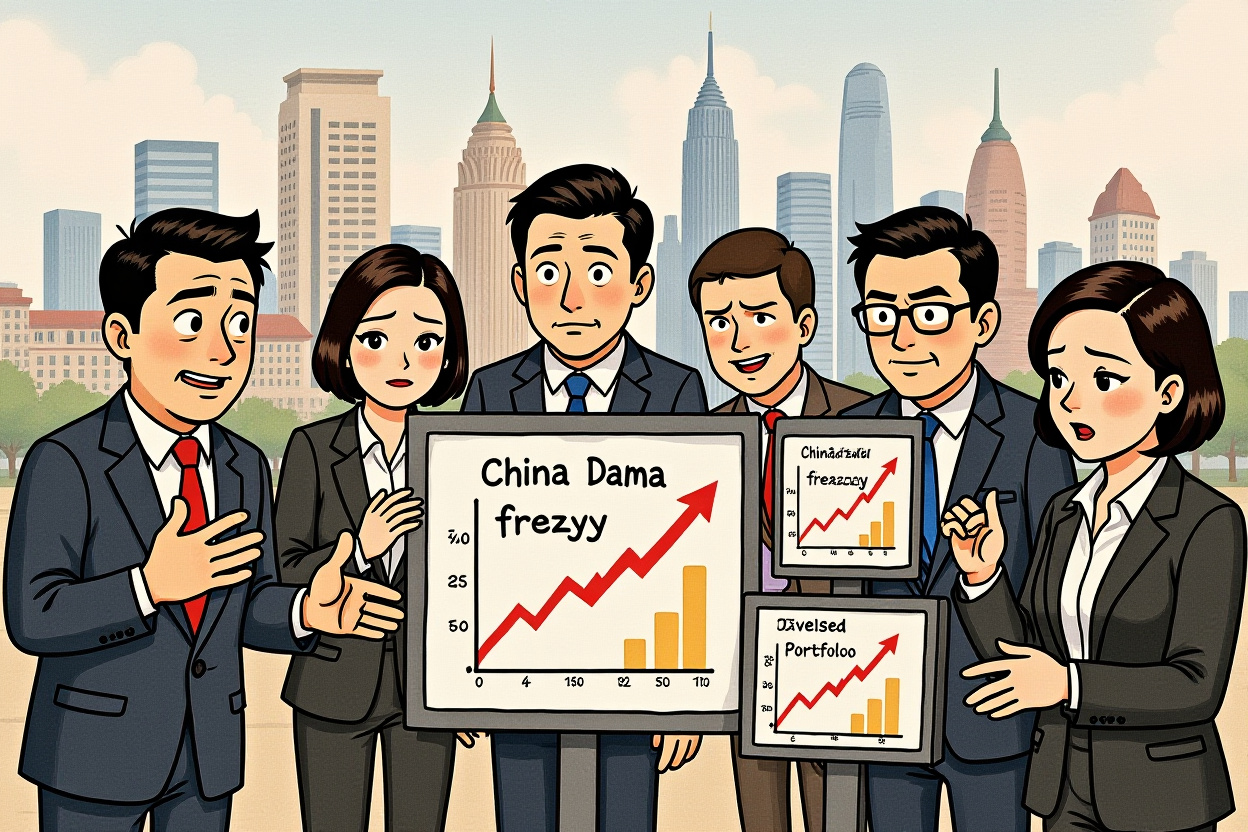
– Market tops frequently coincide with retail investor frenzies, such as the “China Dama” (中国大妈) phenomenon, signaling increased risk of downturns.
– Accelerating price surges, like gold’s recent rally from $2,000 to $5,000, are driven by speculative narratives and crowded trades, heightening reversal risks.
– Ordinary investors should prioritize diversified portfolios and professional advice over speculative bets on gold and silver to manage financial risk effectively.
Rethinking Precious Metals: Beyond the Safe Haven Narrative
For decades, gold and silver have been enshrined in popular investment lore as ultimate safe havens—assets that protect wealth during economic turmoil. This perception is so ingrained that questioning it often meets skepticism. However, prominent economist Ma Guangyuan (马光远) challenges this view head-on, arguing that gold and silver investment is fraught with dangers for ordinary investors. His critique isn’t about denying potential price appreciation; rather, it centers on the extreme volatility, speculative manipulation, and historical patterns that render these metals perilous for those without specialized expertise. In today’s market, where gold prices have skyrocketed to record highs, understanding these risks is crucial for making informed decisions.
The allure of gold and silver as safe assets stems from cultural narratives and historical context, but modern financial data paints a different picture. When compared to other assets like A-shares (A股), the price charts of precious metals reveal similar—if not greater—swings, blurring the line between “safe” and “speculative.” This article delves into why gold and silver investment may be a misstep for ordinary investors, drawing on historical cycles, behavioral economics, and market structure. By examining key episodes from the 1970s to the present, we’ll uncover the hidden perils and offer practical alternatives for building resilient portfolios.
The Myth of Gold as a Safe Investment
Gold is often marketed as a loyal, stable asset, but this characterization is a profound misconception. In reality, gold and silver exhibit price movements that can be as erratic as those in equity markets. Ma Guangyuan (马光远) emphasizes that labeling gold a safe investment is a “colossal lie”—historically, it has been a treacherous vehicle for wealth preservation. The notion of safety stems from gold’s role as a hedge against inflation or currency devaluation, yet its track record shows repeated boom-bust cycles that devastate unprepared investors.
Historical Volatility and Comparative Analysis
To grasp the risks, consider the price volatility of gold versus Chinese equities. If you overlay the K-line charts of gold and the A-shares (A股) index, many investors would struggle to distinguish which line represents which asset. Both display sharp peaks and troughs, driven by macroeconomic shifts, liquidity flows, and investor sentiment. For instance, during the 2008 global financial crisis, gold initially surged as a haven, only to plummet later, mirroring stock market crashes. This volatility undermines the core argument for gold’s safety, suggesting that ordinary investors might fare better with more transparent, regulated assets.
Data from the World Gold Council and historical archives reveal that gold’s standard deviation—a measure of price swings—often rivals that of high-risk stocks. In periods like the 1970s, gold prices swung wildly due to geopolitical tensions and monetary policies, catching retail investors off guard. Similarly, silver, with its smaller market and higher industrial demand, can experience even more pronounced spikes and crashes. This inherent instability makes gold and silver investment a gamble rather than a prudent strategy for wealth accumulation.
The Illusion of Stability in Precious Metals
Another layer of risk lies in the market’s susceptibility to manipulation and speculation. Unlike broadly diversified equity funds, precious metals markets are influenced by concentrated positions from large institutions, central banks, and speculative traders. Reports from regulators like the U.S. Commodity Futures Trading Commission (CFTC) have documented cases of price manipulation in silver markets, where few players can distort prices for short-term gain. For ordinary investors, this opacity means entering a arena where insider knowledge and high-frequency trading dominate, increasing the likelihood of losses.
Ma Guangyuan (马光远) points out that market narratives often fuel this illusion, with media hype portraying gold as a “can’t-lose” asset during crises. However, when retail investors—dubbed “China Dama” (中国大妈) in China—flock to buy gold during rallies, it frequently signals an impending top. This behavioral pattern underscores how sentiment, rather than fundamentals, drives prices, exposing ordinary participants to heightened risk. In essence, the safe haven narrative is a psychological trap that lures investors into volatile territory without adequate safeguards.
Cyclical Nature of Gold and Silver Markets
Gold and silver markets are not linear; they operate in long, punishing cycles that can trap investors for decades. Understanding these cycles is key to recognizing why gold and silver investment is unsuitable for ordinary individuals seeking steady returns. History shows that bull markets in precious metals are brief and euphoric, followed by extended bear phases that erode gains and test patience.
Decade-Long Bull Markets and Extended Bear Phases
Examine two pivotal historical episodes: the 1970-1980 bull run and the post-2008 surge. From 1970 to 1980, gold prices soared from around $200 to $850 per ounce, driven by oil crises and inflationary pressures. Yet, this was followed by a brutal crash, with prices collapsing back to $200 by the mid-1980s—a correction of nearly 70%. Investors who bought at the peak endured a 20-year bear market with minimal appreciation, highlighting the long-term stagnation that can follow hype.
Similarly, after the 2008 financial crisis, gold surged to a record $1,921 per ounce in 2011, fueled by quantitative easing and fear-driven demand. By 2015, it had tumbled to near $1,000, a drop of almost 50%. Many retail investors, including Chinese buyers who purchased heavily in 2013, were locked in losses for years until the COVID-19 pandemic spurred another rally. These cycles demonstrate that gold and silver investment requires precise timing, a skill most ordinary investors lack, leading to costly mistakes when markets reverse.
Accelerating Rallies and Compression of Timeframes
Recent trends reveal an alarming acceleration in gold rallies, compounding risks. Ma Guangyuan (马光远) notes that gold took over a decade to climb from $200 to $2,000 after 2009, but only about 500 days to jump from $2,000 to $3,000, 200 days from $3,000 to $4,000, and roughly 100 days from $4,000 to $5,000. This compression suggests a speculative bubble, where narratives of safety and inflation hedge draw crowded trades. As more ordinary investors pile in, liquidity dries up, and prices become prone to sharp corrections.
Silver has mirrored this pattern, with prices swinging from multi-year lows to peaks above $100 per ounce in volatile spurts. Analysis from financial platforms like Bloomberg indicates that such rapid gains are often unsustainable, driven by leveraged positions and herd mentality. For ordinary investors, entering at these heights—akin to “Mount Everest” levels, as Ma describes—invites significant downside. The lesson is clear: gold and silver investment thrives on momentum that can reverse abruptly, leaving latecomers with steep losses.
Behavioral Pitfalls for Ordinary Investors
Ordinary investors are particularly vulnerable to cognitive biases when dealing with gold and silver, exacerbating the inherent market risks. Behavioral finance studies show that retail participants tend to chase performance, fear missing out, and overestimate their ability to time markets—all of which are detrimental in the precious metals space.
The “China Dama” Effect and Market Timing
A quintessential example is the “China Dama” (中国大妈) phenomenon, where Chinese retail buyers, often middle-aged women, rushed to purchase gold during the 2013 price dip. Initially hailed as savvy investors, they faced years of being “trapped” as prices languished, only rescued by external events like pandemic-driven stimulus. This episode illustrates how ordinary investors frequently enter at market tops, driven by media coverage and social proof, rather than disciplined analysis.
Ma Guangyuan (马光远) observes that when ordinary people enthusiastically invest in gold and silver, it often marks a cycle’s end. This pattern repeats globally, from the 1980 gold peak to recent surges, because retail sentiment lags institutional moves. Data from investor surveys reveal that household allocation to gold spikes near peaks, while professional funds quietly reduce exposure. For those considering gold and silver investment, this signals a need for caution: if everyone is buying, it might be time to step back.
Crowded Trades and the Risk of Reversals
The dynamics of crowded trades further endanger ordinary investors. In financial markets, when too many participants hold similar long positions—as seen in gold’s recent rally—the asset becomes susceptible to sudden sell-offs. A minor trigger, such as a shift in Federal Reserve policy or a strengthening U.S. dollar, can cascade into a steep decline. Ordinary investors, with limited access to real-time data or hedging tools, are often the last to exit, amplifying losses.
For instance, the 2020-2023 gold rally saw record inflows into gold ETFs (exchange-traded funds), but as interest rates rose, prices corrected sharply, catching many retail holders off guard. This underscores why gold and silver investment demands sophisticated risk management, which average individuals typically lack. Instead of relying on precious metals for safety, a diversified approach with bonds, equities, and cash might offer better stability.
Regulatory and Market Structure Concerns
Beyond volatility and behavior, structural factors in precious metals markets pose additional hurdles for ordinary investors. These include regulatory gaps, manipulation risks, and liquidity issues that disadvantage retail participants.
Speculation and Manipulation in Precious Metals
Markets for gold and silver are less regulated than major stock exchanges, making them prone to manipulation. Historical cases, such as the LIBOR scandal or CFTC actions against banks for silver price fixing, show how large players can influence prices for profit. Ordinary investors, trading through brokers or ETFs, may unknowingly face distorted prices, eroding returns. Ma Guangyuan (马光远) warns that this environment is “often投机操纵” (often speculatively manipulated), increasing the peril for those without insider knowledge.
Moreover, derivatives like futures and options tied to gold and silver add layers of complexity. Retail investors might engage via leveraged products, exposing them to margin calls and catastrophic losses during swings. Regulatory bodies like the China Securities Regulatory Commission (CSRC, 中国证监会) advise caution, but enforcement remains challenging globally. Thus, gold and silver investment becomes a high-stakes game where the odds are stacked against ordinary individuals.
Lack of Transparency and Liquidity for Retail Players
Transparency is another issue: physical gold and silver markets involve storage costs, assay fees, and counterparty risks that are often overlooked. For example, buying gold coins or bars requires secure storage and insurance, adding hidden expenses. In contrast, equities offer clearer reporting and dividend streams. During crises, liquidity can vanish, as seen in March 2020 when gold ETFs faced redemption pressures despite rising spot prices.
Data from the Shanghai Gold Exchange (上海黄金交易所) indicates that retail trading volumes surge during rallies but plummet in downturns, trapping investors. This illiquidity means ordinary holders may struggle to exit positions at fair prices, contrary to the narrative of gold as a liquid safe haven. Therefore, a prudent gold and silver investment strategy must account for these structural flaws, which many amateurs ignore.
Practical Guidance for Investment Portfolios
Given the risks, what should ordinary investors do instead? Shifting focus from speculative precious metals to balanced, long-term strategies can enhance financial security without exposure to extreme volatility.
Avoiding the Temptation of Gold and Silver Speculation
First, resist the allure of quick gains in gold and silver. Ma Guangyuan (马光远) advises that ordinary investors should not assume they can “outsmart the market” by timing purchases or sales. Instead, acknowledge that gold and silver investment is best left to professionals, such as hedge funds or central banks, who have resources to navigate cycles. For personal portfolios, limit exposure to a small percentage—if at all—and treat it as a speculative hedge rather than a core holding.
Consider historical averages: over the past 50 years, gold’s real return (adjusted for inflation) has been modest compared to equities, according to studies from academic journals like The Journal of Finance. By avoiding heavy allocations, investors can sidestep the emotional stress and financial hits from downturns. Tools like robo-advisors or financial planners can help set appropriate limits based on risk tolerance.
Embracing Diversification and Professional Management
Diversification is a proven antidote to volatility. Instead of concentrating on gold and silver, build a portfolio across asset classes: stocks, bonds, real estate, and cash. For China-focused investors, this might include A-shares (A股), Hong Kong-listed H-shares (H股), and international ETFs. Research from institutions like the People’s Bank of China (中国人民银行) shows that diversified portfolios yield more consistent returns with lower drawdowns.
Additionally, seek professional advice. Financial advisors can provide insights on market cycles and regulatory changes, reducing behavioral biases. For those keen on commodity exposure, consider broad-based commodity funds rather than single-metal bets, as they spread risk. Resources like the CFA Institute offer guidelines on asset allocation that ordinary investors can adapt.
Synthesizing the Risks and Moving Forward Wisely
In summary, gold and silver investment is a high-risk endeavor that contradicts the safe-haven myth for ordinary investors. As Ma Guangyuan (马光远) argues, these metals exhibit dangerous volatility, cyclical downturns, and susceptibility to manipulation, making them unsuitable for retail participation. Historical patterns from the 1970s to today confirm that bull markets are fleeting and often followed by devastating bear phases, while behavioral traps like the “China Dama” effect signal market tops. The accelerating rallies in recent years, driven by speculative narratives, only heighten the peril for those entering at elevated prices.
To protect and grow wealth, ordinary investors should prioritize education, diversification, and professional guidance over speculative bets on precious metals. By focusing on long-term strategies and avoiding crowded trades, you can navigate financial markets with greater confidence. Remember, in investment, wisdom often lies in recognizing what not to do—and steering clear of gold and silver might be a crucial step toward financial stability. Take action today: consult a trusted advisor, review your portfolio for overexposure, and commit to a disciplined plan that aligns with your goals, free from the illusions of safe havens.