



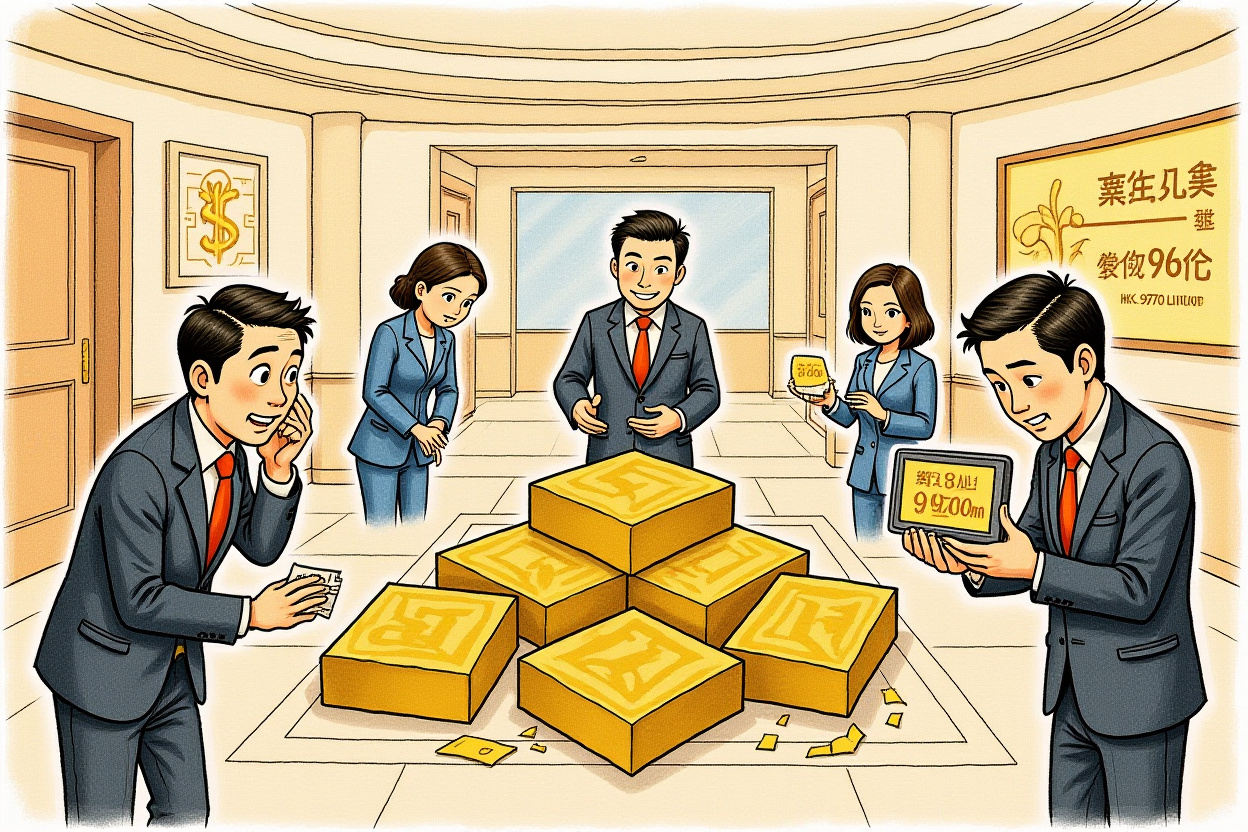
In a move that blends opulence with acute financial acumen, Macau’s Emperor Entertainment Hotel (英皇娱乐酒店) has transformed a lavish architectural feature into a staggering windfall. The recent confirmation that the hotel has sold 79 kilograms of gold—previously embedded in the marble floors of its grand lobby—for nearly HKD 1 billion underscores a savvy asset liquidation strategy amid soaring precious metal prices. This Emperor Entertainment Hotel’s 79kg gold sale not only delivered a near tenfold return on the original investment but also highlights how non-traditional assets on corporate balance sheets can be leveraged to bolster financial health in a challenging economic climate. For investors in Chinese equities and the broader Asian hospitality sector, this event serves as a potent case study in opportunistic capital management and value realization.
Executive Summary: Key Takeaways from the Gold Disposal
The sale of 79kg of gold by Emperor Entertainment Hotel carries significant implications for the company, its shareholders, and market observers. Below are the critical points distilled from the transaction.
– **Substantial Profit Realization**: The hotel sold the gold for HKD 9970 million, compared to an original purchase price of HKD 940 million, locking in an estimated gain of approximately HKD 9020 million.
– **Strategic Financial Repositioning**: Proceeds from the Emperor Entertainment Hotel’s 79kg gold sale will strengthen the company’s balance sheet, providing liquidity for future investments or to offset ongoing operational losses.
– **Market Timing Excellence**: The disposal was executed as gold prices hover near all-time highs, demonstrating proactive asset management in response to favorable commodity market conditions.
– **Corporate Rebranding Signal**: The removal of the iconic ‘Gold Road’ from the lobby aligns with the hotel’s post-gaming pivot towards broader leisure and entertainment offerings, signaling a strategic shift.
– **Immediate Investor Approval**: The announcement triggered a sharp rise in the company’s share price, with intraday gains exceeding 20%, reflecting strong market endorsement of the decision.
The Transaction: Unveiling the Details of the 79kg Gold Sale
The confirmation of the gold’s sale via a formal stock exchange filing provides a clear window into the mechanics and rationale behind this unusual corporate action. This Emperor Entertainment Hotel’s 79kg gold sale is a textbook example of converting a fixed, decorative asset into liquid capital.
Announcement and Sale Particulars
On February 4, Hong Kong-listed Emperor Entertainment Hotel Limited (Stock Code: 00296.HK) issued a definitive announcement stating it had sold multiple gold blocks with a total weight of 79 kilograms from the lobby of its Macau property. The buyer was Heraeus Metals Hong Kong Limited, a global leader in precious metals refining and trading. The total consideration was HKD 9970 million. The company stated that the gold, initially accounted for as property, plant, and equipment with a carrying value of HKD 940 million, was sold to ‘realize and release its value’ given current high market prices. The transaction is expected to generate a one-time gain of about HKD 9020 million after expenses, a monumental return on the original outlay.
From Decoration to Disposal: The History of the ‘Gold Road’
For two decades, the so-called ‘Gold Road’ was a central marketing feature of the Emperor Entertainment Hotel in Macau. The hotel management installed the bullion within the main thoroughfare of its lobby floor to create an atmosphere of ultimate luxury and to attract visitor foot traffic. It became an iconic landmark. However, following the termination of its casino operations, the company has been actively reimagining its guest experience. With plans to renovate and reconfigure the lobby space, the gold was deemed no longer thematically relevant to the hotel’s future direction. The decision to sell, therefore, married practical renovation needs with a timely financial opportunity.
Financial Analysis: Impact on Emperor Entertainment Hotel’s Bottom Line
This windfall from the Emperor Entertainment Hotel’s 79kg gold sale arrives at a critical juncture for the company, which has faced persistent operational headwinds. The infusion of nearly HKD 1 billion in cash provides a much-needed financial cushion.
Profit Calculation and Balance Sheet Enhancement
The sheer scale of the profit is remarkable. With an acquisition cost of HKD 940 million recorded two decades ago, the sale at HKD 9970 million represents a capital appreciation of roughly 960%. The net proceeds will significantly improve the company’s liquidity position. Management has indicated the funds will bolster the company’s financial standing, allowing it to pursue new investment opportunities when they arise. Furthermore, the sale eliminates ongoing costs associated with the gold, such as high-security measures and insurance premiums, contributing to future operating expense savings.
Context of Chronic Losses and Strategic Pivot
Emperor Entertainment Hotel’s recent financial performance underscores the importance of this liquidity event. For the fiscal year ending March 31, 2025, the company reported a net loss of approximately HKD 248 million. This continues a trend of losses in recent years, pressured by the post-pandemic recovery in Macau’s tourism sector and the cessation of its core gaming revenue stream. The substantial gain from this gold sale will directly offset these losses on the income statement for the current period and provides essential capital to fund its transition into a non-gaming integrated resort. The Emperor Entertainment Hotel’s 79kg gold sale is thus not merely a profitable trade but a strategic lifeline.
Gold Market Dynamics: Timing the Sale to Perfection
The decision to sell was explicitly linked to ‘current market conditions’ and the high price level of gold. This highlights a sophisticated understanding of commodity cycles by the company’s board.
Historical Highs and Market Volatility
Gold prices have been on a sustained bull run, driven by macroeconomic factors including geopolitical uncertainty, inflationary pressures, and central bank buying, particularly from institutions like the People’s Bank of China (中国人民银行). In early 2026, prices remain elevated despite recent volatility. By selling 79kg at this peak, Emperor Entertainment Hotel capitalized on a market moment that may not persist. This proactive disposal contrasts with holding a non-income-generating asset through potential future downturns.
Implications for Other Asset Holders
This transaction serves as a signal to other corporations, hotels, or even individuals holding physical gold as part of their assets or décor. The Emperor Entertainment Hotel’s 79kg gold sale demonstrates that such holdings can be re-evaluated not just as static symbols of wealth, but as tradable commodities that can be monetized to address liquidity needs or fund strategic shifts. In a high-interest-rate environment, converting non-performing tangible assets into cash can be a superior financial strategy.
Macau’s Evolving Landscape: Regulatory and Competitive Shifts
The sale cannot be divorced from the broader transformation occurring in Macau’s economy and the specific challenges facing its hospitality sector.
Post-Gaming Diversification Imperative
Macau’s government, in line with directives from Beijing, has been pushing casino operators to diversify their revenue sources away from gambling towards mass-market tourism, entertainment, and leisure. Emperor Entertainment Hotel’s exit from gaming necessitated a full business model overhaul. The removal of the gold and the redevelopment of the lobby space are physical manifestations of this pivot. The capital from the gold sale provides the fuel for this transformation, potentially funding new family-friendly attractions, dining outlets, or retail spaces.
Investment Climate and Corporate Strategy
For foreign and institutional investors, Macau remains a market in flux. The success of non-gaming investments is still being proven. The decisive action taken by Emperor Entertainment Hotel—monetizing a dormant asset to fund its future—may be viewed as a positive indicator of agile management. It shows a willingness to make bold moves to ensure viability in a competitive landscape that includes giants like Sands China (金沙中国有限公司) and Wynn Macau (永利澳门有限公司).
Investor Reaction and Market Sentiment
The market’s verdict on the Emperor Entertainment Hotel’s 79kg gold sale was swift and overwhelmingly positive, offering a clear read on investor sentiment.
Immediate Stock Price Surge
On February 5, following the evening announcement, shares of Emperor Entertainment Hotel (00296.HK) opened sharply higher and at one point surged more than 20% during the trading session. This spike reflects investor approval of the value-unlocking transaction and the immediate boost to the company’s book value. It also suggests that shareholders see the cash infusion as mitigating near-term solvency risks and providing optionality for future growth.
Analyst Perspectives and Forward-Looking Statements
While formal analyst ratings on this specific event may follow, the transaction aligns with common shareholder value principles: realizing hidden value, improving liquidity, and simplifying the business. The company’s board, including its directors, have framed the sale as a prudent capital management decision. The key question for investors now is how effectively management will deploy the net proceeds. The company’s statement that it has ‘not yet identified any attractive investment opportunities’ indicates a cautious approach, which may be warranted but will be closely scrutinized for progress in the coming quarters.
Broader Lessons for Corporate Asset Management
Beyond the immediate headlines, the Emperor Entertainment Hotel’s 79kg gold sale imparts valuable lessons for corporate treasurers and asset managers globally, particularly in the hospitality and real estate sectors.
Re-evaluating Non-Traditional Balance Sheet Items
Many companies possess non-operational assets—art collections, vintage wine cellars, or decorative elements like precious metals—that are carried at historical cost and often overlooked. This case study argues for periodic strategic reviews of all assets. Questions should be asked: Is this asset core to our future operations? What is its current market value versus its book value? Could its sale better serve our strategic objectives?
– **Inventory Hidden Assets**: Conduct a full audit of property for items with significant independent market value.
– **Assess Strategic Relevance**: Determine if the asset aligns with the company’s evolving brand and business model.
– **Monitor Market Windows**: Keep abreast of commodity or collectible markets to identify optimal disposal timings.
– **Calculate Total Cost of Ownership**: Factor in insurance, security, and maintenance costs when deciding to hold or sell.
Risk Management in Volatile Commodity Markets
Holding a large quantity of physical gold inherently ties a company’s fortune to the volatility of the gold market. By selling, Emperor Entertainment Hotel eliminated this price risk and converted it into stable cash. For companies with similar exposures, this highlights a strategy to de-risk the balance sheet while capturing value. It also underscores the importance of having clear governance for disposing of non-core assets, ensuring such decisions are made deliberately rather than reactively.
Synthesis and Forward Guidance for Market Participants
The disposal of 79 kilograms of gold by Emperor Entertainment Hotel is far more than a curious anecdote from Macau. It is a multifaceted event with layers of financial, strategic, and market significance. The near HKD 9020 million profit provides a crucial financial respite for a company navigating a difficult sectoral transition. It demonstrates masterful timing within the commodity cycle and a clear-eyed assessment of what assets are truly essential for future growth. For investors in Chinese equities and the Hong Kong market, this episode reinforces the value of scrutinizing company balance sheets for hidden gems that can be unlocked to create shareholder value. It also serves as a reminder that in dynamic markets like China’s, corporate adaptability and decisive action are key indicators of management quality. Moving forward, stakeholders should monitor how Emperor Entertainment Hotel deploys its newfound capital, as this will be the true test of whether this windfall translates into sustainable long-term value. For now, the Emperor Entertainment Hotel’s 79kg gold sale stands as a masterclass in turning gilt into gold.