



Executive Summary
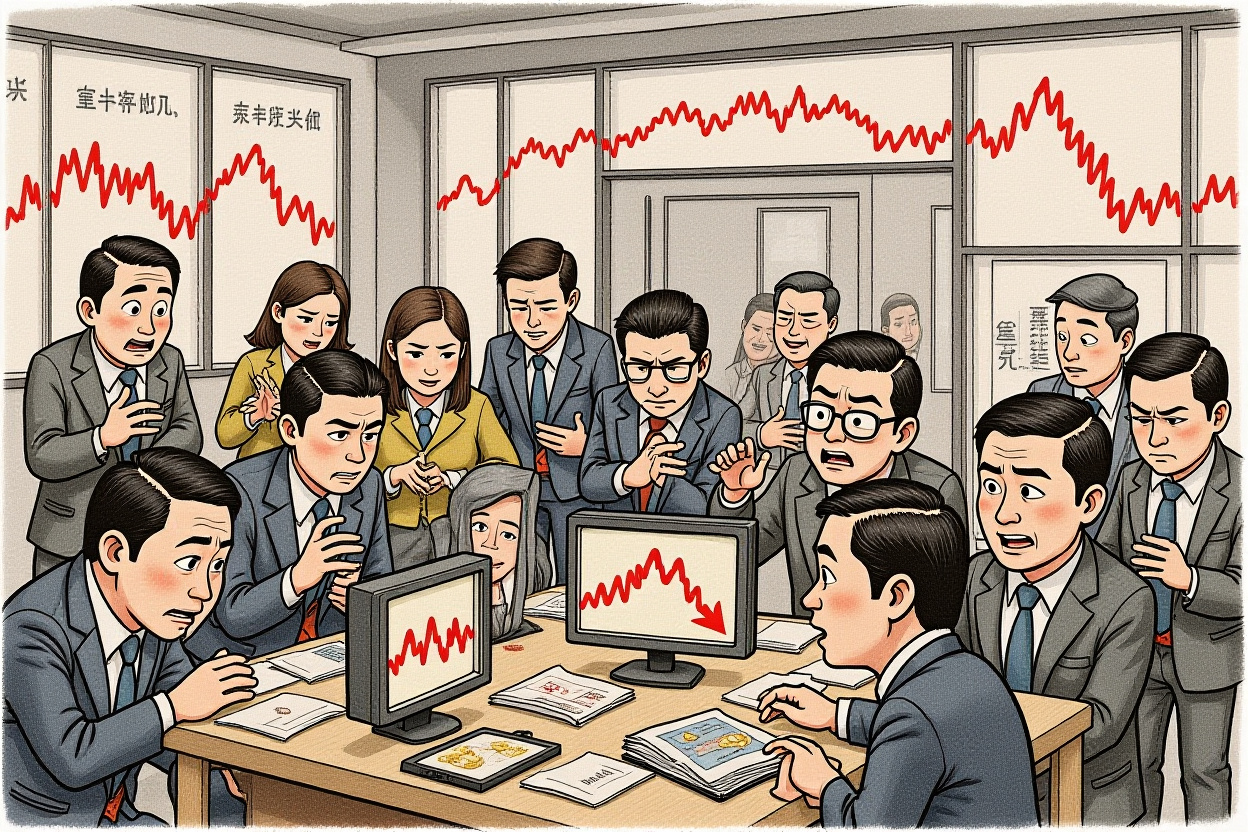
– Precious metals tumbled dramatically, with gold 黄金 posting its worst single-day drop in over a year and silver 白银 falling even more sharply, triggering a cascade of selling in related A-share and港股 (H-share) equities.
– The sell-off was driven by a potent mix of a surging U.S. dollar 美元, shifting expectations for U.S. Federal Reserve interest rate cuts, and technical liquidation pressures following an extended rally.
– China’s domestic non-ferrous metals 有色金属板块 bore the brunt, with gold miners and industrial metal producers alike seeing significant corrections, reflecting concerns over both financial hedge unwinding and weaker-than-expected physical demand.
– This volatility serves as a critical reminder for investors of the sector’s sensitivity to global macro shifts and highlights the importance of differentiating between speculative financial flows and underlying industrial fundamentals.
– The event is likely to lead to a period of consolidation and heightened scrutiny on Chinese policy support for domestic commodity demand and inventory cycles.
A sharp, synchronized decline in global gold 黄金 and silver 白银 prices rattled financial markets, sending China’s closely watched non-ferrous metals 有色金属板块 into a tailspin during the recent trading session. This flash crash, one of the most pronounced in recent memory, erased billions in market capitalization from leading Chinese mining and refining firms, forcing institutional investors to rapidly recalibrate their exposure to a sector that had been a notable outperformer. The sudden downdraft underscores the intricate and often volatile linkage between global commodity benchmarks and the performance of China’s equity markets, serving as a stark reminder of the risks embedded in momentum-driven rallies.
Anatomy of a Flash Crash: The Catalysts Behind the Plunge
The dramatic sell-off in precious metals was not an isolated event but the result of several converging macroeconomic and technical factors. Understanding these drivers is crucial for assessing whether this represents a temporary correction or the beginning of a more sustained downtrend.
A Resurgent Dollar and Shifting Fed Narrative
The primary catalyst was a powerful rally in the U.S. dollar 美元 index. As the dollar strengthens, commodities priced in USD, including gold and silver, become more expensive for holders of other currencies, dampening international demand. This move was fueled by surprisingly robust U.S. economic data, which led markets to dramatically scale back expectations for imminent interest rate cuts by the U.S. Federal Reserve. Higher-for-longer U.S. rates increase the opportunity cost of holding non-yielding assets like gold, making fixed-income alternatives more attractive. The shift in sentiment was swift and severe, triggering automated selling programs.
Profit-Taking and Technical Breakdowns
Prior to the crash, both gold and silver had enjoyed a spectacular rally, with gold reaching successive all-time highs. This created an extremely crowded long position among speculative funds. When key technical support levels were breached, it initiated a wave of stop-loss and margin-call selling. The velocity of the decline was exacerbated by algorithmic trading, creating a feedback loop of liquidation. For Chinese investors who had chased the rally, this represented a classic “bull trap,” where late entrants faced immediate and significant losses.
Ripple Effects: The Carnage in China’s Non-Ferrous Metals Sector
The shockwaves from the international commodity flash crash hit Chinese shores instantly. The CSI 300 Non-Ferrous Metals Index and related sectoral ETFs 交易所交易基金 experienced heavy selling pressure, with losses significantly outpacing the broader Shanghai and Shenzhen indices.
Gold Miners Lead the Decline
Unsurprisingly, companies with direct exposure to gold production and refining were hit hardest. Shares of major listed miners like Zhongjin Gold 中金黄金 and Shandong Gold Mining 山东黄金矿业 saw precipitous falls, in some cases down 8-10% in a single session. The sell-off reflected a rapid repricing of future revenue streams based on the lower spot price. Silver-related plays, which are often more volatile due to smaller market liquidity, fared even worse. This segment of the flash crash demonstrated the high beta nature of mining equities relative to the underlying commodity.
Industrial Metals Dragged Into the Fray
While the initial trigger was precious metals, the panic selling quickly spread to industrial metals like copper 铜 and aluminum 铝. Companies such as Jiangxi Copper 江西铜业 and Aluminum Corporation of China 中国铝业 (Chalco) also posted notable declines. This broader weakness stemmed from two concerns: first, a strong dollar pressures all dollar-denominated commodities; second, the macro fears driving the flight from gold also sparked worries about global economic growth and thus industrial demand. The market treated the event as a broad-based risk-off signal for the entire commodity complex.
Domestic Context: Chinese Market Nuances Amplify the Move
While the flash crash was globally sourced, unique characteristics of the Chinese market amplified its impact on local equities. Domestic investor behavior and policy perceptions played a key role.
Retail Sentiment and Leverage Unwind
The Chinese retail investor base is a significant force in sectoral plays like commodities. The preceding rally had attracted substantial speculative capital. The sudden reversal led to a frantic rush for the exits, with selling volumes soaring. Furthermore, the use of margin financing in A-share accounts can accelerate declines, as forced liquidations add to selling pressure. This domestic dynamic turned an international price correction into a steep equity market rout for the sector.
Questions Over Domestic Demand Strength
The sell-off prompted immediate questions about the robustness of physical demand within China. While gold is seen as a safe-haven, its recent rally was also supported by strong purchasing from the 中国人民银行 (People’s Bank of China) and Chinese households. The price drop tests the conviction of these physical buyers. For industrial metals, the focus returned to the pace of the property sector recovery and the scale of infrastructure stimulus. If the financial flash crash dampens sentiment among physical buyers and fabricators, it could lead to destocking and further price softness.
Strategic Implications for Global Investors
For international fund managers and institutional investors tracking Chinese equities, this episode provides critical lessons and signals for portfolio positioning.
Reassessing the “China Hedge” Narrative
Chinese gold stocks had been touted by some as a dual-purpose hedge: against global inflation and potential RMB 人民币 weakness. This flash crash severely tests that thesis. It demonstrates that in times of broad dollar strength and global risk aversion, the correlation to international dollar-priced commodities can override domestic narratives. Investors must now scrutinize whether this was a one-off volatility event or a breakdown in these correlated hedges.
Differentiating Between Financial and Industrial Plays
The indiscriminate nature of the sell-off may have created potential opportunities. The fundamental outlook for copper, tied closely to energy transition and global manufacturing cycles, is distinct from that of gold, which is driven by monetary and safe-haven demand. Astute investors will use this period of sector-wide weakness to:
– Identify high-quality industrial metal producers with strong cost positions and exposure to secular growth themes like EVs and grid infrastructure.
– Separate companies with pure precious metal exposure from diversified miners.
– Assess which firms have demonstrated operational resilience through previous cycles.
Market Outlook and Key Levels to Watch
The immediate aftermath of a flash crash is characterized by high volatility and sentiment-driven trading. The path forward for the sector depends on several identifiable factors.
Stabilization Factors for Precious Metals
The next support levels for gold around the $2,300/oz mark will be closely monitored. Any renewed physical buying from central banks, particularly the 中国人民银行 (People’s Bank of China), or a dovish shift in Fed rhetoric could provide a floor. Domestically, Chinese investor appetite for gold bars and coins following the price dip will be a key indicator of retail confidence. A failure to hold these levels could signal a deeper corrective phase.
Policy Response and Industrial Data
For industrial metals, the focus returns squarely to China. Upcoming data on PMIs, credit growth, and particularly detailed policies from the upcoming Third Plenum will be pivotal. Concrete stimulus measures aimed at property stabilization or major infrastructure projects would provide a fundamental basis for copper and aluminum demand, helping their equities decouple from the precious metals-led narrative. Traders will watch inventory data from the 上海期货交易所 (Shanghai Futures Exchange) for signs of tightening or surplus.
The recent flash crash in gold and silver, transmitting severe losses to China’s non-ferrous metals equities, is a potent case study in interconnected global markets. It underscores that even sectors with strong domestic narratives are not immune to sudden shifts in international capital flows and macro expectations. For investors, the key takeaway is the imperative of nuanced sector analysis—lumping all “metals” together is a strategy fraught with risk. The volatility presents a filtering mechanism: weaker, speculation-driven names may struggle to recover, while companies with robust fundamentals, clear exposure to structural growth trends, and strong balance sheets are likely to find support. Moving forward, a disciplined focus on differentiating between financial metal speculation and industrial metal demand, coupled with close monitoring of Chinese policy signals, will be essential for navigating this newly uncertain landscape. Consider this event a mandatory stress test for your commodity equity holdings; use the resulting price dislocations to strategically rebalance towards quality and clarity.