



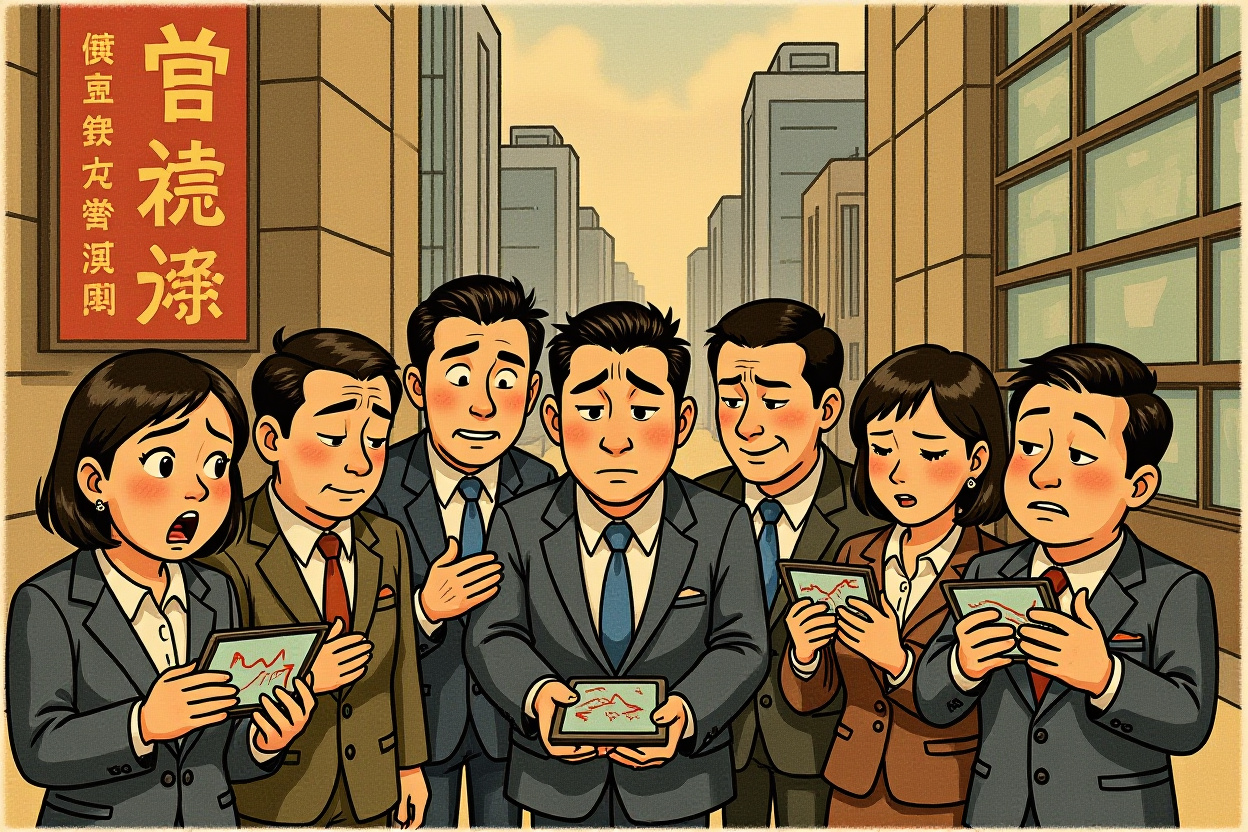
Executive Summary
– Yuyuan Tourist Mart Co., Ltd. (豫园股份), a constituent of the SSE 50 Index, has reported an annual net loss of approximately 4.8 billion yuan, its worst performance since listing 34 years ago, sending shockwaves through the Chinese consumer retail sector. – The loss underscores severe challenges in its core businesses, including traditional retail and property development, amid a shifting macroeconomic landscape and intense competition. – This event represents a critical inflection point, forcing a re-evaluation of the company’s strategic direction and its place within the Fosun International (复星国际) ecosystem. – For global investors, the saga offers crucial lessons on due diligence, sector rotation, and navigating state-owned enterprise (SOE) reform narratives in Chinese equities. – The company’s future hinges on successful asset optimization, digital transformation, and aligning with China’s dual-circulation and consumption-upgrade policies.
A Stunning Setback for a Market Bellwether
The recent financial disclosures from Yuyuan Tourist Mart Co., Ltd. (豫园股份) have delivered a sobering reality check to the market. As a company that has been publicly traded for 34 years, its reported loss of 4.8 billion yuan is not merely a poor earnings figure; it is a symbolic event that signals a profound operational and strategic crisis. For international fund managers tracking the Shanghai Stock Exchange (上海证券交易所), this development forces a urgent reassessment of a once-reliable component of the consumer staples and retail landscape. The phrase ‘Yuyuan shares hit a low point’ is now a stark understatement, describing a collapse in investor confidence that mirrors the company’s financial nadir. This situation did not emerge overnight. It is the culmination of years of accumulating pressures, from cyclical downturns to structural inefficiencies, finally manifesting in a balance sheet that can no longer conceal underlying weaknesses. The immediate reaction has been a sharp sell-off, but the deeper implications for China’s equity markets and the broader narrative of corporate resilience are what warrant closer examination.
Decoding the 4.8 Billion Yuan Loss: Core Drivers
To understand why Yuyuan shares hit a low point, one must dissect the sources of this monumental loss. The primary drivers are multifaceted: – Asset Impairments and Write-downs: A significant portion of the loss is attributed to substantial impairments on goodwill and long-term assets, particularly within its property and hospitality segments. This suggests previous acquisitions or expansions have failed to generate expected returns. – Operational Struggles in Traditional Retail: The company’s core Yuyuan Garden (豫园商城) commercial complex and other retail assets faced severe headwinds from changing consumption patterns, the rise of e-commerce giants like Alibaba (阿里巴巴), and prolonged pandemic-related disruptions. – Debt Servicing Costs: Amid a tighter credit environment and rising interest rates, the financial burden of the company’s leverage has squeezed profitability. This is a common challenge for many Chinese conglomerates with complex capital structures. – Strategic Missteps: Investments and diversifications outside its core competency, potentially influenced by its parent Fosun’s global acquisition strategy, may not have been integrated or managed effectively, leading to value destruction. This loss of 4.8 billion yuan, for a company listed 34 years, is a clear signal that legacy business models are under unprecedented strain. It raises critical questions about corporate governance and the effectiveness of board oversight during this period of decline.
The 34-Year Listing Journey: From Pioneer to Precarious Position
Yuyuan Tourist Mart’s listing in 1990 placed it among the earliest batch of companies on China’s rejuvenated stock exchanges. Its journey mirrors the evolution of China’s capital markets and consumer economy. For decades, it was viewed as a stable, dividend-paying stock with a valuable physical asset base in central Shanghai. However, the very factors that once constituted its strength—prime real estate, a iconic brand, and a traditional business model—have become anchors in a digital-first, experience-driven economy. The fact that it has taken 34 years for Yuyuan shares to hit such a dramatic low point highlights both the durability of its initial model and the seismic shifts that have finally overcome it.
A Timeline of Erosion
Analyzing its financial history reveals a pattern of gradual erosion masked by periodic asset sales or one-off gains. Key pressure points include: 1. The 2008 Global Financial Crisis: Exposed the company’s vulnerability to external shocks and tourism fluctuations. 2. The E-commerce Revolution (2010s): Companies like JD.com (京东) and Pinduoduo (拼多多) reshaped retail, diluting the foot traffic and spending at traditional commercial complexes. 3. China’s Economic Rebalancing: The shift from investment-led growth to consumption and services required agility that a large, traditional entity struggled to muster. 4. The COVID-19 Pandemic: Acted as a final catalyst, devastating tourism and in-person retail for prolonged periods, from which recovery has been slow and costly. The 34-year listing anniversary, rather than a celebration, now marks a critical juncture for corporate survival and reinvention.
Regulatory and Macroeconomic Crosscurrents
Yuyuan’s predicament cannot be isolated from the broader environment. Several macro and regulatory factors have compounded its specific issues. The Chinese government’s policies on common prosperity, debt reduction for property developers, and stringent COVID-19 controls created a perfect storm for businesses reliant on mass gatherings and discretionary spending. Furthermore, regulatory scrutiny on internet platforms, while aimed at tech giants, indirectly altered the entire retail ecosystem’s competitive dynamics. The China Securities Regulatory Commission (CSRC) (中国证券监督管理委员会) has been emphasizing higher quality earnings and transparency, making it harder for companies to obscure fundamental weaknesses through accounting maneuvers. For a company that has been listed 34 years, adapting to this new, stricter regulatory paradigm has proven challenging.
Impact of Sector-Wide Challenges
The consumer discretionary and real estate sectors in China have faced immense pressure. The government’s ‘three red lines’ policy to curb developer debt directly impacted Yuyuan’s property-related holdings and development projects. Simultaneously, consumer confidence has been volatile, affecting spending on non-essential goods and tourism services—the lifeblood of Yuyuan’s operations. Data from the National Bureau of Statistics (NBS) (国家统计局) shows inconsistent recovery in retail sales, particularly for the types of cultural and tourism products Yuyuan specializes in. This macro backdrop ensures that the path to recovery for Yuyuan shares, now at a low point, is inextricably linked to the recovery of the broader Chinese consumer economy.
Strategic Implications for Investors and the Fosun Ecosystem
For institutional investors, the event is a case study in risk assessment. The loss of 4.8 billion yuan by a 34-year-listed company serves as a reminder that even established, seemingly stable Chinese equities carry latent sectoral and operational risks that can materialize rapidly. It underscores the importance of looking beyond top-line growth and brand heritage to analyze cash flow quality, debt maturity profiles, and adaptability to technological disruption.
Fosun International’s Conundrum
As the controlling shareholder, Fosun International (复星国际) Chairman Guo Guangchang (郭广昌) and his management team face a strategic dilemma. Yuyuan was once a crown jewel in Fosun’s ‘Health, Happiness, and Wealth’ ecosystem. Its distress necessitates a decision: commit significant resources for a deep turnaround or consider a strategic restructuring, including potential asset spin-offs or sales. Fosun’s own need to manage debt and refocus on core areas may limit its ability to provide an unlimited lifeline. The market will closely watch for signals from Fosun regarding its commitment to reviving Yuyuan and preventing further erosion of shareholder value. The parent company’s next moves will be critical in determining whether this low point is the bottom or the beginning of a more protracted decline.
Forward Outlook: Pathways to Recovery or Continued Decline?
The central question for analysts is whether Yuyuan shares have truly hit a low point from which they can rebound, or if this is the start of a new, lower trajectory. Several scenarios could unfold. A successful turnaround would likely involve a multi-pronged strategy: – Aggressive Portfolio Rationalization: Selling non-core or underperforming assets to reduce debt and focus on businesses with viable growth prospects, such as its emerging jewelry retail chain or cultural tourism experiences. – Digital Transformation Acceleration: Leveraging its physical assets to create integrated online-offline consumer experiences, potentially through partnerships with tech platforms. – Alignment with National Policy: Pivoting offerings to cater to domestic tourism and cultural consumption, key themes in China’s dual-circulation strategy. – Enhanced Corporate Governance: Possibly refreshing the board or management with expertise in digital retail and lean operations to restore investor trust. However, the risks are substantial. A prolonged period of weak consumer spending, further asset write-downs, or an inability to execute a coherent new strategy could lead to continued financial distress, credit rating downgrades, and further capital depletion. The company that has been listed for 34 years stands at a crossroads where strategic clarity and executional excellence are non-negotiable.
Investment Thesis Recalibration
For global fund managers, Yuyuan’s story necessitates a recalibration of investment theses around Chinese consumer stocks. Key takeaways include: – The premium for ‘old economy’ stalwarts with physical assets has permanently diminished without a clear digital or experiential edge. – Due diligence must now rigorously stress-test asset valuations and goodwill on balance sheets, especially for conglomerates. – Monitoring parent-subsidiary dynamics and intra-group support mechanisms is crucial when investing in complex Chinese corporate families. The event where Yuyuan shares hit a low point after 34 years listed serves as a potent reminder that in China’s rapidly evolving market, corporate longevity is no guarantee of future performance.
Synthesizing the Crisis and Charting a Course
The staggering 4.8 billion yuan loss reported by Yuyuan Tourist Mart is more than a corporate failure; it is a milestone event with ramifications for its shareholders, its parent Fosun, and the perception of established listed entities in China. The phrase ‘Yuyuan shares hit a low point’ encapsulates a moment of reckoning that was decades in the making, driven by internal strategic drift and external economic transformation. The key takeaway for sophisticated investors is the imperative of dynamic, forward-looking analysis. Reliance on historical prestige or asset-heavy balance sheets is insufficient. The future of Yuyuan hinges on its ability to execute a painful but necessary transformation, shedding its legacy burdens and embracing a model fit for the modern Chinese consumer. For the market at large, this episode underscores the ongoing creative destruction within China’s equity markets, as capital reallocates from outdated models to new champions. Investors worldwide should view this not just as a cautionary tale, but as an actionable signal to rigorously audit their portfolios for similar latent risks and to identify companies demonstrating the agility to avoid a comparable fate. The next step is clear: monitor Yuyuan’s forthcoming strategic announcements, quarterly cash flow statements, and any asset disposal plans with heightened scrutiny. The journey back from this historic low point will be the ultimate test of its 34-year legacy and a defining chapter for its role in China’s next economic phase.