



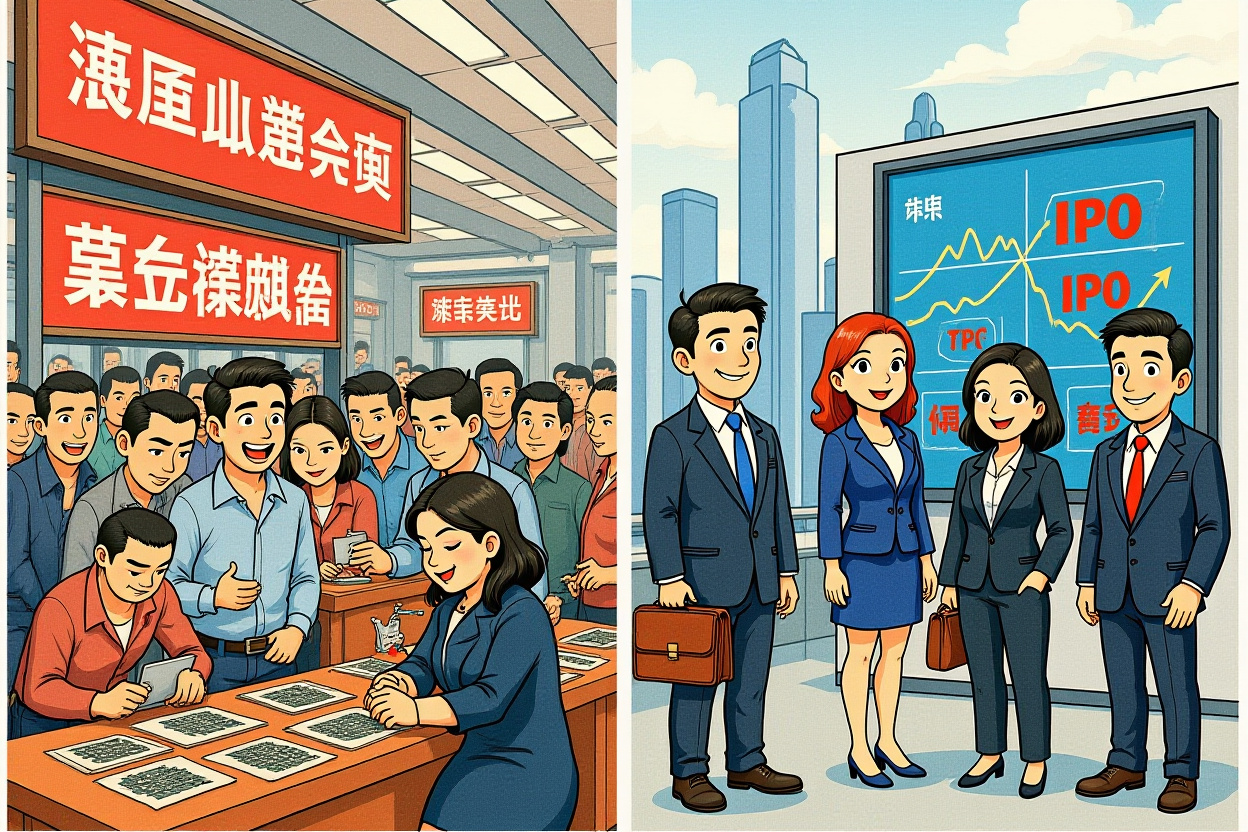
In the sprawling metropolis of Shenzhen, one district stands as a global symbol of Chinese manufacturing and commercial agility: Huaqiangbei (华强北). Often dubbed the world’s electronics supermarket, this dense network of markets has long been the launchpad for countless tech dreams. Yet, beyond the bustling stalls and component bins lies a deeper narrative of capital formation and strategic business evolution. The journey from a single counter to a multi-billion yuan Initial Public Offering (IPO) epitomizes a uniquely Chinese path to market dominance, one often powered by tightly-knit regional networks and relentless entrepreneurial hustle. Doing business, you have to hand it to the Putian people—a phrase that captures the essence of a formidable business culture that has mastered the art of scaling niche operations into publicly-listed giants.
Executive Summary: Key Takeaways from the Huaqiangbei IPO Phenomenon
The emergence of major IPOs from the Huaqiangbei ecosystem is not an isolated event but a trend with significant implications for investors and the broader Chinese economy.
- A Specific Distributor’s Ascent: The reported case of a Huaqiangbei-based electronics distributor achieving an annual revenue of 6 billion yuan and pursuing an IPO highlights the immense scale and profitability achievable within China’s component supply chain.
- The “Putian Network” Effect: The business philosophy encapsulated by “doing business, you have to hand it to the Putian people” points to the critical role of regional (often Fujian-based) entrepreneurial networks in providing capital, trust, and market intelligence to scale businesses rapidly.
- Evolution from Trader to Tech Integrator: Successful Huaqiangbei players are no longer mere traders; they have vertically integrated, building brands, proprietary logistics, and value-added services that attract institutional investment and justify public market valuations.
- Regulatory Scrutiny and Sustainable Growth: As these companies enter the public eye, they face increased scrutiny regarding governance, supply chain transparency, and intellectual property, marking a new phase in their corporate development.
The Huaqiangbei Ecosystem: More Than Just a Electronics Market
To understand the IPO potential, one must first grasp the unique ecosystem of Huaqiangbei. It is a microcosm of China’s entire electronics industry, compressing R&D, manufacturing, distribution, and retail into a few square kilometers.
A Global Supply Chain Nerve Center
Huaqiangbei is not merely a retail destination; it is the physical nexus of global electronics logistics. Thousands of small-to-medium enterprises (SMEs) operate here, specializing in everything from resistors and capacitors to advanced sensors and display modules. Their collective inventory represents the most comprehensive and agile electronics parts repository on Earth. This density creates unparalleled efficiency, allowing prototype builders and manufacturers to source components within hours, not weeks. For a distributor operating at scale, this proximity to both supply and demand is an insurmountable competitive moat.
The Breeding Ground for Agile Business Models
The hyper-competitive environment fosters extreme business agility. Distributors must master inventory management, currency hedging, and demand forecasting with razor-thin margins. This pressure-cooker environment acts as a filter, allowing only the most efficient, well-connected, and financially astute operators to survive and eventually thrive. The leap from a successful counter operation to a regional or national distributor requires significant capital and logistical prowess—a gap often bridged by the deep-pocketed and trusted networks from regions like Putian. Doing business, you have to hand it to the Putian people for creating these invisible financial and operational bridges that turn local success into national empires.
Deconstructing the 6 Billion Yuan IPO: A Case Study in Scaling
The specific case of a distributor reaching 6 billion yuan in revenue before an IPO offers a blueprint for success in this sector. While the company’s name may be withheld pre-IPO, its trajectory is illustrative.
Revenue Drivers and Market Positioning
Achieving such scale typically involves moving beyond passive distribution to active market-making. Key strategies include:
- Focus on High-Growth Segments: Specializing in components for booming sectors like new energy vehicles (NEVs), IoT devices, or advanced consumer electronics, rather than commoditized parts.
- Value-Added Services: Providing technical support, design-in assistance, and supply chain financing to lock in key clients, particularly small and medium manufacturers.
- Omnichannel Distribution: Combining a dominant physical presence in Huaqiangbei with a powerful e-commerce operation on platforms like 1688.com, creating a seamless B2B sales funnel.
This transition from wholesaler to essential供应链 partner (supply chain partner) is what justifies a premium valuation and attracts pre-IPO investors.
The Path to Public Markets: Challenges and Preparations
The journey to an IPO requires a fundamental corporate transformation. A Huaqiangbei business built on personal relationships and informal agreements must adopt rigorous corporate governance, transparent financial auditing, and compliant tax structures. This often involves:
- Formalizing ownership structures and cleaning up related-party transactions common in family or network-run businesses.
- Investing in enterprise resource planning (ERP) and supply chain management software to provide auditable data trails.
- Building a professional management team, often bringing in outside executives with public company experience to complement the founding entrepreneurial vision.
- Navigating the regulatory requirements of the chosen exchange, whether it be the科创板 (Sci-Tech Innovation Board, STAR Market) for its tech focus or the创业板 (ChiNext) for growth companies.
The “Putian Model”: The Cultural Engine Behind the Scenes
The phrase “doing business, you have to hand it to the Putian people” is more than a colloquialism; it describes a potent socioeconomic model. Originating from Putian in Fujian province, this network has famously expanded into various sectors nationwide, from healthcare to timber, and electronics distribution is a prime example.
Capital and Trust Within Closed Networks
The model’s strength lies in its use of guanxi (关系, relationships) and regional identity to facilitate business. Capital flows more freely within the network based on reputation and kinship, bypassing traditional banking hurdles. This allows promising businesses in Huaqiangbei to secure the significant working capital needed to finance large inventory purchases—a critical advantage in a cash-flow-intensive industry. When one member succeeds, they often finance or guide the next, creating a self-reinforcing cycle of growth. Doing business, you have to hand it to the Putian people for institutionalizing this form of venture capital long before it had a formal name in China.
Information Asymmetry as a Competitive Edge
The dense, trusted network acts as a rapid information-sharing system. Intelligence on component shortages, price fluctuations, emerging manufacturers, and policy shifts circulates quickly, allowing network members to act on opportunities before the broader market. This collective knowledge turns individual businesses into a formidable, coordinated force within Huaqiangbei and beyond. For the distributor aiming for an IPO, this network provides not just capital but also the market intelligence required to make strategic bets on emerging technology trends.
Market Implications and Investor Considerations
The rise of professionally-managed, publicly-listed distributors from hubs like Huaqiangbei signals a maturation phase in China’s electronics component industry.
Consolidation and Value Chain Upgrading
The IPO provides a war chest for industry consolidation. A newly public distributor can acquire smaller competitors, invest in automation and logistics technology, and expand overseas. This leads to a more streamlined, efficient, and transparent national supply chain—a development actively encouraged by Chinese industrial policy. For global manufacturers reliant on Chinese components, dealing with a large, publicly-listed entity may reduce counterparty risk compared to smaller, opaque traders.
Risks and Due Diligence Imperatives
For institutional investors evaluating such IPOs, understanding the underlying business model is crucial. Key due diligence areas include:
- Customer Concentration: Over-reliance on a few large manufacturers can be a vulnerability.
- Inventory Risk: The value of electronic components can depreciate rapidly; inventory management capabilities are paramount.
- Governance and Related-Party Transactions: Scrutinizing deals with other businesses within the founder’s regional or familial network is essential.
- Cyclicality: Revenue is tied to the health of the global electronics manufacturing cycle.
Doing business, you have to hand it to the Putian people, but investing requires a disciplined analysis of financials and governance beyond the powerful network narrative.
Forward Outlook: Beyond the IPO
Listing on a stock exchange is not the final destination but a new beginning. The successful Huaqiangbei IPO graduate faces a transformed set of priorities and opportunities.
Strategic Evolution Post-Listing
Public capital allows for strategic pivots that were previously impossible. We can expect these companies to:
- Develop Proprietary Brands: Moving from distributing others’ components to designing and branding their own modular solutions or finished products.
- Expand Geographically: Establishing warehousing and sales networks in Southeast Asia, Europe, and North America to serve the globalized production lines of their Chinese clients.
- Invest in R&D: Funding development in adjacent areas like semiconductor distribution, robotics parts, or renewable energy components to capture the next wave of industrial demand.
A Template for Chinese Entrepreneurial Success
The story of a 6 billion yuan distributor emerging from the stalls of Huaqiangbei will inspire countless other entrepreneurs. It validates a path that combines grassroots hustle, the leveraging of tight-knit regional networks for scale, and the ultimate embrace of corporate professionalism and public market discipline. It proves that China’s secondary market ecosystems are capable of producing world-class, investable companies.
The narrative from Huaqiangbei counter to IPO listing is a powerful testament to the dynamism of Chinese private enterprise. It underscores how informal networks evolve into formal corporate structures, and how niche trading evolves into integrated supply chain mastery. For the global investment community, these stories highlight a critical segment of the market often overlooked in favor of flashier consumer internet or EV stocks: the industrial backbone. Doing business, you have to hand it to the Putian people for mastering this game, but understanding its next phase requires looking at the financial statements, the growth strategy, and the evolving regulatory landscape. As more such companies approach public markets, investors would be wise to look beyond the headline revenue figure and deeply analyze the sustainability of the model that built it. The call to action is clear: monitor the pipeline of IPO applications from the electronics distribution and component sector, as they represent both a barometer for China’s manufacturing health and a new asset class built on the formidable foundation of its most legendary commercial districts.