



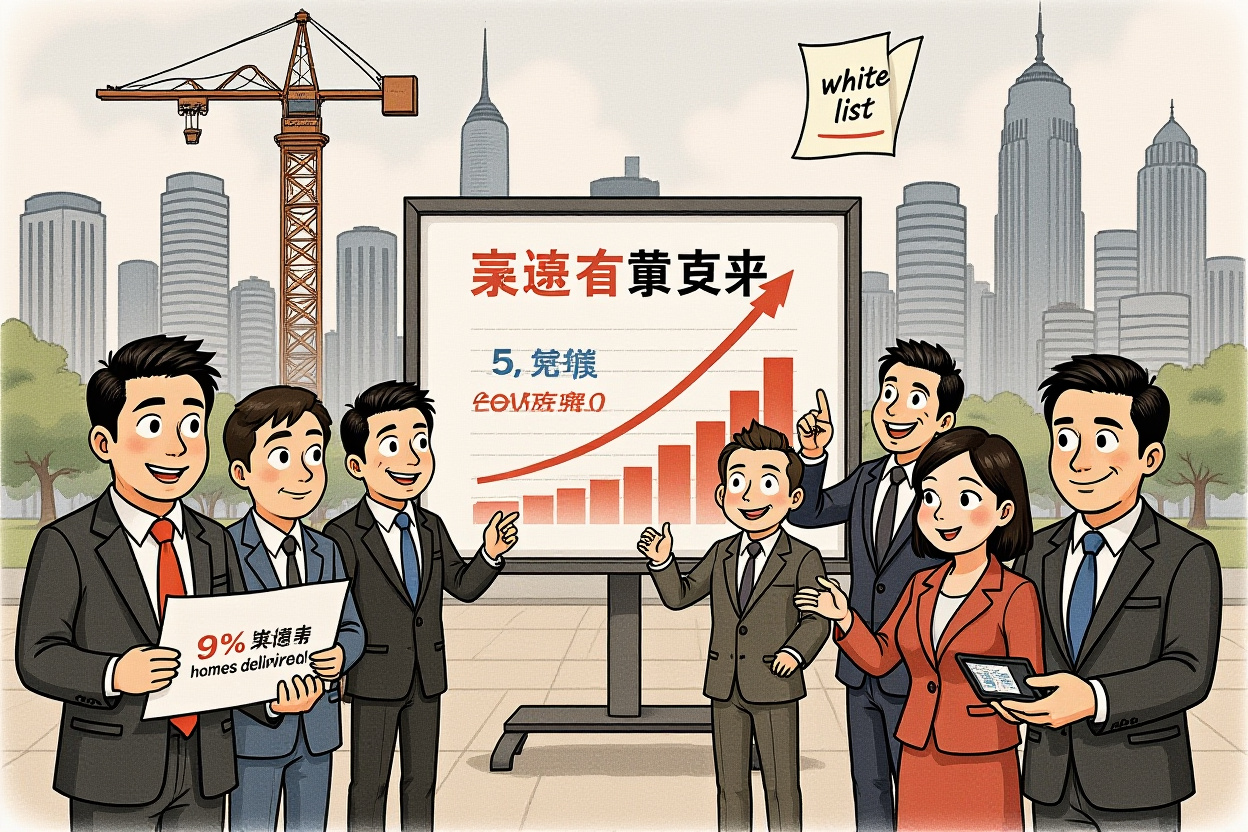
Executive Summary: Critical Takeaways for Market Participants
The resolution of China’s housing delivery crisis marks a pivotal shift for the real estate sector and broader economy. Key insights include:
– Approximately 7.5 million ‘hard-to-deliver’ homes have been successfully handed over nationwide by the end of the 14th Five-Year Plan period, effectively containing a major source of systemic risk.
– Leading developers such as Country Garden (碧桂园), Greenland Holdings (绿地控股), and Sunac China (融创中国) have completed massive delivery campaigns, with cumulative figures in the hundreds of thousands, significantly easing operational pressures.
– Policy tools like the ‘white list’ project financing mechanism and multi-level government work groups were instrumental, achieving a 99% delivery rate for targeted projects and approving over 7 trillion yuan in loans.
– With the housing delivery crisis receding, developers are pivoting towards debt restructuring and asset optimization, while early signs of market stabilization, particularly in first-tier cities, are emerging.
– Experts assert that real estate risks have markedly converged, setting the stage for a phased sectoral recovery and renewed investor confidence.
A Watershed Moment for China’s Property Sector
The shadow of unfinished residential projects, which once triggered widespread buyer anxiety and market volatility, is finally lifting. After a multi-year national effort, the housing delivery crisis that plagued China’s real estate market is now largely resolved. This milestone represents the shedding of the industry’s heaviest burden, unlocking potential for renewal and attracting scrutiny from global investors focused on Chinese equities. The successful delivery of millions of homes not only safeguards consumer rights but also signals a crucial inflection point for regulatory efficacy and market sentiment. As developers breathe a sigh of relief, the focus shifts to rebuilding a more sustainable foundation for growth.
Quantifying the Success: National and Developer-Level Delivery Data
The scale of achievement in overcoming the housing delivery crisis is underscored by comprehensive data from both governmental and corporate sources.
Nationwide Achievement: 750万套 and Counting
According to the Ministry of Housing and Urban-Rural Development (住房和城乡建设部), by the end of 2025, approximately 7.5 million ‘已售难交付’ (hard-to-deliver) homes had been successfully delivered across China. This figure aligns with the completion of the national ‘保交房攻坚战’ (guaranteed housing delivery campaign), where 99% of the 3.96 million units specifically targeted under this initiative were handed over. The data highlights a systemic de-risking of the property market, with the housing delivery crisis moving from a acute problem to a managed residual issue.
Developer Spotlights: From Country Garden to Sunac
The Policy Engine: How Systemic Risks Were ContainedThe resolution of the housing delivery crisis was not incidental but the result of coordinated, top-down policy interventions designed to stabilize the sector.
The ‘White List’ Financing Mechanism and Liquidity Support
A cornerstone of the response was the real estate financing coordination mechanism, which identified eligible projects for a ‘白名单’ (white list) to receive prioritized bank funding. By late 2025, approved loans for these projects exceeded 7 trillion yuan, providing critical liquidity to complete construction. This mechanism, detailed in regulatory announcements, ensured that viable projects could proceed despite developer liquidity crunches, directly addressing the core of the housing delivery crisis.
Local Implementation and ‘One Project, One Policy’
Industry Transformation: Post-Crisis Priorities for DevelopersWith the immediate pressure of the housing delivery crisis alleviated, developers are navigating a new operational landscape focused on financial health and strategic repositioning.
Pivot to Debt Resolution and Asset Management
Expert Analysis: Yan Yuejin on Risk ConvergenceMarket Implications and the Road to RecoveryThe containment of the housing delivery crisis has tangible ramifications for market dynamics, buyer behavior, and the broader economic outlook.
Restoring Buyer Confidence and Curbing Prepayment Trends
Early Indicators of Price StabilizationNavigating the New Landscape: Strategic Considerations for StakeholdersThe effective management of the housing delivery crisis represents a critical inflection point, but it is not the end of the road. The real estate sector now enters a phase of convalescence and restructuring. For institutional investors and corporate executives, attention should pivot to monitoring the progress of developer debt resolutions, the absorption of inventory, and localized policy adjustments. Urban differentiation will be key; markets with robust demand fundamentals may recover faster. The call to action is clear: engage with detailed company disclosures on asset quality and restructuring plans, and watch for policy signals from bodies like the Ministry of Housing and Urban-Rural Development (住房和城乡建设部) that will guide the next stage of market normalization. By doing so, stakeholders can position themselves to identify value in a stabilizing, yet transforming, Chinese property landscape.