



[Executive Summary]
– International gold prices experienced a sharp correction, with London spot gold plummeting from highs above $5,500 to near $4,400 per ounce, triggering a domestic drop of about 100 yuan per gram in Shenzhen’s Shui Bei market (水贝市场).
– Contrary to expectations, the gold price correction spurred a significant surge in consumer activity at Shui Bei, with foot traffic and sales volumes doubling during the Lunar New Year season, highlighting a counterintuitive market response.
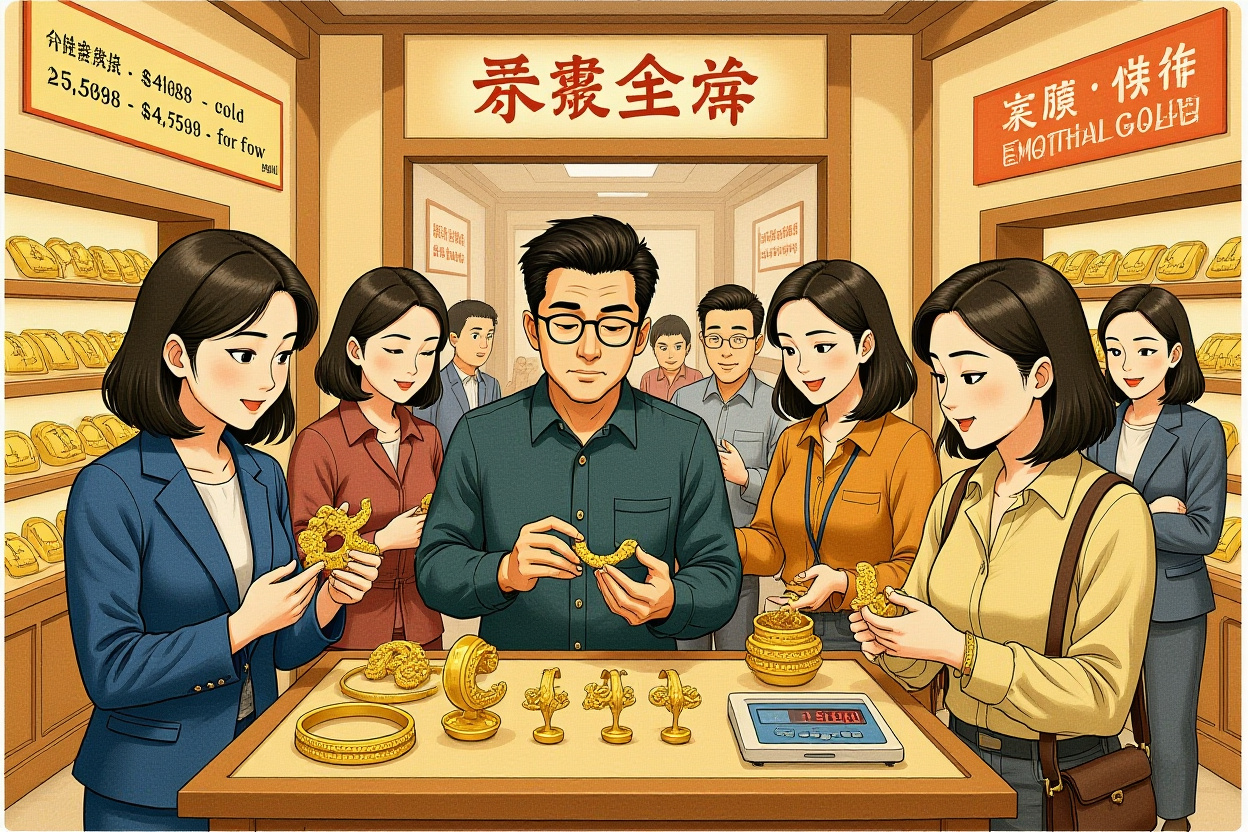
– Consumer preferences are shifting from traditional gold bar accumulation to ’emotional gold’饰品—high-artisan-fee, low-weight jewelry like gold mahjong sets, which sold out in half a day, emphasizing design over pure investment value.
– Gold recycling and exchange services saw increased demand, as consumers leveraged price volatility to upgrade holdings or cash out, reflecting savvy participation in the gold price correction and Shui Bei market surge.
– Analysts anticipate short-term consolidation and volatility in gold prices but maintain a bullish long-term outlook due to structural dollar weakness, escalating global debt risks, and persistent geopolitical tensions.
The Volatile Backdrop: Understanding the Gold Price Swing
The recent turbulence in global gold markets has set the stage for a remarkable phenomenon in China’s premier gold trading hub. This gold price correction and Shui Bei market surge are rooted in dramatic international price movements that quickly transmitted to domestic retail channels.
International Gold Market Turmoil
London spot gold prices (伦敦金现价) embarked on a rollercoaster ride in late January. After reaching a阶段性高点 (stage high) of $5,598 per ounce on January 29, prices plunged by 9.25% the next day, followed by a further 4.52% drop on February 2, briefly touching $4,402 per ounce—a peak-to-trough decline of over $1,100. A rebound of over 5% on February 3 brought prices back near $5,000. This volatility reflects market adjustments to shifting U.S. monetary policy expectations, real interest rate dynamics, and potential algorithmic trading amplifications. For context, investors can refer to data from the London Bullion Market Association (LBMA) for deeper insights into benchmark pricing mechanisms.
Domestic Price Adjustments in Shui Bei
A Marketplace Transformed: Surge in Consumer Activity at Shui BeiThe combination of price corrections and seasonal demand has transformed Shui Bei into a bustling epicenter of gold trading. This gold price correction and Shui Bei market surge are evident in the unprecedented foot traffic and diverse consumer behaviors observed on the ground.
Record Foot Traffic and Sales Volumes
Field reports from February 3 indicate a market operating at fever pitch. Despite being a weekday, crowds began gathering by 10 a.m., with visitor numbers swelling significantly by noon. One online jewelry merchant based in Shui Bei revealed that customer flow on January 31 and February 1 was double that of a typical weekend, with sales volumes reaching twice the normal level. Over a single weekend, their stall sold more than 3 kilograms of gold. Another vendor highlighted February 1 as the peak day, describing scenes of ‘人头攒动’ (a sea of people), with customers from Hong Kong taking high-speed trains specifically to shop for gold and domestic tourists altering itineraries to visit. This gold price correction and Shui Bei market surge have a regional pull, underscoring Shui Bei’s status as a wholesale and retail magnet.
Diverse Consumer Motivations and Behaviors
Consumers are driven by varied motives. For instance, Mr. Li (李先生) from Jiangsu province changed his travel plans from Hong Kong to Shui Bei to purchase gold ornaments for his son’s本命年 (zodiac year of birth), a tradition believed to require protective gold. In contrast, Shenzhen resident Ms. Wang (王女士), a regular shopper, focuses on design and craftsmanship over price fluctuations, seeking items like盘缠手链 (coiled bracelets) and古法戒指 (ancient-method rings). However, merchants also note a segment of ‘看多买少’ (more looking, less buying) consumers who are观望 (wait-and-see) due to market uncertainty, expecting further price dips or clearer trends. This dichotomy highlights how the gold price correction and Shui Bei market surge cater to both opportunistic buyers and design-driven enthusiasts.
The Rise of ‘Emotional Gold’: Shifting Consumer Preferences
A pivotal trend emerging from the gold price correction and Shui Bei market surge is the shift from investment-focused bullion to consumption-oriented ’emotional gold.’ This reflects broader changes in Chinese consumer behavior, where gold is increasingly valued for its aesthetic and symbolic worth.
Defining ‘Emotional Gold’ and Its Appeal
The term ‘情绪黄金’ (emotional gold) refers to gold jewelry where the工费 (artisan or craftsmanship fee) constitutes a significant portion of the price, often exceeding the value of the raw gold content. These are low-weight, high-design items purchased for gifting, self-expression, or cultural significance rather than pure asset accumulation. This trend aligns with consumption upgrades in China, where consumers seek quality, uniqueness, and experiential value. The gold price correction and Shui Bei market surge have amplified this shift, as buyers perceive added value in intricate designs during price dips.
Gold Mahjong Sets: A Case Study in Premium Demand
The rapid sell-out of gold mahjong sets ‘半日被抢空’ (snatched up in half a day) exemplifies this trend. A full set, including tiles and case, retails for over 2,000 yuan, with 680 yuan attributed to工费 (artisan fees). Despite the high markup, demand from regions like Sichuan (四川), Hunan (湖南), and overseas Chinese communities has been insatiable. Sellers report that batches are often depleted by late morning. This product’s success underscores gold’s role as a medium for cultural expression—mahjong is a deeply ingrained pastime—and luxury gifting. The gold price correction and Shui Bei market surge have merely heightened the visibility of this consumer pivot towards premium, emotionally resonant items.
Beyond Buying: Gold Recycling and Exchange Trends
The activity in Shui Bei isn’t limited to new purchases; the volatility has also spurred interest in managing existing gold holdings. This aspect of the gold price correction and Shui Bei market surge reveals a sophisticated consumer base actively optimizing their portfolios.
Increased Inquiries into Gold Redemption
The Preference for Upgrading Over Cashing OutMarket Outlook: Analyst Insights on Gold’s TrajectoryShort-Term Outlook: Consolidation and Elevated VolatilityLong-Term Fundamentals: Structural Support Remains IntactSynthesizing Insights for Investors and Market ParticipantsThe events in Shenzhen’s Shui Bei market offer critical lessons for global investors. The gold price correction and Shui Bei market surge demonstrate that gold’s appeal in China extends beyond mere price speculation to encompass cultural, emotional, and strategic dimensions. For institutional investors and fund managers, key takeaways include: physical gold demand remains resilient and is evolving towards higher-margin products, which could benefit listed jewelry retailers; consumer sentiment in key markets like Shui Bei can serve as a leading indicator for broader economic confidence; and gold’s dual role as a financial asset and cultural symbol ensures its relevance across market cycles. While short-term price choppiness is likely, the long-term underpinnings—centered on dollar trends, global debt sustainability, and geopolitical friction—appear solid. Investors should consider maintaining exposure through a mix of physical gold, ETFs like the SPDR Gold Shares (GLD), or shares of established producers. Stay informed by monitoring data from the World Gold Council, PBOC gold reserve updates, and real-time reports from hubs like Shui Bei to navigate this timeless market strategically. The gold price correction and Shui Bei market surge are not just a local anomaly but a reflection of deeper market forces that warrant close attention in any China-focused equity portfolio.