



Executive Summary: Key Takeaways for Investors
The dramatic swings in precious metals have sent shockwaves through global markets. Here are the critical insights from our in-depth analysis:
– The epic decline in gold and silver was primarily driven by overbought conditions and excessive leverage, not solely by Kevin Walsh’s nomination as Fed Chair.
– Walsh’s perceived hawkish stance is a misconception; his recent comments support rate cuts, making him more dovish, which could be beneficial for gold in the long term.
– Structural shifts in global finance, such as gold’s value parity with U.S. Treasury debt, indicate underlying vulnerabilities in the dollar-based system.
– Investors should maintain a disciplined approach: limit gold exposure to 10% of portfolios, avoid high leverage, and focus on long-term diversification amid continued volatility.
– Despite short-term risks, gold retains strong fundamentals due to central bank demand and geopolitical uncertainties, suggesting a prolonged bull market ahead.
The Precious Metals Rollercoaster: A Market in Turmoil
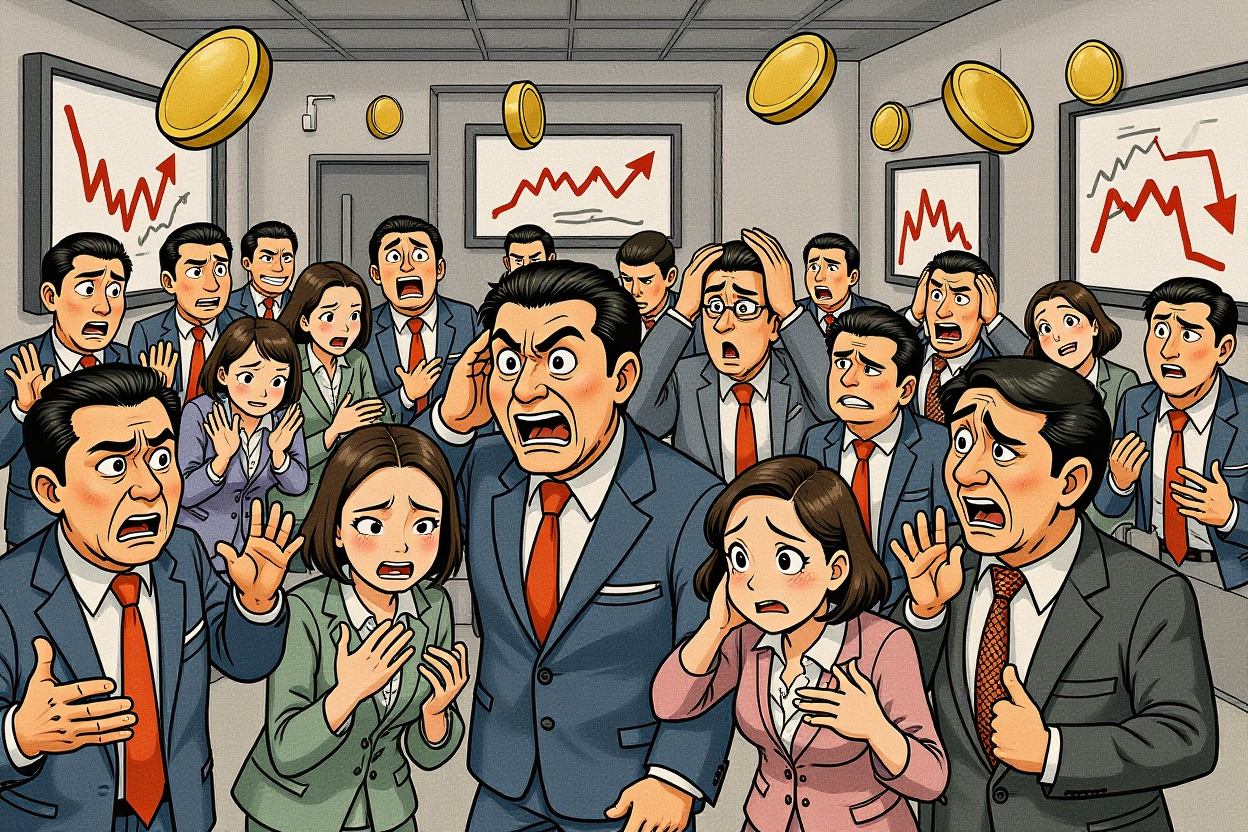
Global investors witnessed a breathtaking spectacle in January 2024 as gold and silver prices catapulted to record highs only to plunge into an abyss of losses. This epic decline in gold and silver has left market participants scrambling for answers, with many pointing fingers at a single event: the nomination of Kevin Walsh (凯文·沃什) as the next Federal Reserve Chair. But is this narrative too simplistic? The volatility underscores deeper fissures in financial markets that demand a closer look.
The focus phrase ‘epic decline in gold and silver’ aptly captures the severity of the sell-off, but understanding its roots requires peeling back layers of market psychology, liquidity dynamics, and macroeconomic trends. For sophisticated investors in Chinese equities and beyond, this episode offers crucial lessons on risk management and asset allocation in an era of unprecedented uncertainty.
Record Highs and Sudden Plunge: The Timeline of Volatility
From January 2 to January 29, international spot gold prices soared by approximately 24%, while silver skyrocketed by nearly 60%, both repeatedly setting new all-time highs. This rally was fueled by a confluence of factors, including geopolitical tensions, central bank buying, and a weakening dollar narrative. However, the euphoria was short-lived. On January 30, following the announcement of Kevin Walsh’s nomination by former President Trump, prices nosedived.
Spot gold closed down 9.25%, marking its largest single-day drop since April 1980. Silver was hit even harder, with an intraday plunge exceeding 36% and a closing loss of 26.42%, the worst since 1983. By February 3, partial recoveries had occurred, but the damage was done, wiping out billions in market value and triggering margin calls across leveraged positions. This epic decline in gold and silver served as a stark reminder of the perils of crowded trades and sentiment-driven markets.
Is Kevin Walsh the Culprit? Initial Market Reactions
Immediately after the news broke, headlines blamed Walsh for the meltdown, citing his reputation as a traditional hawk who might accelerate monetary tightening. However, this knee-jerk reaction overlooked nuances in his recent policy statements. As Deng Zhijian (邓志坚), senior investment strategist at DBS Bank, notes, ‘While the price drop was partly linked to Walsh, it stems from investor misconceptions.’ Walsh has publicly advocated for significant rate cuts since 2024, aligning with Trump’s economic views, a shift from his earlier stance.
Market data supports this perspective. The 10-year U.S. Treasury yield fell rather than rose post-nomination, indicating bond markets weren’t pricing in a more aggressive Fed. This disconnect highlights how the epic decline in gold and silver may have been exacerbated by algorithmic trading and herd behavior, rather than a fundamental reassessment of Walsh’s impact. Investors must discern between catalysts and root causes to navigate such events effectively.
Unpacking the Walsh Nomination: Catalyst, Not Cause
Delving deeper, it becomes clear that Walsh’s nomination acted merely as a trigger for a market already primed for a correction. Li Zhao (李昭), head of macro asset allocation research at China International Capital Corporation Limited (中金公司), emphasizes, ‘The recent gold quake certainly has factors related to Walsh’s nomination, but it’s more of a catalyst.’ This distinction is vital for investors seeking to anticipate future moves rather than react to past headlines.
The focus phrase ‘epic decline in gold and silver’ resonates here, as Walsh’s role was amplified by pre-existing vulnerabilities. His policy proposals, including balance sheet reduction, face practical constraints given current banking liquidity levels. Historical precedents show that previous Fed tightening cycles had minimal immediate impact on gold, with declines of less than 2% post-2017 and 2022 tapering. Thus, attributing the crash solely to Walsh oversimplifies a complex interplay of forces.
Misconceptions About Walsh’s Stance and Policy Implications
Kevin Walsh (凯文·沃什) has undergone a notable evolution in his monetary views. After leaving the Fed Board in 2011, he maintained hawkish critiques, but recent speeches reveal a pivot toward dovishness. He has argued that ‘not cutting rates poses the greatest threat to Fed credibility,’ echoing Trump’s emphasis on growth over inflation. This alignment makes his nomination logical from a political standpoint, but it also suggests a potentially more accommodative Fed under his leadership.
Deng Zhijian (邓志坚) adds, ‘If Walsh takes office, the Fed will likely become more dovish than now. This remains favorable for gold.’ However, confirmation requires Senate approval, adding uncertainty. For investors, the key takeaway is that Walsh may not be the hawkish bogeyman markets feared, and his policies could support gold over time. This nuance underscores why the epic decline in gold and silver was overdone, driven more by sentiment than substance.
Market Reactions and Expert Insights from Chinese Analysts
Chinese financial institutions have provided balanced analyses that caution against overemphasizing Walsh’s influence. A research report from Guotai Junan Securities (国泰君安证券) on February 2 stated, ‘The ‘Walsh trade’ is just one of the fuses that ignited the shift in precious metals sentiment, not the main cause.’ The report points to overheated leverage and speculative positioning as primary drivers.
Li Zhao (李昭) further explains that gold’s surge had already embedded correction risks, with metrics like the correlation between gold prices and ETF inflows hitting historic highs. The epic decline in gold and silver, therefore, represents a natural mean-reversion after irrational exuberance. These insights from top Chinese analysts offer a more holistic view, emphasizing the need for investors to monitor liquidity conditions and market sentiment indicators alongside Fed appointments.
Root Causes of the Gold and Silver Meltdown
Beyond Walsh, several fundamental and technical factors converged to create the perfect storm for precious metals. This epic decline in gold and silver wasn’t an isolated event but a symptom of broader market imbalances. Understanding these root causes is essential for developing robust investment strategies in volatile environments.
The primary driver was the non-rational overbought conditions that had built up over weeks. As prices soared, profit-taking pressure accumulated, making the market susceptible to any negative trigger. Additionally, retail leverage amplified the downturn, as margin calls forced rapid liquidations. Wen Bin (温彬), chief economist at Minsheng Bank, identifies key reasons: ‘First, a callback after overly rapid gains; second, the appointment of a perceived hawkish Fed Chair; third, CME increasing gold margin requirements.’
Overbought Conditions and Leverage Amplifiers
The velocity of the rally itself sowed the seeds of its downfall. Global gold ETF holdings, particularly in the SPDR Gold Trust, surged to levels last seen during the 2022 Russia-Ukraine conflict, indicating extreme bullish sentiment. The correlation coefficient between ETF flows and gold prices reached 0.98, a historical peak, signaling that emotions had reached a fever pitch. When such euphoria meets a minor disturbance, the result is often a violent correction.
– Leverage Effects: Many retail investors used derivatives and margin accounts to magnify gains during the uptrend, but these same tools exacerbated losses during the sell-off. The resulting liquidity crunch transmitted risk to other asset classes, causing widespread declines.
– Technical Breakdowns: Key support levels were breached rapidly, triggering automated selling algorithms and stop-loss orders, which fueled the downward spiral. This mechanistic feedback loop turned a correction into a crash, embodying the epic decline in gold and silver.
Structural Shifts in Global Finance and Gold’s Role
A deeper, more profound factor is the changing architecture of international finance. Li Zhao (李昭) highlights a milestone: gold prices surpassing $5,500 per ounce meant that the total value of above-ground gold stockpiles equaled the total存量 of U.S. Treasury debt for the first time since the 1980s. This parity suggests cracks in the post-Bretton Woods system where the dollar’s dominance is being questioned.
This structural shift underscores why the epic decline in gold and silver may be a temporary setback in a longer-term trend. Central banks, particularly in emerging markets, continue to diversify reserves away from U.S. dollars and into gold, driven by geopolitical fragmentation and trade tensions. As Wen Bin (温彬) notes, ‘As long as the macro narrative of de-dollarization isn’t disproven, the gold bull market could extend.’ Investors must recognize that gold is evolving from a pure safe-haven asset to a strategic hedge against monetary system risks.
Investor Strategies in the Wake of the Crash
Navigating the aftermath of such volatility requires a calibrated approach that balances opportunity with prudence. The epic decline in gold and silver has reshaped risk-reward dynamics, offering entry points for long-term holders while warning speculators of continued turbulence. Here are actionable strategies for institutional and individual investors alike.
First, reassess allocation limits. Deng Zhijian (邓志坚) advises, ‘The proportion of gold holdings should not exceed 10% of total personal assets.’ This cap ensures diversification and mitigates overexposure to a single asset class. Gold’s primary role should be as a hedge against dollar weakness and portfolio risk, not as a speculative tool. Second, avoid high-leverage positions, as gold’s volatility can lead to catastrophic losses in leveraged products.
Short-Term Risks vs. Long-Term Opportunities
In the near term, downside risks persist. Wen Bin (温彬) warns that from the peak of $5,598.75 per ounce on January 29, gold has fallen about 15%, but given last year’s 65% surge and this year’s pre-crash 30% gain, ‘there may still be room for further declines, with the possibility of breaking below $4,000.’ This outlook suggests patience is warranted before adding aggressively to positions.
However, long-term fundamentals remain supportive. DBS Bank maintains its target of $5,100 per ounce by the second half of 2026, citing unchanged drivers like central bank demand. Deng Zhijian (邓志坚) explains, ‘The global trend of de-dollarization and de-U.S. Treasury-ization hasn’t fundamentally changed.’ For investors, this implies adopting a dollar-cost averaging strategy to build positions gradually, rather than timing the market bottom.
Practical Tips for Gold Allocation and Risk Management
Implement these steps to optimize your precious metals exposure:
– Diversify Within Metals: Consider a mix of physical gold, ETFs like the SPDR Gold Trust (GLD), and mining stocks to spread risk across different segments of the market.
– Monitor Macro Indicators: Keep an eye on U.S. real yields, dollar index movements, and central bank gold buying reports for timing decisions. For instance, the People’s Bank of China (中国人民银行) has been a consistent buyer, supporting prices.
– Use Options for Hedging: Employ put options on gold ETFs to protect against further declines, especially if holding substantial positions.
– Stay Informed on Regulatory Changes: Follow announcements from the Chicago Mercantile Exchange (CME) on margin requirements, as these can impact liquidity and volatility.
By adhering to these guidelines, investors can transform the epic decline in gold and silver from a threat into an opportunity for portfolio strengthening.
Future Outlook for Precious Metals: Navigating the Bull Market
The trajectory of gold and silver will be shaped by macroeconomic forces, policy decisions, and geopolitical developments. While the epic decline in gold and silver has introduced near-term uncertainty, the broader bull market narrative remains intact, supported by historical patterns and structural demand.
Historical context is instructive. Wen Bin (温彬) points out that the average length of the previous five gold bull markets is about 63 months, whereas the current cycle has lasted only 38 months, suggesting potential for further gains. Moreover, with Trump in office for the next few years, policies favoring lower interest rates and trade tensions could bolster gold’s appeal as an alternative store of value.
Macroeconomic Drivers and Central Bank Demand
Key factors to watch include:
– Federal Reserve Policy: The pace of rate cuts and balance sheet adjustments under Walsh or his successor will influence opportunity costs for holding non-yielding assets like gold. A dovish tilt could reignite rallies.
– Geopolitical Risks: Conflicts in regions like the Middle East and tensions between major economies will periodically boost safe-haven flows, though their impact may be transient.
– Central Bank Activity: According to the World Gold Council, central banks added over 1,000 tons of gold to reserves in 2023, a trend expected to continue, particularly from banks in China and India, providing a floor for prices.
These elements collectively suggest that the epic decline in gold and silver is a correction within a larger uptrend, not a reversal. Investors should focus on accumulating on dips while maintaining a long-term horizon.
Strategic Recommendations for Global Investors
To capitalize on this outlook, consider the following actions:
– Rebalance Portfolios: If gold allocations have fallen below target due to the crash, use the lower prices to restore them to the 5-10% range, ensuring alignment with risk tolerance.
– Explore Silver Opportunities: Silver often exhibits higher volatility than gold but benefits from both monetary and industrial demand. The recent crash may offer attractive entry points for speculative capital.
– Leverage Chinese Market Insights: Monitor analyses from firms like CICC and Guotai Junan Securities for localized perspectives, as Chinese investors are significant players in global gold markets.
– Stay Agile: Be prepared for further volatility. Set stop-loss orders and regularly review positions in response to new data, such as U.S. inflation reports or Fed meeting minutes.
By integrating these strategies, investors can navigate the complexities of the precious metals market with confidence, turning the lessons from the epic decline in gold and silver into sustained portfolio growth.
Synthesizing Insights for Informed Decision-Making
The dramatic events in gold and silver markets serve as a powerful case study in market dynamics. The epic decline in gold and silver was not merely about Kevin Walsh (凯文·沃什); it was a confluence of overvaluation, leverage, and structural shifts. For sophisticated professionals in Chinese equities and global finance, this episode underscores the importance of digging beneath surface-level narratives to uncover true drivers of value and risk.
Looking ahead, gold remains a compelling asset for diversification, but its role must be contextualized within broader portfolio objectives. Embrace a disciplined approach: avoid emotional trading, prioritize fundamentals over headlines, and maintain a long-term perspective. As markets continue to evolve, those who learn from this volatility will be better positioned to seize opportunities in the ever-changing landscape of global finance. Take action today by reviewing your asset allocation and consulting with trusted advisors to ensure your investments are resilient in the face of future shocks.