



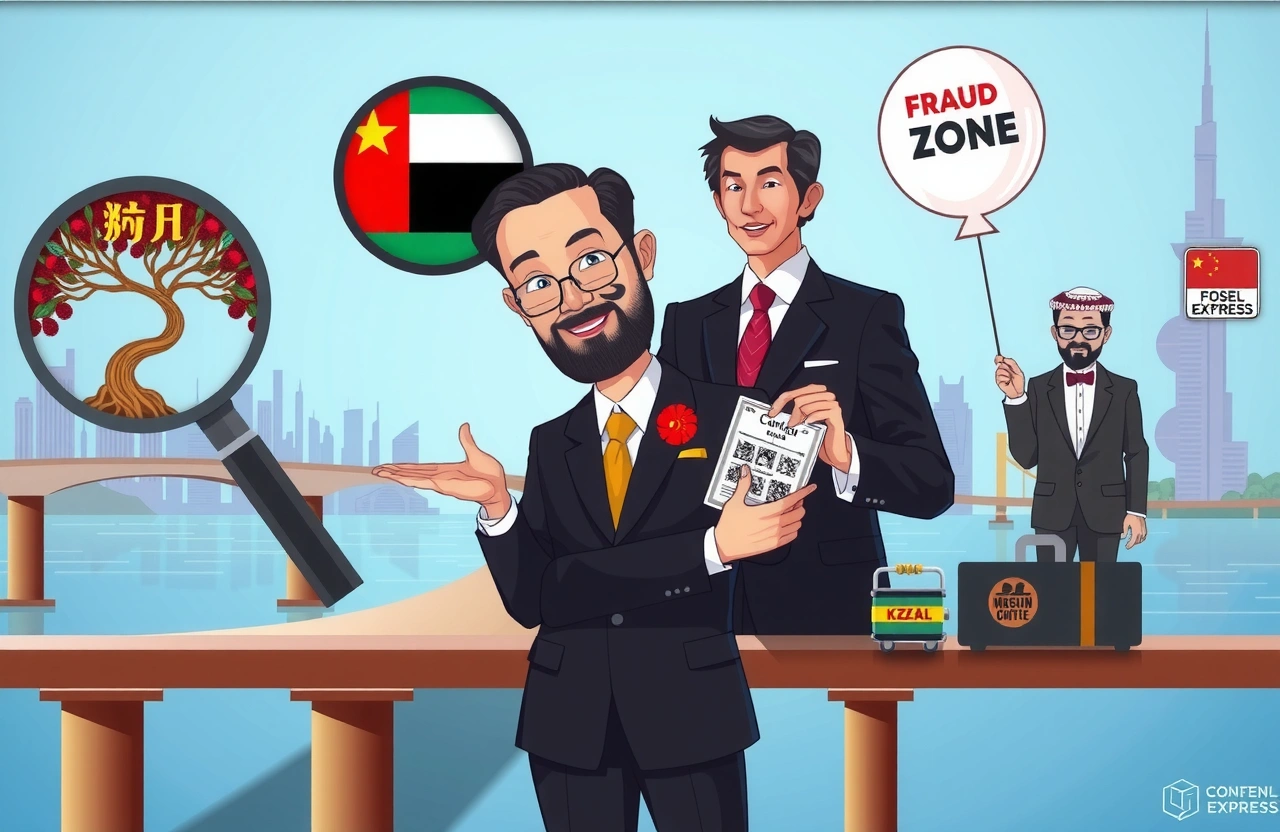
Navigating Royal Connections in Middle Eastern Business
Amid growing Chinese investment in Gulf markets, a troubling phenomenon has emerged: countless self-proclaimed “Middle Eastern princes” promising royal access and lucrative deals. KEZAD Group China Representative and Fosun Capital Venture Partner Yan Linhui (严林辉), who operates at the intersection of Gulf-Chinese commerce, warns that distinguishing authentic royalty from clever impostors has become mission-critical for serious business ventures. Drawing from frontline experience facilitating Sino-Middle Eastern partnerships, Yan advocates for establishing joint ventures with genuine power brokers while exposing opportunistic fraudsters exploiting information asymmetry. Through systematic authentication methods refined over years in Abu Dhabi’s corridors of power, Yan offers corporate leaders practical tools to filter legitimate royalty from dangerous impersonators.
Yan Linhui’s core approach focuses on:
– Validating hereditary linage through surname verification
– Leveraging diplomatic intelligence networks
– Assessing tangible evidence of resource control
– Implementing formalized due diligence protocols
Royal Concentration in Gulf Economies
The regional power structures intensifying fraud vulnerability stem from specific economic patterns. Unlike distributed capitalism seen in Western markets, Gulf Cooperation Council (GCC) countries operate through vertically integrated power centers where royal households control over $2 trillion in sovereign wealth funds according to Global SWF research. Assets ranging from oil concessions to premier real estate remain tightly held—creating legitimate incentives to pursue authentic royal connections.
The Information Gap Exploit
Fraudsters exploit three compounding factors in Sino-Gulf business environments: genuine royal titles remain confusingly similar across nations (e.g., Sheikh, Emir, Sayyid), Chinese executives often lack familiarity with subtle authority distinctions within royal families, and the Middle East’s preference for relationship-based commerce overseasoned trustful approaches.
Three-Step Royal Authentication Framework
Step 1: Surname Lineage Investigation
The inaugural verification gate involves rigorous hereditary research. As Yan Linhui emphasizes: “Surname verification provides the foundational DNA test for royal legitimacy.” Gulf monarchies maintain tight dynastic control, with specific family names denoting ruling lineages:
– Abu Dhabi: Al Nahyan family reigns supreme
– Dubai: Power concentrated within the Al Maktoum dynasty
– Qatar: Power flows through the Al Thani clan
Practical implementation:
– Cross-reference claims against Emirates News Agency directories
– Verify appearance in official royal court member listings
– Confirm names appear in legal documentation
Avoid relying solely on LinkedIn profiles or self-published biographies prone to deception.
Step 2: Diplomatic Intelligence Validation
After passing surname screening, deploy official intelligence channels. Yan recommends formal verification pathways:
– Initiate discreet inquiries through Chinese consular networks (e.g., Beijing’s Ministry of Foreign Affairs Gulf Affairs Division)
– Request position verification from UAE Ministry of Presidential Affairs
– Seek shadow reporting from commercial attaches in target regions
The authentication value lies in uncovering practical decision-making authority—critical insight beyond ceremonial titles.
Step 3: Resource Mobilization Assessment
The acid test arises when observing actual resource control during field assessment. Yan advises scrutinizing tangible demonstrations:
– Transportation modalities: Private aircraft usage versus commercial flights
– Security contingent scale and professionalism
– Direct access to restricted royal palaces or ministerial offices
– Demonstrated facilitation of complex bureaucratic clearances
“Watch whether they casually resolve issues requiring ministerial signatures,” Yan shares from negotiation experience.
Formalizing Due Diligence Protocols
Complementing Yan’s three-step framework, mandatory legal verification prevents fraudulent exploitation. Despite extravagant titles like “Royal Counselor” or “Princely Delegation Chair,” legally binding scrutiny remains non-negotiable.
Essential Documentation Requirements
Insist on submitting:
– Local chamber of commerce registration certificates
– Commercial licensing authenticated by Ministry of Economy
– Shareholding disclosures with ultimate beneficiary ownership
– Government-notarized royal authorization letters
Recommended UAE verification resources:
– Abu Dhabi Judicial Department verification portal
– Dubai Chamber of Commerce documentation system
Professional Service Engagements
Engage Tier-1 regional legal firms with royal family experience:
– Link contracts to penalties for misrepresentation
– Mandate background checks through trackers like Diligencia
– Structure graduated payment milestones contingent on verification
Reputable partners embrace scrutiny—resistance warrants suspicion.
Building Trustworthy Gulf Partnerships
The authentication journey ultimately serves strategic alliance building. Verified royal partners deliver substantive advantages: expedited approvals through WASEL authorization systems, preferential sovereign wealth fund access, and privileged supplier status with national champions like ADNOC.
Joint Venture Implementation Strategies
Structure localized partnerships with:
– Defined equity contributions disproportional to counterparty’s networking value
– Creation of culturally-aligned governance committees
– Performance-triggered escalation protocols
Genuine royal partners demonstrate patience through prolonged authentication phases—a revealing stress test.
The Risk Mitigation Imperative
Verifying Middle Eastern royalty transcends credibility concerns—unscreened partnerships expose enterprises to profound financial and legal repercussions. Multiple Chinese solar firms faced arbitration losses when promised royal subsidies proved fraudulent.
Apply Yan Linhui’s authentication trifecta systematically:
1. Heraldry Truth: Scrutinize surnames against royal registries
2. Insider Authentication: Utilize embassy verification channels
3. Resource Validation: Field-test tangible privilege evidence
Complement these approaches with certified legal due diligence before drafting term sheets. Establish staged verification checkpoints designed to filter suspicious claims progressively.
Commercial success in the Gulf necessitates both cultural deference and evidence-based discernment. Implement Yan Linhui’s structured framework before boarding flights to Dubai—your corporate integrity depends upon distinguishing throne seats from clever facsimiles.