



Executive Summary: Key Takeaways for Investors
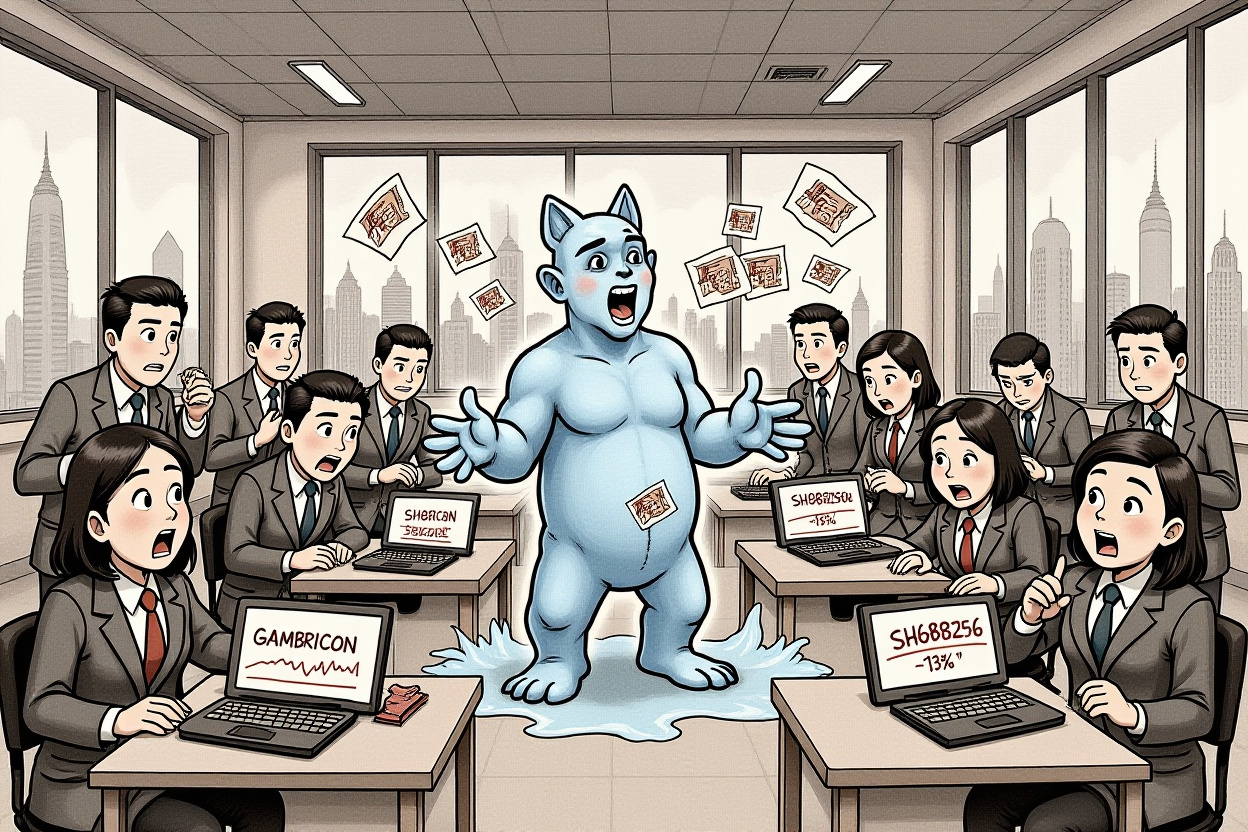
– Cambricon (寒武纪) experienced a dramatic intraday stock price drop of nearly 13% on February 3, erasing over ¥70 billion in market capitalization, raising immediate concerns about volatility in China’s AI sector.
– The company’s Board Secretary Office (董秘办) responded to inquiries by stating the reasons were unclear, attributing the move to market rumors and sentiment shifts, highlighting a lack of transparency that could unsettle institutional investors.
– Despite a robust 2025 annual performance forecast projecting revenue growth of 410.87% to 496.02% and a return to profitability, analysis suggests slowing momentum in the fourth quarter, potentially indicating peak growth cycles.
– This Cambricon stock price plunge underscores the heightened sensitivity of Chinese tech equities to earnings expectations and macroeconomic factors, urging investors to scrutinize quarterly breakdowns and regulatory environments.
– Forward-looking strategies should involve monitoring AI industry demand, competitive pressures, and official audits, as the company’s preliminary data awaits final verification in its annual report.
The sudden and severe drop in Cambricon’s (寒武纪-U, SH688256) share price sent shockwaves through the Chinese equity markets on February 3, serving as a stark reminder of the inherent volatility in high-growth technology sectors. Often dubbed the ‘Ice King’ for its pioneering role in AI chips, Cambricon saw its market value plummet by over ¥70 billion in mere hours, a move that left analysts and investors scrambling for explanations. This Cambricon stock price plunge not only questions the sustainability of recent gains but also casts a shadow over the broader artificial intelligence narrative that has fueled rallies in Chinese tech stocks. For global fund managers and corporate executives with exposure to China’s semiconductor ecosystem, understanding the drivers behind this event is crucial for risk management and strategic positioning. The company’s vague response, coupled with mixed signals from its financial forecasts, sets the stage for a deeper investigation into market dynamics, regulatory oversight, and future growth trajectories.
The Market Plunge: Immediate Impact and Initial Reactions
The trading session on February 3 witnessed Cambricon’s stock opening under pressure before accelerating into a steep decline, ultimately closing the morning session down nearly 13%. This sharp correction wiped out approximately ¥700 billion in market capitalization, reducing the company’s total value to around ¥450 billion. Such a precipitous drop in a leading AI chipmaker inevitably triggered panic selling and heightened volatility across related sectors, including cloud computing and semiconductor manufacturing.
Company Response and Investor Communications
In the aftermath, journalists from Daily Economic News (每日经济新闻) contacted Cambricon’s Board Secretary Office, posing as investors to gauge the official stance. The staff member on duty offered little clarity, stating, “We are not very clear about this (referring to the stock price volatility). First, there are many rumors in the market, which are definitely false. Then, the fluctuations in secondary market capital and sentiment are quite significant; everyone should treat it rationally.” This non-committal response, emphasizing external factors over fundamental issues, has raised eyebrows among sophisticated investors who expect more transparency from a listed entity. The lack of a concrete explanation fuels speculation about potential undisclosed operational challenges or regulatory headwinds, making this Cambricon stock price plunge a case study in crisis communication failures.
Technical Analysis and Trading Volume Surge
Data from the Shanghai Stock Exchange (上海证券交易所) showed unusually high trading volumes during the plunge, suggesting institutional repositioning or stop-loss triggers. Technical indicators, such as moving averages and relative strength indices, pointed to overbought conditions prior to the drop, hinting at a correction that was perhaps overdue. However, the magnitude of the fall exceeded typical market adjustments, indicating that broader sentiment shifts or sector-specific news may have amplified the sell-off. For active traders, this event underscores the importance of setting strict risk parameters when dealing with Chinese tech equities, where news flow can rapidly alter valuation models.
Financial Performance Deep Dive: 2025 Forecasts vs. Quarterly Realities
On January 30, Cambricon released its 2025 annual performance预告 (preliminary forecast), projecting a dramatic turnaround from previous losses. The company expects full-year revenues to reach ¥60 billion to ¥70 billion, representing a year-on-year increase of 410.87% to 496.02%. More notably, net profit attributable to shareholders is forecasted at ¥18.5 billion to ¥21.5 billion, a stark contrast to the ¥4.52 billion loss in 2024. This guidance, if realized, would mark a significant milestone in Cambricon’s journey toward profitability, driven by soaring demand for AI computing power.
Breaking Down the Quarterly Trajectory
However, a closer examination of the numbers reveals potential cracks in the growth story. Cambricon’s 2025 third-quarter report showed that the first nine months already accounted for ¥46.07 billion in revenue and ¥16.05 billion in net profit. Using the annual forecast ranges, this implies that the fourth quarter is projected to contribute only ¥13.93 billion to ¥23.93 billion in revenue and ¥2.45 billion to ¥5.45 billion in profit. Consequently, the first three quarters represent 66% to 77% of the full-year revenue and a similarly high proportion of profits. Comparing Q4’s upper revenue estimate of ¥23.93 billion to Q3’s ¥17.27 billion, the sequential growth appears modest at best. Moreover, the Q4 profit上限 (upper limit) of ¥5.45 billion is slightly below Q3’s ¥5.67 billion, suggesting a plateau or even deceleration in earnings momentum. This quarterly deceleration may have been a key trigger for the Cambricon stock price plunge, as investors reassessed the sustainability of its hyper-growth phase.
Audit Disclaimers and Financial Prudence
Industry Context: AI Chip Demand and Competitive PressuresCambricon operates within the fiercely contested artificial intelligence semiconductor space, where global players like NVIDIA and domestic champions such as Huawei’s HiSilicon (海思) vie for dominance. The company’s recent growth has been fueled by China’s national push for technological self-sufficiency, particularly in AI and high-performance computing. Government policies, including the “Made in China 2025” (中国制造2025) initiative, have spurred investment in domestic chipmakers, creating a tailwind for firms like Cambricon.
Global Trends and Local Dynamics
The global AI chip market is projected to expand at a compound annual growth rate of over 30%, driven by applications in data centers, autonomous vehicles, and edge computing. In China, the demand for AI算力 (computing power) has skyrocketed, with tech giants like Alibaba Group (阿里巴巴集团), Tencent (腾讯), and Baidu (百度) ramping up cloud infrastructure. Cambricon’s products, such as its思元 (Siyuan) series processors, have gained traction in these verticals, contributing to its revenue surge. However, this Cambricon stock price plunge may reflect concerns about intensifying competition, as rivals introduce more advanced nodes or benefit from stronger supply chains. Additionally, export controls and geopolitical tensions could impact access to critical technologies, adding a layer of macro risk for investors.
Regulatory Oversight and Market Sentiment
The Chinese equity markets are heavily influenced by regulatory actions from bodies like the CSRC and the People’s Bank of China (中国人民银行). Recent months have seen increased scrutiny on tech listings and valuation metrics, aiming to curb speculation. For Cambricon, any regulatory shifts affecting AI data governance or semiconductor subsidies could alter its growth trajectory. The stock’s reaction suggests that market sentiment is finely balanced between optimism over industry trends and caution over policy changes. Institutional investors, in particular, must weigh these factors when assessing the long-term viability of holdings, as the Cambricon stock price plunge serves as a timely reminder of sector-specific vulnerabilities.
Investor Implications and Strategic Considerations
For sophisticated business professionals and fund managers worldwide, the events surrounding Cambricon offer valuable lessons in portfolio management and due diligence. The sudden erosion of over ¥70 billion in market cap underscores the need for robust risk assessment frameworks, especially when dealing with high-beta stocks in emerging technology sectors.
Risk Assessment and Diversification Strategies
Forward-Looking Investment ThemesThe AI revolution in China is far from over, with sectors like smart cities, healthcare AI, and industrial automation offering long-term growth runways. Investors might look beyond short-term fluctuations to identify companies with sustainable business models and alignment with national strategic goals. However, the Cambricon stock price plunge emphasizes the importance of timing and entry points, suggesting that dollar-cost averaging or option strategies could be prudent in such volatile names. Engaging with market research from firms like China International Capital Corporation Limited (中金公司) or CITIC Securities (中信证券) can provide deeper insights into sector trends.
Expert Insights and Market Outlook
To contextualize the plunge, we gathered perspectives from industry analysts and financial experts. Wang Li, a senior tech analyst at a major Shanghai-based fund (name withheld for privacy), noted, “Cambricon’s drop reflects a market recalibration after excessive optimism. While the AI demand story is intact, valuation multiples had stretched beyond fundamentals, making a correction inevitable.” Another expert, Zhang Wei from the National Institute of Financial Research (国家金融研究院), added, “This event highlights the broader volatility in Chinese tech equities, where news-driven sentiment can outweigh financial metrics in the short term. Investors should focus on companies with clear path-to-profitability and strong governance.”