



Executive Summary
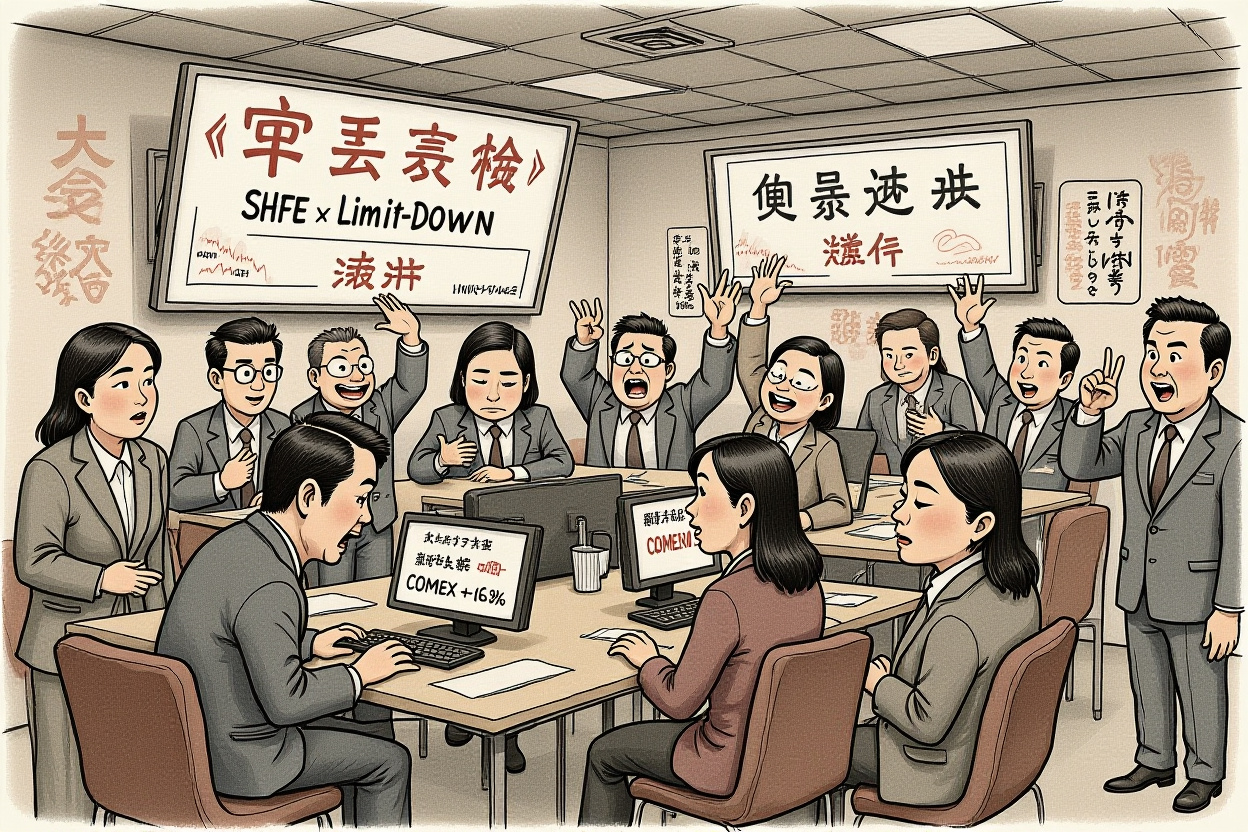
– Shanghai silver futures (沪银) experienced a sharp limit-down move, contrasting sharply with COMEX silver’s robust intraday gain exceeding 6%, highlighting a significant divergence between Chinese and international precious metals markets.
– This event underscores the critical influence of local regulatory measures, currency fluctuations, and investor sentiment differentials in shaping commodity price actions across borders.
– Structural factors, including trading hours, margin requirements, and the role of the 上海期货交易所 (Shanghai Futures Exchange, SHFE) versus CME Group’s COMEX, are key drivers behind such dislocations.
– For global investors, this divergence presents both arbitrage opportunities and heightened volatility risks, necessitating a nuanced understanding of both the 中国市场 (Chinese market) and global macro trends.
– Monitoring 中国人民银行 (People’s Bank of China) policies and U.S. economic data will be essential for forecasting future movements in silver and related equity sectors.
A Tale of Two Silver Markets: Limit-Down in Shanghai, Rally on COMEX
The trading session delivered a stark dichotomy that captured the attention of commodity traders worldwide: Shanghai silver futures hit limit-down while COMEX silver surged over 6% intraday. This dramatic split between the 上海期货交易所 (Shanghai Futures Exchange) and the New York-based COMEX market is not merely a technical anomaly but a reflection of deeper macroeconomic and regulatory currents. For institutional investors focused on 中国股市 (Chinese equity markets) and global commodities, understanding this divergence is paramount for risk management and strategic positioning.
Intraday Price Action and Immediate Triggers
On the SHFE, the most active silver futures contract (symbol: AG) plummeted, triggering the exchange’s daily downward price limit—a mechanism designed to curb excessive volatility. Conversely, COMEX silver futures, traded on the CME Group platform, rallied powerfully, gaining more than 6% at its peak during the same Asian and early European trading windows. This opposing price action was fueled by a confluence of factors: a strengthening U.S. dollar index pressuring yuan-denominated assets, alongside a flight to safety in Western markets amid geopolitical tensions that buoyed precious metals. The Shanghai silver futures hit limit-down while COMEX silver surged over 6% intraday, creating a rare arbitrage window that sophisticated funds quickly sought to exploit.
Deconstructing the Divergence: Fundamental and Technical Drivers
Several interconnected elements contributed to this pronounced market split. Analyzing these drivers offers valuable insights into the operational nuances of global commodity trading.
Monetary Policy and Currency Dynamics</h3
The 中国人民银行 (People's Bank of China, PBOC) has maintained a relatively cautious monetary stance compared to the more aggressive posture of the U.S. Federal Reserve in recent cycles. A firmer 人民币 (Renminbi, RMB) relative to the dollar can make dollar-priced commodities like silver more expensive for Chinese buyers, dampening domestic demand. Simultaneously, expectations of U.S. interest rate cuts have historically been bullish for non-yielding assets like silver, explaining COMEX's strength. This policy divergence directly influenced the day's event where Shanghai silver futures hit limit-down while COMEX silver surged over 6% intraday.
Domestic Speculation and Regulatory Cooling Measures</h3
The 中国证监会 (China Securities Regulatory Commission, CSRC) and SHFE have implemented a series of measures to curb excessive speculation in commodity futures, including higher margin requirements and position limits. These actions can amplify downside moves during risk-off sentiment. Data from the 上海期货交易所 (Shanghai Futures Exchange) showed a significant increase in short-side volume, possibly driven by local investors liquidating positions amid margin calls, contrasting with COMEX where speculative long positions were being added.
Structural Asymmetries Between SHFE and COMEX
The 中国证监会 (China Securities Regulatory Commission, CSRC) and SHFE have implemented a series of measures to curb excessive speculation in commodity futures, including higher margin requirements and position limits. These actions can amplify downside moves during risk-off sentiment. Data from the 上海期货交易所 (Shanghai Futures Exchange) showed a significant increase in short-side volume, possibly driven by local investors liquidating positions amid margin calls, contrasting with COMEX where speculative long positions were being added.
Structural Asymmetries Between SHFE and COMEX
The very architecture of the two trading venues plays a crucial role in how price discovery occurs and volatility manifests.
Trading Hours, Liquidity, and Participant Base
– SHFE Trading Hours: Operates within specific sessions in China Standard Time, with limited overnight access for most domestic traders.
– COMEX Trading Hours: Nearly 24-hour electronic trading, attracting a global pool of participants including hedge funds, ETFs, and industrial users.
This liquidity differential means COMEX often reacts faster to global news, while SHFE prices can be more influenced by local flows and after-hours international moves. The day’s volatility was a textbook case of this structural gap.
Contract Specifications and Delivery Mechanisms</h3
The standardized contracts on both exchanges differ in size, deliverable grade, and settlement terms. For instance, SHFE contracts are settled in 人民币 (RMB), while COMEX uses U.S. dollars. These differences, coupled with China's capital controls, can create persistent basis risks between the two markets. Analysts at firms like 中国国际金融股份有限公司 (China International Capital Corporation Limited, CICC) often publish research on these arbitrage boundaries.
Historical Context and Precedents in Precious Metals</h2
Such divergences are not unprecedented. Similar dislocations have occurred in gold, copper, and other commodities, often around periods of significant policy shifts or market stress.
Case Study: The 2020 Gold Arbitrage Window</h3
In early 2020, the spread between Shanghai gold futures and COMEX gold widened dramatically due to logistics disruptions and soaring demand in Asia. This led to massive physical gold flows from West to East. The current silver scenario, where Shanghai silver futures hit limit-down while COMEX silver surged over 6% intraday, echoes some of these themes, though with different fundamental drivers centered more on financial speculation than physical tightness.
Implications for Global Investors and Portfolio Strategy</h2
For fund managers and corporate treasurers with exposure to 中国资产 (Chinese assets) or global commodities, this event carries several actionable implications.
Arbitrage Opportunities and Execution Risks</h3
– Statistical Arbitrage: Quantitative funds may model the historical spread between SHFE and COMEX silver, entering trades when deviations exceed typical bands.
– Execution Challenges: Physical delivery arbitrage is constrained by China's import quotas and taxes on precious metals, making it primarily a financial play.
– Currency Hedge Necessity: Any cross-border position must account for 人民币 (RMB)/USD volatility, often requiring costly hedging instruments.
Sectoral Impacts on Chinese Equities</h3
The volatility in silver futures can ripple through related 上市公司 (listed companies). For example, shares of major silver producers like 银泰黄金 (Yintai Gold Co., Ltd.) or industrial users in the photovoltaic sector (which consumes silver paste) may experience heightened volatility. Investors should monitor earnings calls and disclosures from these firms for commentary on raw material cost pressures.
Forward-Looking Analysis: Navigating the Next Phase</h2
The path forward for silver markets will hinge on several key variables. The persistent theme of Shanghai silver futures hitting limit-down while COMEX silver surged over 6% intraday may recur if underlying drivers remain in place.
Regulatory Outlook and Market Stability Measures</h3
The 中国证监会 (CSRC) and SHFE are likely to continue fine-tuning rules to prevent market manipulation and extreme volatility. Recent statements from officials like CSRC Chairman Yi Huiman (易会满) emphasize "stable and healthy development" of futures markets. Any further tightening of position limits or increases in transaction fees could suppress domestic speculative fervor, potentially widening the gap with COMEX in the short term.
Macroeconomic Indicators to Watch</h3
– U.S. Inflation Data and Fed Commentary: Will dictate the dollar's strength and opportunity cost of holding silver.
– China's PMI and Industrial Production: As a major consumer, China's economic health impacts industrial demand for silver.
– Global ETF Flows: Products like the iShares Silver Trust (SLV) reflect retail and institutional sentiment in Western markets.
Synthesizing the Cross-Market Signals</h2
The dramatic session where Shanghai silver futures hit limit-down while COMEX silver surged over 6% intraday serves as a potent reminder of the fragmented nature of global commodity markets. For sophisticated investors, it reinforces the necessity of a dual-lens approach: one focused on granular 中国监管 (Chinese regulatory) developments and another on broad global macro trends. The divergence is unlikely to persist indefinitely; market forces and arbitrage activity will gradually narrow the gap. However, the speed and manner of convergence will itself generate trading opportunities and risks.
Such divergences are not unprecedented. Similar dislocations have occurred in gold, copper, and other commodities, often around periods of significant policy shifts or market stress.
Case Study: The 2020 Gold Arbitrage Window</h3
In early 2020, the spread between Shanghai gold futures and COMEX gold widened dramatically due to logistics disruptions and soaring demand in Asia. This led to massive physical gold flows from West to East. The current silver scenario, where Shanghai silver futures hit limit-down while COMEX silver surged over 6% intraday, echoes some of these themes, though with different fundamental drivers centered more on financial speculation than physical tightness.
Implications for Global Investors and Portfolio Strategy</h2
For fund managers and corporate treasurers with exposure to 中国资产 (Chinese assets) or global commodities, this event carries several actionable implications.
Arbitrage Opportunities and Execution Risks</h3
– Statistical Arbitrage: Quantitative funds may model the historical spread between SHFE and COMEX silver, entering trades when deviations exceed typical bands.
– Execution Challenges: Physical delivery arbitrage is constrained by China's import quotas and taxes on precious metals, making it primarily a financial play.
– Currency Hedge Necessity: Any cross-border position must account for 人民币 (RMB)/USD volatility, often requiring costly hedging instruments.
Sectoral Impacts on Chinese Equities</h3
The volatility in silver futures can ripple through related 上市公司 (listed companies). For example, shares of major silver producers like 银泰黄金 (Yintai Gold Co., Ltd.) or industrial users in the photovoltaic sector (which consumes silver paste) may experience heightened volatility. Investors should monitor earnings calls and disclosures from these firms for commentary on raw material cost pressures.
Forward-Looking Analysis: Navigating the Next Phase</h2
The path forward for silver markets will hinge on several key variables. The persistent theme of Shanghai silver futures hitting limit-down while COMEX silver surged over 6% intraday may recur if underlying drivers remain in place.
Regulatory Outlook and Market Stability Measures</h3
The 中国证监会 (CSRC) and SHFE are likely to continue fine-tuning rules to prevent market manipulation and extreme volatility. Recent statements from officials like CSRC Chairman Yi Huiman (易会满) emphasize "stable and healthy development" of futures markets. Any further tightening of position limits or increases in transaction fees could suppress domestic speculative fervor, potentially widening the gap with COMEX in the short term.
Macroeconomic Indicators to Watch</h3
– U.S. Inflation Data and Fed Commentary: Will dictate the dollar's strength and opportunity cost of holding silver.
– China's PMI and Industrial Production: As a major consumer, China's economic health impacts industrial demand for silver.
– Global ETF Flows: Products like the iShares Silver Trust (SLV) reflect retail and institutional sentiment in Western markets.
Synthesizing the Cross-Market Signals</h2
The dramatic session where Shanghai silver futures hit limit-down while COMEX silver surged over 6% intraday serves as a potent reminder of the fragmented nature of global commodity markets. For sophisticated investors, it reinforces the necessity of a dual-lens approach: one focused on granular 中国监管 (Chinese regulatory) developments and another on broad global macro trends. The divergence is unlikely to persist indefinitely; market forces and arbitrage activity will gradually narrow the gap. However, the speed and manner of convergence will itself generate trading opportunities and risks.
For fund managers and corporate treasurers with exposure to 中国资产 (Chinese assets) or global commodities, this event carries several actionable implications.
Arbitrage Opportunities and Execution Risks</h3
– Statistical Arbitrage: Quantitative funds may model the historical spread between SHFE and COMEX silver, entering trades when deviations exceed typical bands.
– Execution Challenges: Physical delivery arbitrage is constrained by China's import quotas and taxes on precious metals, making it primarily a financial play.
– Currency Hedge Necessity: Any cross-border position must account for 人民币 (RMB)/USD volatility, often requiring costly hedging instruments.
Sectoral Impacts on Chinese Equities</h3
The volatility in silver futures can ripple through related 上市公司 (listed companies). For example, shares of major silver producers like 银泰黄金 (Yintai Gold Co., Ltd.) or industrial users in the photovoltaic sector (which consumes silver paste) may experience heightened volatility. Investors should monitor earnings calls and disclosures from these firms for commentary on raw material cost pressures.
Forward-Looking Analysis: Navigating the Next Phase</h2
The path forward for silver markets will hinge on several key variables. The persistent theme of Shanghai silver futures hitting limit-down while COMEX silver surged over 6% intraday may recur if underlying drivers remain in place.
Regulatory Outlook and Market Stability Measures</h3
The 中国证监会 (CSRC) and SHFE are likely to continue fine-tuning rules to prevent market manipulation and extreme volatility. Recent statements from officials like CSRC Chairman Yi Huiman (易会满) emphasize "stable and healthy development" of futures markets. Any further tightening of position limits or increases in transaction fees could suppress domestic speculative fervor, potentially widening the gap with COMEX in the short term.
Macroeconomic Indicators to Watch</h3
– U.S. Inflation Data and Fed Commentary: Will dictate the dollar's strength and opportunity cost of holding silver.
– China's PMI and Industrial Production: As a major consumer, China's economic health impacts industrial demand for silver.
– Global ETF Flows: Products like the iShares Silver Trust (SLV) reflect retail and institutional sentiment in Western markets.
Synthesizing the Cross-Market Signals</h2
The dramatic session where Shanghai silver futures hit limit-down while COMEX silver surged over 6% intraday serves as a potent reminder of the fragmented nature of global commodity markets. For sophisticated investors, it reinforces the necessity of a dual-lens approach: one focused on granular 中国监管 (Chinese regulatory) developments and another on broad global macro trends. The divergence is unlikely to persist indefinitely; market forces and arbitrage activity will gradually narrow the gap. However, the speed and manner of convergence will itself generate trading opportunities and risks.
The volatility in silver futures can ripple through related 上市公司 (listed companies). For example, shares of major silver producers like 银泰黄金 (Yintai Gold Co., Ltd.) or industrial users in the photovoltaic sector (which consumes silver paste) may experience heightened volatility. Investors should monitor earnings calls and disclosures from these firms for commentary on raw material cost pressures.
Forward-Looking Analysis: Navigating the Next Phase</h2
The path forward for silver markets will hinge on several key variables. The persistent theme of Shanghai silver futures hitting limit-down while COMEX silver surged over 6% intraday may recur if underlying drivers remain in place.
Regulatory Outlook and Market Stability Measures</h3
The 中国证监会 (CSRC) and SHFE are likely to continue fine-tuning rules to prevent market manipulation and extreme volatility. Recent statements from officials like CSRC Chairman Yi Huiman (易会满) emphasize "stable and healthy development" of futures markets. Any further tightening of position limits or increases in transaction fees could suppress domestic speculative fervor, potentially widening the gap with COMEX in the short term.
Macroeconomic Indicators to Watch</h3
– U.S. Inflation Data and Fed Commentary: Will dictate the dollar's strength and opportunity cost of holding silver.
– China's PMI and Industrial Production: As a major consumer, China's economic health impacts industrial demand for silver.
– Global ETF Flows: Products like the iShares Silver Trust (SLV) reflect retail and institutional sentiment in Western markets.
Synthesizing the Cross-Market Signals</h2
The dramatic session where Shanghai silver futures hit limit-down while COMEX silver surged over 6% intraday serves as a potent reminder of the fragmented nature of global commodity markets. For sophisticated investors, it reinforces the necessity of a dual-lens approach: one focused on granular 中国监管 (Chinese regulatory) developments and another on broad global macro trends. The divergence is unlikely to persist indefinitely; market forces and arbitrage activity will gradually narrow the gap. However, the speed and manner of convergence will itself generate trading opportunities and risks.
The 中国证监会 (CSRC) and SHFE are likely to continue fine-tuning rules to prevent market manipulation and extreme volatility. Recent statements from officials like CSRC Chairman Yi Huiman (易会满) emphasize "stable and healthy development" of futures markets. Any further tightening of position limits or increases in transaction fees could suppress domestic speculative fervor, potentially widening the gap with COMEX in the short term.
Macroeconomic Indicators to Watch</h3
– U.S. Inflation Data and Fed Commentary: Will dictate the dollar's strength and opportunity cost of holding silver.
– China's PMI and Industrial Production: As a major consumer, China's economic health impacts industrial demand for silver.
– Global ETF Flows: Products like the iShares Silver Trust (SLV) reflect retail and institutional sentiment in Western markets.
Synthesizing the Cross-Market Signals</h2
The dramatic session where Shanghai silver futures hit limit-down while COMEX silver surged over 6% intraday serves as a potent reminder of the fragmented nature of global commodity markets. For sophisticated investors, it reinforces the necessity of a dual-lens approach: one focused on granular 中国监管 (Chinese regulatory) developments and another on broad global macro trends. The divergence is unlikely to persist indefinitely; market forces and arbitrage activity will gradually narrow the gap. However, the speed and manner of convergence will itself generate trading opportunities and risks.
The dramatic session where Shanghai silver futures hit limit-down while COMEX silver surged over 6% intraday serves as a potent reminder of the fragmented nature of global commodity markets. For sophisticated investors, it reinforces the necessity of a dual-lens approach: one focused on granular 中国监管 (Chinese regulatory) developments and another on broad global macro trends. The divergence is unlikely to persist indefinitely; market forces and arbitrage activity will gradually narrow the gap. However, the speed and manner of convergence will itself generate trading opportunities and risks.
Moving forward, professionals are advised to enhance their monitoring of real-time data feeds from both 上海期货交易所 (SHFE) and COMEX, incorporate basis risk into their derivative pricing models, and consider the hedging strategies employed by major Chinese commodity traders like 厦门国贸集团 (Xiamen ITG Group Corp.). The silver market's volatility is a microcosm of larger tensions in global finance—between East and West, between speculation and fundamentals, and between local controls and global capital flows. Staying informed and agile is the only sustainable strategy for capitalizing on such dislocations.