



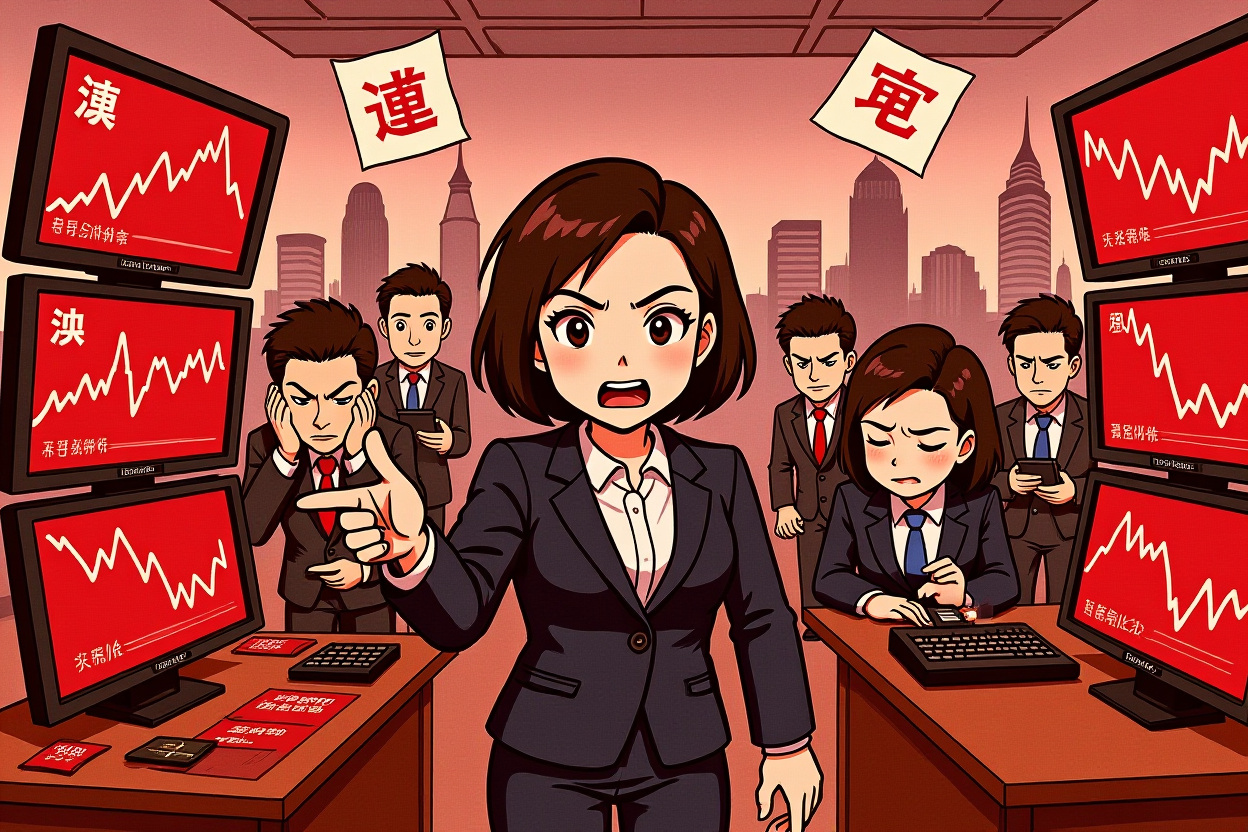
The opening bell on China’s commodity exchanges last week was met not with the usual flurry of activity, but with a wave of intense, synchronized selling pressure. From industrial metals and chemical products to agricultural staples, contract after contract across multiple exchanges hit their daily downward limit, painting trading screens a uniform red. This rare event of collective limit-down moves (集体跌停) in the domestic futures market sent shockwaves through the global commodity complex and served as a stark, real-time indicator of profound shifts in the world’s second-largest economy. For international investors with exposure to Chinese equities, commodity-sensitive currencies, and global supply chains, understanding the drivers behind this plunge and accurately assessing the market’s future trajectory (后市怎么走) is not just an academic exercise—it is a critical component of risk management and strategic positioning in an increasingly volatile macroeconomic landscape.
Executive Summary: Key Takeaways from the Futures Carnage
- A broad-based sell-off across industrial, chemical, and agricultural futures contracts hit daily downward price limits, signaling deep-seated concerns over Chinese demand.
- The rapid depreciation of the renminbi (RMB) acted as a primary catalyst, increasing the local currency cost of dollar-denominated imports and triggering margin-call liquidations.
- Disappointing high-frequency macroeconomic data, including weak PMI and retail sales figures, confirmed fears of a stumbling post-pandemic recovery, crushing bullish sentiment.
- While Chinese policymakers have signaled readiness to support the economy, the immediate path for commodities remains fraught with demand-side uncertainty and technical selling pressure.
- For global investors, the event underscores the need to recalibrate China-dependent growth narratives and adopt more defensive, selective strategies in commodity-linked assets.
Anatomy of a Plunge: Dissecting the Limit-Down Event
The scale of the sell-off was remarkable for its breadth and intensity. It was not confined to a single, oversupplied sector but was a market-wide phenomenon. Contracts on the Shanghai Futures Exchange (SHFE), the Dalian Commodity Exchange (DCE), and the Zhengzhou Commodity Exchange (ZCE) all experienced severe pressure, indicating a systemic rather than idiosyncratic shock.
Sectors in the Eye of the Storm
The industrial metals complex, often viewed as a barometer of global economic health, was among the hardest hit. Key benchmarks like rebar and hot-rolled coil steel futures, directly tied to the domestic property and infrastructure sectors, plummeted to their limits. Similarly, base metals such as copper—dubbed “Dr. Copper” for its predictive economic qualities—and aluminum witnessed aggressive long-liquidation. In the soft commodities space, palm oil and soybean oil contracts also fell sharply, reflecting concerns over downstream demand in the food processing and biofuels industries. The synchronous decline across unrelated sectors pointed to a macro-driven event, overwhelming individual supply-demand fundamentals.
Volume and Open Interest: Telling the Story of Capitulation
Market microstructure data provided a clear narrative of panic. Trading volumes surged as the limits were hit, indicative of a stampede for the exits. More tellingly, aggregate open interest—the total number of outstanding contracts—declined significantly. This combination of high volume and falling open interest is a classic signature of long-position liquidation. Investors and speculators who had bet on higher prices were forced to unwind their positions, either due to hitting loss limits or facing margin calls from their brokers. This self-reinforcing cycle of selling begetting more selling was a primary engine of the downward spiral, making the central question for all market participants: after this wave of forced selling, what is the market’s future trajectory (后市怎么走)?
Root Causes: The Catalysts Behind the Collapse
While the proximate trigger was often cited as specific economic data releases, the collapse was the result of a confluence of several powerful, interrelated factors that eroded the foundation of the commodity bull case for China.
The Renminbi Depreciation Shock
A dominant and immediate catalyst was the sharp and rapid depreciation of the Chinese yuan against the U.S. dollar. A weaker RMB has a direct and painful impact on China’s commodity markets, as the country is the world’s largest importer of many raw materials priced in USD, such as crude oil, iron ore, and soybeans. As the yuan falls, the local currency cost of these imports rises, effectively tightening financial conditions for end-users and processors. For futures traders holding long positions in domestic contracts, a falling yuan diminishes the value of their commodity holdings while simultaneously increasing the cost of any dollar-denominated hedging. This one-two punch triggered widespread margin calls and forced liquidations, accelerating the downtrend. The People’s Bank of China (中国人民银行) has largely tolerated this depreciation, viewing it as a necessary release valve for economic pressure, but for the futures market, it acted as a potent destabilizer.
Macroeconomic Data Disappointment and Demand Anxiety
The currency move was exacerbated by a stream of disappointing macroeconomic indicators that shattered optimism about the strength and sustainability of China’s economic rebound. Key data points that spooked the market included:
- Manufacturing Purchasing Managers’ Index (PMI) falling back below the 50-point expansion-contraction line.
- Slower-than-expected growth in industrial production and fixed asset investment.
- Persistent weakness in retail sales, indicating cautious consumer sentiment.
- Continued stress in the property sector, a crucial source of demand for steel, glass, and base metals.
“The data confirms that the recovery is losing momentum,” noted a Hong Kong-based strategist. “The ‘reopening boom’ narrative that supported commodity prices in Q1 has fully unraveled. The market is now pricing in a prolonged period of sub-par demand growth.” This fundamental reassessment of China’s demand outlook was the bedrock upon which the technical selling pressure built.
Navigating the Crosscurrents: Key Factors Shaping the Market Outlook
Determining the market’s future trajectory (后市怎么走) requires weighing several conflicting forces, from domestic policy responses to global monetary conditions. The path forward is unlikely to be linear and will be highly sensitive to incoming data and official communication.
Policy Support vs. Structural Headwinds
The Chinese government and the People’s Bank of China have a toolkit available to stabilize growth and, by extension, commodity demand. Expectations are mounting for more targeted fiscal stimulus, potential further cuts to reserve requirement ratios (RRR) or interest rates, and measures to support the beleaguered property sector. Any credible announcement of a significant infrastructure push or property sector bailout would provide immediate psychological and fundamental support to industrial metals. However, analysts caution that the effectiveness of stimulus is now being questioned. “The transmission mechanism is clogged,” warns economist Liu Yuanchun (刘元春). “Local government debt constraints and household balance sheet concerns mean traditional stimulus may have a diminished impact.” The tension between proactive policy and powerful structural drags will be a central theme in determining the durability of any market recovery.
The Global Context: Dollar Strength and External Demand
China’s commodity markets do not operate in a vacuum. The global monetary environment, characterized by persistent strength in the U.S. dollar and high interest rates in developed markets, continues to exert downward pressure. A strong dollar makes all dollar-priced commodities more expensive for non-U.S. buyers globally, suppressing demand. Furthermore, weakening economic prospects in Europe and concerns over a U.S. recession threaten China’s crucial export sector, which would further dampen industrial activity and raw material imports. The interplay between domestic Chinese policy loosening and sustained global monetary tightening creates a complex backdrop for forecasting prices.
Strategic Pathways: Scenarios and Probabilities for the Road Ahead
Based on the interplay of catalysts and crosscurrents, several plausible scenarios for the market’s future trajectory (后市怎么走) emerge, each carrying distinct implications for investors.
Scenario 1: Technical Rebound Followed by Range-Bound Trading (High Probability)
Following such an extreme, capitulatory sell-off, markets are often technically oversold. A short-covering bounce is likely, potentially fueled by any marginally positive news or rumor of stimulus. However, without a decisive turnaround in hard economic data—particularly in property sales and infrastructure groundbreaking—the rally may lack legs. The most probable outcome in the coming quarters is a period of volatile, range-bound trading. Prices may stabilize at lower levels as the market finds a new equilibrium that discounts a slower-growth Chinese economy. This environment favors nimble, tactical trading over long-term directional bets.
Scenario 2: Protracted Downturn on Deepening Gloom (Medium Probability)
If subsequent economic releases continue to disappoint and policymakers respond with only piecemeal, underwhelming support measures, the bearish narrative will strengthen. In this scenario, the recent lows could be tested and broken. Demand destruction could become more visible in shrinking physical inventories and canceled import orders. This would maintain downward pressure on futures and would likely spill over into the equity prices of global mining and resource companies, as well as the currencies of commodity-exporting nations. For the market’s future trajectory (后市怎么走), this path implies continued caution and defensive positioning.
Scenario 3: Sustained Recovery on “Bazooka” Stimulus (Lower Probability)
The bullish case rests almost entirely on the announcement and effective implementation of a large-scale, coordinated stimulus package that successfully reignites credit growth and tangible demand. A 2008- or 2015-style response targeting infrastructure and property could trigger a powerful, V-shaped recovery in sentiment and prices. However, given current debt levels and the government’s stated preference for “high-quality growth” over flood-like stimulus, this is considered a lower-probability scenario in the near term. It remains a tail risk that contrarian investors are watching for.
Actionable Insights for Global Market Participants
The dramatic events in China’s futures pits are more than a local squall; they are a signal flare about the state of global industrial demand. For institutional investors and corporate treasurers worldwide, proactive adaptation is required.
For Equity and Macro Investors
Re-evaluate exposure to China-centric cyclical stocks and commodity producers. Shift focus towards sectors insulated from commodity cycles, such as consumer staples, select technology subsectors, or companies with pricing power. In fixed income, the stress may present opportunities in high-grade Chinese corporate debt if policymakers are forced to act aggressively to lower financing costs. Crucially, use China’s commodity futures market as a leading, real-time sentiment indicator for the broader economy, complementing traditional economic data releases.
For Traders and Hedgers
Expect elevated volatility to persist. Implement stricter risk management protocols, including reduced position sizes and wider stop-loss margins. For physical commodity hedgers, such as manufacturers importing raw materials, the environment underscores the importance of layered hedging strategies. While the cost of importing is rising with a weaker yuan, the fall in dollar-denominated benchmark prices may offer partial offset; active management of both currency and commodity exposure is now paramount. Monitoring the commentary from key officials like People’s Bank of China Governor Pan Gongsheng (潘功胜) for clues on currency policy is essential.
Synthesizing the Signal from the Noise
The collective limit-down event in China’s domestic futures markets was a powerful confluence of currency dynamics, macroeconomic disappointment, and technical liquidation. It serves as a clear warning that the post-pandemic recovery has entered a fragile and challenging phase. While an immediate, oversold bounce is technically plausible, the fundamental picture suggests that markets are undergoing a painful re-pricing for a period of structurally lower Chinese demand growth. Policymakers hold the keys to altering this narrative, but their response so far has been measured. Therefore, the most prudent base case for the market’s future trajectory (后市怎么走) is one of heightened volatility within a lower trading range, where rallies are to be scrutinized and not blindly trusted.
For the global investment community, the message is unambiguous: the era of relying on China as an insatiable engine of commodity demand is on pause. This necessitates a strategic pivot towards selectivity, robust risk management, and a data-dependent approach. Monitor physical inventory data at Chinese ports, credit growth figures, and policy announcements from the State Council for the next catalysts. The red on the futures screens is more than a daily price move; it is a compelling mandate to recalibrate expectations and strategies for a new phase in the world’s most important commodity demand story.