



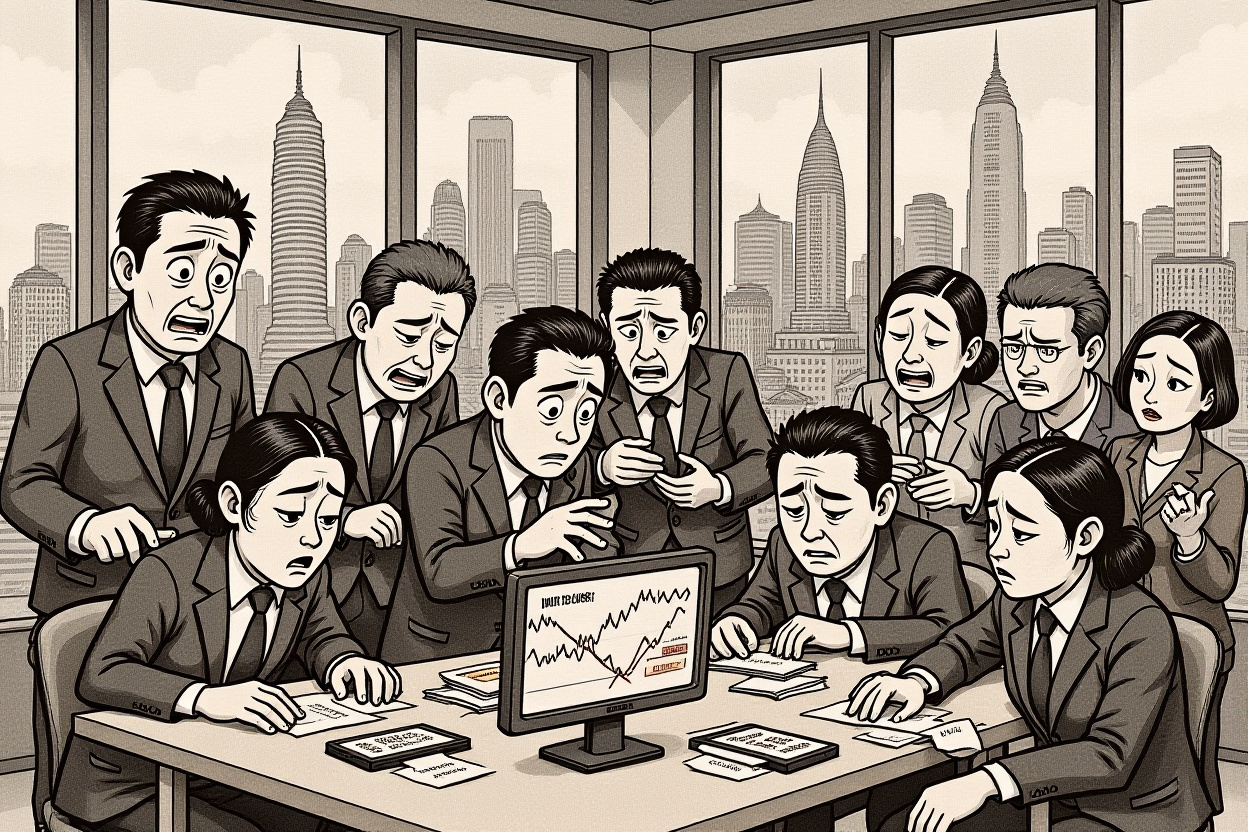
– A sudden wave of limit-down hits has rattled key metal futures contracts on Chinese exchanges, triggering sharp price declines and market panic.
– Investors who aggressively added long positions during the recent rally face imminent margin call risks, with forced liquidations amplifying downward pressure.
– The correction is driven by a confluence of factors, including shifting macroeconomic policies, global supply chain adjustments, and overheated speculative activity.
– Regulatory bodies like 中国证监会 (China Securities Regulatory Commission) are monitoring the situation closely, but market volatility is expected to persist in the near term.
– This event underscores the critical need for robust risk management strategies, especially for leveraged positions in volatile commodity markets.
A chilling wave of limit-down hits has swept through China’s metal futures markets, catching many investors off guard and dramatically increasing the risk of margin calls for those who chased prices higher. This sudden downturn, epitomized by the limit-down wave hits metal futures, has exposed the fragile underbelly of leveraged trading in commodities, reminding participants that rapid gains can evaporate even faster. As contracts for copper, aluminum, and other industrial metals plummeted to their daily loss limits, overextended traders found themselves staring at margin deficit notices and potential liquidation. For global institutional investors with exposure to Chinese commodities, this event serves as a stark warning about the inherent volatility in these markets and the dangers of complacency during bull runs.
The Anatomy of the Limit-Down Wave in Chinese Metal Futures
The recent trading sessions witnessed a dramatic sell-off across major metal futures listed on 上海期货交易所 (Shanghai Futures Exchange) and 大连商品交易所 (Dalian Commodity Exchange). This limit-down wave hits metal futures with a severity not seen in months, wiping out billions in notional value and testing the resilience of market infrastructure.
Key Contracts Affected and Price Movements
The contagion was broad-based, impacting both ferrous and non-ferrous metals. Copper futures, often a bellwether for industrial demand, fell by the daily limit of 6% in consecutive sessions, erasing gains from the previous quarter. Aluminum and zinc contracts followed suit, with declines exceeding 5%. Even steel rebar and iron ore futures, which had been buoyed by infrastructure hopes, succumbed to the selling pressure. Intraday volatility spikes overwhelmed automated trading systems, leading to fragmented liquidity and widened bid-ask spreads. Exchange data revealed that aggregate open interest dropped sharply as positions were unwound, indicating a market in distress.
Historical Context and Comparison to Past Events
While limit-down events are not uncommon in China’s commodity markets, the scale and simultaneity of this wave draw parallels to the 2015 equity market crash or the 2020 oil futures negative pricing episode. Historically, such abrupt corrections often follow periods of excessive speculation fueled by cheap margin financing. For instance, during the 2021 commodity super-cycle, similar limit-downs occurred when policymakers intervened to cool prices. The current limit-down wave hits metal futures amid a different macroeconomic backdrop—slowing global growth and tightening monetary conditions—which may prolong the adjustment phase.
Drivers Behind the Sudden Market Correction
Understanding the catalysts for this downturn is essential for investors navigating the fallout. The limit-down wave hits metal futures due to a perfect storm of fundamental and technical factors.
Macroeconomic Indicators and Policy Shifts
Recent data from 国家统计局 (National Bureau of Statistics) showed a contraction in manufacturing PMI, dampening demand expectations for industrial metals. Concurrently, the 中国人民银行 (People’s Bank of China) has maintained a cautious stance on liquidity, refraining from broad stimulus that could reinflate asset bubbles. Globally, central banks’ hawkish pivots to combat inflation have strengthened the US dollar, pressuring dollar-denominated commodity prices. These macro headwinds converged to trigger profit-taking and portfolio rebalancing, exacerbating the limit-down wave.
Supply-Demand Dynamics and Inventory Data
On the supply side, reports of rising warehouse inventories at 上海期货交易所 (Shanghai Futures Exchange) delivery points signaled weakening physical demand. For example, copper stockpiles increased by 15% month-over-month, contradicting bullish narratives of tight supply. Additionally, easing COVID-19 restrictions in major producing countries like Chile and Peru alleviated supply chain bottlenecks, adding to the bearish sentiment. The market’s realization that speculative positioning had outstripped fundamental support was a key trigger for the limit-down wave hits metal futures.
The Peril for Overleveraged Investors: Margin Calls and Liquidation Risks
The most immediate consequence of this limit-down wave hits metal futures is the surge in margin call risks for leveraged traders. Those who doubled down on long positions during the rally now face the threat of forced liquidation, which could spiral into a broader market crisis.
Mechanics of Margin Trading in Chinese Futures
In China’s futures markets, investors typically post initial margins of 10-20% of contract value, allowing for significant leverage. When prices move against positions, brokers issue margin calls requiring additional funds. If unmet, positions are automatically liquidated. During the limit-down wave, many accounts breached maintenance margin levels, triggering a cascade of sell orders. Data from 中国期货业协会 (China Futures Association) indicates that margin debt in metal futures had climbed to a two-year high prior to the crash, setting the stage for a sharp unwind.
Case Studies of Recent Margin Call Events
Interviews with brokerage risk managers reveal that retail investors and some hedge funds were particularly exposed. For instance, a Zhejiang-based trader reportedly lost over CNY 5 million due to leveraged copper futures positions liquidated at the limit-down price. Similarly, proprietary trading desks at domestic securities firms faced substantial mark-to-market losses. These incidents highlight how the limit-down wave hits metal futures with disproportionate force on highly leveraged participants, echoing past episodes like the 2008 commodity bust.
Regulatory Response and Market Safeguards
In response to the turmoil, Chinese regulators and exchanges have activated measures to stabilize markets and prevent systemic risk. However, their actions also reflect a delicate balance between curbing speculation and maintaining market functionality.
Actions by 中国证监会 (China Securities Regulatory Commission)
The CSRC has issued warnings against excessive speculation and urged brokers to strengthen client risk assessments. While no broad trading halts were imposed, the regulator is reviewing position limits and margin requirements for metal futures. Historically, the CSRC has intervened during volatile periods, such as in 2016 when it cracked down on commodity futures speculation. This limit-down wave hits metal futures at a time when regulatory priorities include financial stability, suggesting potential tighter oversight ahead.
Exchange Circuit Breakers and Risk Management
Exchanges like 上海期货交易所 (Shanghai Futures Exchange) have circuit breakers that temporarily halt trading if prices move beyond certain thresholds. During the recent event, these mechanisms were triggered, providing brief cooling-off periods. However, critics argue that such breaks can exacerbate panic by creating liquidity voids. Exchange officials have emphasized their commitment to enhancing risk management systems, including dynamic margin adjustments and improved surveillance for abnormal trading patterns.
Strategic Implications for Institutional and Retail Investors
For market participants worldwide, this limit-down wave hits metal futures as a critical learning moment. It underscores the need for adaptive strategies in the face of China’s unique market dynamics.
Portfolio Hedging Strategies
Institutional investors should consider diversifying across geographies and asset classes to mitigate concentration risk in Chinese commodities. Tools like options on futures or swaps can provide downside protection. For example, buying put options on copper futures could hedge against further declines. Additionally, monitoring correlations between Chinese metal futures and global equity indices can inform tactical asset allocation.
– Utilize volatility-based position sizing to reduce exposure during high-risk periods.
– Incorporate macroeconomic indicators from 国家统计局 (National Bureau of Statistics) into trading models to anticipate policy shifts.
– Explore physical metal ETFs as a less leveraged alternative to futures contracts.
Lessons from the Limit-Down Wave
The event reinforces that chasing momentum in leveraged markets is fraught with peril. Investors must prioritize capital preservation over aggressive returns, especially in cycles driven by speculative fervor. The limit-down wave hits metal futures as a reminder that China’s commodity markets, while offering lucrative opportunities, are prone to sharp regulatory and sentiment-driven swings. Conducting thorough due diligence on supply-demand fundamentals and avoiding overreliance on technical analysis alone are key takeaways.
Future Outlook: Volatility and Opportunities in Metal Futures
Looking ahead, the aftermath of this limit-down wave hits metal futures is likely to shape market structure and investor behavior for months to come. While near-term volatility persists, discerning opportunities may emerge for patient capital.
Analyst Predictions and Market Sentiment
Leading analysts from 中金公司 (CICC) and 中信证券 (CITIC Securities) project continued choppiness in metal prices, with a base case for range-bound trading until clearer demand signals emerge. Sentiment indicators, such as the 中国大宗商品情绪指数 (China Commodity Sentiment Index), have turned negative, suggesting caution. However, some contrarian views point to undervaluation in certain metals if global infrastructure spending accelerates later this year.
Long-term Investment Thesis for Commodities
Despite the current turmoil, structural trends like the energy transition and urbanization in emerging markets support a bullish long-term outlook for industrial metals. The key is to navigate short-term dislocations like this limit-down wave hits metal futures with disciplined entry points. For instance, copper’s role in electric vehicles and renewable energy infrastructure implies sustained demand growth over the next decade.
– Focus on metals with strong ESG profiles, such as aluminum for lightweighting in transportation.
– Monitor policy announcements from 国家发展和改革委员会 (National Development and Reform Commission) for clues on strategic stockpiling or infrastructure projects.
– Consider phased accumulation strategies during price dips to average into positions without overleveraging.
The recent limit-down wave hits metal futures serves as a potent reminder of the dual nature of China’s commodity markets: immense potential coupled with heightened risk. For investors, the path forward involves recalibrating risk models, embracing robust hedging frameworks, and maintaining a long-term perspective amid short-term noise. As markets digest the correction, opportunities will arise for those prepared to act with prudence and insight. We recommend consulting with specialized advisors and continuously monitoring exchange circulars and regulatory updates to stay ahead of the curve in this dynamic environment.