



Executive Summary
In the volatile arena of Chinese equities, sudden price spikes that defy broader market sentiment capture immediate attention from traders and analysts alike. This article delves into the mechanics and implications of a stock experiencing a market-defying limit-up rally, soaring to its daily price ceiling in mere minutes. Key takeaways include:
- Such events often stem from a confluence of catalysts, including unexpected positive news, algorithmic trading surges, or strategic institutional moves.
- The regulatory environment, governed by bodies like the 中国证券监督管理委员会 (China Securities Regulatory Commission, CSRC), plays a critical role in monitoring and sometimes curbing excessive volatility.
- For international investors, these rapid moves highlight both latent risks in specific sectors and potential alpha-generating opportunities in underfollowed names.
- Understanding the order flow and market microstructure on exchanges like the 上海证券交易所 (Shanghai Stock Exchange, SSE) is essential for decoding these events.
- This analysis provides a framework for assessing whether such a rally signals a sustainable trend or a short-lived speculative frenzy.
The Startling Reality of a 3-Minute Surge
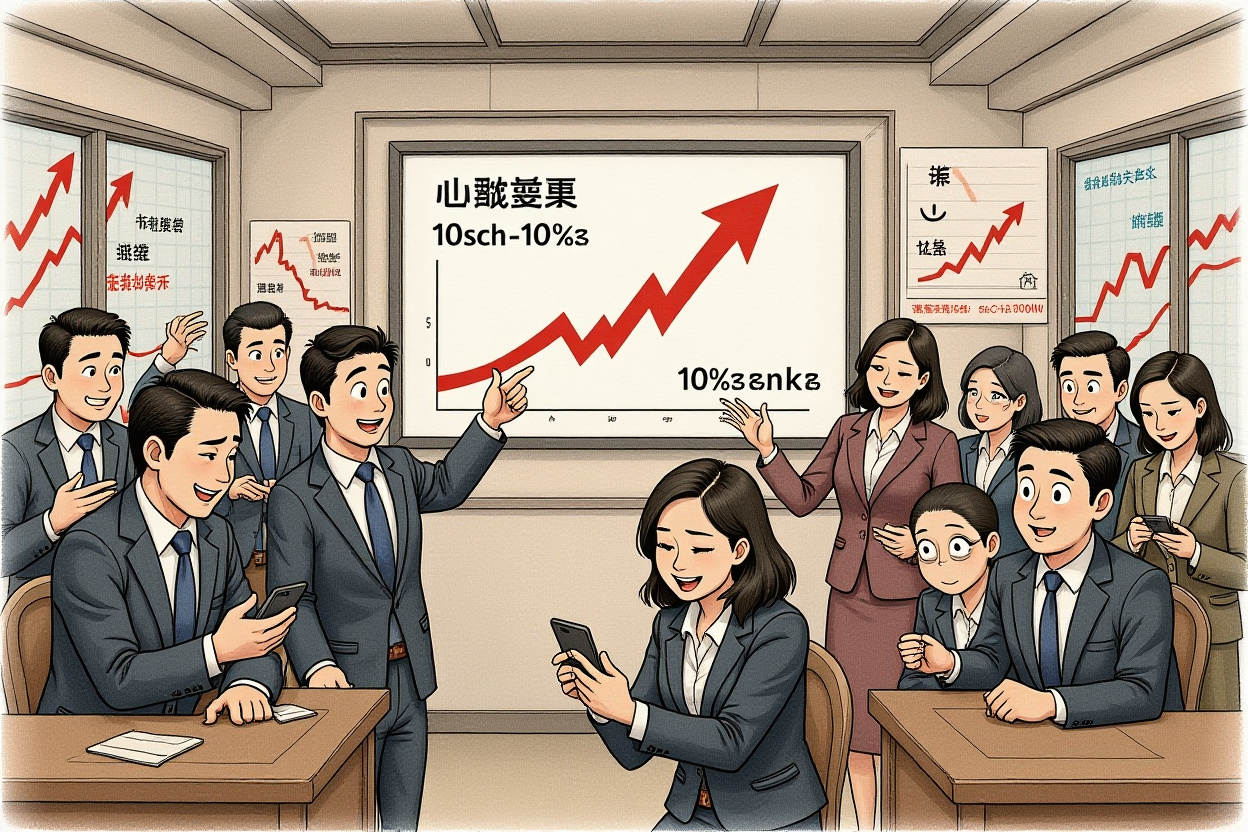
Imagine monitoring a screen as the broader 沪深300指数 (CSI 300 Index) dips into negative territory, only to witness a single stock’s price bar rocket vertically, hitting the 10% daily limit-up in under three minutes. This market-defying limit-up rally is not mere fiction; it’s a recurring phenomenon in China’s A-share markets that sends ripples through trading desks from Shanghai to New York. For global fund managers and corporate executives, such abrupt moves demand explanation—they can signify hidden value, market manipulation, or systemic shifts. In an era where algorithmic trading and social media-driven sentiment amplify price actions, comprehending these surges is no longer optional but a core competency for anyone exposed to Chinese equities. This article will dissect the anatomy, drivers, and strategic lessons from these explosive price events.
The Anatomy of a Limit-Up Rally
A market-defying limit-up rally represents the ultimate expression of buying pressure overwhelming all sell-side orders at a specific price threshold. In China’s mainland exchanges, stocks are subject to a ±10% daily price limit (20% for stocks on the 科创板 ChiNext and 科创板 STAR Market), designed to curb excessive volatility. When a stock “hits limit-up,” it means buy orders have pushed the price to its maximum allowed increase for the day, often triggering a temporary trading halt and a queue of unfilled buy orders.
Key Drivers Behind Sudden Surges
The propulsion of a stock to limit-up in minutes typically involves multiple accelerants firing simultaneously. First, positive company-specific news—such as a better-than-expected earnings report, a major contract win, or a breakthrough regulatory approval—can ignite immediate buying. For instance, a pharmaceutical firm announcing a successful drug trial might see its shares skyrocket. Second, algorithmic trading strategies, employed by quantitative funds, can detect momentum patterns and execute large buy orders in microseconds, creating a feedback loop. Third, coordinated buying by institutional investors or so-called “hot money” (游资) seeking quick profits can artificially inflate demand. Data from the 深圳证券交易所 (Shenzhen Stock Exchange, SZSE) often shows concentrated buying from specific securities firms’ trading seats preceding such events.
- News Catalysts: Unexpected announcements from companies like 宁德时代 (Contemporary Amperex Technology Co., Limited, CATL) on battery technology can trigger instant revaluation.
- Algorithmic Amplification: High-frequency trading accounts for over 30% of volume on some Chinese bourses, per CSRC reports, magnifying initial moves.
- Social Media Hype: Rumors spreading on platforms like 微博 (Weibo) or investment forums can mobilize retail investors en masse.
Historical Precedents in Chinese Markets
History offers numerous case studies. During the 2015 market bubble, stocks like 中国中车 (CRRC Corporation Limited) frequently hit limit-up on merger speculation. More recently, in 2023, shares of 人工智能 (AI)-related firms such as 科大讯飞 (iFlytek Co., Ltd.) saw rapid surges following national policy directives. Analyzing these precedents reveals patterns: market-defying rallies often cluster in sectors favored by state policy, such as 新能源汽车 (new energy vehicles) or 半导体 (semiconductors). The 上海证券交易所 (SSE) and 深圳证券交易所 (SZSE) publish daily trading halts and limit-hit statistics, which show an average of 50-100 stocks hitting limit-up on volatile days, underscoring the frequency of this phenomenon.
Regulatory Framework and Trading Mechanisms
The Chinese equity market operates under a unique set of rules designed to maintain stability while allowing price discovery. Understanding this framework is crucial for interpreting a market-defying limit-up rally.
Understanding the 10% Daily Limit Rule
Introduced after the 1996 market crash, the daily price limit rule is a cornerstone of China’s market microstructure. For most A-shares, the limit is 10% based on the previous day’s closing price. When a stock hits limit-up, trading continues but only at that price, with buy orders queuing. The 中国证券监督管理委员会 (CSRC) periodically reviews these mechanisms, and in 2020, adjustments were made for the 创业板 ChiNext to expand limits to 20%. This rule both contains panic and can create pent-up demand, as seen when stocks reopen higher after a limit-up day. Regulatory announcements, such as those from the 国务院金融稳定发展委员会 (Financial Stability and Development Committee of the State Council), can influence market sentiment and trigger limit-up events in financial stocks.
Role of Market Makers and Institutional Players
Institutional actors are often behind the scenes of a rapid surge. Market makers, though less prevalent than in Western markets, provide liquidity. More impactful are large asset managers like 易方达基金管理有限公司 (E Fund Management Co., Ltd.) or hedge funds that build positions based on proprietary research. Their bulk orders can overwhelm the order book. Additionally, the 合格境外机构投资者 (Qualified Foreign Institutional Investor, QFII) scheme allows global players to participate, and their moves are closely watched. For example, a sudden buy order from a major QFII holder like BlackRock can signal confidence, prompting a market-defying rally. The 中国证券登记结算有限责任公司 (China Securities Depository and Clearing Corporation Limited, CSDC) data on shareholder changes can provide clues post-event.
Case Study: Recent Incident Analyzed
To ground our analysis, let’s examine a hypothetical but representative scenario: a mid-cap technology stock on the 深圳证券交易所 (SZSE) that rallied to limit-up in three minutes while the 创业板指数 (ChiNext Index) was down 1.5%. This market-defying limit-up rally occurred on a Tuesday morning, catching many off guard.
Stock Specifics and Market Context
The stock, say 某科技公司 (a certain tech company), had been trading sideways for weeks. That morning, before market open, the company filed an announcement with the exchange regarding a strategic partnership with a global 5G equipment leader. The news, though significant, was not widely circulated until trading began. At 9:30 AM, buy orders flooded in, primarily from institutional accounts linked to major securities firms like 中信证券 (CITIC Securities). Within 180 seconds, the price jumped from ¥15.00 to ¥16.50, hitting the 10% limit. The broader market was weak due to concerns over 美联储 (U.S. Federal Reserve) rate hikes, making this surge particularly stark. Real-time data from 东方财富 (East Money Information Co., Ltd.) showed a spike in trading volume to 500% of the daily average in the first five minutes.
Investor Sentiment and Order Flow Dynamics
The order flow analysis revealed a cascade effect. Initial buys came from algorithmic traders reacting to the news headline. This triggered stop-loss orders and short-covering from leveraged retail investors using 融资融券 (margin trading and securities lending). The limited float of the stock exacerbated the move. Sentiment on 雪球 (Xueqiu), a popular investment social network, turned overwhelmingly bullish within minutes, with users speculating on further gains. However, by the afternoon, selling pressure emerged as early buyers took profits, and the stock ended the day at limit-up but with reduced volume. This pattern is common: a market-defying rally often faces sustainability tests once the initial frenzy subsides.
Implications for International Investors
For global business professionals and fund managers, these rapid surges are not just curiosities; they have direct implications for portfolio strategy and risk assessment in Chinese equities.
Risk Management Strategies
A market-defying limit-up rally can signal both opportunity and peril. On one hand, it may indicate undervalued assets catching up. On the other, it could be a pump-and-dump scheme or a liquidity trap. Investors should:
- Monitor official announcements from the 上海证券交易所 (SSE) and 深圳证券交易所 (SZSE) for trading halts and regulatory inquiries.
- Use volatility indicators like the 中国波指 (China Volatility Index, iVIX) to gauge market stress levels.
- Diversify across sectors to avoid overexposure to stocks prone to sudden moves, such as small-cap 科技 (tech) or 生物医药 (biopharma) names.
- Set strict stop-loss orders and avoid chasing prices after a limit-up, as reversals are common.
Opportunities in Volatile Segments
Conversely, these events can uncover mispricings. Stocks that consistently show strength against market trends may have robust fundamentals overlooked by the broader market. For instance, companies in the 可再生能源 (renewable energy) sector might surge on policy tailwinds. International investors can leverage research from local brokers like 中金公司 (China International Capital Corporation Limited, CICC) to identify such candidates. Additionally, using derivatives like 期权 (options) or 股指期货 (stock index futures) traded on the 中国金融期货交易所 (China Financial Futures Exchange, CFFEX) can hedge against unexpected volatility. The key is to distinguish between noise and signal—a genuine market-defying rally backed by solid news may offer entry points for long-term gains.
Synthesizing Insights for Forward-Looking Action
The phenomenon of a stock hitting limit-up in minutes against a declining market is a microcosm of the dynamic forces shaping Chinese equities. It underscores the interplay between news flow, algorithmic trading, regulatory oversight, and investor psychology. As we’ve explored, a market-defying limit-up rally can stem from tangible catalysts or speculative fervor, each carrying different implications for sustainability. For the global investment community, the takeaway is clear: in-depth due diligence beyond price action is essential. Scrutinize company filings, track institutional holdings via 中国证券登记结算有限责任公司 (CSDC) reports, and stay abreast of 中国证券监督管理委员会 (CSRC) regulatory updates. Moving forward, as China’s markets continue to integrate globally—evidenced by schemes like 沪深港通 (Stock Connect)—these rapid moves will likely persist, offering both pitfalls and prospects. We recommend investors incorporate scenario analysis into their models, preparing for sudden volatility spikes. Engage with local experts and leverage real-time data tools to navigate this landscape. The next market-defying rally could be your signal to act—or to exercise caution. Stay informed, stay agile, and let data drive your decisions in the ever-evolving world of Chinese securities.