



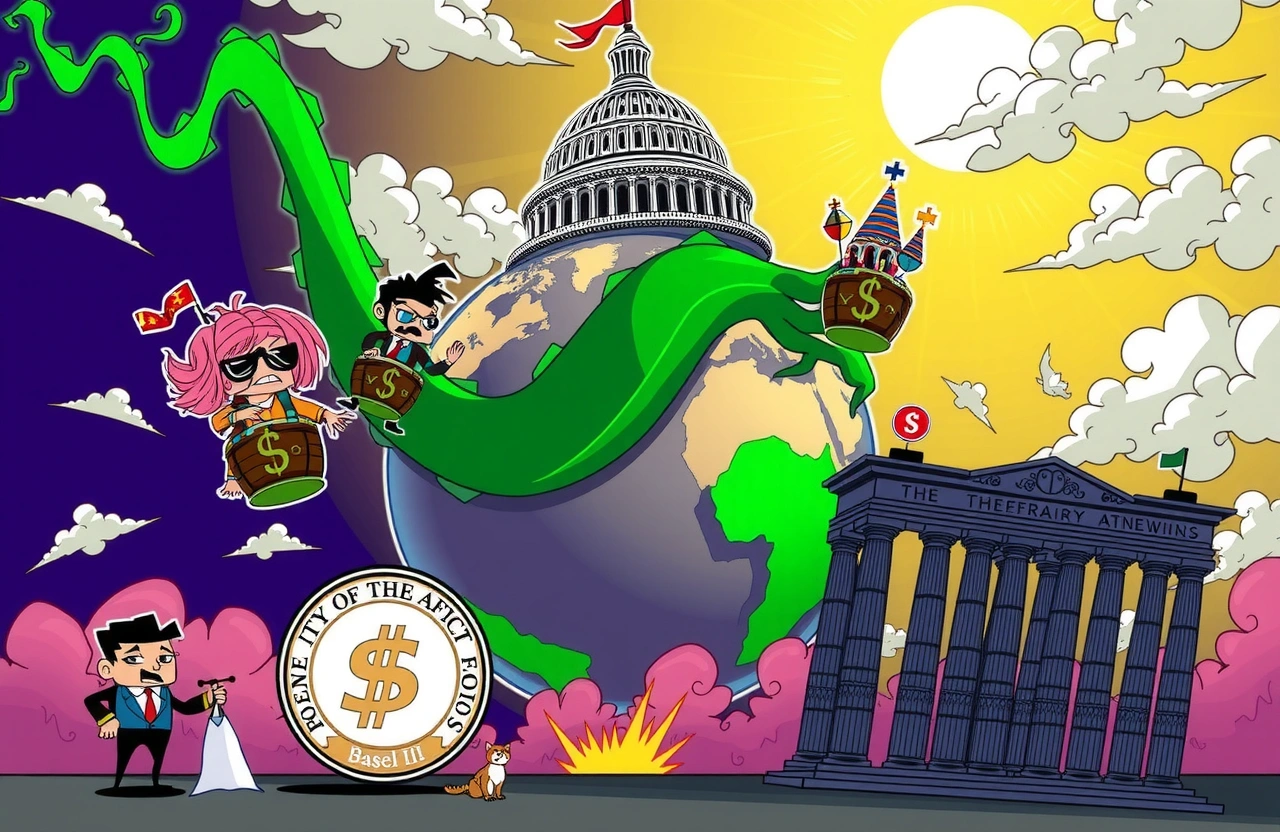
The Gathering Storm
A seismic shift in global finance looms on the horizon as Congress advances landmark legislation for dollar-pegged digital assets. Vincent Mortier (莫蒂尔), Chief Investment Officer at Amundi – Europe’s largest asset manager overseeing €2 trillion – issues a stark warning: America’s stablecoin bill threatens global payment system stability. As regulators worldwide scramble to respond, geopolitical tensions erupt over what Mortier describes as potential “mischief” disguised as financial innovation. With over 80% of stablecoin transactions occurring outside U.S. borders, this Washington-driven initiative risks accelerating dollarization while triggering capital flight dangers.
The GENIUS Act: America’s Stablecoin Gamble
The Federal Senate recently passed the Guiding and Establishing New Innovations and Developments by Enterprise and Startups Act. Better known as the GENIUS Act, this legislation establishes a regulatory framework for stablecoins – cryptocurrencies pegged 1:1 to reserve assets like the U.S. dollar.
Core Requirements
- Reserve mandates: 100% backing by liquid assets including dollars and Treasury bills
- Transparency protocols: Monthly public disclosure of reserve compositions
- Compliance oversight: Registration requirements before issuing dollar-pegged tokens
The Treasury Windfall
The legislation would potentially spark massive demand for short-term U.S. Treasuries as stablecoin issuers scramble to comply. Treasury Secretary Janet Yellen could gain fresh relief during turbulent bond auctions. But Britain’s Andrew Bailey (贝利) has publicly cautioned about dollar dominance creating instability, particularly through Financial Action Task Force transparency reports www.fatf-gafi.org.
Global Stability Under Siege
Mortier predicts potentially destructive consequences for global payment system stability: “The rapid adoption of dollar-pegged stablecoins creates de facto ‘quasi-banks’ without deposit insurance. When individuals trust crypto tokens more than national currencies, we unravel decades of built safeguards.” Currently, dollar-backed tokens represent 98% of global stablecoin value.
The Dollarization Domino Effect
- Emerging economies face currency replacement risks as citizens adopt virtual dollars
- Capital flight accelerates through crypto onramp platforms during crises
- Monetary sovereignty evaporates as central banks lose control over money supply
Italy’s Economy Minister Giancarlo Giorgetti (焦尔杰蒂) contends these impacts surpass traditional trade wars: “Unlike tariffs, dollarization fundamentally rewires financial infrastructure without national consent.”
The International Regulatory Uprising
From London to Basel, alarm bells echo through financial institutions.
Crisis-Level Warnings
- Bank of England Governor Andrew Bailey (贝利): ‘Trust-degradation’ threat to national currencies
- Bank for International Settlements: Systemic stability risks requiring coordinated oversight
- Asia-Pacific regulators: Express grave concern over USD’s dominance impact
The Financial Action Task Force issued a critical report noting www.fatf-gafi.org: “Inexperienced stablecoin issuers could trigger compliance failures worsening illicit flows.”
Market Projections: Growth Amid Uncertainty
Investment banks clash dramatically when forecasting the stablecoin landscape.
The Conservative View
- Morgan Stanley forecasts 2030 market cap: $500 billion
- Currently, stablecoins total $161 billion according to Coin Market Cap
- Mainstream adoption barriers remain substantial despite growing DeFi usage
The Bullish Outlook
- Leading crypto exchanges predict $2 trillion valuations by 2030
- Tether transaction volumes now surpass Visa’s annual throughput
- Emerging market demand drives adoption outside America
Navigating Payment System Stability
Preserving global payment system stability amid stablecoin proliferation requires decisive action.
Regulatory Protections
- Develop global liquidity standards mirroring Basel III currency reserves
- Mandate issuer access to central bank settlement systems
- Demand regularly audited proof-of-reserves protocols
Institutional Guardrails
- Central bank digital currency advancement through BIS Innovation Hub
- Inter-agency cryptocurrency task force coordination at FSB
- Prompt implementation of travel rule protocols for transfers
The Precarious Path Forward
America’s venture into stablecoin regulation presents a geopolitical economic paradigm shift with profound implications for global payment system stability. While the GENIUS Act promises streamlined innovation, the potential detachment of monetary policy from currency sovereignty requires urgent multilateral consultations. Andre Stochniol www.bis.org observes: “We require frictionless interoperability standards preventing jurisdictional arbitrage – not unilateral legislation.” Financial institutions must embed rigorous payment system stability protocols through data rights frameworks before Web3 rewires global finance. Monetary sovereignty preservation arguably becomes the defining geopolitical tension of our emerging digital age.